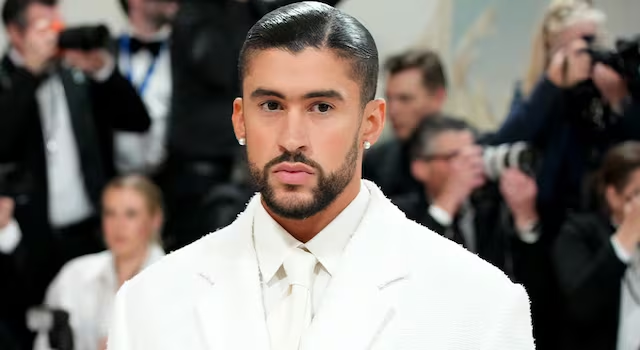
Bad Bunny biography tells an inspiring story of a Puerto Rican artist who refused to compromise his identity while conquering the world. In a music industry obsessed with English-language hits, this reggaeton pioneer proved that staying true to your roots could lead to unprecedented global success. His journey from a small island town to performing at the Super Bowl 2026 halftime show shows what happens when talent meets determination.
Quick Facts About Bad Bunny
| Fact | Details |
|---|---|
| Real Name | Benito Antonio Martínez Ocasio |
| Birth Date | March 10, 1994 |
| Birthplace | Vega Baja, Puerto Rico |
| Stage Name Origin | Childhood photo in bunny costume with angry expression |
| First Discovery | DJ Luian found him on SoundCloud in 2016 |
| Breakthrough Hit | “I Like It” (with Cardi B & J Balvin) – #1 Billboard |
| Most Streamed Album | Un Verano Sin Ti (14+ billion streams) |
| Grammy Win | Album of the Year 2026 (first Spanish-language album) |
| Super Bowl Moment | Halftime performer 2026 |
| Current Status | World’s most-streamed artist (2020-2022) |
Bad Bunny Early Life: Where It All Began
Born Benito Antonio Martínez Ocasio on March 10, 1994, in Vega Baja, Puerto Rico, Bad Bunny early life was shaped by a working-class family with deep musical roots. His father worked as a truck driver while his mother, a retired English teacher, filled their home with diverse sounds salsa, merengue, and pop ballads.
Here’s what made his childhood special:
- Musical environment: His parents’ diverse taste exposed him to multiple genres from day one
- Church choir training: Singing in the local Catholic choir until age 13 developed his vocal skills
- Street influence: Living in Almirante Sur neighborhood, he absorbed reggaeton culture organically
- Humble upbringing: Working-class values taught him the importance of authenticity
At just five years old, he received a record from reggaeton pioneer Vico C as a Christmas gift. This moment sparked something inside young Benito. Basically, unlike many artists who chase commercial appeal, Bad Bunny early life taught him to stay grounded in his culture. His mother encouraged his musical pursuits, though success wasn’t guaranteed in such a competitive industry. In it, you can see how family shaped everything he would become.
The stage name itself comes from a childhood photo where he wore an angry expression in a bunny costume. What started as a joke became iconic a perfect metaphor for his later approach: breaking conventions while staying playful. Whether people knew it or not, this name would soon become synonymous with authenticity in the music world.
Bad Bunny Music Career: Building From Nothing
Bad Bunny music career didn’t start with record deals or industry connections. Instead, it started in 2013 with a laptop, free software called FL Studio, and pure passion. For three years, he uploaded tracks to SoundCloud while working as a grocery bagger at Econo supermarket to support his musical ambitions.
His early music career timeline:
| Year | Milestone | Impact |
|---|---|---|
| 2013-2015 | SoundCloud uploads | Built underground fanbase |
| 2016 | “Diles” goes viral | DJ Luian discovers him |
| 2017 | Signs with Rimas Entertainment | Professional music career begins |
| 2018 | Releases X 100PRE | First major album success |
| 2020 | YHLQMDLG drops | Becomes most-streamed artist on Spotify |
This period of Bad Bunny music career shaped his work ethic. He wasn’t waiting for permission or the “right moment.” He was creating constantly, experimenting with production, and building his sound in isolation. When DJ Luian finally discovered him in 2016, it wasn’t luck it was the result of thousands of hours spent perfecting his craft.
His early music career tracks show an artist unafraid to blend reggaeton with trap, Latin influences with emotional vulnerability. Songs like Soy Peor gained traction organically, proving that authentic artistry resonates with listeners worldwide. Consequently, even songs sung entirely in Spanish could reach millions of people. Meanwhile, other Latin artists were changing their sound to fit American preferences, Bad Bunny stayed true to his roots. Also, this decision would later become his biggest strength.
Bad Bunny Rise to Fame: The Breakthrough Moment
Bad Bunny rise to fame accelerated dramatically after signing with Rimas Entertainment. His debut studio album X 100PRE (released Christmas Eve 2018) announced his arrival as a major artist. The album wasn’t just commercially successful it was critically acclaimed, later ranking among Rolling Stone’s 500 Greatest Albums of All Time.
The turning point came with I Like It, a collaboration with Cardi B and J Balvin. This track became his first Billboard Hot 100 number-one hit. Whether anyone believed it before or not, Latin music sung entirely in Spanish could dominate American charts.
What made his rise to fame different:
- No English crossover: While other Latin artists compromised, he didn’t
- Authentic production: Working with top producers while maintaining his sound
- Cultural pride: Every album celebrated Puerto Rican identity
- Genre flexibility: Moving between reggaeton, trap, and traditional Caribbean sounds
His rise to fame continued accelerating through 2019 and 2020. The pandemic-era release of YHLQMDLG (February 29, 2020) became Spotify’s most-streamed album globally that year. The title translates to I Do Whatever I Want a perfect ethos for the moment. Basically, eleven tracks charted simultaneously on the Billboard Hot 100, an unprecedented achievement that showed his power.
Then came Un Verano Sin Ti (2022), which dominated the charts for 13 consecutive weeks. With 14+ billion streams, this album solidified his position as the world’s most-streamed artist. In it, you could hear traditional Puerto Rican sounds mixed with modern reggaeton beats.
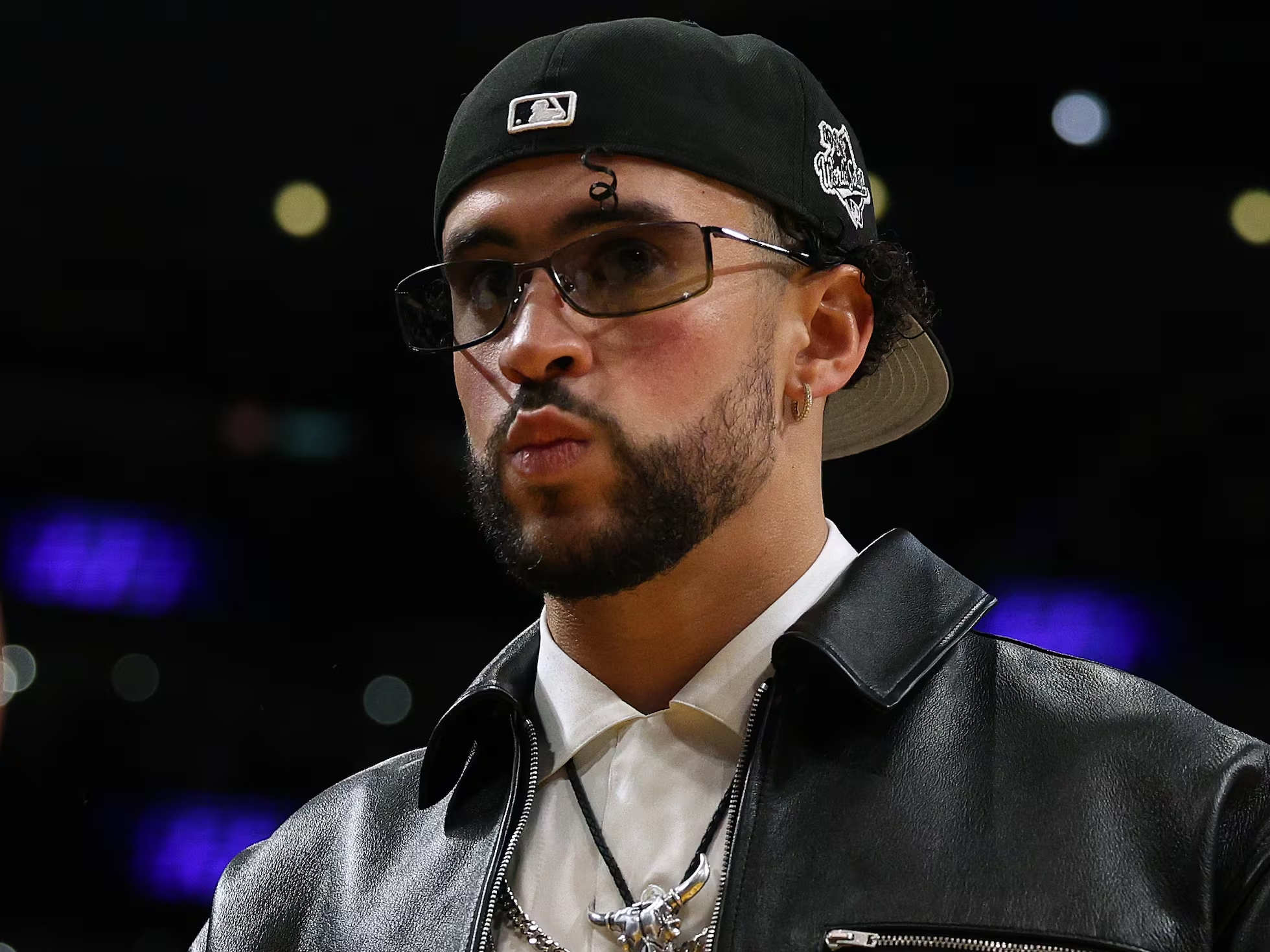
The Numbers Behind Bad Bunny Biography
Bad Bunny biography is ultimately a story written in statistics that reflect authentic connection with listeners. Consequently, these numbers tell us something important about how audiences respond to genuine artistry:
- 4 consecutive #1 albums on the Billboard 200
- First Spanish-language album to win Grammy Album of the Year (2026)
- Most-streamed artist on Spotify (2020-2022)
- 175% streaming spike after Super Bowl halftime performance (February 2026)
- 100+ million monthly listeners across platforms
These achievements didn’t happen by accident. Whether through hard work, smart choices, or genuine talent, Bad Bunny proved something the music industry needed to learn.
Beyond Music: The Activist Side of Bad Bunny Biography
Bad Bunny biography goes beyond commercial success. He’s also used his platform for activism, particularly around Puerto Rico’s struggles. When Hurricane María devastated the island in 2017, killing over 3,000 people, he contributed quietly to relief efforts and memorials.
His 2022 music video El Apagón doubled as a documentary, exposing the power grid failures affecting everyday Puerto Ricans. The video included an 18-minute documentary about gentrification and infrastructure collapse turning entertainment into activism. In it, he showed real people facing real problems.
In his 2020 Tonight Show performance, he wore a skirt and displayed the message Mataron a Alexa, no a un hombre con falda (They killed Alexa, not a man in a skirt), honoring Alexa Negrón Luciano, a transgender woman killed in Puerto Rico. This moment showed that Bad Bunny biography isn’t just about chart dominance it’s about using visibility for social change. Basically, he understood that having a platform meant responsibility.
The Real Impact of This Bad Bunny Biography
What makes Bad Bunny biography remarkable isn’t just the streaming numbers or Grammy wins. It’s that he achieved global superstardom while refusing every industry pressure to assimilate. Whether people understood it at the time or not, his success changed how the music industry saw Latin artists.
The broader significance:
- Proved Latin artists don’t need English to dominate globally
- Showed that authenticity sells better than conformity
- Demonstrated that cultural pride enhances rather than limits commercial appeal
- Inspired a generation of Spanish-language artists to stay true to their roots
His story matters because it shifted how the music industry views Latino artists. Before Bad Bunny rise to fame, the conventional wisdom was: learn English, water down your culture, appeal to the widest audience. Consequently, he proved that wrong, spectacularly. Meanwhile, new artists watched and learned that compromise wasn’t necessary.
Conclusion: Bad Bunny’s Ongoing Story
Bad Bunny biography continues to unfold. At 31 years old, he’s already achieved what most artists only dream about. Yet his focus remains on Puerto Rico his roots, his island, his people.
His 2026 Super Bowl performance came with controversy. Former President Trump criticized the choice, but that opposition only amplified his cultural significance. Bad Bunny biography represents something larger than music: it’s about resistance, identity, and the power of refusing to compromise.
From uploading tracks on SoundCloud to headlining the world’s biggest sporting event, Bad Bunny music career trajectory defies conventional narratives. His early life in a humble Puerto Rican neighborhood shaped an artist who’d eventually change global music forever. Visit MarianoIduba for more interesting stories.
FAQs
What is Bad Bunny’s real name and where is he from?
Bad Bunny’s real name is Benito Antonio Martínez Ocasio. He was born on March 10, 1994, in Vega Baja, Puerto Rico. His Bad Bunny early life was shaped by his working-class family in a small Puerto Rican neighborhood called Almirante Sur. His father was a truck driver and his mother was a retired English teacher who loved music.
How did Bad Bunny start his music career?
Bad Bunny music career began in 2013 when he started uploading songs to SoundCloud while working as a grocery bagger at Econo supermarket. For three years, he created music in his spare time using free software called FL Studio. In 2016, DJ Luian discovered his song “Diles” on SoundCloud and signed him to Rimas Entertainment, which changed everything for his career.
What was Bad Bunny’s breakthrough hit that led to his rise to fame?
Bad Bunny’s rise to fame came with the song “I Like It” featuring Cardi B and J Balvin in 2018. This track became his first Billboard Hot 100 number-one hit and proved that Spanish-language music could dominate American charts. His debut album X 100PRE also gained critical acclaim, ranking among Rolling Stone’s 500 Greatest Albums of All Time.
What makes Bad Bunny’s biography unique compared to other Latin artists?
Bad Bunny biography is unique because he became a global superstar without ever singing in English or compromising his Puerto Rican identity. While other Latin artists changed their music to appeal to American audiences, he stayed true to reggaeton and Spanish lyrics. His success proved that authenticity and cultural pride could take you further than assimilation ever could.
Why is Bad Bunny considered important beyond just music?
Bad Bunny biography goes beyond music because he uses his platform for activism, especially for Puerto Rico. He’s spoken out about gentrification, power grid failures, and violence against women and transgender people. His 2020 Tonight Show performance where he wore a skirt to honor a murdered transgender woman showed how he uses fame to create social change and raise awareness about important issues.