Which Costa Rican beach should actually get your one free afternoon? With roughly 1,290 kilometers of coastline split between the Pacific Ocean and the Caribbean Sea, the country makes that question harder than it sounds. The two coasts run opposite weather calendars, produce different sand, and attract different travelers entirely. Picking a beach here is really picking a coast first, and that decision shapes the rest of the itinerary.
This roundup skips the philosophy and names specific places, with who each one suits, what it does well, and where it falls short.
The Shortlist at a Glance
| Beach | Coast | Best for | Watch out for |
|---|---|---|---|
| Playa Manuel Antonio | Pacific | Wildlife plus easy swimming | Crowds, park entry logistics |
| Playa Conchal | Pacific (Guanacaste) | Calm water, snorkeling, families | No adjoining town, shell rules |
| Playa Flamingo | Pacific (Guanacaste) | Sunsets and couples | Development around the marina |
| Playa Santa Teresa | Pacific (Nicoya) | Consistent surf | Rough access roads, strong currents |
| Nosara | Pacific (Nicoya) | Surf plus yoga, low-rise vibe | Dirt roads, spread-out layout |
| Sámara | Pacific (Nicoya) | Beginners and families | Modest waves for advanced surfers |
| Manzanillo | Caribbean | Quiet, reef-sheltered snorkeling | Fewer hotels, slower pace |
| Cahuita’s Playa Blanca | Caribbean | Monkeys, reef, budget stays | Sargassum and rain risk |
Playa Manuel Antonio: The One With the Monkeys
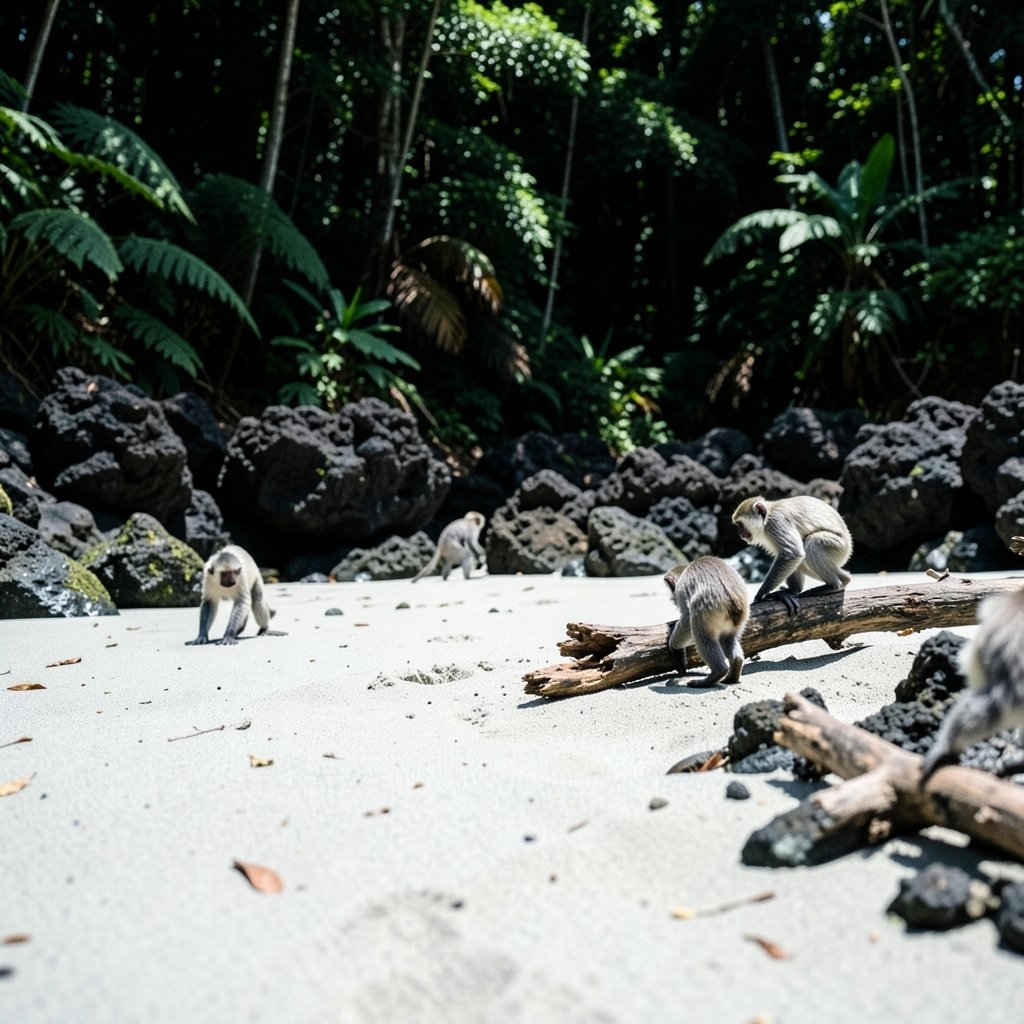
Inside Manuel Antonio National Park, three beaches sit within the park boundary, with a fourth just outside the entrance. The most picturesque is Playa Manuel Antonio, also called Playa Tres. It is the safest beach in the area for swimming and offers good snorkeling; head to the rocks at the end of the beach to see marine life. Troops of monkeys play around the sand, which is the draw for anyone traveling with kids or a camera.
The limitation is the crowd. This is one of the country’s most popular beaches, and locals arrive on weekends, so a weekday visit is the practical move. Pre-book park tours, and note that access runs through the park rather than from a roadside parking lot. Include the entry queue in your time budget, along with the sand.
Playa Conchal: Shells Instead of Sand
Playa Conchal in Guanacaste province is unusual: its shoreline is made up of almost 3 million tiny shells rather than plain sand, which gives it a pinkish tone. The calm bay and abundant reef make it a strong fit for swimmers, snorkelers, families, and scuba divers.
Two warnings matter here. First, do not take any shells with you. Removing them counts as illegal wildlife trafficking in Costa Rica, and they get confiscated at the airport. Second, the beach has no adjoining town and is rimmed by thick forest, so it feels remote even though large hotels sit nearby. Travelers who want a walkable strip of restaurants and shops will find it isolating. Travelers who want quiet water and a book will love it.
Playa Flamingo: The Sunset Pick
Playa Flamingo sits on the northern Pacific coast, and its sand is soft enough to sink into, alongside the west end of Playa Conchal and Playa Puerto Viejo. It earns its reputation as a couples’ and sunset beach: the Pacific side faces west, so the sun drops over the water, which is exactly why most of the country’s hotel development faces that direction.
The trade-off is polish. Flamingo is developed, with a marina and a built-up feel, so it delivers convenience rather than wilderness. If the goal is a barefoot, empty-horizon experience, look elsewhere on this list.
Playa Santa Teresa: Surf First, Everything Else Second
Playa Santa Teresa, on the Nicoya Peninsula, is a stunning stretch with excellent waves. It belongs on any shortlist built around surfing, and the town has grown into a destination for travelers who want warm water and consistent swell.
Two practical notes. The roads into and around Santa Teresa are famously rough, so a rental car with clearance helps, and the drive eats time. The surf is also not a beginner’s wave on bigger days. Strong currents and shore break demand respect, and lessons are worth the money before paddling out alone. (Ron Chernow: Biographer of America’s Greatest Icons)
Nosara: Surf and Yoga Without High-Rises
Nosara, also on the Nicoya Peninsula, has become the classic combination of surf town and wellness retreat. It suits travelers who want morning waves, afternoon yoga, and a low-rise, dust-road atmosphere rather than an all-inclusive resort.
The limitation is sprawl. Nosara is a collection of neighborhoods rather than one compact center, so a bike or car makes a real difference. First-timers often book accommodation far from the beach they intended to use. Check the map before booking, not after.
Sámara: The Beginner-Friendly Bay
Sámara rounds out the Nicoya picks and is the gentlest of the three for new surfers and families. The bay shape softens the waves, and the town is walkable in a way Nosara and Santa Teresa are not.
The honest downside: experienced surfers will find it tame. Sámara is a place to learn, not to chase serious swell. Travelers who want both can base here and day-trip to heavier breaks nearby.
Manzanillo: The Caribbean’s Quiet Corner
Inside the Gandoca-Manzanillo Wildlife Refuge on Costa Rica’s Caribbean coast, the small fishing town of Manzanillo is postcard-worthy and genuinely quiet. The Caribbean side is largely undeveloped by comparison: no all-inclusives or large hotel chains, just low-slung bungalows and cozy guesthouses, and noticeably fewer tourists.
That calm is the point and also the constraint. Dining and lodging options are limited, nightlife is minimal, and travelers who want resort amenities will feel underserved. The reef knocks down wave energy in several spots along this coast, producing some of the clearest swimming water in the country, which is the real prize here.
Playa Blanca in Cahuita: Reef, Monkeys and a Budget Stay
Playa Blanca, inside Cahuita National Park, pairs a white-sand shoreline with wildlife: monkeys play around the beach, and other species make occasional appearances. The reef protection makes swimming easy, and Cahuita itself is a small, affordable base.
Be realistic about the Caribbean’s weather. That coast runs the opposite calendar from the Pacific, and its rainy season can wash out beach days. Sargassum can also pile up on Caribbean shores at times. Build in flexibility rather than locking every day to the sand.
How to Choose Between Them
Work through these questions in order, because each answer narrows the list fast.
- Which coast fits your dates? The Pacific and Caribbean run opposite weather calendars. Check the season for the specific coast, not the country as a whole.
- What is the beach for? Surf, wildlife, snorkeling, or pure lounging each point to different names on this list.
- Do you want a town or a forest? Playa Conchal has no adjoining town. Nosara is spread out. Sámara and Cahuita are walkable.
- How much driving can you tolerate? Santa Teresa and Nosara reward a rental car with clearance. A car rental is genuinely handy for exploring different beaches, but only if you are comfortable on unpaved roads.
- Do you need calm water? Families and weak swimmers should favor reef-protected bays like Conchal, Manzanillo, and Playa Blanca over open Pacific surf breaks.
One more practical tip that saves trips: the Pacific has a substantial tidal range, and beaches shift noticeably between high and low water. A beach that looks tiny at noon can be enormous at 4 p.m. Check a tide table before planning a walk or a swim.
Mistakes Travelers Keep Making
The most common error is treating Costa Rica as one beach destination. The Pacific side gets long-period swell from the open ocean and faces sunset over the water; the Caribbean sits behind coral reef in places, with flatter water and a different culture. Booking a Caribbean flight and expecting Pacific surf is a recipe for disappointment. (Mariano iduba coderoot africa)
The second error is underestimating transfer times. Distances on a map shrink into wishful thinking once dirt roads and ferries enter the picture. The third is ignoring park logistics: Manuel Antonio and Cahuita both sit inside protected areas with entrance rules, and showing up unprepared costs hours.
The fourth is packing for a postcard. Sun, salt, and sudden rain are the daily reality, and a dry bag costs less than a ruined phone. If planning the trip itself feels like a job application, the same discipline applies: small oversights cost opportunities, as this breakdown of how job application mistakes cost interviews for qualified candidates makes clear. Travel rewards the same attention to detail.
Conclusion
The best beach in Costa Rica depends on one decision made early: Pacific or Caribbean. Choose the Pacific for surf, sunsets over the water, and the widest range of towns and hotels, with Playa Manuel Antonio, Playa Conchal, Santa Teresa, Nosara, Sámara, and Flamingo covering families, couples, and wave chasers between them. Choose the Caribbean for reef-sheltered swimming, fewer crowds, and a slower rhythm, with Manzanillo and Playa Blanca leading the way.
Then match the beach to the traveler, not the other way around. A family that books a surf break will spend the week watching from the sand. A surfer who books a calm bay will spend it driving. Get that pairing right, and the rest of the trip mostly takes care of itself.
FAQ
Which coast in Costa Rica has the better beaches?
Neither is objectively better; they deliver different things. The Pacific has a much longer coastline and a larger range of beaches and tourist towns, plus sunset over the water and consistent surf. The Caribbean is less developed, with reef-protected bays and the clearest swimming water in several spots.
What is the best Costa Rica beach for families?
Playa Conchal is a strong pick because of its calm bay and reef, which suit swimmers, snorkelers, and scuba divers. Sámara is another good option thanks to its gentler waves and walkable town. Playa Manuel Antonio works well for families who want wildlife along with safe swimming.
Can you swim at every beach in Costa Rica?
No. Open Pacific beaches can have strong currents and shore break, and conditions change with the tide. Reef-protected bays on the Caribbean side and in Guanacaste are calmer. Ask locally about currents before swimming anywhere unfamiliar, and never assume a quiet-looking beach is safe.
Is Manuel Antonio worth visiting if I don’t like crowds?
It is worth it if you go on a weekday and pre-book your park tour. The beach is the safest in the area for swimming and offers good snorkeling, and the monkeys are a genuine highlight. If crowds are a hard no, Manzanillo on the Caribbean coast offers a much quieter alternative.
Do I need a car to reach Costa Rica’s best beaches?
It depends on the beach. A rental car is handy for exploring different beaches and is close to essential around Santa Teresa and Nosara, where roads are rough and towns are spread out. Sámara and Cahuita are easier on foot, and buses run to several popular destinations.
Can I take shells home from Playa Conchal?
No. Removing shells counts as illegal wildlife trafficking in Costa Rica, and they will be confiscated at the airport. Photograph them instead. The same respect applies across the country’s protected areas, where wildlife and shoreline features are legally off-limits to collectors.