What if the difference between a magical first camping trip and a soggy, sleepless disaster comes down to a single forgotten item? It usually does. Ask anyone who has spent a night shivering on cold ground because they skipped a sleeping pad, or eaten dinner by phone light because the lantern stayed home. The gear list is not glamorous, but it is the whole ballgame.
This checklist walks through the essentials in the order a beginner actually needs them. It covers what to buy, what to rent, what to borrow, and the small mistakes that quietly ruin first trips.
Start With the Big Three: Shelter, Sleep, and Light
Experienced campers talk about the “big three” for a reason. A tent, a sleep system, and a light source form the foundation. Everything else is comfort.
The tent: buy for the weather, not the photo
A good shelter protects against rain, wind, and bugs, and it keeps body heat in. Three features matter most:
- Elbow room. Campers may huddle inside for hours during bad weather. Check floor length and ceiling height before buying. Can the tallest person in the group lie flat? Can everyone sit up?
- A three-season design. For spring, summer, and fall trips, a three-season shelter with a tent body, rainfly, and mesh panels balances ventilation and weather protection.
- Setup simplicity. A dome tent that pitches in ten minutes beats a palace that takes an hour. Beginners should practice pitching in the backyard once before leaving.
The sleeping bag: match the rating to the forecast
Sleeping bags carry temperature ratings, and the comfort rating matters more than the extreme rating. A bag rated for mild nights will feel miserable on a frosty one. Match the bag to the coldest temperature expected, not the warmest.
The sleeping pad: the most underrated item on the list
Here is the mistake almost every beginner makes: spending generously on a tent and bag, then sleeping on a thin foam mat. Body heat drains into the ground far faster than into the air. Sleeping pads carry R-values, which measure insulation. A minimum of R-4 suits cold conditions, and something near R-8 is ideal for freezing nights. Pads also add cushioning, which matters more as the years add up.
Light: hands-free beats handheld
Campsites go dark fast. A headlamp beats a phone flashlight because it keeps both hands free for cooking, zipping, and finding the tent door. Pack spare batteries or a rechargeable model with a long runtime.
Build the Campsite: Table, Chair, and Fire
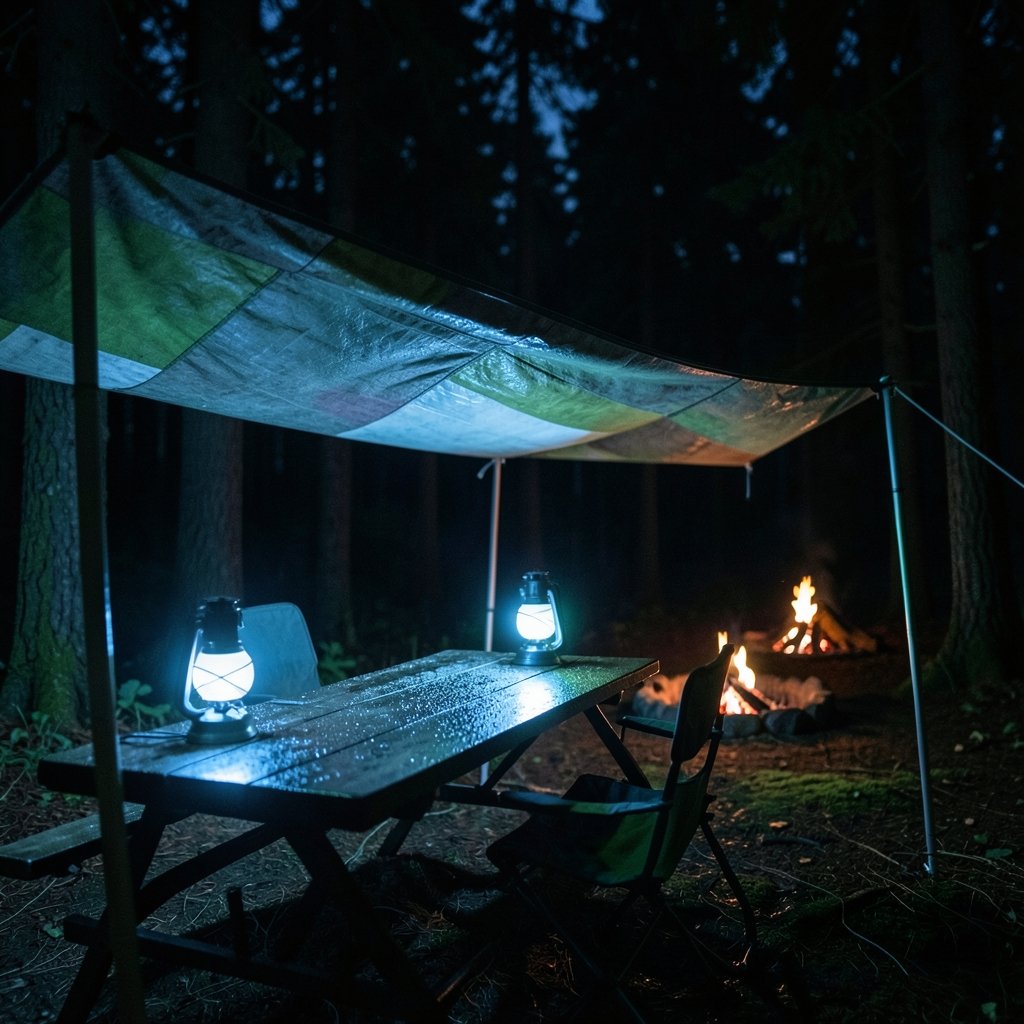
Once sleeping is sorted, the next layer is the living space. This is where trips start to feel comfortable rather than merely survivable.
| Item | Why beginners need it | Buying tip |
|---|---|---|
| Table | Cooking, eating, and organizing gear off the ground | A 120 cm model suits families; solo campers can go smaller |
| Chair | Back support during long evenings | Low chairs suit small children; height-adjustable models add flexibility |
| Tarp or shade | Sun and rain protection over the living area | Often skipped, rarely regretted once owned |
| Pegs and hammer | Securing the tent and tarp | Check what ships with the tent before buying extras |
| Fire pit or grill | Campfire cooking and warmth | Confirm the campsite allows open flames first |
A tarp deserves special mention. Many first-timers assume it is optional. It is not. Shade and rain cover turn a exposed picnic table into a genuine living room, and a tarp costs far less than a larger tent.
Sort the Kitchen: Cooking Gear That Earns Its Space
Camp cooking is one of the great pleasures of the hobby, and it needs surprisingly little equipment. The core kit looks like this:
- Stove or burner with the right fuel canisters.
- Cooker or pot set sized to the group. One pot and one pan cover most beginner meals.
- Cutlery and dishes for each person, plus a cup.
- Knife and small cutting board.
- Seasonings and oil decanted into small containers.
- Trash bags, because campsites follow leave-no-trace rules and expect everything packed out.
- Washing kit: detergent, sponge, and a cloth or paper towels.
A cooler rounds out the kitchen for fresh food. Beginners often overpack food and underpack ice. Plan meals precisely, then add one emergency snack.
Pack the Personal Kit: Clothing, Bugs, and First Aid
The living essentials are easy to forget because they live in the bathroom at home. The personal kit covers:
- Layers of clothing, including a warm layer for evenings even in summer.
- Rain shell, which doubles as a windbreaker.
- Insect repellent. Bugs, flies, gnats, and mosquitoes can ruin an otherwise perfect evening.
- Sunscreen and a hat.
- Wash kit and towel, especially if the campsite has shower facilities.
- First-aid supplies and a health card.
- Work gloves for handling firewood, pegs, and hot cookware.
Rent, Borrow, or Buy? A Beginner’s Decision Framework
The single best money-saving move for a first trip is renting. Many campsites and outdoor shops rent tents, sleeping bags, and cooking gear. That lets a beginner test the hobby before committing serious money.
Some items, though, are worth buying early because they get used constantly and hold value: a good tent, water bottles, and a headlamp. The table below offers a rough guide.
| Category | Rent or borrow first | Buy early |
|---|---|---|
| Shelter | Large family tents | A quality three-season tent |
| Sleep | Sleeping bags for one-off trips | Sleeping pads and pillows |
| Kitchen | Full stove systems | Water bottles and a headlamp |
| Furniture | Tables and chairs | Nothing urgent |
A second tactic works well: camp with a friend who already owns gear, and bring the food. Sharing equipment is how most people enter the hobby.
The Beginner Mistakes That Actually Matter
Gear advice is everywhere, but the practical failures repeat with striking consistency. These are the ones worth guarding against.
Buying everything at once. A full kit bought in one shopping spree usually includes items the camper never uses and misses items they desperately need. Buy the essentials, take one trip, then fill gaps based on what actually felt missing.
Ignoring the campsite’s facilities. Beginners have a far better time at sites with toilets, showers, and nearby shops. Save the remote, off-grid sites for later trips. Choosing a comfortable campsite is a gear decision in disguise, because it removes half the equipment burden.
Skipping the backyard test. Pitching the tent and testing the stove at home reveals missing pegs, dead batteries, and confusing instructions while the stakes are low.
Forgetting fuel and batteries. Stoves need the correct canister, and lanterns need working batteries. Check both before departure, not at the campsite.
Underestimating the cold. Clear nights get cold even in summer. An extra warm layer and a properly rated sleeping pad solve most of it.
Overpacking the car. Every item should earn its place. A cluttered campsite is harder to manage and harder to pack up in the rain.
For anyone who enjoys documenting the journey, the storytelling side of outdoor life has its own craft, and resources on how to write an autobiography step by step show how personal experiences become compelling narratives.
A Printable-Style Checklist by Category
Grouping gear by function makes packing faster and prevents duplicates. This structure works for a solo trip and scales to a family.
Shelter and site: tent, tarp, pegs, hammer, groundsheet, table, chairs, lantern, headlamp, batteries, fuel.
Sleep: sleeping bag, sleeping pad, pillow, spare blanket for cold sleepers.
Kitchen: stove, fuel, pots, pan, cutlery, plates, cups, knife, board, seasonings, cooler, ice, water containers, trash bags, washing kit.
Personal: layered clothing, rain shell, sturdy shoes, insect repellent, sunscreen, hat, wash kit, towel, medications, first-aid kit, health card, work gloves.
Extras that help: power bank, rope or cord, duct tape, multi-tool, camp chairs for guests, a small broom for tent floors.
Many campers keep this list on their phone and tick items off as they pack. Over a few trips, the list shrinks to what the individual camper genuinely uses.
Where the Checklist Meets the Road
Gear lists are only half the story. Planning, campsite choice, and scheduling carry equal weight. Deciding who is coming, what meals will be cooked, and when setup will happen prevents most first-trip chaos. The same discipline applies to creative pursuits: actors building a career learn early that preparation and a clear plan matter as much as raw talent, as guides to acting jobs for beginners explain.
Beginners who want to document their trips, or simply enjoy writing, often find that a simple journal habit pays off. Tips for autobiography writing for students offer practical starting points for turning scattered memories into a readable story.
And for campers whose real passion is film and performance rather than the outdoors, understanding how a casting list works reveals how much preparation happens before anyone steps in front of a camera. The lesson transfers: good outcomes come from checklists, not luck.
Conclusion
The best camping gear for beginners is not the most expensive gear. It is the gear that matches the trip: a shelter that fits the weather, a sleep system rated for the coldest night expected, a hands-free light, and a kitchen simple enough to pack up in the rain. Rent the big items first, buy the tent and pad once the hobby sticks, and test everything at home before leaving.
Every experienced camper started with a borrowed tent and a list of things they forgot. The goal of a first trip is not perfection. It is coming home warm, dry, and already planning the next one.
Frequently Asked Questions
What gear does a complete beginner actually need for a first camping trip?
The true minimum is shelter, sleep, light, and food. That means a tent, a sleeping bag rated for the forecast, an insulated sleeping pad, a headlamp, a stove with fuel, basic cookware, water containers, and a cooler. Clothing layers, insect repellent, and a first-aid kit complete the kit. Everything else is comfort.
Is it cheaper to rent camping gear or buy it?
Renting is almost always cheaper for a first trip, and many campsites and shops rent tents, bags, and cooking equipment. Buying makes sense for items used on every trip, such as a quality tent, a sleeping pad, water bottles, and a headlamp. A common approach is to rent the big items once, then buy only what proved essential.
What R-value sleeping pad should a beginner choose?
For cold-weather camping, an R-value of at least 4 is the practical minimum, and something close to R-8 is ideal for freezing conditions. Summer campers can go lower, but a pad with more insulation stays useful across more of the year. The pad matters as much as the sleeping bag because body heat drains into the ground.
Do beginners really need a tarp if the tent has a rainfly?
A tarp covers the living space, not the sleeping space. It provides shade during hot afternoons and a dry place to cook and sit during rain, which a tent rainfly cannot do. Many first-timers skip it and regret it. A basic tarp and a couple of poles or ropes cost little and dramatically improve comfort.
How do I choose a campsite for a first trip?
Pick a site with toilets, showers, and a shop nearby. Beginners have a better time when basic facilities are close, and the campsite often rents gear or sells forgotten essentials. Save remote, off-grid locations for later once setup, cooking, and packing have become routine.
What is the most commonly forgotten camping item?
Fuel and batteries top the list, followed by a pillow, a towel, and a can opener. Stoves need the correct canister type, and lanterns need working batteries. Packing from a written checklist by category, and testing the stove and lights at home, catches nearly all of these misses before departure.