Double baked baked potatoes sound like a typing error, but they are a real dish, and a very good one. The short answer to what they are: potatoes baked until tender, scooped out, mashed with butter, cream and cheese, spooned back into their crisp skins, and baked a second time until golden on top.
The result is the best of both worlds: a crisp, salty skin and a soft, rich filling, in a dish that works as a side or as a meal on its own. This guide covers the method step by step, the best fillings, and the food safety rules that matter.
Key takeaways
- Double baked potatoes are baked twice: first whole, then again after the filling goes back into the skins.
- Use large floury potatoes, such as russets or Maris Piper, for the fluffiest filling.
- Bake the potatoes at around 200°C for 45 to 60 minutes, until the flesh is soft all the way through.
- Mash the scooped flesh with butter, cream or soured cream, and cheese, then refill the skins.
- Refrigerate leftovers within two hours and eat them within three to four days.
Why bake a potato twice?
A plain baked potato is a fine thing, but it has one weakness: the filling is just potato. Baking it twice lets you turn that filling into something richer, seasoning it properly and mixing in cheese, herbs and other flavours before it goes back into the skin.
The second bake does two jobs at once. It heats the filling through, and it crisps the top, so you get a golden, slightly crunchy surface over a soft centre. A sprinkle of cheese on top melts and browns in the second bake, which is the finishing touch the dish is known for.
Best for: a weekend dinner or a gathering — most of the work happens early, and the second bake takes only minutes of attention.
Choosing the right potatoes
The potato matters more than anything else in this dish. Large, floury potatoes are the right choice, because their flesh turns light and fluffy when baked, and it mashes smoothly without turning gluey. Russets are the classic choice in the United States, and Maris Piper or King Edward work well in the United Kingdom.
Choose potatoes of a similar size, so they cook in the same time, and pick ones with unbroken skins and no green patches or sprouts. A potato with a damaged skin will not hold its filling, and green patches should be cut away, because they taste bitter.
Waxy potatoes, such as new potatoes or Charlotte, are the wrong choice here. They hold their shape well in a salad, but they mash into a dense, sticky filling that never gets properly fluffy. Save them for another dish.
Best for: the fluffiest filling — a large, floury potato with a thick skin that can stand up to being scooped and refilled.
The first bake
Heat the oven to around 200°C, or 180°C for a fan oven, and put a shelf in the middle. Scrub the potatoes clean under cold water and dry them well, then prick each one a few times with a fork. The pricks let steam escape, which stops the potato from bursting in the oven.
Rub the skins with a little oil and a pinch of salt. The oil helps the skin crisp, and the salt seasons it, so the skin becomes worth eating rather than something to leave on the plate. Put the potatoes straight on the oven shelf, with a tray below to catch any drips.
Bake for 45 to 60 minutes, depending on the size of the potatoes. They are ready when the skin is crisp and a skewer slides into the centre with no resistance. If the flesh is still firm in the middle, give them more time: an under-baked potato makes a lumpy filling, and there is no way to fix it later.
Best for: a crisp skin — oil, salt and direct heat on the oven shelf, with no foil wrapping, which would steam the skin soft.
Scooping and mashing the filling
Let the baked potatoes cool for a few minutes, until you can hold them without burning yourself, then cut a thin slice off the top of each one. Scoop the flesh out into a bowl with a spoon, leaving a shell about half a centimetre thick all round. The shell needs to be sturdy enough to hold the filling, so do not scrape it too thin.
Mash the scooped flesh while it is still warm, because warm potato mashes far more easily than cold. Add a knob of butter first and mash it in, then add a spoonful or two of cream or soured cream, and season with salt and pepper. The filling should be soft and creamy, not stiff, because it firms up again in the second bake.
Now add the flavourings. Grated cheddar is the classic choice, and it melts into the mash as you stir. Chopped chives or spring onions add freshness, and a little garlic or mustard adds depth. The filling needs something to hold it together as well as to flavour it, and cheese and egg both do that job: our guide to what is a binder in cooking explains how binders work in dishes like this one.
Best for: a smooth, rich filling — mash while the potato is warm, add the butter first, and season as you go.

The second bake
Spoon the filling back into the potato shells, piling it up generously above the rim. A heaped filling looks generous and gives the top more surface to brown, so do not be shy with it. Sprinkle a little extra grated cheese over the top of each potato.
Put the filled potatoes on a baking tray and return them to the oven at around 200°C for 15 to 20 minutes, until the filling is hot all the way through and the top is golden and bubbling. The skins will crisp up further in this second bake, which is exactly what you want.
Let the potatoes rest for a couple of minutes before serving, so the filling settles and the cheese stops bubbling. Serve them straight from the tray, with a green salad or some steamed vegetables alongside, and put the extra toppings on the table so everyone can add their own.
Best for: a golden top — a hot oven, a generous heap of filling, and a sprinkle of cheese that has time to brown.
Fillings and variations
The classic filling is cheese and chives, but the dish is a blank canvas, and almost any combination works as long as the filling stays moist. Cooked bacon or ham adds salt and smokiness, and it pairs well with cheddar. Sautéed mushrooms add an earthy note, and they work well with a little thyme.
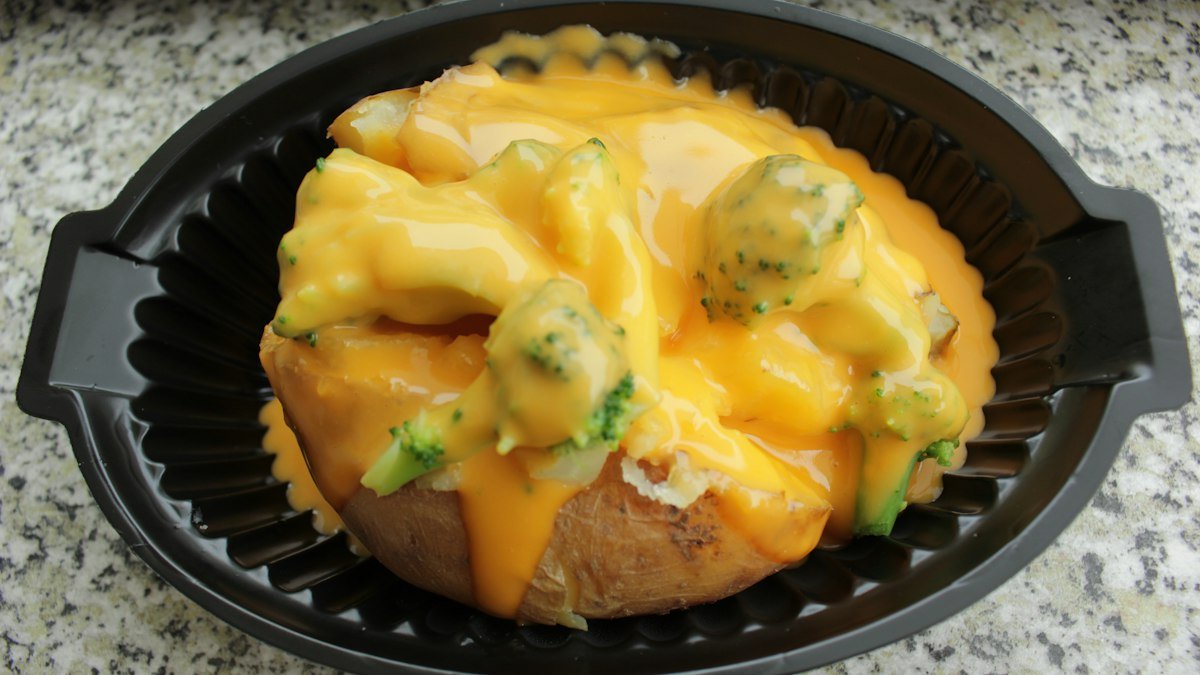
For a vegetarian version, try broccoli and cheese, which is a classic pairing, or spinach and feta, which adds a salty tang. A spoonful of soured cream on top, with chopped chives, finishes either version well. Sweetcorn and peppers make a lighter, sweeter filling that children usually like.
For a fuller meal, top the potatoes with chilli or pulled pork and serve them as a main course rather than a side.
| Filling | Main flavours | Best with |
|---|---|---|
| Cheddar and chives | Sharp cheese, fresh onion | Steak, roast chicken |
| Bacon and cheese | Smoky, salty, rich | Barbecue, grilled meats |
| Broccoli and cheese | Mild, creamy, green | Vegetarian mains, salads |
| Mushroom and thyme | Earthy, herbal | Roast dinners |
| Chilli and cheese | Spicy, rich, hearty | As a main course |
If you are serving these at a gathering, it is worth thinking about the rest of the table too. A good meal out is sometimes easier than cooking for a crowd, and if your travels take you to Florida or Missouri, our guides to the best restaurants in Tampa and the best restaurants in St Louis are good places to start.
Best for: using up leftovers — almost any cooked vegetable, meat or cheese in the fridge can find a home in a twice-baked potato.
Food safety: the rules that matter
Potatoes need care once they are cooked, because the flesh is a good home for bacteria if it sits at room temperature for too long. The rule to remember is two hours: cooked potatoes should not sit out for more than two hours, and less on a hot day. After that, they belong in the fridge or the bin.
Cool the filled potatoes quickly if you are not baking them straight away. Spread them on a tray rather than stacking them, and get them into the fridge within two hours of the first bake. Eat refrigerated potatoes within three to four days, and reheat them until they are steaming hot all the way through.
Reheat a potato only once. A potato that has been reheated and cooled again should not go back in the fridge for another round, because each cycle gives bacteria another chance. Heat what you will eat, and leave the rest sealed in the fridge.
Best for: safe leftovers — fridge within two hours, eat within three to four days, and reheat once until steaming hot.
A simple checklist for perfect results
Use this list the first few times you make the dish, until the method becomes second nature.
- Choose large floury potatoes of a similar size, with unbroken skins.
- Scrub, dry, prick, oil and salt the skins before the first bake.
- Bake at around 200°C for 45 to 60 minutes, until a skewer slides in easily.
- Scoop the flesh out while the potatoes are warm, leaving a sturdy shell.
- Mash with butter first, then cream or soured cream, and season as you go.
- Refill the shells generously and top with a little extra cheese.
- Bake again for 15 to 20 minutes, until golden and hot through.
- Refrigerate leftovers within two hours and eat them within three to four days.
Frequently asked questions
What potatoes are best for double baked potatoes?
Large floury potatoes, such as russets, Maris Piper or King Edward. Their flesh turns light and fluffy when baked, and it mashes smoothly without turning gluey.
How long do you bake the potatoes the first time?
As a rough guide, 45 to 60 minutes at around 200°C, depending on size. They are ready when a skewer slides into the centre with no resistance and the skin is crisp.
Can you make double baked potatoes ahead of time?
Yes. Bake and fill the potatoes, then refrigerate them for up to a day and do the second bake just before serving. Add five minutes to the second bake if they go into the oven cold.
Can you freeze double baked potatoes?
Yes, they freeze well. Cool them completely, wrap each one tightly, and freeze for up to a month. Defrost in the fridge overnight and bake until steaming hot throughout.
What cheese works best in the filling?
A good melting cheddar is the classic choice, and it gives the best flavour and the best golden top. Gruyère, Monterey Jack and a little Parmesan all work well too.
Why did my filling turn gluey?
The most common cause is over-mashing, or mashing a waxy potato. Mash floury potatoes gently while they are warm, and stop as soon as the filling is smooth.
The bottom line
Double baked potatoes take a simple dish and make it better, with a crisp skin, a rich filling and a golden top. The method is straightforward, the ingredients are cheap, and the result feels far more special than the effort suggests.
Choose floury potatoes, bake them properly the first time, season the filling well, and respect the food safety rules. Do that, and you will have a dish that works as a side, a starter or a meal.