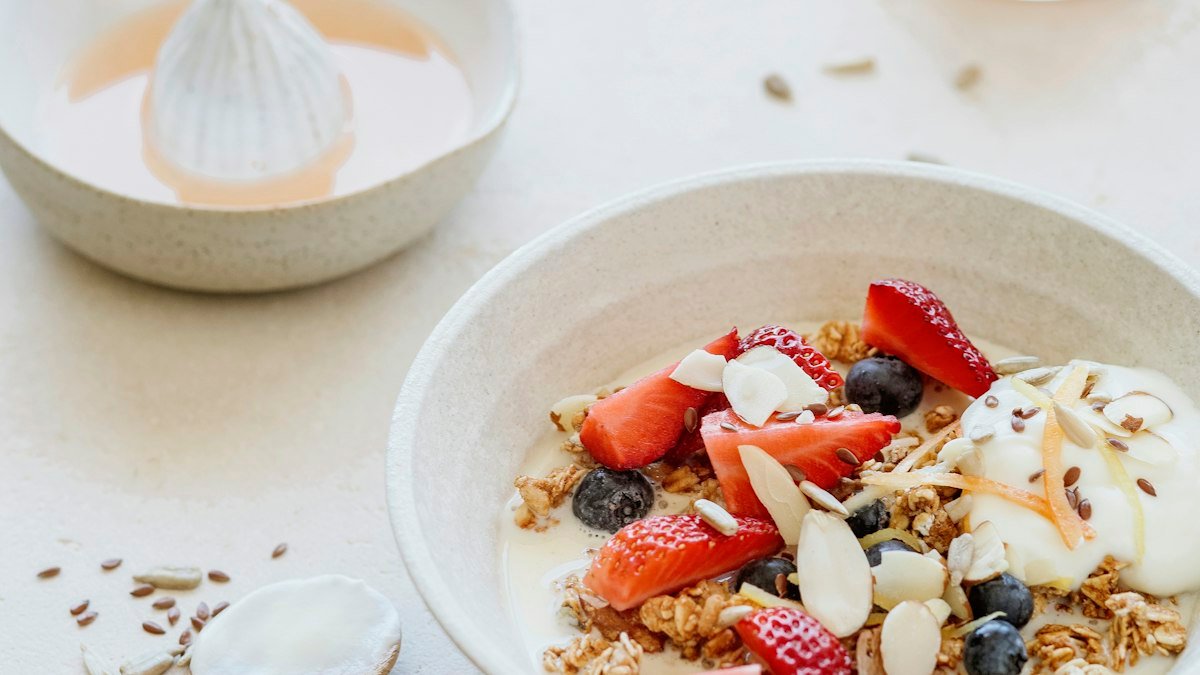
The best breakfast food in 2027 is a simple, balanced plate that gives you steady energy, such as eggs with wholegrain toast, oats with fruit, or yoghurt with berries and nuts. The right choice depends on your morning, your appetite and how much time you have before the day begins.
Breakfast is the first meal of the day, and it sets the tone for the hours that follow. A breakfast that is mostly sugar will leave you hungry again within an hour, while a breakfast with protein, fibre and a little healthy fat will keep you full until lunch. The good news is that the best options are also the simplest.
Key takeaways
- The best breakfast food balances protein, fibre and a little healthy fat.
- Eggs are the most versatile choice, with roughly 6 to 7 grams of protein each.
- Oats and wholegrain toast give slow, steady energy through the morning.
- Yoghurt with fruit and nuts is the fastest good breakfast for a busy day.
- Drink water or tea with breakfast, and keep sugary drinks and pastries for a treat.
Eggs: the most versatile breakfast
Eggs are the best breakfast food for most people, because they are cheap, quick, filling and easy to cook in many ways. One large egg has roughly 6 to 7 grams of protein and about 70 calories, and two eggs with toast make a breakfast that will keep most people full until lunch.
Boiled eggs are the easiest option, and they can be made the night before and kept in the fridge. Scrambled eggs take only a few minutes, and they suit a slow morning with toast and a little butter. A fried egg on wholegrain toast, with a tomato or a handful of spinach, is a complete breakfast in one plate.
An omelette is a good way to use up vegetables, cheese or herbs, and it makes a breakfast that feels like a proper meal. Keep the heat low, add a little butter or oil, and take the eggs off the heat just before they look done, because they will keep cooking in the pan.
Best for: a filling, flexible breakfast — boiled, scrambled or fried, with toast and a little fruit or greens.
Oats and porridge: slow, steady energy
Oats are the best breakfast food if you want slow, steady energy through the morning. A bowl of porridge, made with milk or water, has roughly 150 to 200 calories before toppings, with fibre that digests slowly and keeps you full for hours. It is also one of the cheapest breakfasts you can make.
Porridge is easy to change to suit your taste. Add sliced banana, berries, a spoonful of honey or a handful of nuts, and the bowl becomes a different breakfast each day. Overnight oats, made by soaking oats in milk or yoghurt in the fridge, are a good choice for a busy morning, because they are ready when you wake up.
Instant oat sachets are quicker, but they are often sweetened and lower in fibre, so plain rolled oats are the better choice when you have the time. A bowl of plain oats with fruit and nuts is a simple, honest breakfast, and it costs very little.
Best for: a cheap, filling start — porridge or overnight oats with fruit, nuts and a little honey.
Yoghurt, fruit and nuts: the fast option
Yoghurt with fruit and nuts is the best breakfast food for a busy morning, because it takes only a minute to put together and needs no cooking. A pot of plain Greek yoghurt has roughly 15 to 20 grams of protein per serving, with berries, a sliced banana and a handful of nuts or seeds on top.
Choose plain yoghurt rather than a flavoured one, which is often high in sugar. Add your own fruit for sweetness, and a spoonful of oats or granola for crunch, though granola can be high in sugar, so use a small amount. A few nuts add healthy fat and keep you full, and a drizzle of honey is enough for most people.
This breakfast also suits warm weather, when a hot meal feels too heavy. Keep a pot of yoghurt and a bag of frozen berries in the fridge and freezer, and you will always have a good breakfast on hand, even on a morning when you have no time to cook.
Best for: a busy morning — no cooking, no washing up beyond a bowl, and ready in a minute.
Toast, avocado and smoked salmon
Wholegrain toast is a good base for many breakfasts, and it is far better than white bread, which is lower in fibre and less filling. A slice of wholegrain toast with avocado, a squeeze of lemon and a pinch of salt is a simple, satisfying breakfast, with healthy fat from the avocado and fibre from the bread.
Add an egg, poached or fried, and the toast becomes a complete meal, with protein to keep you full. Smoked salmon on toast, with a little cream cheese and a squeeze of lemon, is a richer option, and it suits a weekend morning or a special occasion, though it costs more than eggs or oats.
Peanut butter on wholegrain toast is another good choice, with protein and healthy fat in a form that children and adults both enjoy. Choose a peanut butter with no added sugar if you can, and add sliced banana for sweetness, rather than jam or honey.
Best for: a quick, satisfying plate — wholegrain toast with avocado, egg, salmon or peanut butter.
Pancakes, waffles and pastries: the weekend treat
Pancakes and waffles are a good breakfast for a slow weekend, when you have time to cook and to enjoy the meal. A stack of pancakes with berries and a little maple syrup is a treat, and it is best saved for a day when you are not in a rush, because it takes time and washing up.
The trouble with pancakes, waffles and pastries as an everyday breakfast is sugar. A croissant or a sweet pastry has roughly 250 to 350 calories, with little protein or fibre, so it will leave you hungry again soon after. That does not make it a bad food, only a poor choice for a working morning.
If you like pancakes during the week, make a healthier version with oats, banana and egg, cooked in a little butter, and serve them with fruit rather than syrup. They taste good, they are more filling, and they take only a few minutes longer than a bowl of porridge.
Best for: a slow weekend — pancakes, waffles or a pastry, saved for a day when you have time to enjoy them.

Drinks, and what to skip
What you drink with breakfast matters as much as what you eat. Water is the best choice, because you wake up a little dehydrated, and a glass of water before coffee or tea will help you feel alert. Tea is a good choice, with or without milk, and it has less caffeine than coffee.
Coffee is fine for most people, though it is best with breakfast rather than on an empty stomach, which can feel harsh for some. Fruit juice, by contrast, is high in sugar and low in fibre, even when it is freshly squeezed, so a whole piece of fruit is a better choice than a glass of juice.
Skipping breakfast is a personal choice, and some people feel better without it, but most people do better with a small breakfast than with none. If you have no appetite in the morning, try a small bowl of yoghurt or a piece of fruit, rather than forcing a large meal.
Best for: a good start — water or tea first, coffee with food, and whole fruit rather than juice.
| Breakfast | Protein, roughly | Energy | Best for |
|---|---|---|---|
| Two eggs with toast | 12 to 14 grams | Steady, filling | Most mornings |
| Porridge with fruit | 5 to 8 grams | Slow, steady | A cheap, full morning |
| Greek yoghurt and berries | 15 to 20 grams | Light, fresh | A busy morning |
| Avocado toast with egg | 10 to 12 grams | Satisfying | A quick, complete plate |
| Pancakes with berries | 5 to 7 grams | Quick energy | A weekend treat |
Building a good breakfast: a checklist
A good breakfast is a balance, not a rule. Use this list to build one that suits your morning.
- Include protein, such as eggs, yoghurt or nuts, to stay full until lunch.
- Add fibre, such as oats, wholegrain toast or fruit, for slow energy.
- Add a little healthy fat, such as nuts, avocado or olive oil.
- Keep sugar low on working days, and save pastries for the weekend.
- Drink water or tea, and have coffee with food rather than on an empty stomach.
- Prepare the night before if your mornings are busy: overnight oats or boiled eggs.
For more on the morning cup, the guide to the best coffee brewing methods and their differences compares pour-over, French press and more, and the roundup of the best pizza deals is useful for a night off cooking. For a fast brew, the guide to the best Keurig coffee maker covers a quick start to the day.
Frequently asked questions
What is the best breakfast food?
Eggs with wholegrain toast, oats with fruit, or yoghurt with berries and nuts are the best choices for most people. They balance protein, fibre and healthy fat, which keeps you full until lunch, and they are simple and cheap to make.
What is the healthiest breakfast?
A breakfast with protein, fibre and a little healthy fat, such as Greek yoghurt with berries and nuts, or porridge with fruit. There is no single healthiest food, and the best breakfast is one you will eat regularly and enjoy, rather than a perfect meal you skip.
Is it okay to skip breakfast?
Some people feel fine without breakfast, and it is a personal choice. Most people, however, do better with a small breakfast, such as yoghurt or fruit, than with none, especially if they have a busy morning or a physical job.
What should I eat for breakfast to stay full?
Protein and fibre are the keys. Eggs, Greek yoghurt, oats and wholegrain toast all help, and a little healthy fat, such as nuts or avocado, will keep you full for longer. A breakfast that is mostly sugar, such as a pastry, will leave you hungry again within an hour.
Are eggs good for breakfast every day?
Yes, for most people, eggs are a good daily breakfast, with protein, vitamins and minerals in a cheap, versatile form. If you have a health condition that affects your diet, ask your doctor or a dietitian for advice that suits you.
What is a good breakfast for a busy morning?
Yoghurt with fruit and nuts, overnight oats, or a boiled egg with toast. All three take a minute or less in the morning if you prepare them the night before, and they will keep you full until lunch.
The bottom line
The best breakfast food in 2027 is a simple, balanced plate: eggs with wholegrain toast, oats with fruit, or yoghurt with berries and nuts, with water or tea to drink. Save pancakes, waffles and pastries for a slow weekend, keep sugar low on working days, and prepare the night before if your mornings are busy, so a good breakfast is ready when you wake up.
This article gives general information only, and it is not medical advice. If you have a health condition, an allergy or a special diet, ask your doctor or a dietitian for advice that suits you.