The best baby strollers 2025 offer a lie-flat carrycot or seat for a newborn, a five-point harness, and brakes that lock both rear wheels, and the best baby strollers in 2027 follow the same rule: safety first, then comfort. What is the best baby stroller in 2027? It is the one that fits your baby’s age and weight, folds with one hand when you are holding a baby in the other, and still steers straight when the basket is full of shopping.
A stroller is the piece of baby kit you will use most, several times a day, in rain, on buses, up kerbs and through shop doorways. That daily grind is why the details matter more than the brand name on the handle: the harness, the brakes, the fold and the weight will shape every outing for the next two or three years.
Key takeaways
- The best baby strollers have a five-point harness, brakes that lock both rear wheels, and a lie-flat option for newborns.
- Choose the stroller type by your daily life: full-size for comfort, lightweight for travel, a travel system for car journeys, a double for two children.
- Check the folded size against your car boot and hallway before you buy, and lift the folded frame yourself.
- Never hang heavy bags from the handles, and always use the harness, even for a short walk.
- Look for a wide wheelbase, a low seat and a basket that sits low over the rear wheels for stability.
Full-size strollers: the everyday workhorse
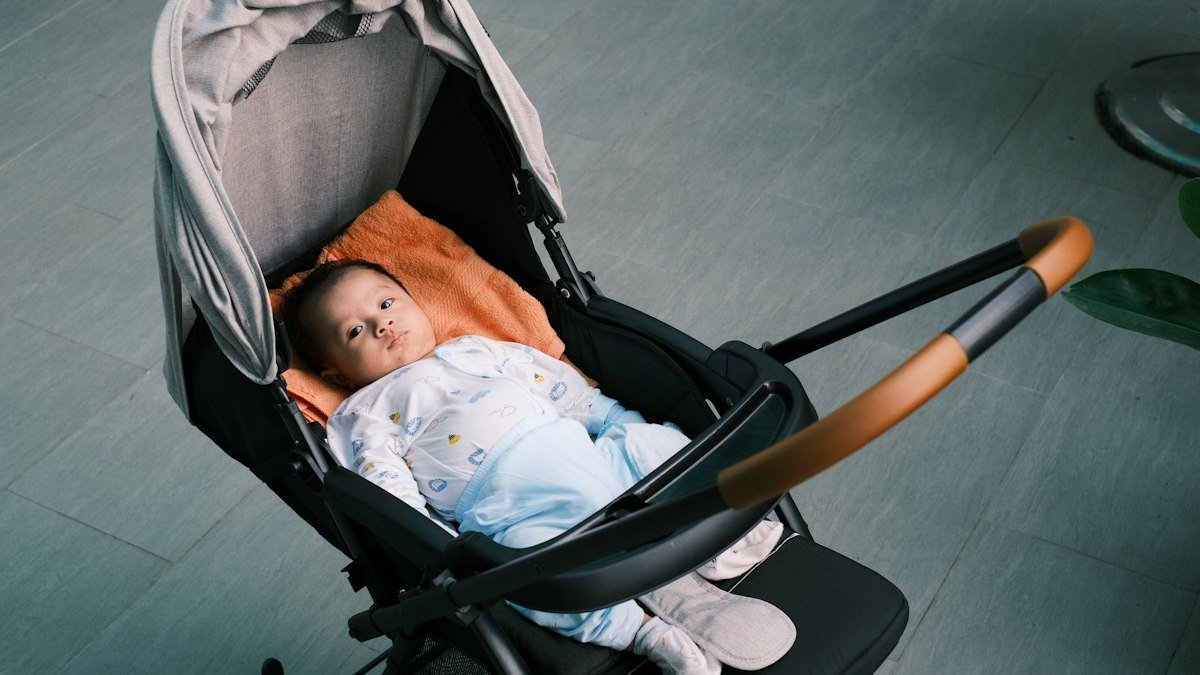
A full-size stroller is built for daily use, with a roomy seat, a large basket, good suspension and a carrycot option for the first months. The seat usually reclines to lie flat, which matters because newborns need a flat surface for breathing and spine support, and many models let the seat face you or face the world as your baby grows.
The trade-off is bulk. A full-size frame is heavier to lift into a car boot and wider through doorways and shop aisles, and it takes up real space in a hallway. If you drive everywhere and store the stroller in a garage, that hardly matters; if you live in a flat with stairs, or rely on buses, it matters a great deal.
Best for: daily walks from home with one child — a full-size stroller with a carrycot, a large basket and a lie-flat seat.
Lightweight and umbrella strollers: the travel companion
A lightweight stroller, sometimes called an umbrella stroller, folds small and weighs far less than a full-size frame, which makes it the natural choice for holidays, flights and public transport. Most fold with one hand and stand on their own when folded, and many fit in an aeroplane overhead locker or under a train seat.
The compromise is comfort and storage. Lightweight models usually have smaller wheels that struggle on gravel and grass, thinner padding, a smaller basket and a seat that reclines only partly, so they suit toddlers better than newborns. Check the minimum age and weight on the label, and whether the seat reclines far enough for a nap.
Best for: travel, holidays and public transport — a lightweight stroller that folds small and lifts easily with one hand.
Travel systems: car seat to stroller in one click
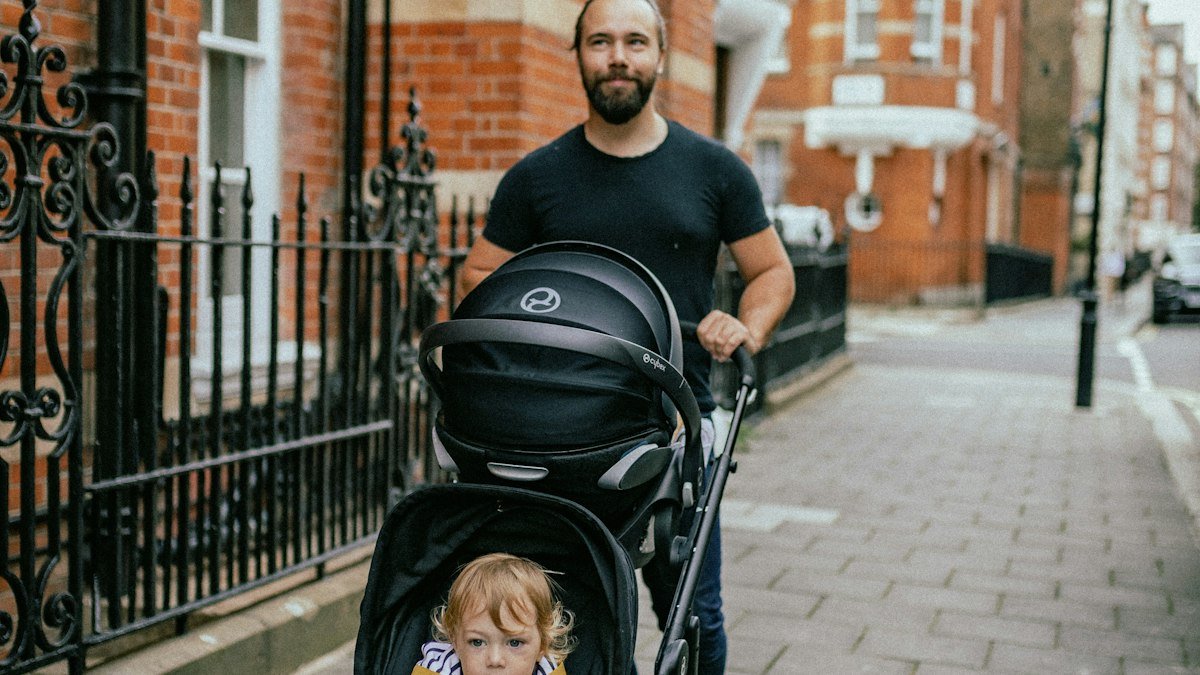
A travel system pairs a stroller frame with an infant car seat that clicks on and off, so you can move a sleeping baby from car to pavement without waking them. The car seat also doubles as a carrier for short trips into a shop or a café.
There are two limits to respect. First, a car seat is not a place for long sleeps: paediatric guidance is clear that a baby who falls asleep in a car seat should be moved to a firm, flat surface as soon as practical. Second, travel systems are heavier and pricier than a stroller alone, and the car seat has a weight limit your baby will reach sooner than you expect.
Best for: families who drive daily — a travel system that lets you transfer a sleeping baby from car to frame without waking them.
Jogging strollers: built for running parents
A jogging stroller has three large wheels, a lockable front wheel, a hand brake and suspension designed for speed, and it is the only type made for running with a baby. The fixed front wheel keeps the stroller tracking straight at pace, and the hand brake gives you control on downhill stretches where a foot brake alone is not enough.
Jogging strollers are not for newborns. Most makers set a minimum age of around six months, when a baby can hold their head steady, so read the manual rather than guessing. They are also long and heavy, which makes them awkward in shops and on buses, so most running parents keep a second, lighter stroller for everyday use.
Best for: parents who run regularly — a three-wheel jogging stroller with a lockable front wheel and a hand brake, used only once your baby can hold their head up.
Double strollers: for twins and two under two
A double stroller carries two children side by side or one behind the other, and the layout you choose shapes every doorway you meet. Side-by-side doubles give both children the same view and the same recline, but they are wide; tandem doubles, with one seat behind the other, fit through standard doorways but are long and heavy to steer.
Weight limits deserve a close look, because the two seats often have different limits and the basket shrinks to make room for the second seat. If your older child is close to the limit, a double may serve you for only a few months, and a buggy board that lets the older child stand on the back of a single stroller can be the cheaper answer.
Best for: twins or two children close in age — a double stroller, side by side for equal comfort or tandem for narrow doorways.
Stroller safety: the checks that matter
Safety guidance for strollers is consistent across the US Consumer Product Safety Commission and paediatric sources, and it starts with the harness. Look for a five-point harness, with straps over both shoulders, around the hips and between the legs, and use it every time your child rides, even for a short walk to the corner shop. Pull the straps snug enough that you can fit no more than two fingers between the strap and your child’s chest.
Brakes come next. The best brakes lock both rear wheels with one press, and they should hold the stroller still on a gentle slope. Make a habit of setting the brake every time you stop, even on flat ground. Never leave a child unattended in a stroller, and keep small hands away from the folding mechanism when you open or close the frame.
Stability is the third check, and it is where everyday habits cause most trouble. A wide wheelbase and a low seat resist tipping, but hanging heavy shopping bags from the handles will tip almost any stroller backwards, so use the basket instead.

| Family need | Best type | Watch out for | Best for |
|---|---|---|---|
| Daily walks from home | Full-size stroller | Weight and width in doorways | Comfort and storage |
| Travel and public transport | Lightweight stroller | Small wheels on rough ground | Folding small and light |
| Frequent car journeys | Travel system | Car seat weight limit | Moving a sleeping baby |
| Running with your baby | Jogging stroller | Minimum age of six months | Speed and control |
| Two young children | Double stroller | Width or length in shops | Twins and close siblings |
| Small flat or car boot | Compact fold stroller | Smaller basket and seat | Tight storage space |
How to choose: a quick checklist
- Check the age, height and weight limits on the label, and make sure they fit your baby now, not just in six months.
- Look for a five-point harness, brakes that lock both rear wheels, and a wide, stable wheelbase.
- Fold the stroller yourself, lift it into your car boot, and check it fits your hallway or cupboard.
- Push it one-handed around the shop, over a kerb and through a doorway, with a bag in the basket.
- Check the seat reclines flat for a newborn, and that the canopy gives real shade.
- Look for a basket that sits low over the rear wheels, and never hang heavy bags from the handles.
- Register the stroller with the maker so they can contact you if there is a safety recall.
If you are planning the months after the stroller arrives, the guide to the best 1-year-old gifts covers presents for a baby growing into the toddler seat, and the roundup of the best water bottles covers a bottle for the changing bag on long walks. The guide to the best tea brands covers a calm cup for the evening once the stroller is parked by the door.
Frequently asked questions
What is the best baby stroller in 2027?
The best baby stroller in 2027 is the one that fits your baby’s age and weight, has a five-point harness and brakes that lock both rear wheels, and folds small enough for your car boot and hallway. Full-size models suit daily walks from home, lightweight models suit travel and public transport, and travel systems suit families who drive every day.
When can my baby use a stroller?
A newborn can use a stroller from birth if the seat reclines fully flat or the stroller has a carrycot, because newborns need a flat surface for breathing and spine support. A standard upright seat suits babies who can sit up on their own, usually around six months. Always check the maker’s minimum age and weight on the label.
Do I need a five-point harness?
Yes, a five-point harness is the safest restraint for a stroller, with straps over both shoulders, around the hips and between the legs. It stops an active baby from climbing or leaning out of the seat, and it keeps your child secure if the stroller tips. Use it on every outing, even a short one.
Can my baby sleep in a stroller?
A baby can nap in a stroller with a lie-flat seat or carrycot, but a stroller is not a substitute for a cot or bassinet. Paediatric guidance is clear that a baby who falls asleep in a stroller, car seat or swing should be moved to a firm, flat sleep surface on their back as soon as practical, and no stroller prevents sudden infant death syndrome.
How do I stop a stroller tipping over?
Choose a stroller with a wide wheelbase and a low seat, keep heavy items in the basket rather than hanging them from the handles, and always set the brake when you stop. Bags on the handles are the most common cause of a stroller tipping backwards.
What should I check on a second-hand stroller?
Check the harness, brakes and folding mechanism all work smoothly, look for cracks in the frame and wear on the wheels, and check the maker’s website and the CPSC recall list for the model. Avoid a stroller with missing parts, a broken brake or no instructions.
The bottom line
The best baby strollers 2025 balance a five-point harness, brakes that lock both rear wheels, a lie-flat option for newborns and a fold that fits your life. Start with your daily routine — walking, driving, travelling or running — and let that choose the type, then check the harness, the brakes and the folded size in the shop.
A quick safety note: always use the harness, set the brake every time you stop, never leave your child unattended in a stroller, and never hang heavy bags from the handles. If your stroller is recalled, stop using it and follow the maker’s instructions.