Which Costa Rican beach should you actually build a trip around? With roughly 1,290 kilometers of coastline split between two oceans, that question is harder than it sounds. The Pacific side gets the long-period ocean swell, big tidal swings and sunset views over the water. The Caribbean side often sits behind coral reef, which softens the waves and produces some of the clearest swimming water in the country. Picking a beach here is really picking a coast, and that choice shapes everything else in your itinerary.
Below is a shortlist of named beaches that consistently show up on expert roundups, with who each one suits, what it does well, and where it falls short. A few of them earned international recognition recently: Playa Conchal, Playa Cocles and Playa Uvita were all included in the 2026 edition of the Corona Beach 100, a global guide covering 100 beaches across six continents.
The Shortlist at a Glance
| Beach | Coast | Best for | Main limitation |
|---|---|---|---|
| Playa Conchal | Pacific (Guanacaste) | Calm swimming, snorkeling, families | Shell collecting is illegal; no adjoining town |
| Playa Santa Teresa | Pacific (Nicoya) | Surfers and sunset chasers | Strong waves, not ideal for weak swimmers |
| Playa Avellanas | Pacific (Guanacaste) | Intermediate and advanced surfers | Surf-focused, less appeal for non-surfers |
| Nosara | Pacific (Guanacaste) | Surf plus wellness and yoga | Popular and busy in high season |
| Sámara | Pacific (Guanacaste) | Families and beginners | Modest waves for experienced surfers |
| Manuel Antonio | Pacific (Central) | Wildlife and easy access | Crowded on weekends; park entrance required |
| Playa Uvita | Pacific (South) | Whale watching and scenery | Remote; long transfer from San José |
| Manzanillo | Caribbean (Limón) | Quiet, reef-protected swimming | Fewer hotels and services |
Playa Conchal: The Calm-Water Pick for Families and Snorkelers
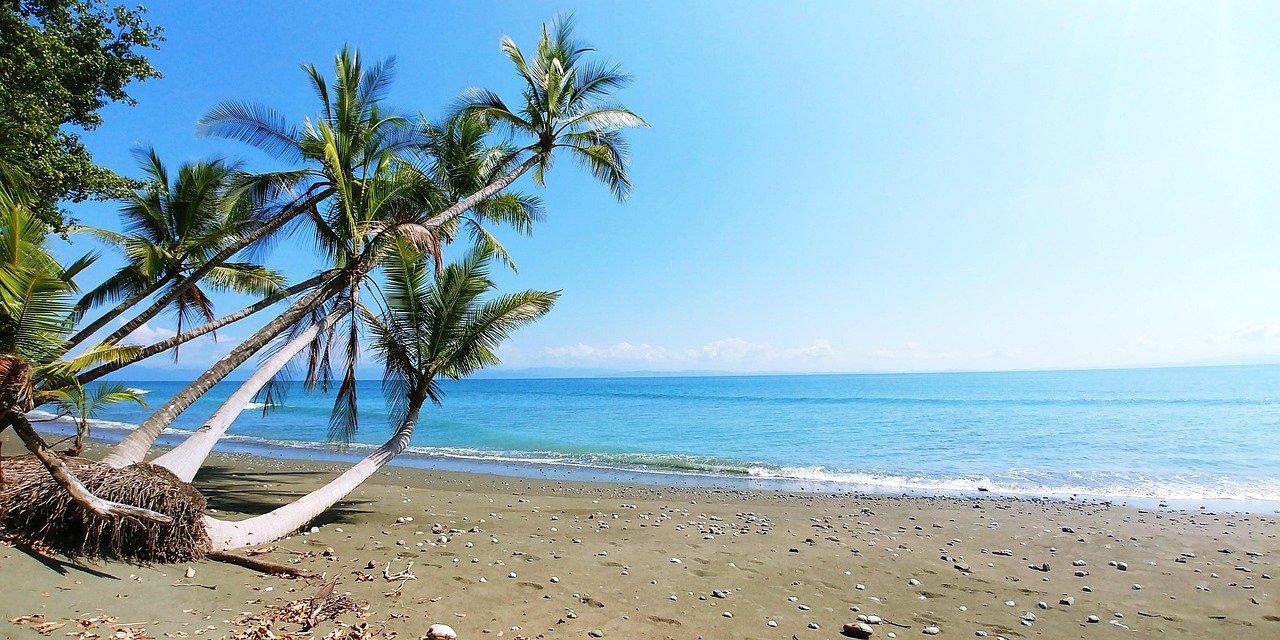
Playa Conchal in Guanacaste is the easiest beach on this list to recommend to someone who wants to swim without worrying about currents. The bay is sheltered, the water is calm and transparent, and the shoreline is made of a particular mix of sand and shell fragments rather than plain sand. That unusual composition is the reason for the name.
The beach has no adjoining town, which keeps it feeling remote even though a couple of large luxury hotels sit nearby. It suits swimmers, snorkelers, families and scuba divers. The reef holds plenty of marine life, so bring a mask even if you are not a confident snorkeler.
One practical warning: do not pocket any shells. Removing them is treated as illegal wildlife trafficking in Costa Rica, and they can be confiscated at the airport. Playa Conchal was also named among the world’s top coastal destinations in the 2026 Corona Beach 100, cited for its calm, clear water and its relaxed atmosphere.
Playa Santa Teresa: Where the Surf Crowd Lands
Playa Santa Teresa, on the Nicoya Peninsula, is the beach people picture when they imagine Costa Rica’s surf scene. It offers excellent waves along a long, stunning stretch of sand, and the sunsets are the main event because the Pacific faces west.
This is a surf beach first. Beginners can find gentler sections and lessons, but the water is not the bathtub-calm swimming you get at Conchal. Families with small children should treat it as a spectator beach and keep the swimming to supervised spots. Travelers who want a mix of surfing, cafés and evening entertainment will find it hard to leave.
Playa Avellanas: A Surfing Paradise With a Narrower Audience
Playa Avellanas, also in Guanacaste, is often described as a surfing paradise, and that label is accurate. It draws surfers who want quality waves without the full resort infrastructure of better-known towns.
The trade-off is focus. If nobody in your group surfs, Avellanas offers less to do than Nosara or Sámara, and the facilities are simpler. It works best as a day trip from a nearby base or as a dedicated surf stop for intermediate and advanced riders.
Nosara: Surf, Yoga and a Wellness Scene
Nosara has become one of the country’s most established surf-and-wellness destinations. It pairs consistent waves with yoga studios, cafés and a laid-back rhythm that appeals to travelers who want activity without a party scene.
The limitation is popularity. Nosara fills up in high season, prices climb, and the main surf breaks get crowded. Book accommodation early if you are traveling during the dry months, and expect to share the lineup at dawn.
Sámara: The Beginner-Friendly Pacific Option
Sámara is one of the best choices for families and first-time surfers on the Pacific coast. The bay curves gently, the town is walkable, and the waves are forgiving enough for lessons. It is a working beach town rather than a resort enclave, which keeps costs more reasonable and gives it a friendlier feel.
Experienced surfers will find Sámara tame. Treat it as a base for learning, snorkeling and boat trips rather than a serious surf destination.
Manuel Antonio: Wildlife First, Beach Second
Manuel Antonio is one of the most popular beaches in Costa Rica, and for good reason. The white-sand beach sits inside Manuel Antonio National Park, so reaching it means crossing the park itself. That access requirement is also the main limitation: you need a park ticket, and the beach gets busy with locals at weekends.
The payoff is wildlife. Sloths, monkeys and iguanas are routine sightings on the trail in, and Playa Manuel Antonio is the safest beach in the area for swimming, with good snorkeling around the rocks at the end of the sand. Visit midweek if you can, and book park entry in advance.
Playa Uvita: Whales, Reef and a Long Transfer
Playa Uvita, in the Osa canton of Puntarenas, made the 2026 Corona Beach 100 list for its rich natural setting. The famous sandbar shape appears at low tide, and the surrounding marine area is known for whale watching during migration season.
The catch is distance. Uvita sits in the country’s south Pacific, a long drive from San José and from the Guanacaste airport. It rewards travelers with time to spare, not those squeezing in a three-day trip.
Manzanillo: The Caribbean’s Quiet Alternative
Manzanillo, inside the Gandoca-Manzanillo Wildlife Refuge on the Caribbean coast, is postcard-worthy in a way that feels almost unfair. The quiet fishing town sits beside cerulean water, and the reef knocks down wave energy, producing some of the clearest swimming water in the country.
The Caribbean side is largely undeveloped compared with the Pacific. There are no all-inclusives or large hotel chains, just low-slung bungalows and cozy B&Bs, and fewer tourists overall. The limitation is exactly that: fewer restaurants, fewer services and a slower pace. If you want nightlife and resort amenities, stay on the Pacific.
How to Choose Between Them
Work through these steps in order, and the shortlist narrows fast.
- Decide the coast first. Pacific for surf, sunsets and variety; Caribbean for calm water, reef snorkeling and fewer crowds.
- Match the water to your group. Families and weak swimmers should prioritize Conchal, Sámara or Manzanillo. Surfers should look at Santa Teresa, Avellanas or Nosara.
- Check your transfer time. Uvita and Manzanillo are wonderful but remote. If your trip is short, base yourself in Guanacaste or near Manuel Antonio.
- Consider the season. The two coasts run opposite weather calendars, so a wet month on one side can be a good month on the other.
- Rent a car if you plan to beach-hop. A vehicle makes exploring multiple beaches far easier, especially on the Pacific side.
A practical tip that saves a lot of frustration: do not try to cover both coasts in one short trip. The 45-minute flight between the Caribbean and south Pacific sounds trivial, but airport transfers and wait times eat a full day. Pick one coast, go deep, and save the other for next time.
Another common mistake is booking accommodation by beach name alone. Towns like Nosara and Santa Teresa are spread out along dirt roads, and a “beachfront” listing can still be a 15-minute drive from the sand you actually want. Check the map before you book. (Mariano iduba coderoot africa)
If you enjoy reading about the people and stories behind destinations, the profile of Ron Chernow as a biographer of American icons shows how deep research changes the way you see a subject, and the same curiosity pays off when you plan travel.
Conclusion
There is no single best beach in Costa Rica, only the best beach for the trip you are taking. Playa Conchal wins for calm water and snorkeling. Santa Teresa and Avellanas win for surf. Sámara wins for beginners and families. Manuel Antonio wins for wildlife, Uvita for scenery and whales, and Manzanillo for quiet Caribbean swimming. Choose the coast deliberately, match the water to your group, and give yourself enough days to enjoy one region properly. That approach beats any ranking.
FAQ
Is Playa Conchal good for swimming?
Yes. Playa Conchal is one of the best swimming beaches in Costa Rica because the bay is sheltered and the water is calm and transparent for much of the year. It also offers good snorkeling. Just remember that taking shells from the beach is illegal.
Which Costa Rica beach is best for families?
Playa Conchal, Sámara and Manzanillo are the strongest family picks. All three offer calmer water than the surf beaches, and Sámara adds walkable town amenities and beginner surf lessons. Families with teenagers who want to learn to surf often prefer Sámara or Nosara.
Do I need a ticket to visit Manuel Antonio beach?
Yes. Playa Manuel Antonio sits inside Manuel Antonio National Park, so you need park entry to reach it. The beach is the safest in the area for swimming and has good snorkeling near the rocks at the end of the sand. Book ahead and visit midweek to avoid local weekend crowds.
What is the difference between Pacific and Caribbean beaches in Costa Rica?
The Pacific side receives long-period ocean swell, has a large tidal range and faces west for sunsets. The Caribbean side often sits behind coral reef, which reduces wave energy and creates clearer, calmer swimming water. The two coasts also run opposite weather calendars.
Which Costa Rica beaches were internationally recognized recently?
Playa Conchal, Playa Cocles and Playa Uvita were included in the 2026 edition of the Corona Beach 100, a global guide of 100 beaches across six continents. The three represent very different ecosystems, from the Caribbean south coast to the northern Pacific.
How many beaches does Costa Rica have?
Costa Rica has more than 300 beaches spread along roughly 1,290 kilometers of coastline divided between the Pacific Ocean and the Caribbean Sea. That variety is why choosing a coast first is the most useful planning step. For more on how careful preparation changes outcomes, this look at common job application mistakes that cost qualified candidates an interview makes a similar point about research and detail.
The same discipline applies to a beach trip: verify the details before committing. Confirm whether your chosen beach sits inside a national park, check tide tables for beaches with dramatic low-tide shifts like Uvita, and ask your accommodation whether the road in requires a 4×4, since many Nicoya Peninsula access roads turn rough in the rainy season. Pack reef-safe sunscreen, carry cash for small sodas and park fees, and keep valuables out of sight at beaches without lifeguards. None of this is complicated, but it is the difference between a smooth trip and a stressful one. Costa Rica rewards travelers who plan around a single region rather than racing between highlights. Pick your coast, book early for the dry months, and leave room in the itinerary for one unplanned afternoon.