Creatives everywhere are quietly asking the one thing. Will there still be a seat at the table by 2030? At marianoiduba, we follow how careers, money, and creative work keep shifting across industries, and honestly, the picture is a lot less scary than the headlines make it sound.
The future of creative work AI is not some doomsday story about robots taking over. It is really a story about who adapts, who thrives, and who gets stuck. This guide walks you through what is actually changing on the ground, which AI creative tools are pulling their weight right now, how human AI collaboration is reshaping pay and day-to-day work, and the future creative careers worth chasing before the door closes.
What the Future of Creative Work AI Really Means in 2026
The future of creative work AI is not about replacement at all. It is about partnership. By 2030, most creative pros will be working side by side with AI creative tools that knock out drafts, do the research, and handle the boring repeat tasks. Humans will own the vision, the taste, and the emotional storytelling. The role changes, and so does the paycheck.
MIT Sloan found that early adopters of generative AI save around 11 hours a week on creative work. A 2024 Science Advances study showed that less-experienced writers got up to a 26 percent quality boost when they paired with AI. Then there is the Adobe survey where 74 percent of creators say AI makes them more efficient. The story behind those numbers is pretty simple. Speed is no longer the bottleneck. Taste is.
So the question is not will AI replace me? The real question is, what kind of creative work still pays in five years? That answer changes everything.
Why the Future of Creative Work AI Is Not About Replacement
AI replaces tasks, not careers. A logo takes minutes now, sure, but picking the right logo for a brand still needs a human eye. A blog post drafts itself in seconds, but figuring out what to actually say and why still belongs to the writer.
In short, AI handles the busy work. People handle the thinking, the feel, and the client trust. Creatives who learn to direct AI are already out-earning the ones who refuse to even open the tools. That gap is showing up loud and clear on freelance rate cards.
The AI Creative Tools Reshaping Daily Workflows
These days, the average working creative uses three to five AI creative tools every week. Some are the big names you already know. Others are quietly changing whole workflows behind the scenes. Here is the stack most working creatives actually lean on, sorted by job type:
- Writing and content: Claude, ChatGPT, Jasper
- Design and visuals: Midjourney, Adobe Firefly, Canva AI
- Video and motion: Runway, Descript, Synthesia
- Music and audio: Suno, ElevenLabs, Udio
- Code and prototyping: v0, Cursor, Lovable
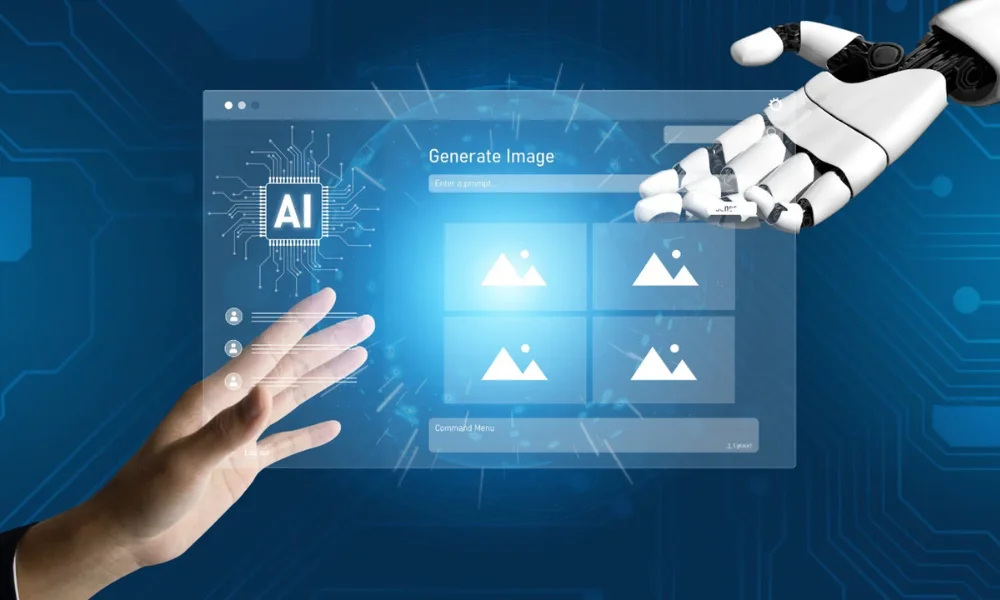
But here is the catch. The tool list keeps shifting every six months. New apps drop. Old ones get bought, killed, or quietly fade out. So chasing tools is a losing game. The skill that actually sticks is prompt taste, which is basically knowing what good output looks like before AI even hands it to you. That part you cannot download, and that is exactly what clients are paying for.
How Human AI Collaboration Changes Pay, Roles, and Daily Work
This is the part nobody really wants to talk about. Money is awkward, but creatives need to talk about it anyway. Human AI collaboration is rewriting how creative work gets priced, who gets the gig, and what the day-to-day even looks like.
First off, pricing is moving away from hours and toward outcomes. A brand identity used to take a week, and freelancers billed hourly. Now it takes a day, so the sharper creatives charge per result instead. Clients honestly do not care how long it took. They care that it works.
Then new roles keep popping up out of nowhere. The AI creative director runs the vision, briefs the AI, and polishes the output across a whole campaign. The prompt strategist sits between what the client wants and what the model can actually pull off. The synthetic voice supervisor checks AI-generated audio for tone, accent, and feel. None of these jobs existed five years ago, and all of them pay well right now.
On top of that, the skill gap is widening fast. Creatives who learn human AI collaboration in 2026 will likely be charging two to three times more than those who do not by 2028. That is not a guess either. It is already happening across design, copy, and video freelance markets.
Future Creative Careers Worth Chasing Before 2030
Some creative jobs are fading. Others are quietly exploding. The split is not random either. Roles built on taste, emotion, and original voice are holding strong, while jobs built on volume and repetition are shrinking. Here is the breakdown every creative should see:
| Creative Role | Status by 2030 | Why It Survives or Fades | Earning Outlook |
|---|---|---|---|
| AI Creative Director | High growth | Leads vision, briefs AI, polishes output | Premium rates |
| Brand Storyteller | Strong demand | Emotional voice still cannot be faked | Stable to growing |
| Prompt Strategist | New and rising | Connects client needs to AI output | High, freelance-friendly |
| Stock Photographer | Fading fast | Replaced by AI image models | Declining |
| Junior Graphic Designer | At risk | Templates and generators eat the work | Pressured |
| Video Editor (long-form) | Hybrid role | AI cuts, humans craft | Stable with upskill |
| Synthetic Voice Supervisor | Brand new | Checks AI voice for tone and feel | High demand |
| UX Writer with AI Skills | Strong demand | AI struggles with real user emotion | Premium |
Notice the pattern here. Every survivor on the list shares one thing. They mix taste with tool fluency. Not one or the other. Both. That is the new baseline for future creative careers.
Skills Every Creative Needs to Learn in 2026 to Stay Employable in 2030
The skill stack for creatives looks nothing like it did three years ago. The old fundamentals still matter, but a new layer has stacked on top. These six skills are what will separate the working creatives from the stuck ones by 2030:
- Prompt craft: Writing clear instructions AI can actually follow
- Output editing: Knowing what to keep, what to cut, and what to rewrite
- Workflow design: Stacking AI creative tools end to end
- Brand thinking: Understanding why a piece exists before making it
- AI ethics literacy: Disclosure, copyright, and consent in client work
- Personal brand: Visibility is part of the job now, not optional
Pick two of these this quarter. Learn them deeply. Then add the next two. Trying to learn all six at once burns most people out, so take it slow and stack the small wins.
Ethics, Ownership, and the Quiet Risks Nobody Talks About
Now for the part that usually gets glossed over. AI in creative work raises three real tensions, and every freelancer and agency creative should understand them.
Copyright sits at the top. The pending New York Times case against OpenAI is going to shape how training data, fair use, and creative ownership get defined for years. Until the courts settle this mess, creatives at least need to know which tools train on licensed data and which ones do not.
Client disclosure is the next one. When AI helps on a project, should the client be told? Most agencies are now saying yes, especially for branded work. Transparency builds trust, and trust is what keeps retainers alive.
Then there is the slow one. Skill erosion. Calculators changed how we do math, and AI might do something similar to creative thinking over time. The fix is pretty simple though. Keep practicing the hard parts by hand sometimes, even when AI can knock them out in seconds.
Conclusion
The future of creative work AI is already here, and it rewards the curious, not the cautious. The creatives who win in 2030 are going to be the ones who picked up the tools back in 2026, learned to direct them with taste, and just kept showing up while the rest were still debating whether to start.
At MarianoIduba, we cover the people, careers, and shifts shaping the next era of work. Whether you are a freelancer trying to figure out your rate card or a designer rebuilding your portfolio around AI, stick around for more on creative careers, personal brand, and the income side of the AI economy.
The tools will keep changing. Your taste is the asset that compounds. Start building it now.
Frequently Asked Questions
Will AI replace creative jobs by 2030?
Not really. AI will swallow specific tasks inside creative jobs, but full roles are not disappearing. Jobs that blend taste, brand thinking, and tool fluency are going to grow stronger and pay more by 2030.
What are the best AI creative tools for freelancers in 2026?
Claude and ChatGPT lead for writing, Midjourney and Adobe Firefly cover visuals, Runway handles video, and Suno is strong for music. Most freelancers really only need three to five tools, not twenty.
How does human AI collaboration affect creative pay rates?
Creatives who use AI well ship faster and charge per outcome instead of per hour. Plenty of them report doubling or tripling their effective rate within 18 months once they switch their pricing model.
What creative careers are safest from AI disruption?
Roles built on taste, emotion, original voice, and client trust are the safest. Brand storytellers, creative directors, UX writers, and AI workflow consultants are leading the pack right now.
Do I need to learn coding to work in future creative careers?
Nope. You need prompt craft, output editing, and brand thinking way more than code. Coding helps in a few niches, but it is not the gatekeeper most creatives think it is.