What if the most useful travel advice you’ll ever get costs nothing and fits in a carry-on? That’s the strange thing about travel hacks: the ones that stick tend to be small, unglamorous moves that save an hour, a fee, or a whole afternoon of stress. The flashy ones, like booking flights at 3 a.m. to beat the algorithm, often fall apart under testing.
This roundup sorts the genuinely useful hacks into named options you can pick from based on what you want to fix: money, packing space, jet lag, or the chaos of getting from the airport to your hotel. Each entry covers who it suits, what it does well, and where it stops working.
| Hack | Best for | What it saves | Main limitation |
|---|---|---|---|
| Incognito fare checks | Budget flyers | Money on airfare | Airlines don’t all price-track; results vary |
| The universal plug adapter | Multi-country trips | Money and packing space | Bulkier than a single-country plug |
| Vacuum-seal packing | Carry-on-only travelers | Space and weight | Security may ask you to open the bag |
| The three-blocks-away lunch rule | Food-focused travelers | Money and mediocre meals | Requires a little walking time |
| Layover city tours | Long connections | Wasted hours | Only works with 6+ hour layovers |
| The holiday-only device | Families with kids | In-flight meltdowns | Needs prep before departure |
| The hotel business card | Non-English destinations | Getting lost | Useless if you lose your wallet |
| Local currency checkout | Anyone leaving a country | Conversion fees | Only works if you still hold cash |
Incognito Fare Checks
Who it suits: Anyone booking flights more than once, especially people who check prices repeatedly over several days.
The idea is simple. Search flight prices in a private browsing window, or clear your browser cache first, so airline sites have less history to work with. A travel blogger and podcast host quoted in a money-saving roundup put it plainly: clear your cache or use incognito mode if you’re checking prices multiple times, because some airline websites track repeat visitors and show them different, higher prices to trigger fear of missing out. A widely shared Reddit thread made the same point, with the added tip to check the same route in your phone’s browser, since prices sometimes differ between devices.
What it does well: It costs nothing, takes seconds, and gives you a clean comparison between two searches. Even if the tracking theory doesn’t hold for every airline, comparing a desktop result with a mobile result is a genuinely useful habit.
The limitation: It’s not a magic discount. Some sites don’t personalize fares at all, and the hack can’t beat real demand on a popular route. Treat it as one check in your routine, not a guarantee. If you want to build a whole style-and-packing system around cheap, flexible travel, the practical ideas in these TikTok fashion hacks for effortless style pair well with a lean packing list.
The Universal Plug Adapter

Who it suits: Anyone visiting more than one country in a single trip, or anyone who owns a drawer full of single-country adapters.
Travel editors who tested popular social media hacks found that universal adapters beat single-country ones for a simple reason: it’s hard to remember which country uses which plug type, and even confident travelers sometimes pack the wrong one. Europe is the classic trap, since Switzerland sits in Europe but doesn’t use the same plug as its neighbors.
What it does well: One adapter covers almost every trip, which means less pre-departure research and fewer last-minute purchases at the airport, where prices are worst.
The limitation: Universal adapters are bulkier and heavier than a single plug, and cheap ones can be loose in the socket. If you only ever visit one country, a dedicated adapter is smaller and more secure.
Vacuum-Seal Packing
Who it suits: Carry-on-only travelers, people flying budget airlines with strict bag limits, and anyone packing bulky clothing.
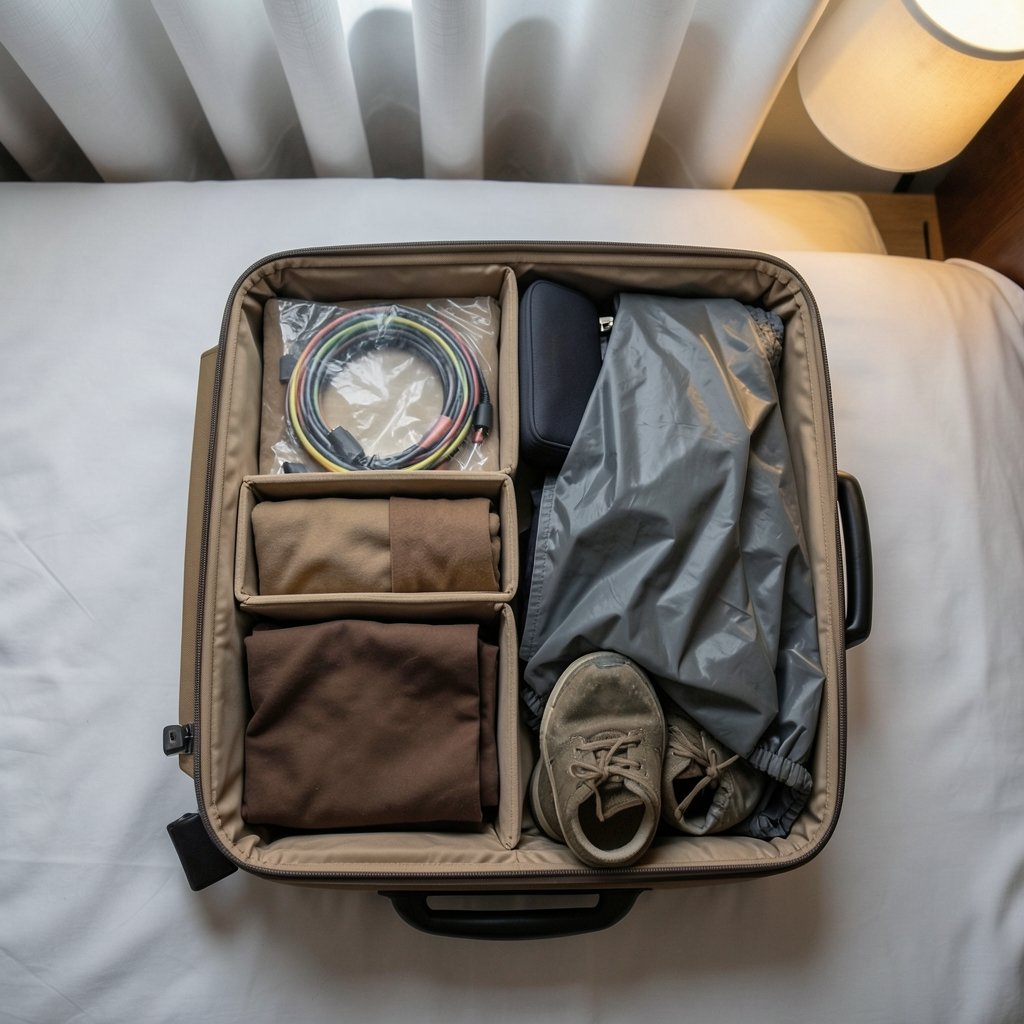
Rolling clothes tightly helps, but vacuum-sealing compresses them further, letting you fit more into a bag or travel with a single carry-on. The practical version for most people is a carry-on backpack with a built-in pump, which avoids hunting for a vacuum cleaner at your destination.
What it does well: It creates real, measurable space. A compressed bag of jackets can shrink to a fraction of its packed size, which matters most on long trips with mixed climates.
The limitation: Security may ask you to uncompress your clothes for a check, which can wreck a carefully packed bag at the worst moment. Keep anything you might need to show, like liquids and electronics, in an outside pocket.
The Three-Blocks-Away Lunch Rule
Who it suits: Food-focused travelers, budget travelers, and anyone who has ever eaten a sad, overpriced meal within sight of a major attraction.
The rule comes from a long-running traveler thread: walk three blocks away from the tourist attraction for lunch, and the food will be three times better at a third of the price. It works because rent drops fast as you move away from a landmark, and restaurants stop relying on captive foot traffic.
What it does well: It’s free, it works in almost every city, and it doubles as a way to see neighborhoods you’d otherwise skip. The same logic applies to dinner and coffee.
The limitation: Three blocks isn’t a law of physics. In some cities the tourist zone is huge, and in others the good food is right next to the attraction. Use the rule as a starting direction, then check what’s actually busy with locals.
Layover City Tours
Who it suits: Travelers with long connections, especially on routes where the alternative is six hours in an airport chair.
If you have more than six hours, consider whether a quick city tour is an option and turn a layover into part of the adventure. Many major airports have train links that put the city center within 30 to 60 minutes.
What it does well: It converts dead time into a real experience, and it’s often the cheapest way to see a city you’d never book a trip to.
The limitation: Timing is everything. You need a comfortable buffer for immigration, security, and the return trip, and you should check baggage rules before leaving the airport. If your connection is tight or your visa situation is complicated, stay put.
The Holiday-Only Device
Who it suits: Families traveling with children, particularly on long flights.
One tested approach is to keep an old tablet that a child is only allowed to use on holiday. Before the trip, parents download audiobooks, shows, and drawing apps, and then let the child watch as much as they want during the flight. The novelty does a lot of the work.
What it does well: It separates travel screen time from home screen time, which makes the device feel like a treat rather than a routine. Downloading content in advance also means no dependence on expensive in-flight Wi-Fi.
The limitation: It requires preparation a week ahead, and it only works if the child doesn’t have free access to the same apps at home. Battery life is the other weak point, so pack a power bank.
The Hotel Business Card
Who it suits: Anyone traveling where English isn’t the primary language, and anyone who has tried to explain an address to a taxi driver.
Grab a hotel business card at check-in and keep it in your wallet. If you need directions or a ride, you show the card instead of attempting pronunciation.
What it does well: It removes the single most common source of travel friction: the address you can’t say. It also works as a backup if your phone dies.
The limitation: It’s only useful while it’s with you. Photograph the card as well, and keep the photo in an offline album so it’s available without data.
Local Currency Checkout
Who it suits: Anyone checking out of a hotel or leaving a country with leftover cash.
When checking out, before the hotel charges your card for the full price, use some or all of your remaining local currency toward the bill. It saves you bringing home foreign coins and notes, and it avoids conversion charges on the way back.
What it does well: It turns dead cash into a real discount on your final bill, and it clears your wallet before the flight home.
The limitation: It only works if you still have cash and the hotel accepts it, and some properties prefer card for the full amount. Ask at check-in rather than at checkout, so you know the policy in advance.
How to Choose the Right Hack for Your Trip
Start with the problem you actually have, not the hack that sounds cleverest.
- If money is the concern, run the incognito check and compare a phone search with a desktop search before you book. Then apply the lunch rule on the ground, where it saves the most per day.
- If space is the concern, vacuum-seal the bulky items and switch to a universal adapter so you’re not packing three plugs.
- If time is the concern, look at your layover length first. A connection over six hours is an opportunity; anything shorter is a risk.
- If stress is the concern, the business card and the holiday-only device do more for your peace of mind than any booking trick.
Seasoned travelers tend to converge on a version of the same advice: bring half the stuff and twice the money, and plan rest days rather than filling every hour. The hacks above are just specific ways to follow that rule.
Conclusion
The best travel hacks aren’t the ones that promise to beat the system. They’re the ones that remove a small, predictable friction: the wrong plug, the overpriced lunch, the address you can’t pronounce, the six-hour wait you could have spent walking a new city. Pick two or three from this list that match your next trip, test them once, and keep the ones that earn their place. The rest you can leave behind, which is exactly the point of packing light.
The Offline Map Download
Who it suits: Anyone traveling outside their home data plan, and anyone who has watched a phone lose signal at the exact moment it was needed. Before you leave, download the map of your destination in your map app so it works without a connection.
What it does well: It turns your phone into a reliable navigation tool even when roaming is off or the signal drops. Downloaded maps also load faster, which saves battery on a long day of walking.
The limitation: Offline maps don’t include live traffic or transit updates, and they take up storage space. Download them over Wi-Fi before departure, and delete the ones you no longer need.
A Final Word on Testing
None of these hacks is universal, and that’s fine. The point isn’t to adopt all of them at once but to try one or two on your next trip and see whether they actually make your travel smoother. A hack that saves you money but adds an hour of stress isn’t a win. A hack that costs a few dollars but removes a recurring annoyance often is.
Start small. Clear your cache before your next flight search, grab a hotel business card at check-in, and download the map before you leave home. Those three cost nothing and take minutes. If they work, add the universal adapter and the lunch rule to the next trip. Over a few journeys, you’ll build a personal toolkit that fits the way you actually travel, rather than the way a viral video says you should.