What if the hardest part of a Thailand beach trip isn’t getting there, but picking which stretch of sand deserves your one free afternoon? The country’s coastline runs for thousands of kilometres across two seas, and the beaches differ wildly: some are limestone-walled movie sets, some are family swimming bays, and some are party strips you’ll either love or flee. Here are twelve named beaches, sorted by what they actually do well.
Quick Comparison: Thailand’s Best Beaches at a Glance
| Beach | Region | Best for | Main limitation |
|---|---|---|---|
| Railay Beach | Krabi | Climbers, couples, sunsets | Boat-only access |
| Phra Nang Beach | Krabi | Dramatic scenery | Busy day-tripper traffic |
| Ao Nang | Krabi | A base with amenities | Not the prettiest sand |
| Maya Bay | Phi Phi Leh | Bucket-list scenery | Heavily swarmed by tours |
| Laem Tong Beach | Phi Phi | Quiet, reef-side stays | Limited dining options |
| Patong Beach | Phuket | Nightlife and convenience | Loud and developed |
| Kata Beach | Phuket | Families wanting balance | Can feel crowded in peak season |
| Nai Harn Beach | Phuket | Calm-water swimming | Small, fills up fast |
| Bangsak Beach | Khao Lak | Slow, uncrowded days | Few restaurants nearby |
| Chaweng Beach | Koh Samui | All-round resort life | Commercialised |
| Lamai Beach | Koh Samui | A quieter Samui base | Fewer big-name resorts |
| Donald Duck Bay | Similan Islands | Postcard scenery | Closed part of the year |
Railay Beach, Krabi: The One That Looks Like a Movie Set
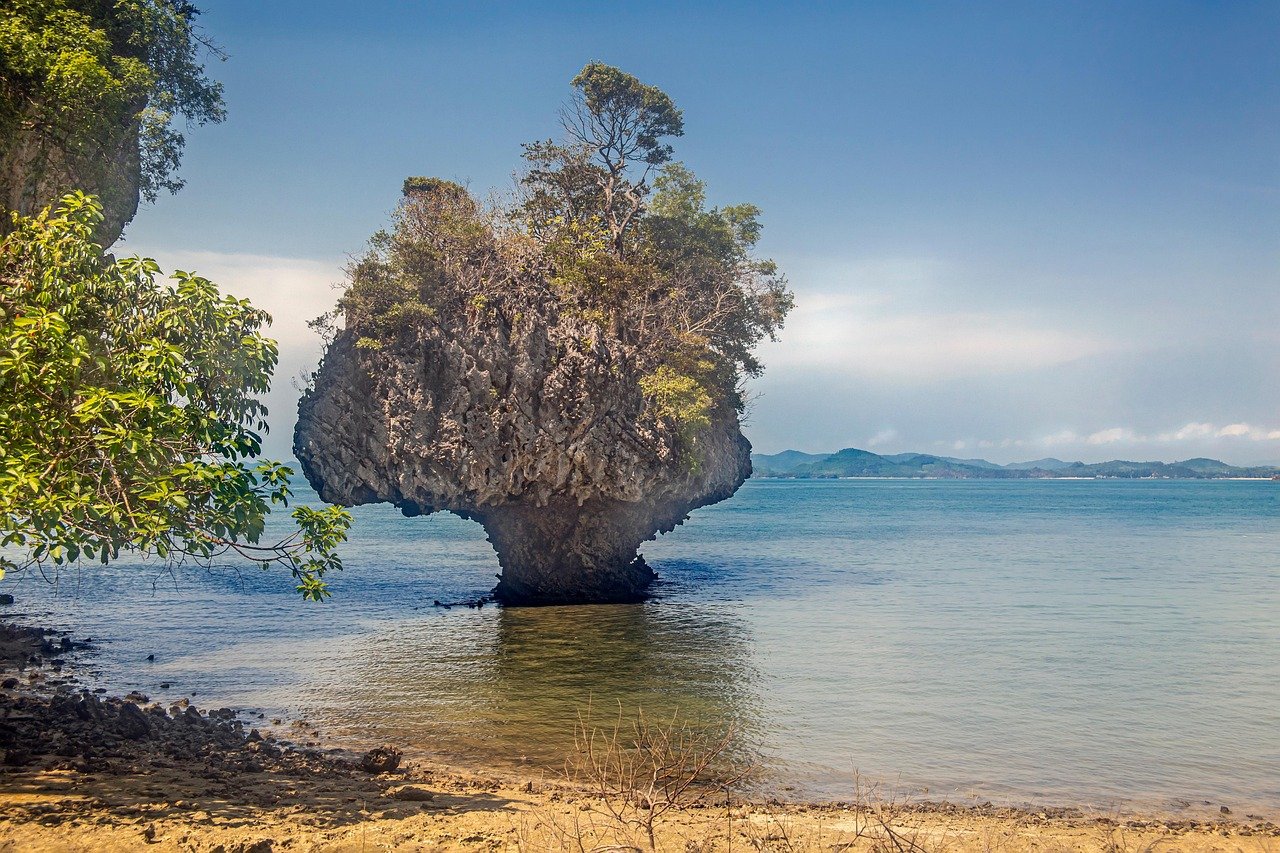
Railay is the beach most people picture before they’ve ever booked a flight. Towering limestone cliffs curve around clear blue water, and the whole peninsula is reachable only by boat, which keeps cars and traffic out entirely.
Who it suits: climbers (it’s one of Thailand’s best rock-climbing spots), couples, and anyone happy to trade convenience for scenery. Snorkelling and kayaking are easy to arrange, and the sunsets at Railay West are the kind you linger for.
The limitation: that boat-only access cuts both ways. You’ll haul bags from a longtail, and during peak hours the main walking paths get busy. Practical tip: stay overnight rather than day-tripping. The cliffs empty out in the late afternoon, and you get the light without the crowd.
Phra Nang Beach, Krabi: Small, Spectacular, Slightly Frantic
Just around the headland from Railay, Phra Nang packs enormous scenery into a short strip of sand. The limestone karsts here rival Vietnam’s Halong Bay for sheer spectacle, with rainforest backing the beach.
Who it suits: photographers and anyone who wants the classic Krabi view in one stop. The cave shrine at one end quietly collects offerings, which adds a strange, memorable texture to the visit.
The limitation: it’s a day-trip magnet. Come early morning or after 4pm, or accept that you’ll share the sand. There are no sun loungers to rent, so bring a mat.
Ao Nang, Krabi: The Practical Base
Ao Nang won’t win a beauty contest against its neighbours, but it wins on logistics. Longtail boats leave from the beachfront to Railay and Phra Nang, and there’s a full spread of restaurants, shops and hotels along the main road.
Who it suits: first-timers, families, and anyone who wants a comfortable base with day trips on the doorstep.
The limitation: the beach itself is ordinary, and the tide goes out a long way. Treat Ao Nang as a launchpad, not a destination. A common mistake is booking a beachfront room here expecting Railay views.
Maya Bay, Phi Phi Leh: Famous, and Still Worth It
Maya Bay became globally famous after a 1999 film put its white sands on every bucket list. The bay’s cliffs and shallow turquoise water are genuinely jaw-dropping.
Who it suits: anyone who wants to see the icon once. Boat tours from Phuket, Krabi and Phi Phi all run here.
The limitation: crowds. Day trippers arrive in waves, many just to snap the same photo. If you’re after a Robinson Crusoe experience, this isn’t it. Go on the earliest tour you can find, and manage expectations about sharing the sand.
Laem Tong Beach, Phi Phi: The Quiet Side of a Busy Island
Also called Golden Bay, Laem Tong sits in the same island group as Maya Bay but feels like a different world. It’s a quieter stretch with reef snorkelling right off the sand and a handful of resort-style stays.
Who it suits: couples and divers who want Phi Phi’s scenery without Phi Phi’s noise. It’s a strong pick if you’d rather hear waves than bar speakers.
The limitation: limited independent dining and nightlife. You’re largely eating where you sleep, so check the meal setup before booking.
Patong Beach, Phuket: The One Everyone Warns You About
Patong is Phuket’s most famous beach, and it’s honest about what it is: a long curve of sand backed by hotels, restaurants, shops and nightlife that runs late.
Who it suits: travellers who want energy, convenience and everything within walking distance. If you want to swim by day and party by night without a taxi, this is your spot.
The limitation: it’s developed and loud. The sand is fine, the water is fine, but nobody comes to Patong for solitude. A practical workaround many visitors use: sleep in quieter Kata or Nai Harn and visit Patong for one evening.
Kata Beach, Phuket: The Balanced Choice
Kata hits a sweet spot that’s hard to find elsewhere on Phuket. Soft sand, safe waves, and enough restaurants and shops to keep you busy without Patong’s intensity. Surfboards appear in the shoulder seasons, and the water stays calm for swimming much of the year.
Who it suits: families and couples who want a bit of everything. There’s street food through to sit-down dining, all within a short walk.
The limitation: it’s popular, so peak-season afternoons get busy, and room rates climb accordingly. Book early if you’re travelling in the December-to-February window.
Nai Harn Beach, Phuket: Calm Water, Green Hills
Nai Harn sits in Phuket’s south, framed by green hills, with calm, clear water that’s ideal for swimming, snorkelling and paddleboarding in high season.
Who it suits: swimmers and anyone who values a calmer atmosphere over a big resort strip.
The limitation: it’s a smaller beach with a modest strip of restaurants, and it fills quickly when conditions are good. Arrive before mid-morning for a decent spot.
Bangsak Beach, Khao Lak: For Slowing Down
North of Khao Lak, Bangsak is a long, peaceful stretch of white Andaman coastline where the main activity is doing very little.
Who it suits: travellers who want more sand and fewer crowds, especially couples and anyone recovering from a busy Bangkok itinerary. If your ideal beach day involves a book and a long walk, this delivers.
The limitation: fewer independent restaurants and bars, so you’re more reliant on your hotel. It’s also a longer transfer from Phuket airport than the island beaches.
Chaweng Beach, Koh Samui: The Gulf’s All-Rounder
Chaweng is Samui’s flagship beach: a long, palm-lined bay with resorts, restaurants and nightlife along its length. It’s the Gulf Coast’s answer to Patong, with slightly softer edges.
Who it suits: first-time visitors to Samui who want variety without renting a scooter. It also works well as a base for a boat day to Ang Thong Marine Park, the island cluster that helped inspire the setting of The Beach.
The limitation: commercialised and busy. If you want seclusion, look elsewhere on the island.
Lamai Beach, Koh Samui: Samui With the Volume Down
Lamai offers a similar formula to Chaweng with a calmer pace. The sand is good, the water is swimmable, and there’s a solid spread of restaurants and smaller resorts.
Who it suits: couples and repeat visitors who’ve done Chaweng and want a quieter base with amenities still in reach.
The limitation: fewer big-name resorts and less polish. Think relaxed rather than luxurious.
Donald Duck Bay, Similan Islands: The One With a Season
Donald Duck Bay (Ao Kuek) stretches out in a long, pale curve inside a protected national park, with a properly laid-back mood. It’s one of three Thai shores named on the World’s 50 Best Beaches list for 2026, alongside Paradise Beach on Koh Kradan and Freedom Beach.
Who it suits: snorkellers, divers and anyone chasing a genuine national-park beach. The protected status keeps it in good condition.
The limitation: the bay only opens from November to May. Monsoon closures protect the site the rest of the year, so you cannot visit on a whim. Paradise Beach on Koh Kradan, ranked 23rd on the same list, is another low-development option with no roads or cars, plus a cave shrine.
How to Choose Your Thailand Beach
Skip the temptation to do all of them. Two regions in one trip is usually plenty, because the Andaman Coast (Phuket, Krabi, Phi Phi, Khao Lak) and the Gulf Coast (Koh Samui) sit on opposite sides of the peninsula.
- Match the beach to your travel style. Party and convenience: Patong or Chaweng. Families: Kata or Nai Harn. Quiet: Bangsak, Laem Tong or Lamai. Scenery: Railay, Phra Nang or Donald Duck Bay.
- Check the season for your coast. Thailand works as a year-round beach destination because when one coast is wet, the other is usually dry. The Andaman side peaks from November to April.
- Decide whether you want a base or a destination. Ao Nang and Chaweng are bases. Railay and Bangsak are destinations.
- Check park closures before booking. Some protected bays, including Donald Duck Bay, close for part of the year.
- Book peak-season rooms early. The famous beaches are no secret, and rates reflect it.
If you’re planning a longer trip and want to pair beach time with career moves back home, the guide on how to land an internship and boost your resume is a useful read before you go. And if you enjoy the science behind blockbuster settings, the breakdown of the Project Hail Mary science in the Ryan Gosling movie makes a fun travel companion read.
Common Mistakes to Avoid
Booking a “beachfront” hotel in Ao Nang and expecting Railay’s cliffs. Visiting Maya Bay at midday and being surprised by the crowds. Assuming every Thai beach is swimmable year-round, when monsoon season changes the water on each coast. And skipping the boat-only beaches because of the transfer, when those are often the ones people remember most.
Conclusion
Thailand’s best beaches aren’t one beach. They’re a set of very different places: a climbing paradise at Railay, a family bay at Kata, a party strip at Patong, a quiet reef at Laem Tong, and a seasonal national-park curve at Donald Duck Bay. Pick two regions, match the beach to the kind of traveller you are, check the season, and book early. The sand will handle the rest.
FAQ
Which beach in Thailand is best for families?
Kata Beach in Phuket is the strongest all-rounder for families, with soft sand, generally safe waves and plenty of dining nearby. Nai Harn is a good second choice for calm-water swimming.
Can you visit Maya Bay without the crowds?
Not really, but you can reduce them. Take the earliest boat tour available, since day trippers arrive in waves through the middle of the day. Staying on Phi Phi rather than day-tripping from Phuket also helps.
When is the best time to visit Thailand’s beaches?
It depends on the coast. The Andaman side, including Phuket, Krabi and Phi Phi, peaks from November to April. Thailand works year-round because when one coast is wet, another is usually dry.
Which Thai beaches are only reachable by boat?
Railay Beach and Phra Nang Beach in Krabi are the best-known examples, since the peninsula has no road access. You’ll arrive by longtail boat from Ao Nang or Krabi.
Is Patong Beach worth visiting?
Yes, if you want convenience and nightlife. It’s developed and loud, so it suits travellers who value energy over solitude. Many visitors stay elsewhere and visit for an evening instead.
Which Thai beaches close for part of the year?
Donald Duck Bay in the Similan Islands only opens from November to May, with monsoon closures protecting the site for the rest of the year. Always check national-park opening dates before booking.