
Unagi is freshwater eel as it is prepared and eaten in Japanese cooking, most often grilled and glazed with a sweet, savoury sauce. The central question for someone meeting it for the first time is simple: what exactly is it, and how should you eat it? It is the Japanese eel, cooked through and served hot, usually over rice or as sushi, with a rich sauce and a pinch of sanshō pepper, and it is best tried first in a restaurant that prepares it well.
The dish is one of the most recognisable in Japanese cuisine, and it has been eaten in Japan for centuries. Its flavour is rich and oily, its texture is soft, and its preparation is a skilled craft that takes years to learn properly. This guide explains what unagi is, how it is cooked, the dishes it stars in, and how to enjoy it safely.
Key takeaways
- Unagi is freshwater eel, usually the Japanese eel, prepared in Japanese cooking and quite different from saltwater conger eel, known as anago.
- The best-known preparation is kabayaki: the eel is filleted, grilled and glazed with a sweet soy-based sauce called tare.
- Unadon is unagi served over rice in a bowl, and unajū is the same dish served in a lacquered box.
- Unagi is a rich, oily fish and a source of protein and vitamins, and it is usually eaten in modest portions.
- Eating unagi is a summer tradition in Japan, linked to the midsummer Day of the Ox.
- Freshwater eel must always be cooked thoroughly, and it is best eaten in a reputable restaurant or from a trusted source.
What unagi is
Unagi is the Japanese word for freshwater eel, and in cooking it usually means the Japanese eel, a fish that lives in rivers and coastal waters around Japan and East Asia. The eel is long and snake-like, with smooth skin and rich, oily flesh, and it is farmed as well as caught wild. Farming matters, because wild eel numbers have fallen over the years, and most of the unagi eaten today comes from farms.
Unagi should not be confused with anago, which is saltwater conger eel. Anago is paler, milder and more delicate, and it is often served as sushi. Unagi is richer and bolder in flavour, and it is almost always served cooked and glazed, while anago is also usually cooked before serving. If a menu says unagi, it means freshwater eel; if it says anago, it means its saltwater cousin.
How unagi is prepared
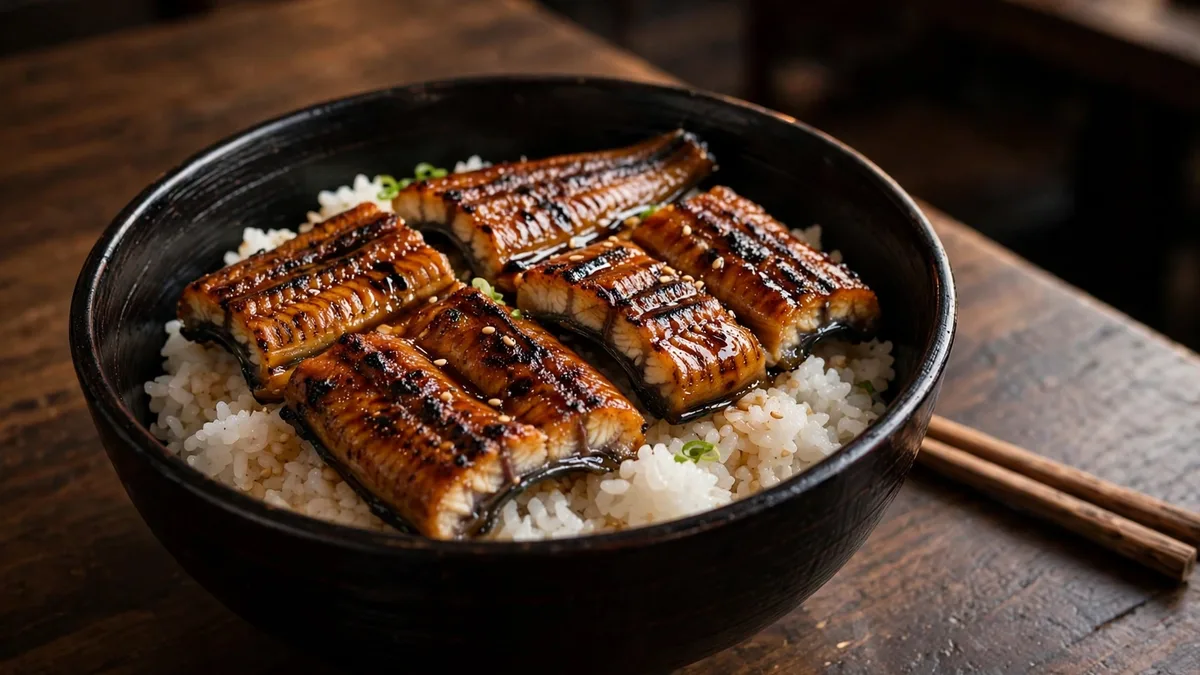
The classic preparation is kabayaki, and it is a craft. The eel is first killed and filleted, and the bones are carefully removed. The fillets are then grilled over charcoal, which gives them a smoky flavour and a crisp edge, and brushed repeatedly with tare, a sweet and savoury sauce made with soy sauce, mirin and sugar. The glazing and grilling are repeated until the flesh is tender, glossy and lightly caramelised. A skilled cook judges the timing by eye and by touch, and the work takes years to learn well.
A second preparation is shirayaki, in which the eel is grilled plain, without sauce, and served with salt and a squeeze of citrus or a dab of wasabi. Shirayaki shows the flavour of the eel itself, without the sweetness of tare, and it is the preparation to try if you want to taste the fish rather than the sauce. In both styles, the eel is always cooked through: freshwater eel is never served raw.
The sauce matters as much as the fish. A restaurant’s tare is often kept going for years, topped up and reused, so that it deepens in flavour over time. That long-kept sauce is part of what regular customers return for, and it is one reason why unagi from a specialist restaurant tastes different from a ready-made version bought elsewhere.
The dishes unagi stars in
The most familiar unagi dish is unadon, in which grilled eel is laid over a bowl of steamed white rice, with tare spooned over the top. It is a simple, satisfying meal, and it is often served with pickles and a clear soup. Unajū is the same dish served in a lacquered box rather than a bowl, and it is usually the more formal version, with the eel arranged neatly over the rice.
Unagi also appears as sushi, most often as nigiri, where a slice of grilled eel sits on a small mound of vinegared rice, or in a rolled form. It can also be served on its own, as a small plate of grilled eel with sauce, as part of a larger meal. In every case, the usual accompaniment is sanshō pepper, a fragrant Japanese pepper that is sprinkled over the eel to cut its richness. A little goes a long way, so add it sparingly at first.

Unagi dishes at a glance
The table below brings the main unagi dishes together, so you know what to expect when you see them on a menu.
| Dish | What it is | How it is served |
|---|---|---|
| Kabayaki | Grilled eel glazed with sweet soy-based tare | On its own, or as the eel in other dishes |
| Shirayaki | Eel grilled plain, without sauce | With salt, citrus or wasabi, to taste the fish itself |
| Unadon | Grilled eel over rice in a bowl | With tare spooned over, pickles and soup on the side |
| Unajū | Grilled eel over rice in a lacquered box | The more formal version of unadon |
| Unagi nigiri | Grilled eel on vinegared rice | As sushi, often with a strip of seaweed to hold it |
| Unagi with sanshō | Any unagi dish with sanshō pepper | Sprinkle the pepper lightly to cut the richness |
Unagi and the seasons
Unagi is eaten all year round, but it is most closely linked to summer. In Japan there is a tradition of eating eel on the Day of the Ox in midsummer, a day in the traditional calendar that falls in late July, when the heat is at its worst. The custom is said to go back to the eighteenth century, when an eel seller is said to have advertised eel as a food to restore strength in the summer heat, and it has lasted ever since. Restaurants are at their busiest around that day, and it is worth booking ahead if you plan to eat unagi then.
The idea behind the tradition is that a rich, nourishing food helps the body through hot weather. Whether or not you believe that, the habit has a practical side: a bowl of unadon is filling, warming and easy to eat, and it makes a satisfying meal on a humid evening. The tradition is a reminder that unagi is not only a dish but a part of Japanese food culture, tied to the turning of the seasons.
Nutrition in general terms
Unagi is a rich, oily fish, and its nutrition reflects that. It is a good source of protein, and it contains vitamins that are found in oily fish, including vitamin A and vitamin B12, as well as minerals. It is also high in fat, which is where much of its richness comes from, and the sweet tare adds sugar. None of that makes it unhealthy, but it does make it a dish best eaten in modest portions, as part of a varied diet, rather than in large amounts every day.
The rice it is served with adds further energy, and the meal as a whole is filling. If you are watching your intake of sugar or fat, the plain grilled style, shirayaki, is the lighter choice, since it is served without the sweet sauce. As with any rich food, the sensible approach is to enjoy it, in a sensible portion, and to balance it with lighter meals around it.
Your unagi checklist
Use this list the first time you order unagi.
- Try unagi first in a reputable Japanese restaurant, where it is prepared by someone who knows the craft.
- Start with unadon, the eel over rice in a bowl, which is the most familiar way to eat it.
- Ask whether the eel is served kabayaki, glazed with sauce, or shirayaki, grilled plain.
- Sprinkle sanshō pepper lightly at first, since a little goes a long way.
- Eat it hot, while the eel is still glossy and the rice is warm.
- Remember that unagi is freshwater eel, and anago on the same menu is its saltwater cousin.
- Expect a rich, oily flavour and a soft texture, quite different from white fish.
- Keep the portion modest, since unagi is a rich dish and the meal is filling.
- If you go around the midsummer Day of the Ox, book ahead, since restaurants are busy.
- Buy unagi only from a trusted source, and never eat freshwater eel raw or undercooked.
Frequently asked questions
What does unagi taste like?
Unagi tastes rich and savoury, with soft, oily flesh and a lightly caramelised surface from the glaze. The sweet soy-based sauce, tare, gives it a sweet and salty flavour, and a pinch of sanshō pepper adds a fragrant warmth. It tastes quite different from white fish, and closer to other rich, oily fish.
Is unagi the same as anago?
No. Unagi is freshwater eel, usually the Japanese eel, while anago is saltwater conger eel. Anago is paler, milder and more delicate, and unagi is richer and bolder. Both are usually served cooked, and both appear as sushi, but they are different fish with different flavours.
Is unagi always served with sauce?
Most often, yes, in the kabayaki style, where the eel is glazed with tare as it grills. The exception is shirayaki, in which the eel is grilled plain and served with salt and a squeeze of citrus or a dab of wasabi, so you can taste the fish itself without the sweet sauce.
What is the difference between unadon and unajū?
Both are grilled eel over rice, and the difference is the container. Unadon is served in a bowl, and unajū is served in a lacquered box, usually as the more formal version, with the eel arranged neatly over the rice. The eel, the rice and the sauce are the same in both.
Why do Japanese people eat unagi in summer?
Eating eel in summer is a long-standing tradition, linked to the Day of the Ox in midsummer, when the heat is at its worst. The custom is said to go back to the eighteenth century, when eel was advertised as a food to restore strength in the heat. Restaurants are at their busiest around that day.
Is it safe to eat unagi?
Unagi from a reputable restaurant or a trusted source, cooked thoroughly, is a normal part of Japanese cooking. Freshwater eel must always be cooked through and should never be eaten raw or undercooked, since raw freshwater fish can carry parasites. If you have a fish allergy, or you are pregnant or have a health condition that affects what you can eat, ask your doctor or follow the food safety guidance in your area.
The bottom line
Unagi is freshwater eel at its best: filleted, grilled over charcoal and glazed until it is glossy and tender, then served over warm rice with a pinch of sanshō pepper. Try it first as unadon in a good Japanese restaurant, eat it hot, and keep the portion modest. For more food and drink ideas, see our recipe for how to make iced matcha, our round-up of trending healthy snacks, and our guide to how to make banana chips.
This article is general information only and is not medical or dietary advice. Freshwater eel must always be cooked thoroughly, and food safety guidance varies by country, so follow the guidance in your area and speak to a doctor if you have a fish allergy or a health condition that affects what you can eat.