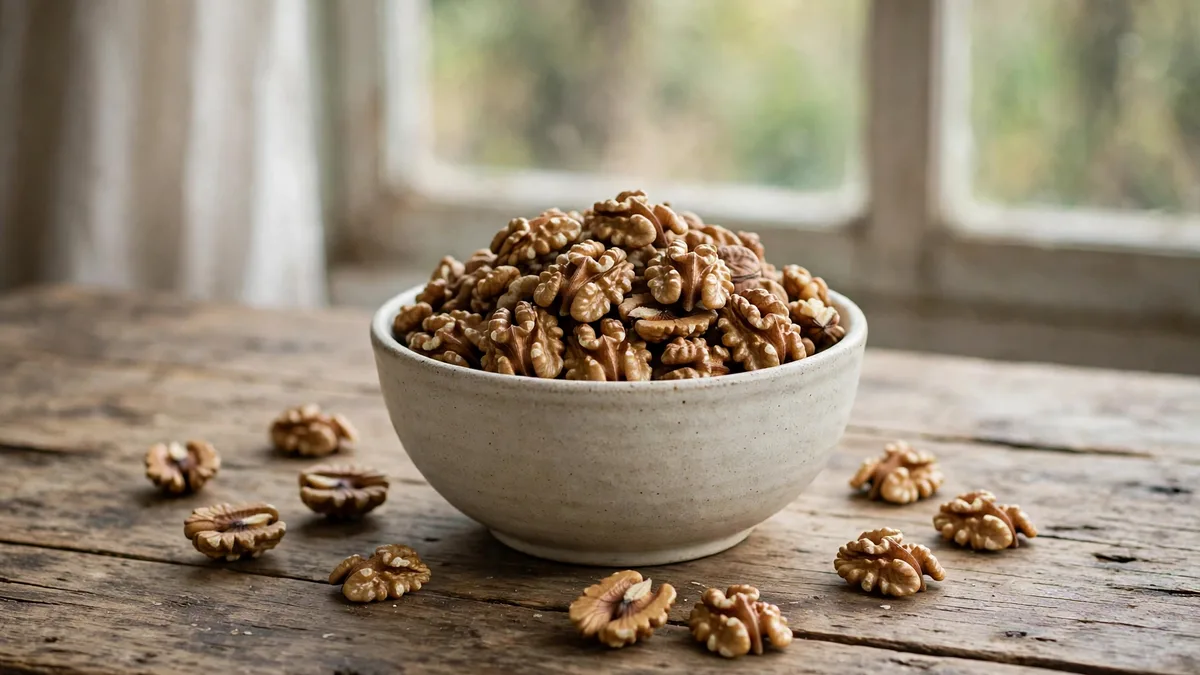

Walnuts raw are simply walnuts in their natural state, shelled but neither roasted nor salted, and they are one of the most useful nuts a kitchen can keep. The central question is how to choose good ones, keep them fresh and use them well, and the answer is to buy plump, pale kernels that smell sweet and nutty, store them airtight away from heat, and use them within a few months. Get those three things right and raw walnuts will reward you in snacks, salads and baking alike.
The walnut is the seed of the walnut tree, and the familiar English walnut is the kind most often sold for eating. Its kernel is shaped a little like a tiny brain, with a pale, wrinkled surface and a thin, slightly bitter skin. That skin is part of the flavour, so raw walnuts taste earthy and mild, with a soft crunch that turns creamy as you chew.
Key takeaways
- Walnuts raw are shelled walnuts that have not been roasted or salted.
- Good kernels are plump and pale, with a sweet, nutty smell and no hint of staleness.
- Raw walnuts are rich in plant-based fats, including the omega-3 fat ALA, and provide fibre and protein.
- Store them airtight in a cool, dark place, and keep them in the fridge or freezer for longer life.
- Use them raw in salads and snacks, or toast them lightly to deepen the flavour.
- Tree nut allergy is serious: keep walnuts away from anyone with a nut allergy and label shared dishes.
What raw walnuts are
Raw walnuts are sold shelled, as halves and pieces, or still in the shell for cracking at home. In the shell, they keep longest, since the shell protects the kernel from air and light, while shelled walnuts are ready to eat but go stale faster. Most cooks buy shelled halves, which are easy to measure, chop and scatter.
The flavour of a raw walnut is gentle and earthy, with a mild bitterness from the thin skin around the kernel. Roasting changes that flavour, making it deeper and more toasty, which is why recipes sometimes call for toasted walnuts instead. Raw walnuts suit dishes where you want a soft crunch and a mild taste, while toasted ones suit dishes where the nut should stand out.
Buying good walnuts
When you buy shelled walnuts, look at the colour first. Fresh kernels are pale and creamy, while stale ones turn darker and look dry or shrivelled. Pick up a few and feel them: good walnuts feel plump and firm, not light and papery. Smell them too, since fresh walnuts smell sweet and nutty, while stale ones smell flat, oily or paint-like, which is a sign the fats have turned.
Buy from a shop that sells nuts quickly, since turnover matters more than packaging, and check the date on the bag where one is given. Smaller bags are often the better buy for a small household, because an open bag goes stale faster than a sealed one. If you buy in the shell, shake a few: a good nut feels heavy for its size, while a light, rattling nut may be dried out inside.
Storing them well
Walnuts go stale because their natural oils react with air, light and heat, so the rules of storage are simple: keep them cool, dark and airtight. A sealed jar or tub in a cool cupboard works for a few weeks, while the fridge keeps them fresh for longer, and the freezer keeps them for months. Cold storage slows the oils from turning, which is what makes old walnuts taste bitter and stale.
Keep walnuts away from strong smells, since nuts pick up odours easily, and never store them near the cooker or in a sunny spot. If you buy a large bag, divide it into smaller portions and freeze most of it, taking out only what you need. Frozen walnuts can be used straight from the freezer in cooking, and they thaw in minutes at room temperature for snacking.

Using raw walnuts in cooking
Raw walnuts are at home in both sweet and savoury cooking. Scatter them over salads, where their soft crunch suits bitter leaves, soft cheese and sharp dressings, or stir them into porridge and yoghurt for breakfast. They are a natural partner for apples, pears and grapes, and they sit well beside blue cheese on a cheese board.
In baking, walnuts add texture to banana bread, brownies, carrot cake and biscuits, and they can be chopped fine for crusts and crumbles. They also blend into sauces, where soaked walnuts turn smooth and creamy, and they make a good base for a simple pesto-style sauce with herbs, garlic and oil. If a recipe calls for toasted walnuts, spread them on a tray and warm them gently until they smell nutty, then let them cool before chopping.
Snacking and everyday eating
A small handful of raw walnuts makes a satisfying snack on its own, and it travels well in a pocket or a desk drawer. Pair them with dried fruit for a quick trail mix, or with a piece of cheese and an apple for a light lunch. Because they are filling, a small portion goes a long way, which makes them easy to enjoy as part of an ordinary day rather than a special occasion.
Raw walnuts also fit well into a plant-based kitchen, since they add richness to dishes without any cooking. Blend them into smoothies, sprinkle them over roasted vegetables, or stir them through cooked grains for texture. A few chopped walnuts over soup or pasta can lift a plain dish, and they keep their crunch better than many softer nuts when scattered over hot food.
Raw walnut forms compared
Walnuts are sold in several forms, and the table below sets out the main ones in general terms so you can choose the right form for your kitchen.
| Form | Best for | Keep in mind |
|---|---|---|
| In the shell | Keeping longest and cracking fresh | Needs a nutcracker and more time |
| Shelled halves | Snacking, salads and baking | Goes stale faster once opened |
| Pieces | Stirring through baking and cooking | Less neat for serving whole |
| Ground walnuts | Cakes, crusts and sauces | Stales fastest, so buy small amounts |
| Chopped walnuts | Scattering over dishes and desserts | Check the chop is even for baking |
| Walnut butter | Spreading and blending | Stir well, since the oil separates |
Your walnuts raw checklist
Keep this list beside you when you buy and store walnuts.
- Choose kernels that are plump and pale, with a sweet, nutty smell.
- Skip nuts that look dark, dry or shrivelled, or smell stale and oily.
- Buy from a shop with fast turnover, and check the date on the bag.
- Buy smaller bags if you use walnuts slowly, so less goes stale.
- Store walnuts airtight in a cool, dark place, away from strong smells.
- Move them to the fridge for longer keeping, or the freezer for months.
- Divide large bags into portions, freezing most and keeping a little out.
- Taste before cooking with older nuts, and throw out any that taste bitter.
- Toast lightly when a recipe needs deeper flavour, and cool before chopping.
- Keep walnuts away from anyone with a tree nut allergy, and label shared dishes.
Frequently asked questions
What does raw mean for walnuts?
Raw means the walnuts have been shelled but not roasted or salted, so they are in their natural state. They taste mild and earthy, with a soft crunch, and they suit salads, snacks and baking. Roasted walnuts taste deeper and more toasty, which suits recipes where the nut should stand out.
How can I tell if walnuts have gone stale?
Look, smell and taste. Fresh kernels are pale and plump with a sweet, nutty smell, while stale ones look darker and dry, smell flat or paint-like, and taste bitter. If walnuts smell oily or taste sharp, they have turned, and it is best to throw them out rather than cook with them.
How long do raw walnuts keep?
It depends on storage. In a cool, dark cupboard in an airtight container, they keep for a few weeks, while the fridge keeps them fresh for longer and the freezer for months. In the shell they keep longest of all, since the shell protects the kernel from air and light.
Should raw walnuts be soaked before eating?
Soaking is a matter of taste, not a rule. Some people soak walnuts to soften them and ease the slight bitterness of the skin, and soaked walnuts blend more smoothly into sauces. For snacking and most cooking, there is no need to soak them at all.
Are raw walnuts good for snacking?
Yes, a small handful makes a satisfying snack, and walnuts travel well in a pocket or desk drawer. They are filling, so a small portion goes a long way, and they pair well with dried fruit, cheese or an apple for a light bite.
Can people with a nut allergy eat walnuts?
No. Walnuts are tree nuts, and a tree nut allergy can be serious, so anyone with such an allergy should avoid them entirely. Keep walnuts away from allergic people, wash hands and utensils after handling them, and label any dish that contains them.
The bottom line
Raw walnuts are a simple, versatile pantry staple: buy plump, pale kernels, store them airtight in the cold, and use them in salads, snacks and baking while they are fresh. For more on everyday eating, see our guide to filbert nuts and hazelnuts, our best snacks for diabetics, and our best snacks from Trader Joe’s.
This article is general information only and is not medical advice. Walnuts are tree nuts, so anyone with a nut allergy should avoid them, and anyone with a health condition or dietary concern should speak to a doctor or a qualified dietitian before changing what they eat.