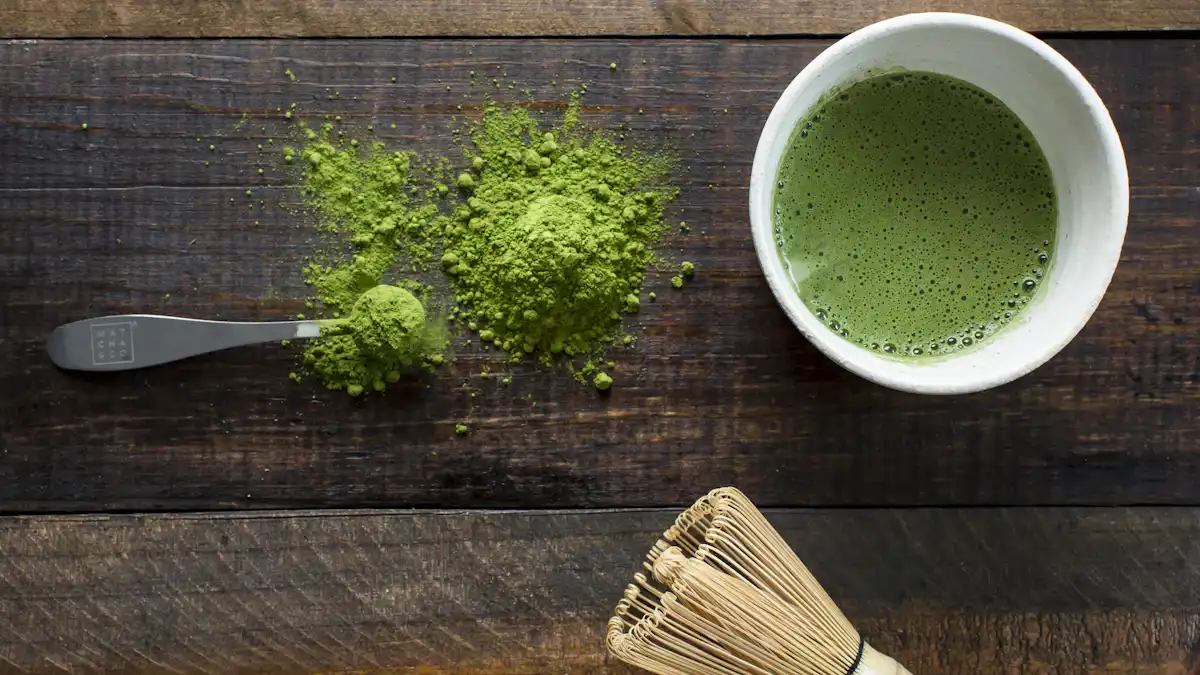

Learning how to make iced matcha at home takes about five minutes, one bowl and a handful of ingredients you probably already own. The method is simple: whisk matcha powder with a little hot water until smooth, pour it over cold milk and ice, and stir. The result is a cool, creamy green drink with a gentle lift, and it costs a fraction of the café version.
Good iced matcha depends on three things: decent powder, proper whisking and the right ratio of matcha to milk. Skip the whisking and the powder clumps; use too little matcha and the drink tastes like sweetened milk. Get those three right and the homemade version is hard to tell apart from a barista’s.
Key takeaways
- Iced matcha is whisked matcha poured over cold milk and ice; the whole drink takes about five minutes.
- Use 1 to 2 teaspoons of matcha per drink, whisked first with about 60 ml of hot water.
- Water around 80°C protects the flavour; boiling water turns it bitter.
- A bamboo whisk gives the smoothest result, but a small milk frother or a jar with a lid works too.
- Ceremonial-grade powder tastes smoother; culinary grade suits sweetened lattes.
- Sweeten lightly, if at all, and taste before adding more, since milk softens matcha’s natural edge.
What iced matcha actually is
Matcha is powdered green tea made from shade-grown leaves that are steamed, dried and stone-ground into a fine powder. Because you drink the whole leaf, it tastes stronger and more grassy than ordinary green tea, with a savoury depth called umami. An iced matcha latte takes that whisked tea and serves it cold, usually with milk and ice.
The drink became a café staple because it sits neatly between coffee and tea. A serving carries roughly 30 to 70 mg of caffeine, depending on how much powder you use, which is less than a typical cup of coffee. It also contains L-theanine, an amino acid in tea that is often credited with giving matcha a calmer, steadier lift than coffee, though the research on that effect is still developing.
Best for: anyone who wants a cold, creamy caffeine drink without coffee’s acidity, and who enjoys a small daily ritual that takes minutes rather than machinery.
Choosing the right matcha powder
The powder matters more than any other part of this recipe. Ceremonial-grade matcha is made from the youngest leaves of the first harvest, ground finely and bright green. It tastes smooth, mildly sweet and only faintly bitter, which is why it suits drinks where matcha is the star. Culinary-grade matcha comes from later harvests, tastes stronger and more bitter, and is designed for cooking and for drinks with plenty of milk and sweetener.
When you shop, look for a vivid green colour, a fine texture and a tin or pouch that keeps light and air out. Dull, yellowish or brownish powder is usually old or low grade, and it will taste flat however carefully you whisk it. A 30-gram tin makes roughly fifteen drinks, so the cost per glass stays modest even for good powder. Store it sealed, away from light, and use it within a few weeks of opening.
Best for: ceremonial grade when you drink matcha plain or lightly sweetened; culinary grade when you plan to add syrup, honey or a flavoured milk that will cover the sharper edges.
The tools you need, and the ones you can skip
The traditional tool is a chasen, a bamboo whisk with dozens of fine tines designed to suspend the powder in water and build a light foam. It is inexpensive, lasts for months with care, and does the best job of removing lumps. A wide, low bowl called a chawan helps too, because it gives the whisk room to move, but any wide mug or small bowl works in practice.
If you do not own a bamboo whisk, a small electric milk frother whisks matcha smoothly in seconds and costs little. A jam jar with a tight lid also works: add the powder and hot water, seal it and shake hard for twenty seconds. A fork or a small balloon whisk is the weakest choice, since both leave small clumps, but even those will do if you sift the powder first through a fine tea strainer.
Best for: a bamboo whisk and a wide bowl for the smoothest, most traditional result; a milk frother for speed on busy mornings.
How to make iced matcha, step by step
Start by sifting 1 to 2 teaspoons of matcha powder into your bowl, about 2 to 4 grams. Sifting takes ten seconds and is the best defence against lumps, since matcha clumps easily in humidity. Add about 60 ml of hot water, heated to around 80°C, and whisk briskly in a quick M or W motion until the mixture is smooth and lightly foamy. That should take twenty to thirty seconds, and the liquid should look evenly green with no dry specks.
Fill a tall glass with ice cubes, then pour in 120 to 180 ml of cold milk. Whole milk gives the richest result, oat milk is the most popular dairy-free choice because its flavour stays out of the way, and almond or soya milk both work for a lighter drink. Pour the whisked matcha slowly over the milk, watching the green layer settle above the white, then stir gently before drinking. Taste it before sweetening: a teaspoon of honey, maple syrup or sugar syrup is plenty if you want it sweeter.
Best for: a first attempt with 1 teaspoon of matcha and whole or oat milk, so you can judge the strength before making a stronger batch.
Getting the ratios right
Ratios are where most iced matcha goes wrong. The standard café ratio is roughly 2 grams of matcha to 60 ml of hot water, then 150 ml of cold milk over ice. If your drink tastes weak, add half a teaspoon more powder rather than less milk, since the powder is what carries the flavour. If it tastes bitter, the usual cause is water that was too hot, rather than too much matcha.
Ice matters more than people expect, because it dilutes the drink as it melts. Fill the glass generously so the drink stays cold, and drink it within ten minutes for the best flavour. If you prefer a stronger, more tea-forward drink, cut the milk to 120 ml and keep the matcha at 2 teaspoons. If you prefer something gentler, use 1 teaspoon and 180 ml of milk, which tastes closer to a flavoured milk drink.
Best for: the standard ratio above for a balanced first glass, then small adjustments of half a teaspoon at a time until the drink tastes right to you.
Common mistakes and how to fix them
Clumps are the most common problem, and they come from powder meeting water without proper mixing. Sifting fixes most of them, and whisking in a brisk zigzag rather than a slow circle fixes the rest. If specks remain, pour the whisked matcha through a small strainer before it goes over the milk. Bitterness usually means the water was boiling, so let the kettle stand for a minute or two after boiling.
A grey or dull colour points to old powder or to matcha stored in light, and there is no technique that restores it. Layers before stirring are normal, since matcha is denser than milk, so a quick stir is part of serving. If your drink tastes chalky, the powder may be a coarse culinary grade, and upgrading it is the real answer.
Best for: sifting and a quick zigzag whisk to fix clumps; cooler water and fresher powder to fix bitterness and dull colour.

Your iced matcha checklist
Run through this list before your first glass, and again whenever a batch tastes off.
- Is your matcha bright green and finely ground, with no dull or brown tones?
- Have you sifted the powder into the bowl to remove clumps before adding water?
- Is your water around 80°C, not boiling?
- Did you whisk in a brisk M or W motion until the mixture was smooth and foamy?
- Is your glass filled generously with ice before the milk goes in?
- Have you used 120 to 180 ml of cold milk, depending on how strong you like it?
- Did you pour the matcha slowly over the milk to keep the layers visible?
- Have you tasted before sweetening, and added only a teaspoon if needed?
- Did you stir gently before drinking so the layers combine?
- Have you sealed the matcha tin and stored it away from light after use?
How iced matcha compares with other cold drinks
| Drink | Caffeine | Flavour | Effort | Best suited to |
|---|---|---|---|---|
| Iced matcha latte | Moderate, about 30 to 70 mg | Grassy, creamy, mildly sweet | 5 minutes, whisking needed | A calm lift without coffee acidity |
| Iced coffee | Higher, about 90 to 120 mg | Bold, bitter, roasty | 5 minutes, brewing needed | A stronger, sharper lift |
| Cold brew | High, often over 150 mg | Smooth, chocolatey, low acid | 12 hours steeping | Slow mornings and big batches |
| Iced green tea | Low, about 20 to 30 mg | Light, herbal, refreshing | 3 minutes, steeping needed | A gentle drink with no milk |
Frequently asked questions
Can I make iced matcha without a bamboo whisk?
Yes. A small electric milk frother works very well, and shaking the powder and hot water in a sealed jar for twenty seconds also works. Sift the powder first whichever method you use.
How much matcha should I use per glass?
Start with 1 to 2 teaspoons, about 2 to 4 grams, whisked with 60 ml of hot water and poured over 120 to 180 ml of cold milk. Use more powder for a stronger flavour, adjusting half a teaspoon at a time.
Why is my iced matcha bitter?
Bitterness usually comes from water that was too hot, so let boiled water stand for a minute or two until it is around 80°C. Old or low-grade powder can also taste bitter, in which case a better tin or a little sweetener helps.
Can I make iced matcha the night before?
You can whisk the matcha and keep it in a sealed jar in the fridge overnight, then pour it over fresh milk and ice in the morning. Use it within a day, as the colour dulls after that.
Is iced matcha healthier than iced coffee?
It depends on what you add. Unsweetened iced matcha with milk is low in sugar and moderate in caffeine, while a large sweetened iced coffee can carry far more sugar.
What milk works best for iced matcha?
Whole milk gives the richest result, and oat milk is the best dairy-free option because its flavour is mild. Almond and soya milk both work too, giving a lighter drink.
The bottom line
Good iced matcha is a small skill with a short learning curve: sift the powder, whisk it with water that is hot but not boiling, and pour it over cold milk and plenty of ice. Spend a little on decent powder, keep the tin sealed and away from light, and the homemade version will match most café glasses at a fraction of the price. A good water bottle also helps on warm days, and our guide to the best water bottles covers bottles that keep cold drinks cold, while our guide to the best breakfast food covers simple mornings to go with it, and our guide to the best single-serve coffee maker covers the coffee side of the kitchen for days when you want a change.
Matcha contains caffeine, so if you are sensitive to caffeine, pregnant or managing a health condition, keep servings modest and check with a clinician if you are unsure.