
How to make banana chips at home is simpler than most people expect: slice firm, ripe bananas thinly, brush them lightly with oil and lemon juice, and bake or air fry them low and slow until crisp. The short answer is to use bananas that are yellow with a few brown spots, slice them evenly at about three millimetres, and cook them at a low temperature so they dry out instead of browning.
Homemade banana chips are a useful snack to have in the cupboard. They travel well, they keep for days in a sealed jar, and you control the oil, the salt, and the sweetness. This guide covers the oven method, the air fryer method, flavour variations, and how to store them so they stay crisp.
Key takeaways
- Use firm, ripe bananas: yellow with a few brown spots, not green and not overripe.
- Slice evenly, about three millimetres thick, so every chip cooks at the same rate.
- Brush with lemon juice to stop browning and a little oil to help them crisp.
- Cook low and slow, around 120 to 150 degrees Celsius, and turn the slices halfway.
- Chips crisp up as they cool, so take them out just before they look done.
- Store in an airtight container once fully cool, and eat within a few days for the best crunch.
Choosing the right bananas
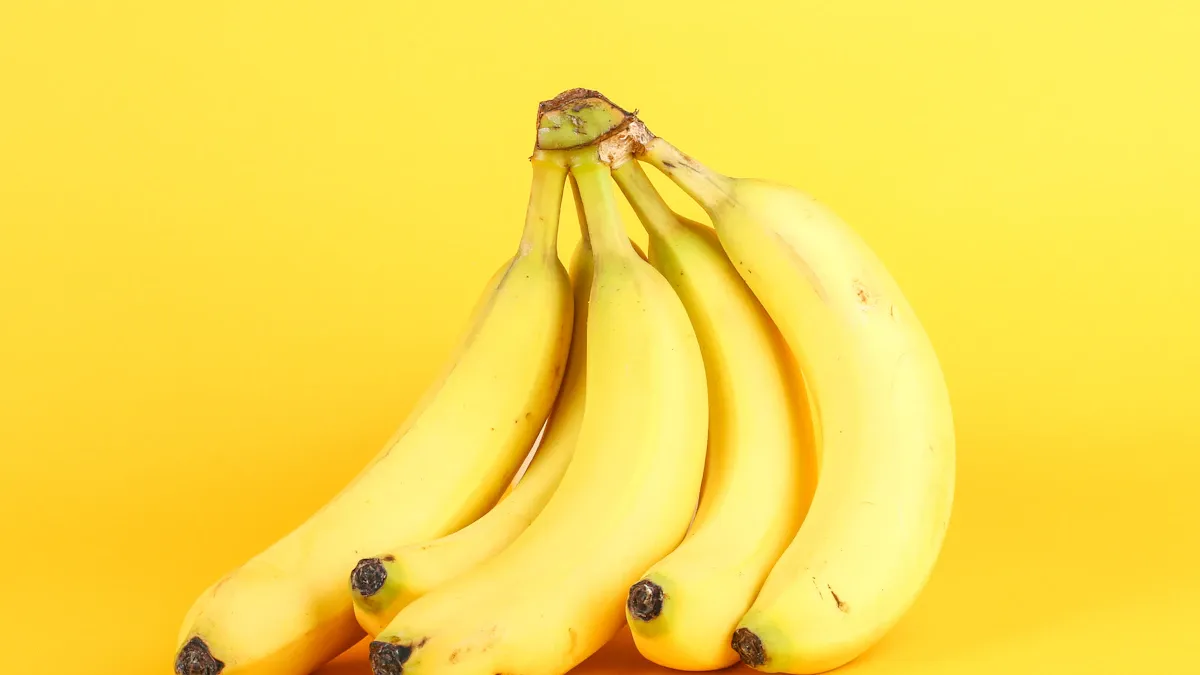
The bananas matter more than the method. The best ones are ripe but still firm: yellow all over, with a few small brown spots, and no soft patches when you press them gently. Underripe bananas are starchy and will not sweeten properly, while overripe bananas are too soft to slice thinly and will turn chewy rather than crisp.
Size matters too. Medium bananas slice more evenly than very large ones, and a straight banana is easier to cut into neat rounds than a strongly curved one. If your bananas are different sizes, sort them so that similar slices cook together, and keep the thinnest slices on a separate tray so they do not burn while the thicker ones finish.
Best for: anyone with a bunch of bananas that are ripe today and will be too soft tomorrow, which is the perfect moment to make a batch.
Equipment and preparation
You need very little equipment: a sharp knife or a mandoline, a baking tray or an air fryer basket, baking paper, and a pastry brush. A mandoline gives the most even slices, which is the single biggest factor in getting crisp chips, but a sharp knife and a steady hand work well too. If you use a mandoline, use its guard, because the slices are thin and your fingers are close to the blade.
Preparation is quick. Peel the bananas, slice them into rounds about three millimetres thick, and lay them in a single layer without overlapping. Brush each slice lightly with lemon juice, which keeps them from browning, and then with a thin coat of neutral oil, such as sunflower or light olive oil. A little oil helps the chips crisp and stops them sticking, but too much will make them greasy.
Best for: a quiet half hour in the kitchen, where the preparation takes ten minutes and the oven does the rest.
The oven method
Heat the oven to around 120 to 150 degrees Celsius, and line a baking tray with baking paper. Arrange the slices in a single layer, leaving a small gap between them so the air can circulate. If your tray is crowded, use two trays rather than squeezing the slices together, because overlapping slices steam instead of crisping.
Bake for about an hour, turning the slices halfway through, and check them from the forty-five-minute mark onwards. The chips are ready when the edges are golden and the centres feel dry to the touch. Remember that they continue to crisp as they cool, so take them out just before they look fully done rather than waiting for them to look perfect in the oven.
Cool the chips on the tray for a few minutes, then move them to a wire rack until they are completely cool. Warm chips sealed in a jar will go soft, so patience at this stage is what keeps the crunch. Once cool, taste one: it should snap rather than bend.
Best for: big batches, where the oven’s larger trays let you cook several bananas at once.
The air fryer method
The air fryer is faster and works well for small batches. Set it to around 150 degrees Celsius, arrange the slices in a single layer in the basket, and cook for about ten to fifteen minutes, shaking the basket or turning the slices halfway through. The circulating hot air crisps the chips quickly, so watch them closely in the last few minutes.
Work in batches rather than overfilling the basket. A single layer with space between the slices gives the best result, and a second batch takes only a few minutes. If your air fryer has a rack, you can cook two layers at once, but swap them halfway so both layers crisp evenly.
Best for: a quick snack for one or two people, where a small batch is ready in about fifteen minutes.
Flavours and variations
Plain banana chips with a pinch of salt are the classic version, and they need nothing else. For a sweet version, toss the slices in a little cinnamon before cooking, or add a light dusting of cocoa powder once they are cool. For a savoury version, try a pinch of smoked paprika, a little sea salt, or a dusting of curry powder, and serve them with dips.
Plantains make a different, sturdier chip. They are firmer and less sweet than dessert bananas, so they hold their shape well and suit savoury seasonings. Use the same method, but slice them slightly thinner and expect a longer cooking time. Green bananas can also be used for a savoury chip, though they will be less sweet and more starchy.
Banana chips also work as an ingredient rather than just a snack. Break them over porridge or yoghurt, pack them into a lunchbox, or crumble them into trail mix with nuts and seeds. Our guide to the best breakfast food has ideas for mornings where a crunchy topping makes all the difference. For lunchboxes and days out, our guide to the best water bottles covers keeping a drink alongside your snacks. And for a slow afternoon, our guide to the best single-serve coffee maker pairs well with a small bowl of banana chips and a coffee.

Best for: anyone who likes to experiment, where one batch can be split three ways: plain, cinnamon, and smoked paprika.
Storing banana chips so they stay crisp
Storage is where most homemade chips fail. The chips must be completely cool before they go into a container, because even a little warmth creates steam, and steam is what turns crisp chips soft. An airtight jar or container with a tight lid is the right choice, and a small bag of silica gel or a paper towel inside can help in humid kitchens.
Keep the jar in a cool, dry cupboard away from the stove and the sink. Properly dried and stored chips stay crisp for several days, and they are at their best within the first few days. If they do soften, you can often rescue them with five minutes in a low oven, spread out on a tray, and then cooled again before eating.
Best for: weekly snack preparation, where one batch made on Sunday covers lunchboxes for the first few days of the week.
Your banana chips checklist
Work through this list before you start slicing. It prevents the two most common failures: uneven slices and soggy storage.
- Are your bananas ripe but firm, yellow with a few brown spots?
- Have you got a sharp knife or a mandoline, with its guard, ready?
- Can you slice evenly at about three millimetres?
- Have you brushed the slices with lemon juice to stop browning?
- Have you brushed them lightly with oil, without overdoing it?
- Are the slices in a single layer, with space between them?
- Have you set the oven low, around 120 to 150 degrees Celsius?
- Will you check the chips from the forty-five-minute mark and turn them halfway?
- Have you let the chips cool completely on a rack before storing them?
- Is your storage jar airtight, clean, and dry?
Comparing banana chip methods
| Method | Temperature | Time | Batch size | Best for |
|---|---|---|---|---|
| Oven | 120 to 150 degrees Celsius | About 60 minutes | Large, several bananas | Big batches and even drying |
| Air fryer | About 150 degrees Celsius | 10 to 15 minutes | Small, one banana | Quick snacks |
| Dehydrator | About 55 to 60 degrees Celsius | 6 to 10 hours | Large, several trays | The driest, longest-lasting chips |
| Microwave | Medium power, short bursts | 2 to 4 minutes | Tiny, a few slices | Testing a recipe quickly |
Frequently asked questions
Why are my banana chips chewy instead of crisp?
The usual cause is slices that are too thick, or an oven that is too cool to dry them out. Slice thinner next time, about three millimetres, and make sure the slices are in a single layer with space between them. Remember that chips crisp as they cool, so judge them after cooling, not straight from the oven.
Do I need oil to make banana chips?
A little oil helps the chips crisp and stops them sticking, but you can make them without it if you use good baking paper and watch them closely. Oil-free chips may be slightly less golden and a little more likely to stick, so line the tray well and turn them gently.
Can I make banana chips without lemon juice?
Yes. Lemon juice mainly stops the slices browning before they cook, so skipping it affects the colour more than the flavour or the texture. If you skip it, work quickly and get the slices into the oven promptly so they spend less time exposed to the air.
How long do homemade banana chips last?
Stored in an airtight container in a cool, dry cupboard, they stay crisp for several days and are best eaten within the first few days. If they soften, spread them on a tray and warm them for five minutes in a low oven, then cool them completely before eating.
Can I use overripe bananas for banana chips?
Overripe bananas are too soft to slice thinly and will turn chewy rather than crisp, so they are better used for banana bread or smoothies. Save the firm, just-ripe bananas for chips, and use the soft ones for baking.
Are homemade banana chips healthier than shop-bought ones?
They can be, because you control the oil, the salt, and the sugar, and many shop-bought chips are fried in oil and sweetened. That said, banana chips are still an energy-dense snack, so they are best enjoyed as part of a varied diet rather than as a health food.
The bottom line
Making banana chips comes down to three things: firm, ripe bananas, even thin slices, and low, slow cooking. The oven suits big batches, the air fryer suits a quick snack, and both give you crisp chips with a fraction of the oil and sugar of many shop-bought versions. Slice evenly, cool them fully before storing, and eat them within a few days while the crunch lasts.
Food safety note: take care with hot oil and hot trays, and keep children away from the oven and air fryer while cooking. Store cooled chips in a clean, airtight container in a cool, dry place, and discard any that smell off or show signs of mould.