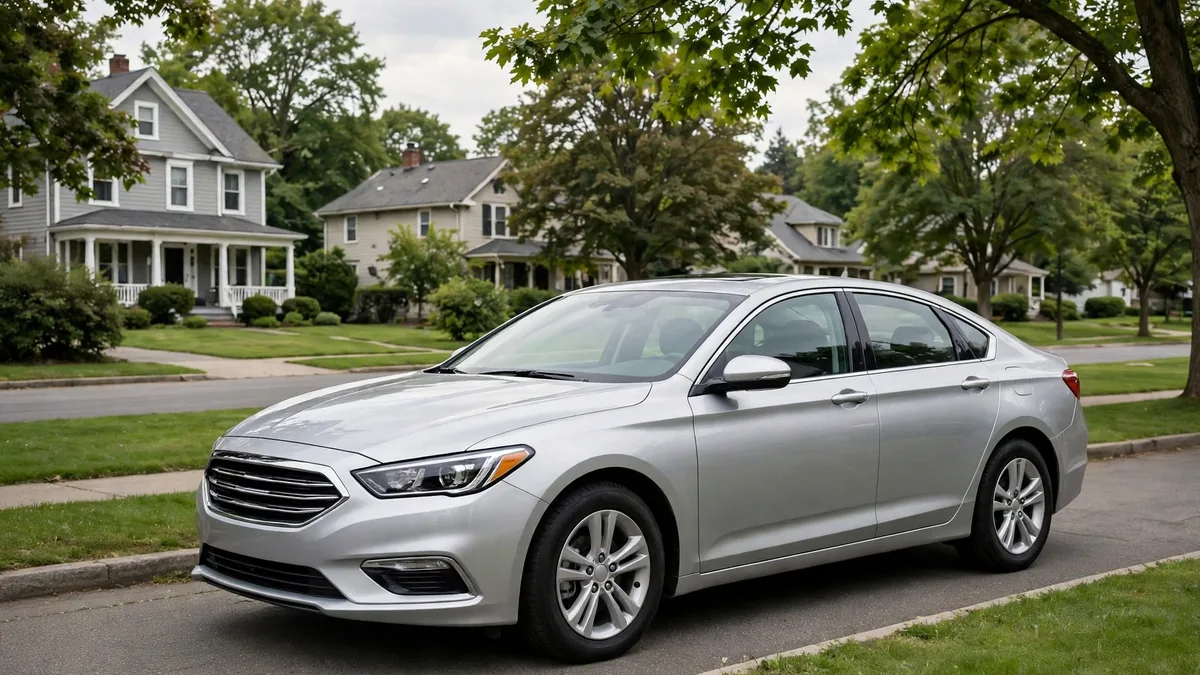

A used Toyota Camry is one of the most sensible second-hand cars a buyer can choose, because it is a large, comfortable saloon with a long record of steady, undramatic service. The central question is how to tell a good used Toyota Camry from a tired one, and the answer is to check its history, inspect its condition in daylight, drive it properly and have an independent inspection before money changes hands.
The Camry has been on sale since the early 1980s, and it has built its reputation on the same qualities: a quiet cabin, a smooth ride and mechanical parts that last when looked after. That reputation is why used examples hold their value, and why a careless purchase can be expensive, since a neglected car can hide repair bills behind a fresh wash and a confident sales pitch.
Key takeaways
- A used Toyota Camry is a large, comfortable saloon with a quiet cabin and a long service life when maintained.
- Check the car’s history, including ownership, recorded mileage and any finance or write-off markers, before viewing.
- Inspect the car in daylight, looking at bodywork, tyres, lights, glass and the interior.
- Take a proper test drive over town streets, faster roads and a hill start, listening for unusual noises.
- Hybrid versions need the same checks plus attention to the hybrid system, ideally from a hybrid specialist.
- An independent pre-purchase inspection is the single best money a used car buyer can spend.
Why the Camry suits used buyers
The Camry is a midsize saloon, sitting between small family hatchbacks and large executive cars, and that middle ground is a large part of its appeal. There is room for four adults to travel in comfort, the boot is generous, and the driving position suits long journeys as well as short trips.
Toyota has sold the Camry in many markets over several generations, and most used examples share the same character: soft, quiet and easy to drive. The steering is light, the suspension favours comfort, and the cabin keeps road and wind noise low. Fuel choice matters too: many used Camrys run on petrol, while later models are widely available as petrol-electric hybrids, which pair a small electric motor with the petrol engine to cut fuel use in town.
Setting a budget before you look
Before looking at any car, decide the total amount you are willing to spend, and remember that the purchase figure is only part of it. A used car also needs insurance, road tax where it applies, fuel and a first service, plus a reserve for anything an inspection turns up.
It helps to look at several examples at a similar age and mileage before settling on one, because that comparison shows what the market really offers. If one car is far cheaper than the rest, there is usually a reason, and the reason is rarely good news, while if one is far dearer, the seller should be able to explain why, whether that is a full service history, new tyres or a recent major service. Think about how long you plan to keep the car as well, since a buyer keeping a Camry for years can accept higher mileage on a well-maintained example.
Checking the car’s history
A history check is the first filter, and it should happen before you travel to see a car. A basic check confirms the registration, make, model, year of first registration and recorded mileage, and flags whether the car has been written off, stolen or has outstanding finance. A mismatch between the seller’s story and the recorded facts is a reason to walk away.
Service history is the next thing to ask about. A Camry with a stamped service book or a folder of invoices shows that someone cared enough to maintain it, and regular servicing is one of the best signs of a long life ahead. Ask how many owners the car has had and how long the current owner has kept it, since a car that has changed hands every few months can point to a recurring problem, while one kept by a single owner for years is usually a better bet. Also ask why it is being sold: a clear, ordinary reason is reassuring, while a vague story is not.
Inspecting the car in daylight
Always view a used car in daylight, and never buy one you have only seen in the dark or in the rain. Walk around the car slowly and look at the panels from different angles, since uneven gaps between panels, paint that looks a different shade on one door, or a faint line of overspray on the window rubbers can all point to accident repair. None of that automatically rules a car out, but it should prompt questions and a closer look.
Check the tyres next: all four should be a known brand, evenly worn and with plenty of tread, since uneven wear can point to suspension or alignment trouble, while cheap, mismatched tyres suggest the owner cut corners. Inside, try every switch, including the windows, the air conditioning, the heater and the lights, and check under the carpets for damp, which can point to a leak. Look at the lights, glass and mirrors for cracks, and check the boot for signs of water or damage.

Under the bonnet and underneath
Open the bonnet and look before you listen. The engine bay of a cared-for car is usually clean and dry, with no strong smell of fuel or burnt oil, so check the oil on the dipstick if the car has one: it should be golden or dark brown, not black and gritty, and the level should sit between the marks. Check the coolant level and look for leaks where the car is parked, plus cracks or fraying on belts and hoses.
On a hybrid, there is also a separate battery system, and while its condition is harder for a buyer to judge by eye, a dashboard warning light or a hybrid system fault message is a clear reason to get a specialist opinion, so do not let a seller dismiss a warning light as a minor glitch. If you can, look underneath the car as well, or ask for it to be put on a ramp during an inspection, since rust, damaged exhaust parts or leaking fluid are all things a buyer should know about before agreeing a figure.
The test drive that actually tells you something
A short drive around the block tells you almost nothing, so plan a proper test drive of at least twenty minutes, starting the car from cold if you can, because a cold start can reveal starting trouble, smoke or rough running that disappears once the engine is warm. Drive on town streets first, then on a faster road, and include a hill start if one is nearby, listening for rattles, knocks or whines and noting whether the engine settles into a smooth idle.
The steering should feel straight and even, with no pull to one side and no vibration through the wheel, and the brakes should stop the car smoothly without pulling or squealing, while the gearbox should change gear without jolts or hesitation. Try the car at parking speed too, turning the wheel fully in both directions and listening for clicks or groans, and test the air conditioning, heater and demister with the radio off for part of the route so you can hear the car itself.
Used Toyota Camry choices compared
Camrys come in several broad forms on the used market, and the table below sets them out in general terms so you can see which fits your driving best.
| Version | Best for | Keep in mind |
|---|---|---|
| Petrol saloon | Longer journeys and motorway driving | Fuel use is higher in town traffic |
| Petrol-electric hybrid | Stop-start town driving and short trips | Ask for a hybrid system check before buying |
| Older, higher-mileage car | Buyers on a tight budget | Condition and service history matter more than age |
| Newer, lower-mileage car | Buyers planning to keep the car for years | Expect to pay more for the newest examples |
| Top trim level | Buyers who want leather and extra equipment | More equipment means more to check and repair |
| Base trim level | Buyers who value simplicity and lower costs | Fewer luxuries, but often a simpler car to run |
Your used Toyota Camry checklist
Take this list to every viewing and work through it before you agree anything.
- Run a history check first, covering write-offs, theft, finance and recorded mileage.
- Ask for the service history and read it, looking for regular servicing and gaps.
- View the car in daylight and walk around it slowly, checking panels, paint and gaps.
- Check all four tyres for brand, tread depth and even wear.
- Inspect the interior, trying every switch, the air conditioning and the heater.
- Look under the bonnet for leaks, oil condition, coolant level and worn belts.
- Start the car from cold and listen for rough running, smoke or warning lights.
- Take a test drive of at least twenty minutes, covering town, faster roads and a hill start.
- Check the hybrid system on hybrid versions, and ask a specialist if anything is unclear.
- Book an independent pre-purchase inspection before paying, and walk away if the seller refuses one.
Frequently asked questions
Is a used Toyota Camry a good buy?
For most buyers, yes. The Camry is a large, comfortable saloon with a long record of steady service, and a well-maintained example can serve for many more years. The key is condition and history: a cared-for car with regular servicing is a much better buy than a neglected one.
What mileage is too high for a used Camry?
There is no single figure that makes a Camry too old to buy, because condition matters more than the number on the dashboard. A car with higher mileage and a full service history can be a better buy than a low-mileage car that has been neglected, so judge the car in front of you.
Should I buy a hybrid or a petrol Camry?
It depends on how you drive. A hybrid suits stop-start town driving, where the electric motor does more of the work, while a plain petrol car can suit longer journeys. Both need the same basic checks, and a hybrid deserves an extra check of its hybrid system by a specialist.
What should I check first when viewing a used Camry?
Start with the history check and the service record, then inspect the car in daylight, looking at the bodywork, tyres and interior. A test drive of at least twenty minutes follows, and an independent inspection should come before any money changes hands.
Do used Camrys have expensive problems?
Camrys have a reputation for being dependable, but no used car is free of risk, and age and mileage bring wear to tyres, brakes, suspension and batteries. Buy on condition, keep up with servicing and fix small problems before they grow.
Can I buy a used Camry without a test drive?
You can, but you should not. A test drive is the only way to judge how the car steers, brakes, changes gear and sounds at speed, and it can reveal problems that no photograph or description will show. If a seller will not allow a proper drive, walk away.
The bottom line
A used Toyota Camry rewards a careful buyer. Check its history, inspect it in daylight, drive it properly and pay for an independent inspection, and you give yourself the best chance of buying a quiet, comfortable car that serves you well for years. For more on buying and running a car wisely, see our guide to used cars, our eco-friendly lifestyle tips, and our round-up of the best carry luggage for every kind of traveller.