
Water heater installation near me is the search most homeowners make when the hot water runs cold, and the answer is to find a qualified local installer, agree the scope of the job in writing, and let a licensed professional handle the gas, electric and water connections. A water heater is not a do-it-yourself job: it mixes water, heat and, in many homes, gas or high-voltage electricity, so the installer you choose matters more than the heater itself.
This guide explains what an installation involves, how the main types of heater differ, how to find and check an installer, and which questions to ask before any work begins. It does not name businesses or give prices, since both vary by area and by home, but it will leave you able to judge a quote, spot a poor job and keep your household safe.
Key takeaways
- Water heater installation should be done by a qualified, licensed professional, not as a DIY job.
- Storage tank heaters heat a tank of water, while tankless heaters heat water only when a tap opens.
- Gas, electric and water connections all need the right skills and, in many areas, a permit.
- Check an installer’s licence, insurance and references before agreeing any work.
- Get the scope, the heater type and the warranty in writing before work starts.
- Ask about venting, drainage, the pressure relief valve and where the heater will drain.
What a water heater installation involves
A standard installation has four parts: removing the old heater if there is one, placing and connecting the new one, testing it, and clearing up. The installer drains the old tank, disconnects its water, gas or electric supply, and takes it away for disposal, which is a heavy, awkward job that needs two people and the right tools.
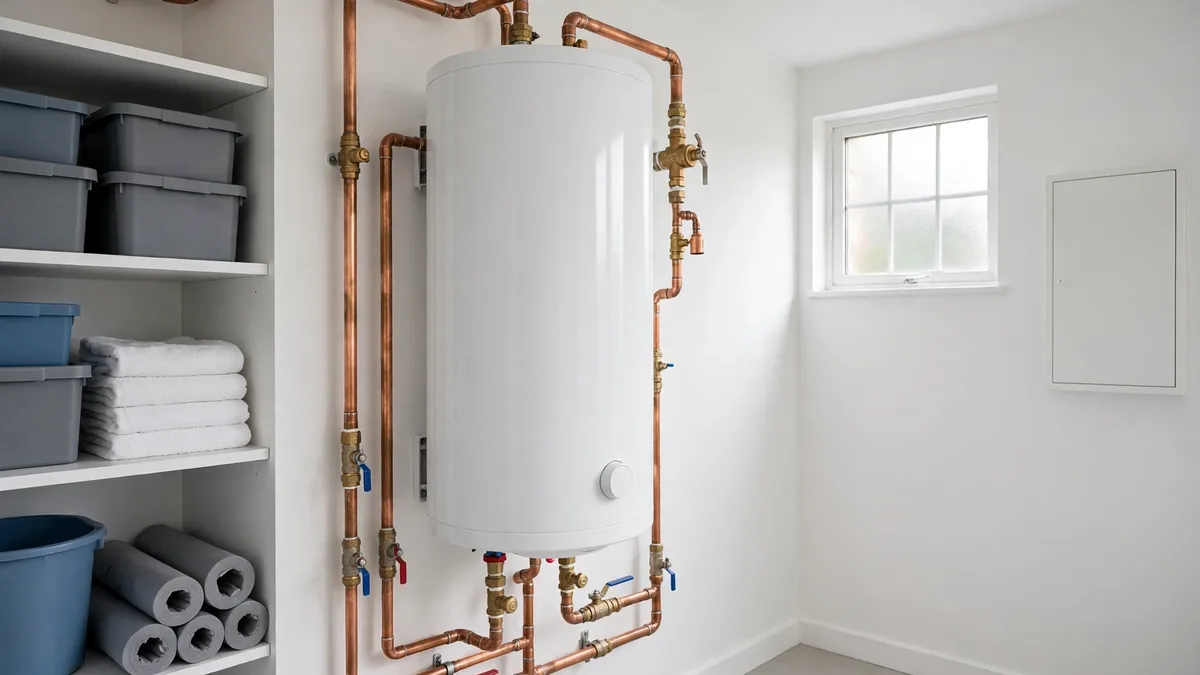
The new heater is then set in place, levelled and connected to the cold water inlet and the hot water outlet, with shut-off valves so it can be isolated for servicing. Gas heaters need a gas connection and a flue or vent to carry exhaust gases outside, while electric heaters need a dedicated electrical circuit of the right size. The installer then fills the heater, checks for leaks, tests the temperature and shows the homeowner how the controls work.
Storage tanks and tankless heaters
The two main types of water heater work in different ways. A storage tank heater keeps a tank of water hot around the clock, so hot water is ready whenever a tap opens, and the tank refills and reheats as water is used. It is the common choice in many homes, and its size is chosen to match the household, since a tank that is too small runs out of hot water at busy times.
A tankless heater, also called an on-demand heater, has no tank and heats water only when a tap opens, passing it over a heating element or burner as it flows through. It takes up less space and never runs out of hot water in the way a tank can, but it needs a strong gas supply or electrical capacity to heat water fast enough. Which type suits a home depends on the household’s hot water use, the space available and the existing gas and electrical supply, so an installer should look at the home before recommending one.
Finding a qualified installer near you
Start with the installers who work in your area, and look for the ones who specialise in water heaters rather than general handiwork. A good installer will be licensed for the work your home needs, which usually means plumbing, and gas or electrical licensing where those apply, and will carry insurance that covers their work. Ask to see the licence and the insurance, and check that both are current.
References matter as much as paperwork, so ask for recent local jobs you can ask about, and read reviews with a critical eye, looking for detail rather than praise alone. A reliable installer will visit your home before quoting, look at the existing heater, the pipes, the venting and the electrical panel, and then give a written quote that sets out the heater, the parts, the labour and the warranty. Be wary of anyone who quotes a firm figure sight unseen, pressures you to decide at once, or asks for full payment in advance.

Questions to ask before work begins
Before you agree to anything, ask which type and size of heater the installer recommends and why, and whether your gas supply or electrical panel can support it. Ask whether a permit is needed in your area and whether the installer will arrange it, since many places require a permit and an inspection for water heater work, and the installer should handle that paperwork.
Ask what the quote covers, including removal of the old heater, new valves and fittings, venting changes, any electrical work and disposal, and ask what is not covered, so nothing surprises you later. Ask about the warranty on both the heater and the work itself, and how long each lasts, and ask how long the job will take and whether your water will be off during it. A clear, written answer to each of these is a sign of a professional, while vague answers are a reason to keep looking.
What happens on the day
On the day of the job, clear the area around the heater so the installer can work, and keep children and pets out of the way, since the work involves heavy lifting, hot water and tools. The installer will turn off the water and the power or gas, drain the old heater, and remove it, which can take a while if the tank is large or hard to reach.
Once the new heater is connected, the installer fills it, checks every joint for leaks, and runs hot water at a tap to confirm the temperature and flow. For gas heaters, the flue and venting are checked to make sure exhaust gases leave the home safely, and for electric heaters, the circuit is tested. Before leaving, a good installer will show you the controls, explain the temperature setting, point out the shut-off valves and the pressure relief valve, and leave the area clean.
Water heater types compared
The table below sets out the main heater types in general terms, so you can follow the conversation with your installer.
| Type | Best for | Keep in mind |
|---|---|---|
| Storage tank, gas | Homes with a gas supply and steady hot water use | Needs venting to carry exhaust gases outside |
| Storage tank, electric | Homes without gas, or with simple venting needs | Needs a dedicated electrical circuit |
| Tankless, gas | Endless hot water and saving space | Needs a strong gas supply to heat water fast |
| Tankless, electric | Small households and point-of-use heating | Needs high electrical capacity for whole homes |
| Heat pump hybrid | Lower running costs in suitable homes | Needs space and air flow around the unit |
| Point-of-use heater | A single tap or shower far from the main heater | Heats only that outlet, not the whole home |
Your water heater installation checklist
Work through this list before you book anyone.
- Decide what is wrong with the current heater, and whether repair or replacement fits better.
- Look for local installers who specialise in water heaters, not general handiwork.
- Check licences for plumbing, gas and electrical work, and confirm they are current.
- Confirm the installer carries insurance that covers their work.
- Ask for recent local references and read reviews for detail, not just praise.
- Get a written quote after a home visit, covering the heater, parts, labour and warranty.
- Ask whether a permit is needed and whether the installer will arrange it.
- Agree the heater type and size, and ask how the installer chose them.
- Ask where the heater will drain, and how the pressure relief valve is routed.
- Keep the warranty papers and the installer’s details somewhere safe after the job.
Frequently asked questions
Do I need a professional to install a water heater?
Yes. A water heater mixes water, heat and often gas or high-voltage electricity, so the work needs a qualified, licensed professional. A poor installation can leak, scald, damage the home or, with gas, put the household at risk, and it can also void the warranty on the heater.
How do I find a water heater installer near me?
Look for local installers who specialise in water heaters, check their licences and insurance, and ask for recent local references. A good installer will visit your home before quoting and give a written quote that sets out the heater, the parts, the labour and the warranty.
How long does a water heater installation take?
It depends on the home and the heater, but a straightforward replacement of a similar heater often takes a few hours, while a change of type or location can take longer. Your installer should tell you how long the job will take and whether your water will be off during it.
Do I need a permit to install a water heater?
In many areas, yes. Water heater work often needs a permit and an inspection, and the installer should know the local rules and arrange the paperwork. Ask about this before work begins, and be wary of anyone who suggests skipping a required permit.
Should I choose a tank or a tankless heater?
It depends on your home. A storage tank keeps hot water ready and suits steady use, while a tankless heater heats water only when a tap opens and never runs out in the same way. Your installer should look at your household’s hot water use, space and existing gas and electrical supply before recommending one.
What should I do if my new heater leaks?
Turn off the water supply to the heater if you can do so safely, turn off the power or gas to it, and call the installer at once. Do not try to repair a leaking heater yourself, and keep clear of any water near electrical parts. A new installation should be covered by the installer’s warranty.
The bottom line
Finding a water heater installer near you is a job of checking, not guessing: confirm the licence and insurance, get a written quote after a home visit, and ask about permits, venting and warranty before work begins. For more on keeping a home running well, see our guide to plumbing repair, our emergency septic pumping near me, and our advice on how to stay young.
Safety note: water heaters involve hot water, gas and electricity, and a faulty installation can scald, leak, cause fire or release carbon monoxide. Always use a licensed professional, never work on gas or electrical connections yourself, and call a professional at once if you smell gas, see scorching or hear unusual noises from the heater.