Easy Peruvian recipes at home begin with five classics: ceviche, lomo saltado, ají de gallina, arroz chaufa and papa a la huancaína. Peruvian cooking is bright and layered, shaped by the Andes, the Pacific and the Chinese and Japanese kitchens that settled in Lima, and most of its best-known dishes use everyday ingredients.
This guide gives each dish a straightforward home method, plus the pantry behind Peruvian cooking. No dish here needs specialist equipment, and every one suits a shared table.
Key takeaways
- Peruvian cooking blends Andean, Spanish and Asian influences, with lime, chilli, potatoes and rice at the centre.
- Ceviche is raw fish cured in lime juice with onion, chilli, sweet potato and corn.
- Lomo saltado is a stir-fry of beef, onion and tomato, served with chips and rice.
- Ají de gallina is chicken in a creamy sauce made with yellow chilli, walnuts and bread.
- Arroz chaufa is Peruvian fried rice, and papa a la huancaína is potatoes in a creamy cheese sauce.
The Peruvian pantry: what to have ready
Peruvian cooking leans on a small set of flavours that repeat across the whole cuisine. Lime juice is the foundation, used to cure ceviche and to sharpen sauces, while ají amarillo, the yellow chilli, gives many dishes their colour and gentle heat. Garlic, cumin and red onion add warmth, and soy sauce appears wherever the Chinese influence shows.
Potatoes are the backbone of the Peruvian table, and Peru grows hundreds of varieties. Long-grain white rice appears at almost every meal, and sweet potatoes and corn sit beside the fish in ceviche.
Chilli pastes are worth keeping in the cupboard. Ají amarillo paste is the most useful, and it is sold in jars in many supermarkets and Latin American shops.
Best for: a well-stocked start — limes, ají amarillo paste, garlic, red onions, potatoes and long-grain rice.
Ceviche: fish cured in lime juice
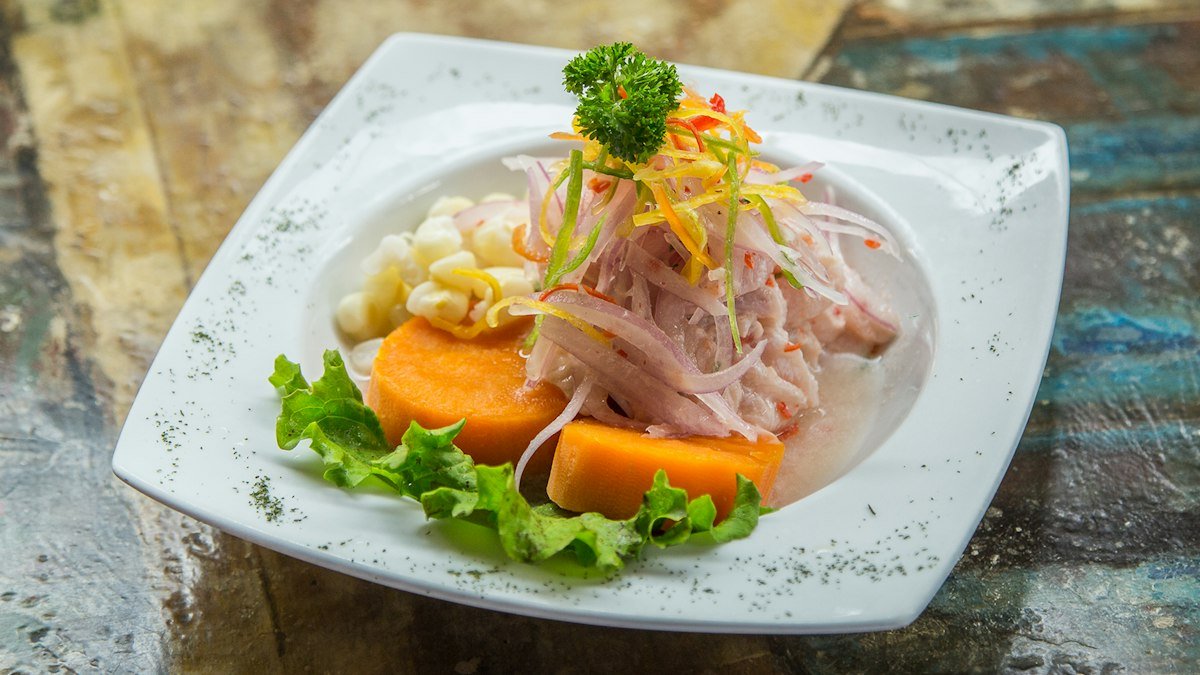
Ceviche is the most famous Peruvian dish, and it is also the simplest on this list. Cubes of very fresh white fish are cured in lime juice with sliced red onion and chilli, then served with sweet potato and corn on the cob. The acid in the lime firms the fish and turns it opaque, and the dish is eaten within minutes of making it.
To make it at home, cut 500 grams of very fresh white fish, such as sea bass or cod, into bite-sized cubes, and put them in a bowl with the juice of four limes, a finely sliced red onion and a chopped chilli. Leave the fish for ten to fifteen minutes, until the edges turn opaque, then drain off most of the juice and season with salt. Serve at once with slices of boiled sweet potato and corn.
Ceviche depends on freshness more than any other dish on this list. Buy the fish on the day you cook it, keep it cold until the moment it goes in the bowl, and never keep leftover ceviche for the next day.
Best for: a bright summer lunch — fresh, sharp and ready in fifteen minutes.
Lomo saltado: beef stir-fry with chips and rice
Lomo saltado is Peru’s stir-fry, a dish that shows the Chinese influence on Peruvian cooking. Strips of beef are fried fast with onion, tomato and soy sauce, then tossed with chips and served over white rice. It is a restaurant dish that is easy to cook at home, and it is on the table in about twenty minutes.
To make it at home, cut 500 grams of beef fillet or sirloin into strips and season with salt and cumin. Heat a little oil in a wide pan until it is very hot, then fry the beef in batches for a minute or two, so it browns without stewing. Set the beef aside, fry a sliced red onion and two chopped tomatoes in the same pan, add a splash of soy sauce and a little vinegar, then return the beef and toss in a handful of hot chips.
Serve lomo saltado over white rice, with the chips mixed through the beef rather than on the side.
Best for: a fast weeknight supper — beef, chips and rice in a single pan.
Ají de gallina: chicken in a creamy yellow sauce
Ají de gallina is a mild, creamy chicken stew from Lima, and it is one of the most comforting dishes in Peruvian cooking. Shredded chicken is folded into a sauce made with ají amarillo, walnuts, bread and milk, then served over rice with a boiled egg and black olives.
To make it at home, poach two chicken breasts in water with an onion and a bay leaf for about fifteen minutes, until they are cooked through, then shred the meat with two forks. Soften a chopped onion and garlic in oil, add two spoonfuls of ají amarillo paste, then stir in a slice of bread soaked in milk and a handful of ground walnuts. Blend the sauce until it is smooth, return it to the pan with the chicken and a splash of the poaching liquid, and warm it through gently.
Serve ají de gallina over white rice, with a halved boiled egg and a few black olives on top.
Best for: a gentle family supper — creamy, mild and kind to uncertain appetites.
Arroz chaufa: Peruvian fried rice
Arroz chaufa is Peru’s fried rice, a dish that arrived with Chinese cooks in the nineteenth century and became a Peruvian staple. Cold rice is fried fast with egg, spring onions, soy sauce and whatever protein is to hand, and it is the best way to use up leftover rice.
To make it at home, cook two cups of rice the day before and chill it in the fridge, since cold rice fries without going sticky. Heat a little oil in a wide pan, scramble two eggs and set them aside, then fry a chopped onion, garlic and a handful of diced chicken or prawns. Add the cold rice and a splash of soy sauce, toss everything over high heat for a few minutes, then stir in the egg and a handful of chopped spring onions.
Serve arroz chaufa as a main course on its own, or as a side with lomo saltado or grilled chicken.
Best for: using up leftovers — cold rice, an egg and whatever is in the fridge.

Papa a la huancaína: potatoes in cheese sauce
Papa a la huancaína is a cold starter from the highlands around Huancayo, and it is one of the simplest dishes in Peruvian cooking. Boiled potatoes are served on lettuce leaves and covered with a smooth, pale yellow sauce made from cheese, milk, ají amarillo and crackers.
To make it at home, boil four large floury potatoes until they are tender, then peel them and leave them to cool. Blend a cup of crumbled feta or queso fresco with a splash of milk, two spoonfuls of ají amarillo paste and a few plain crackers, until the sauce is thick and smooth. Slice the cold potatoes, lay them on lettuce leaves, and spoon the sauce over the top, finishing with a halved boiled egg and a few black olives.
The sauce can be made a day ahead and kept in the fridge. Adjust the thickness with a little more milk, and taste for salt, since the cheese is already salty.
Best for: a cool first course — creamy, mild and ready ahead of time.
| Dish | Main ingredients | Time | Best for |
|---|---|---|---|
| Ceviche | White fish, lime, red onion, chilli | About 15 minutes | A bright summer lunch |
| Lomo saltado | Beef, onion, tomato, soy sauce | About 20 minutes | A fast weeknight supper |
| Ají de gallina | Chicken, ají amarillo, walnuts, milk | About 45 minutes | A gentle family supper |
| Arroz chaufa | Cold rice, egg, soy sauce, spring onion | About 20 minutes | Using up leftovers |
| Papa a la huancaína | Potatoes, cheese, ají amarillo | About 40 minutes | A cool first course |
| Causa | Mashed potato, lime, avocado, tuna | About 1 hour | A layered cold terrine |
Cooking Peruvian food safely: a checklist
Peruvian cooking is bright and forgiving, but a few habits keep every dish on this list safe.
- Buy fish for ceviche on the day you cook it, keep it cold, and eat the ceviche within hours of making it.
- Never keep leftover ceviche for the next day, and throw away fish that smells strong or feels slimy.
- Cook beef strips fast in a very hot pan, and do not crowd the pan, or the meat will stew instead of browning.
- Poach chicken until it is cooked through, with no pink meat left at the centre and clear juices.
- Get cooked rice into the fridge within two hours, since it spoils faster than most foods.
- Warm rice and leftovers right through until they are piping hot.
- Wash hands and boards after touching raw fish or meat, and keep raw and cooked food separate.
- Store sauces and leftovers in shallow containers in the fridge, and use them within three to four days.
Good tools make Peruvian cooking easier. The guide to best slow cookers covers models that handle a long, gentle stew with no attention, and the article on best soups for winter has pots and bowls that suit a potato-rich table. For the tea that follows a meal, the guide to best tea brands covers blends that suit a Peruvian supper.
Frequently asked questions
What is the most famous Peruvian dish?
Ceviche, raw fish cured in lime juice with onion, chilli, sweet potato and corn, is the dish most often named as Peru’s national dish, and lomo saltado is usually named alongside it. Both are served all over the country.
Is ceviche safe to eat at home?
Yes, if the fish is very fresh. Buy it on the day you cook it, keep it cold until the moment it goes in the bowl, and eat the ceviche within hours. Lime juice firms the fish, but it does not cook it in the same way as heat.
What is ají amarillo?
Ají amarillo is a yellow chilli from Peru, with a fruity flavour and a gentle heat. It is sold as a paste in jars, and a spoonful goes into sauces, soups and marinades all over Peruvian cooking.
What is leche de tigre?
Leche de tigre, tiger’s milk, is the lime juice left over after making ceviche, flavoured with fish, onion and chilli. It is served in small glasses alongside the ceviche, and it is also used as a base for seafood cocktails.
Can I make lomo saltado without beef?
Yes. Chicken strips or firm tofu work well in the same method, fried fast in a hot pan with onion, tomato and soy sauce, then tossed with chips and served over rice.
What do Peruvians eat with ceviche?
Ceviche is served with boiled sweet potato and corn on the cob, and sometimes with toasted corn kernels for crunch. The sweet potato balances the sharp lime, and the corn adds texture.
The bottom line
Easy Peruvian recipes at home are about bright flavours and simple methods: fish cured in lime, beef fried fast in a hot pan, and chicken folded into a creamy yellow sauce. No dish on this list needs rare ingredients or fussy technique.
Start with ceviche for a quick win, then try lomo saltado on a weeknight and ají de gallina when you want something gentle.
A short safety note: use very fresh fish for ceviche and eat it the same day, cool rice quickly and refrigerate it within two hours, and reheat leftovers until steaming hot. Bin food that smells off rather than taking a chance on it.