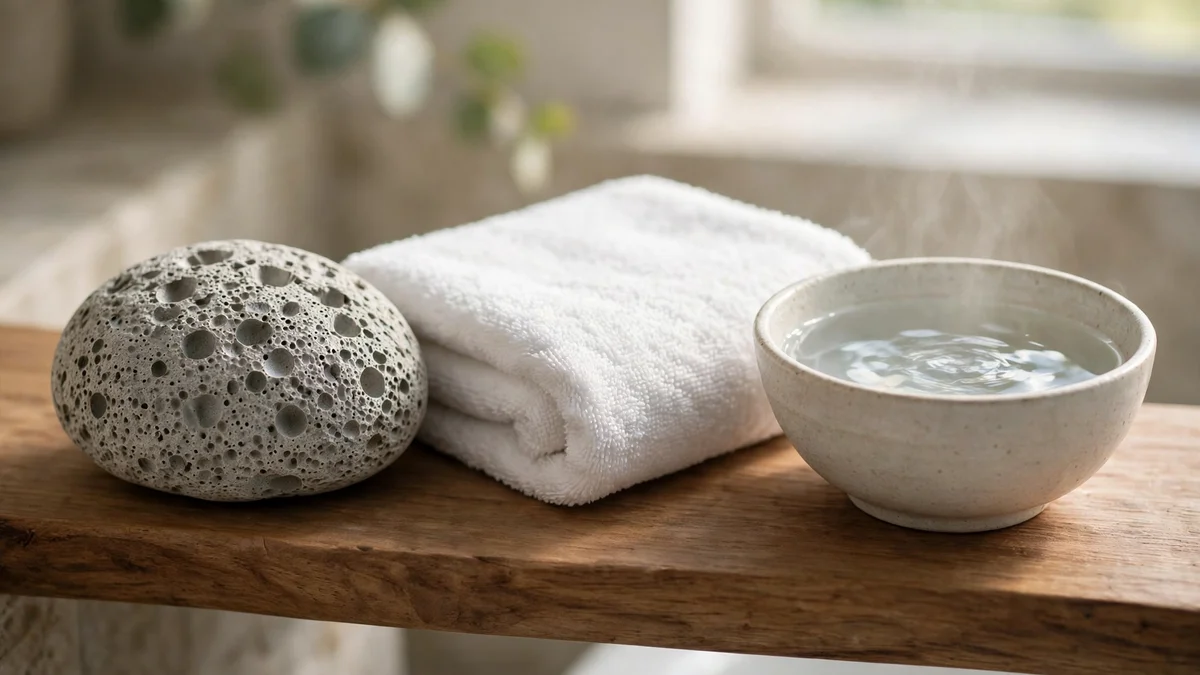

A pumice stone is a light, porous volcanic rock that has been used for centuries to smooth rough skin, especially on the feet. It forms when gas-rich lava erupts and cools so quickly that the bubbles of gas are frozen into the rock, leaving a stone that is mostly air. The result is a natural exfoliator: rough enough to lift dead skin, gentle enough to use at home, and cheap to replace. This guide explains what it is, how it forms, and how to use one safely.
Key takeaways
- A pumice stone is volcanic glass full of tiny gas bubbles, formed when lava cools rapidly during an eruption.
- It is so porous that a dry piece floats on water, sometimes for years.
- Its main home use is exfoliating rough skin on the feet, heels, elbows and hands.
- Always use it wet, with light pressure, on soaked skin, and never on broken skin.
- Do not use one if you have diabetes, poor circulation or numbness in your feet without medical advice.
- Keep your stone clean and dry between uses, do not share it, and replace it when it goes smooth.
What is a pumice stone?
A pumice stone is a piece of pumice, a volcanic rock made of highly vesicular volcanic glass: glass full of small holes, which are the bubbles of gas trapped in the lava as it cooled. The rock is usually pale, from white and cream through grey and blue to green-brown and black, and it feels rough and light in the hand. The name comes from the Latin pumex, meaning foam: pumice is, in effect, solidified froth.
What makes pumice unusual is how much of it is empty space. Between 64 and 85 per cent of its volume is pores, and a dry piece floats on water, sometimes for years, until the pores fill and it slowly sinks. The same lightness makes it useful as a lightweight aggregate in concrete, as a filter material, and as an abrasive.
Not every porous volcanic rock is pumice. Its darker cousin, scoria, is also full of bubbles, but it has larger holes, thicker walls, a dark colour and a higher density. Pumice also comes as a fine powder called pumicite, made of particles less than four millimetres across, which is used in polishes. Pumice on Wikipedia sets out the geology in full.
How a pumice stone forms
Pumice forms during explosive volcanic eruptions, when magma rich in dissolved gases rises and the pressure on it drops suddenly. The gases come out of solution and form bubbles, much as carbon dioxide bubbles form when a bottle of fizzy water is opened. At the same moment, the molten rock cools very fast and freezes into glass before the bubbles can escape: a solid foam of thin glass walls around thousands of tiny air pockets.
The speed of the process is what matters. If the lava cooled slowly, the atoms would arrange themselves into crystals, and the rock would be dense and heavy. Because pumice cools in moments, most of its structure stays as glass. That is why a pumice stone feels like stiff foam, and why its surface is so abrasive: the edges of the broken bubble walls act like hundreds of tiny files.
Pumice is found wherever explosive eruptions have happened, and it is mined in open pits in Italy, Greece, Turkey, Iran, Chile and the United States. Turkey is the largest producer. A piece picked up on a beach may have travelled far: floating pumice can wash up thousands of miles from its eruption.
What a pumice stone is used for
The best-known use is skin care. A pumice stone is a mechanical exfoliator: it removes dead skin cells by rubbing them away, rather than dissolving them with chemicals. It works best on tough skin, and its classic job is the feet, where it smooths calluses, corns and cracked heels. It is also used on the elbows, knees and hands, although most dermatologists advise against using a stone on the face, where the skin is thinner.
The stone has uses beyond the bathroom. Ground pumice is an abrasive ingredient in some tooth polishes used by dentists, and pumice is used to clean stubborn surfaces and to distress denim in stone-washing. In the garden, it is valued as a soil additive that holds water and air and drains well, which suits succulents. It is also used in lightweight building blocks and concrete.
How to use a pumice stone on your feet
Using a pumice stone well is a matter of preparation, gentle pressure and patience. The routine takes about ten minutes, and it works best as part of a bath or shower, when the skin is already warm and soft. Done properly, it leaves the feet smoother; done roughly, it can remove too much skin and leave them sore.
Start by soaking the feet in warm, soapy water for five to ten minutes, until the hard skin feels soft. Wet the stone too, and keep it wet: a dry stone is far harsher. Rub the stone over the rough areas in light, circular movements, using little pressure, for two to three minutes on each foot. Concentrate on the heels, the balls of the feet and the sides of the toes.
When you have finished, rinse the feet and the stone, pat the feet dry, and apply a thick moisturiser while the skin is still slightly damp. Clean the stone under running water, scrubbing out any skin caught in the pores with an old toothbrush, and leave it somewhere it can dry completely. A stone that stays wet can grow bacteria.
| Rock | How it forms | Colour and weight | Main uses |
|---|---|---|---|
| Pumice | Gas-rich lava cools very fast in an explosive eruption | Pale, very light, floats on water | Exfoliating skin, lightweight concrete, horticulture |
| Scoria | Similar eruptions, with less gas and thicker bubble walls | Dark brown to black, denser than pumice | Landscaping, drainage, barbecue stone |
| Pumicite | Powdered pumice, particles under 4 mm | Pale grey powder | Fine abrasive, polishes, cleaning powders |
| Obsidian | Lava cools fast with almost no gas bubbles | Black volcanic glass, heavy and smooth | Ornaments, blades, jewellery |

When not to use a pumice stone
A pumice stone is safe for most people, but there are times to leave it alone. Never use one on broken skin, on a cut, blister, sunburn or open wound, or on skin that is infected or inflamed. The stone removes the surface of the skin, and on damaged skin that can open the way to infection. Stop at once if the skin feels sore, stings or bleeds.
Some people should not use a pumice stone on their feet at all without medical advice. That includes people with diabetes, especially those with numbness or poor circulation in their feet, because they may not feel it if the stone removes too much skin. The same caution applies to people with nerve damage, a bleeding disorder, or anyone taking blood-thinning medicine. If any of that applies to you, ask a doctor, nurse or podiatrist first.
Do not share a pumice stone, even with family. The pores can hold skin cells and moisture, and sharing spreads bacteria and fungi, including the fungi that cause athlete’s foot. Give each person their own stone, keep it clean, and let it dry between uses. Replace the stone when it wears down: a smooth stone has lost its cutting surface, and a very small one is hard to hold safely.
Choosing and caring for a pumice stone
Pumice stones come in several shapes, and the shape matters more than the brand. A flat stone suits large areas such as the heel and the sole, while a rounded stone fits the curves of the ankle and the sides of the toes. Some have a handle or a cord, which helps if grip is a problem, and some are double-sided, with a coarser side for rough skin and a finer side for finishing.
Before first use, rinse the stone and check it for loose grit. After each use, rinse it well, scrub it with a brush, and set it somewhere dry and airy, rather than on the shower floor. Once in a while, soak it in warm water with a little washing-up liquid. If the stone develops a smell, or stays damp and discoloured, throw it away.
A checklist for using a pumice stone safely
- Soak the skin in warm water for five to ten minutes before you start.
- Wet the stone and keep it wet while you work.
- Use light pressure and small circular movements, for two to three minutes per foot.
- Stop when the skin feels smooth; do not try to remove a thick callus in one sitting.
- Never use a stone on broken, sunburnt, infected or inflamed skin.
- Moisturise after exfoliating, while the skin is still slightly damp.
- Clean the stone after every use and let it dry completely.
- Do not share your stone, and replace it when it goes smooth or too small to hold.
Frequently asked questions
What is a pumice stone made of?
A pumice stone is a piece of pumice, a volcanic rock made of volcanic glass full of tiny gas bubbles. It forms when gas-rich lava erupts and cools so quickly that the bubbles are frozen into the rock.
Does a pumice stone float?
Yes, a dry piece floats. Pumice is so full of air that it weighs less than the water it displaces, and it can float for months or even years until its pores fill and it slowly sinks.
Can you use a pumice stone every day?
You can, but most people do not need to. Once or twice a week is enough, and daily use can remove too much skin and leave the feet sore. Thick calluses are better reduced gradually over several days.
Can you use a pumice stone on your face?
Most dermatologists advise against it. The skin on the face is thinner and more sensitive than the skin on the feet, and a stone can cause redness and irritation. If you want to exfoliate your face, use a product made for the face, such as a gentle scrub, rather than a stone.
How do you clean a pumice stone?
Rinse it under running water after every use and scrub the pores with an old toothbrush. Let it dry completely in a dry, airy place. Throw it away if it smells, stays damp or becomes discoloured.
What is the difference between pumice and scoria?
Both are porous volcanic rocks, but scoria has larger bubbles, thicker walls, a dark colour and a higher density, while pumice is pale, very light and floats. Pumice is the better exfoliator because its bubble walls are thin and sharp.
The bottom line
A pumice stone is a small piece of a volcano that turns out to be one of the simplest tools in the bathroom: a light, porous rock that smooths rough skin, cleans stubborn surfaces and lightens concrete, all because it is mostly air. Use it wet, use it gently, keep it clean, and replace it when it wears smooth. For more on caring for the home and the body, read our guide to how to clean soapstone countertops, our guide to how to polish wood furniture, and our guide to dandelion tea.
Safety note: do not use a pumice stone on broken, sunburnt or infected skin, and do not use one on your feet without medical advice if you have diabetes, poor circulation or numbness in your feet. Stop at once if the skin feels sore or bleeds.