
Learning how to clean soapstone countertops is simpler than most new owners expect, because soapstone is a dense, non-porous stone that needs little more than warm water and a soft cloth for everyday care. The central question is straightforward: what should you use on soapstone, and what should you keep away from it? Use mild soap and water for daily cleaning, treat stains with a gentle paste, and oil the surface now and then if you want the darker, richer look that many owners love.
Soapstone has been used for worktops, sinks and hearths for generations, and part of its appeal is that it ages gracefully. It does not need sealing the way granite or marble does, it resists heat well, and it shrugs off most spills. What it does do is scratch more easily than harder stones, and its colour deepens with use.
Key takeaways
- Warm water and a drop of mild washing-up liquid handle nearly all daily cleaning.
- Never use harsh chemicals, bleach or abrasive scouring pads on soapstone.
- A paste of bicarbonate of soda and water lifts most food and drink stains.
- Mineral oil darkens the stone and hides small scratches, but it is optional.
- Soapstone needs no sealing, unlike granite and marble.
- Light scratches can be sanded out gently with fine sandpaper and then oiled.
What makes soapstone different
Soapstone is a metamorphic rock made mostly of talc, which gives it a soft, almost soapy feel under the hand. That talc content is also why it scratches more easily than granite: a knife dragged across the surface can leave a mark, and a heavy pan set down hard can chip an edge. The trade-off is that soapstone is remarkably dense and non-porous, so liquids sit on the surface instead of soaking in. Red wine, coffee and cooking oil may stain the surface, but they rarely penetrate deeply, and most marks can be cleaned away.
The stone is usually a soft grey-green when it is first installed, and it darkens over time as it absorbs oils from cooking and from hands. Some owners love this natural darkening and let it happen on their own. Others apply mineral oil to darken the whole surface evenly and bring out the veining. Neither approach is right or wrong; it is a matter of taste, and the stone performs the same either way.
Heat is one area where soapstone excels. A hot pan can sit directly on the surface without the scorching that other stones might suffer, although most installers still suggest using a trivet out of habit.
Daily cleaning: the simple routine
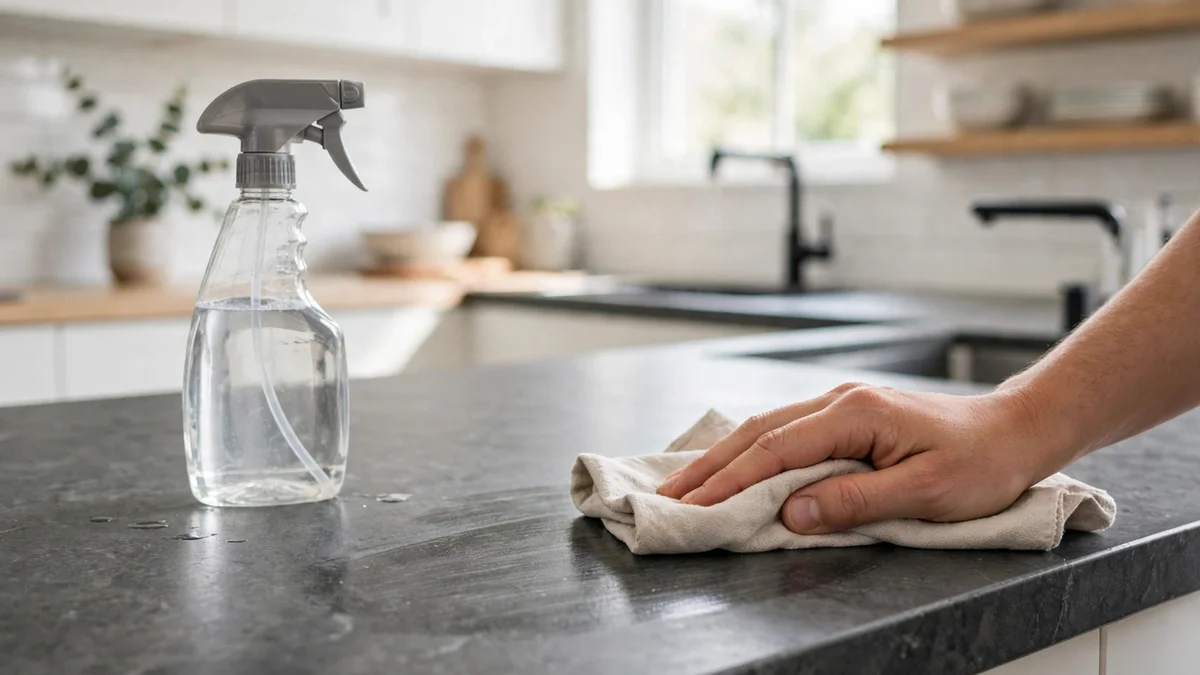
For everyday cleaning, warm water and a soft cloth are all you need. Wipe up spills as you go, and give the worktop a quick wipe after cooking. If the surface feels greasy, add a single drop of mild washing-up liquid to the cloth, wipe the area, and then rinse the cloth and wipe again with clean water so no soapy film is left behind.
Microfibre cloths work well because they lift grease without scratching, and a soft sponge is fine too. Avoid the green scouring side of a sponge, steel wool and any pad marketed as heavy duty, since all of these can leave fine scratches in the soft stone.
Drying matters. Water left to dry on soapstone can leave pale marks, especially in hard-water areas. A quick pass with a dry cloth after wiping keeps the surface even and streak-free.
Dealing with stains and marks
Most stains on soapstone are surface marks rather than deep damage. Coffee rings, tea marks, tomato sauce and red wine usually wipe away with warm soapy water if they are caught the same day. For a mark that has sat for longer, make a paste of bicarbonate of soda and a little water, spread it over the stain, and leave it for an hour or so before wiping it away with a damp cloth.
Grease marks are common near the hob, and they often look worse than they are. A little washing-up liquid left on the mark for a few minutes will usually cut through it, followed by a rinse and a dry wipe. If a pale ring remains, it is often just dried residue, and a second wipe with clean water clears it.
For a stubborn mark, spread the paste thicker, cover it with cling film, and leave it overnight before wiping it away. Avoid poultices made with hydrogen peroxide or bleach, which are too harsh for soapstone and can discolour it.
Oiling your soapstone worktop
Oiling is the step that surprises new owners most, because it changes the look of the stone dramatically. A thin coat of food-grade mineral oil darkens soapstone to a deep charcoal grey and makes the veining stand out. The effect is temporary: the oil slowly wears away with cleaning, and the stone lightens again over a few weeks.
To oil a worktop, clean it first and let it dry fully. Pour a small amount of mineral oil onto a soft cloth and rub it over the surface in even strokes, working in sections. Leave it for half an hour, then buff away the excess with a clean dry cloth. There should be no sticky or wet patches left behind; if the surface feels tacky, you have used too much, and another buffing pass will fix it.
How often you oil is entirely up to you. Some owners oil once a month to keep the dark look, others do it a few times a year, and some never oil at all and enjoy the lighter, natural grey. New worktops often need a few coats in the first months, applied a week or so apart. Use only food-grade mineral oil, sold for chopping boards and worktops, and never cooking oil, which can turn rancid and sticky.

Soapstone cleaning compared
Different cleaning jobs call for different methods, and using the right one saves time and avoids damage. The table below sums up the common approaches.
| Job | Method | Avoid |
|---|---|---|
| Daily wipe | Warm water and a soft cloth | Scouring pads and steel wool |
| Greasy marks | A drop of mild washing-up liquid | Oven cleaner and degreasers |
| Food and drink stains | Bicarbonate of soda paste | Bleach and peroxide poultices |
| Water marks | Wipe dry with a clean cloth | Leaving puddles to dry |
| Darkening the stone | Food-grade mineral oil | Cooking oil and furniture polish |
| Light scratches | Fine sandpaper, then oil | Coarse sandpaper and fillers |
What to avoid on soapstone
Soapstone is forgiving, but a few products can damage it. Bleach, ammonia-based cleaners, oven cleaner and strong degreasers are all too harsh and can discolour the surface or dry it out. Acidic cleaners, including vinegar-based sprays and lemon juice, should also be kept away, since acids can etch the stone over time. If you use vinegar elsewhere in the kitchen, keep it off the worktop.
Furniture polish and wax are another trap. They leave a film that attracts dust and turns patchy as it wears, and they are difficult to remove cleanly. The same applies to stone sealers sold for granite and marble: soapstone does not need sealing, and a sealer will sit on the surface, leaving a cloudy or sticky layer.
Sharp objects deserve respect too. Always use a chopping board rather than cutting directly on the worktop, and lift heavy pans rather than dragging them across the stone. A knife will leave a pale line, and a dragged cast-iron pan can leave a scratch that needs sanding to remove.
Fixing scratches and chips
Light scratches are a normal part of living with soapstone, and most can be fixed at home. For a fine surface scratch, rub the area gently with fine sandpaper, around 220 grit, working in the direction of the scratch, then wipe away the dust and apply a little mineral oil. The oil darkens the sanded area so it blends with the rest of the stone.
Deeper scratches need a little more patience. Start with a coarser paper, around 120 grit, and work up through finer grades, finishing with 220 or 320 grit before oiling. Take care to feather the edges of the sanded area so it does not stand out as a pale patch. If the scratch is very deep, or a corner has chipped, ask a stone specialist, since a bad repair can look worse than the original damage.
One reassuring fact is that soapstone scratches tend to fade on their own with oiling and everyday use. The stone darkens, the pale lines soften, and after a few months many owners stop noticing marks that seemed obvious at first.
Your soapstone cleaning checklist
Keep this list handy until the routine becomes second nature.
- Wipe up spills as soon as you notice them, before they dry.
- Clean daily with warm water and a soft microfibre cloth.
- Use only a drop of mild washing-up liquid when the surface is greasy.
- Dry the worktop with a clean cloth to prevent water marks.
- Use a chopping board for all cutting, every time.
- Lift heavy pans rather than dragging them across the stone.
- Keep bleach, vinegar sprays and oven cleaner away from the worktop.
- Treat stains with a bicarbonate of soda paste, not a harsh chemical.
- Oil with food-grade mineral oil only when you want the darker look.
- Sand out light scratches gently with fine paper, then oil the area.
Frequently asked questions
Can I use vinegar to clean soapstone countertops?
It is best not to. Vinegar is acidic, and acids can etch soapstone over time, leaving dull patches. Warm water with a drop of mild washing-up liquid cleans just as well and carries no risk, so there is no reason to reach for vinegar.
Does soapstone need to be sealed?
No. Soapstone is naturally non-porous, so it does not need a sealer the way granite and marble do. Sealing products sit on the surface instead of soaking in, and they can leave a cloudy film, so skip them entirely.
How often should I oil my soapstone worktop?
As often as you like the dark look. Some owners oil once a month, others a few times a year, and some never oil at all. New worktops usually take a few coats in the first months before the colour settles, then the routine is whatever suits you.
Will soapstone stain from red wine or coffee?
It can mark on the surface if a spill is left to dry, but the stone is non-porous, so the mark rarely goes deep. Warm soapy water removes most fresh marks, and a bicarbonate of soda paste handles the ones that have sat for a while.
Can scratches in soapstone be repaired?
Yes, light scratches can usually be sanded out at home with fine sandpaper, followed by a little mineral oil to blend the colour. Deeper scratches and chips are better left to a stone specialist, since a heavy-handed repair can stand out.
Is mineral oil safe to use on a kitchen worktop?
Food-grade mineral oil is the standard choice for soapstone and wooden chopping boards, and it is sold for exactly this purpose. Avoid cooking oils such as olive or vegetable oil, which can turn rancid and leave a sticky film.
The bottom line
Knowing how to clean soapstone countertops comes down to a short routine: warm water and a soft cloth every day, a drop of mild soap for grease, a bicarbonate paste for stains, and mineral oil only when you fancy the darker finish. The stone asks for very little, and in return it gives a worktop that handles heat and grows more handsome with use. For more gentle cleaning know-how, see our guide to how to wash silk, our advice on how to wash a wool blanket, and our easy Belgian recipes at home for putting a well-kept kitchen to good use.