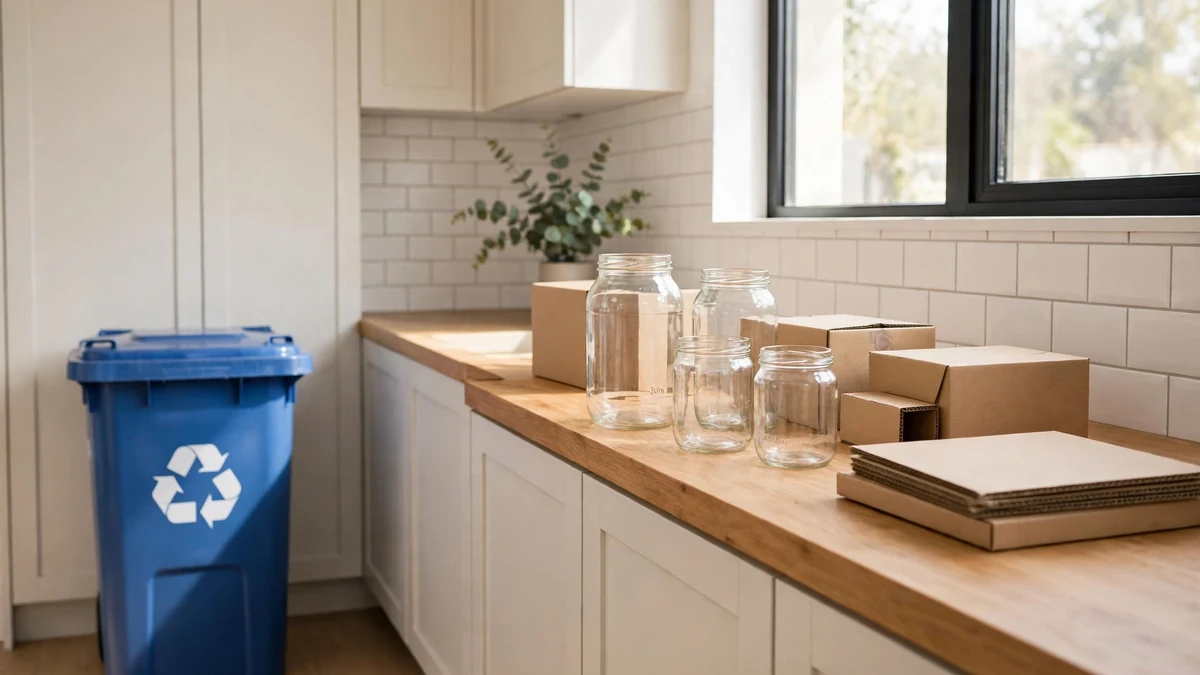

A recycling bin is only useful when the right things go into it, and the quickest way to get it right is to sort at the source: clean paper and card, rinsed plastic bottles and tubs, glass jars and bottles, and metal cans and tins all belong in the recycling bin, while food waste, soft plastics, batteries and greasy cardboard do not. Most household recycling fails not because people do not care, but because one wrong item in the bin can spoil a whole load. If you can learn the short list of what belongs and what does not, your recycling bin will do its job with very little effort.
The rules differ a little from one council to another, so the local list always wins over any general guide. That said, the basics are the same almost everywhere: dry, clean and loose items are welcome, while wet, dirty and tangled things cause trouble. Keep this guide near the bin for a week or two, and the sorting will soon become a habit you barely have to think about.
Key takeaways
- A recycling bin takes clean paper and card, rinsed plastic bottles and tubs, glass jars and bottles, and metal cans and tins.
- Food waste, soft plastics, batteries, nappies and greasy cardboard do not belong in the recycling bin.
- Rinse containers quickly so food residue does not spoil the rest of the load.
- Put items in loose, never bagged, so sorting machinery can handle them.
- Your council’s list always wins over a general guide, so check it before you change your routine.
- A clean bin smells less, lasts longer and is far easier to use every day.
What goes in a recycling bin?
The short answer is that a recycling bin takes dry, clean materials that can be sorted and reprocessed: paper, card, hard plastic, glass and metal. Newspapers, magazines, envelopes, cereal boxes and corrugated cardboard all belong, as do plastic drinks bottles, milk bottles, yoghurt pots and cleaning-product bottles. Glass jars and bottles go in too, along with food tins, drinks cans, aluminium foil trays and empty aerosol cans. These are the staples of the kerbside collection, and they make up the great bulk of what a household throws away.
What stays out is just as important. Food waste and garden waste belong in their own collections or the compost heap, not in the recycling bin. Soft plastics such as carrier bags, cling film and crisp packets are not accepted by most kerbside services, and neither are polystyrene, coffee cups with plastic linings, or black plastic trays, which sorting machines often cannot detect. Batteries, electrical items, textiles, nappies and broken glass such as mirrors and window panes need separate routes. When in doubt, the safest question is whether the item is clean, dry and made of one of the five accepted materials. If it is not, it belongs elsewhere.
How to sort recycling properly
Good sorting starts in the kitchen, not at the kerb. Keep the recycling bin where the waste is made, so the right thing lands in the right container without a trip across the room. A small caddy under the sink for food waste and a paper bag by the door for cardboard can take the pressure off the main bin. The habit that matters most is the rinse: a quick swill of a yoghurt pot or a sauce jar takes seconds and stops food residue from contaminating paper and card in the same load. You do not need to scrub anything spotless; you only need to remove the worst of the food.
Flatten cardboard boxes before they go in, because flat card stacks neatly and leaves room for everything else. Leave lids on plastic bottles where your council asks for them, and take them off where it asks the opposite; the local list settles this, and either way the bottle itself is recyclable. Put everything in loose rather than in a plastic bag, because bagged recycling is often pulled out at the sorting plant and sent to landfill. A reusable water bottle is a good example of the same thinking: the less single-use plastic you bring home, the less sorting you have to do at all.
Takeaway packaging deserves a special mention, because it is where most people go wrong. A clean pizza box can be recycled, but a box soaked in grease cannot, so tear off the clean lid and bin the greasy base. The same rule applies to a cardboard tray from a food lorry: if it is dry and clean it can go in, and if it is stained with oil or sauce it belongs in the general waste. Foil containers need a quick rinse and a scrunch into a ball before they go in. Once you know the grease rule, most takeaway decisions answer themselves.
How to clean a recycling bin
A recycling bin that is never cleaned becomes a smelly bin that nobody wants to use, so a wash every few weeks is worth the effort. Pick a dry day, empty the bin completely, and rinse the inside with a hose or a bucket of warm water. Add a little washing-up liquid and scrub the base and the lid seal with a long-handled brush, paying attention to the corners where liquid collects. Tip the dirty water onto a drain, not onto the garden, and leave the bin upside down with the lid open until it is fully dry. A dry bin resists smells far better than a damp one.
For stubborn smells, bicarbonate of soda scattered over the base and left overnight works well, and a splash of white vinegar helps with sticky residue. Avoid bleach unless the bin is badly soiled, and never mix cleaning products. If the bin lives outdoors, a tight-fitting lid keeps rain out, which matters more than most people realise: rainwater turns paper to pulp and adds weight that the collection crew has to deal with. A wooden bin store kept in good order, much like the care described in our guide to polishing wood furniture, keeps the bin sheltered and the area around it tidy. A clean, dry, sheltered bin is a bin that gets used properly.
Recycling bin sorting at a glance
| Material | Goes in the bin | Rinse first? | Common mistake |
|---|---|---|---|
| Paper and card | Newspapers, magazines, envelopes, cereal boxes | No | Greasy pizza boxes and wet paper |
| Hard plastic | Bottles, tubs, pots and trays | Yes, a quick rinse | Carrier bags and cling film |
| Glass | Jars and bottles | Yes, a quick rinse | Mirrors, window glass and ovenware |
| Metal | Tins, cans, foil trays and empty aerosols | Yes, a quick rinse | Foil too small to scrunch into a ball |
| Cardboard | Flattened boxes and corrugated card | No | Boxes left whole, wasting space |

Choosing the right recycling bin
Choosing a recycling bin is mostly a question of space and household size. A family of four fills a standard wheeled bin quickly, while a single person may manage with a slim indoor bin and a weekly trip to the kerbside container. Measure the space first, including the height under a worktop and the width of the path to the kerb, and remember that a wheeled bin needs clearance to tip. Indoor bins with two or three compartments help in a small kitchen, because they turn sorting into a single movement rather than a decision.
Look for a bin with a tight lid, sturdy handles and wheels that roll smoothly when full. A lid that seals well keeps smells in and rain out, while a foot pedal is worth having if you often have wet hands. Colour coding helps the whole household: green for garden waste where it applies, blue or grey for paper and card in some areas, and a clearly marked recycling bin for the rest. Whatever you choose, label it clearly, because a bin that everyone in the house can read is a bin that everyone uses correctly. The best recycling bin is not the most expensive one; it is the one that fits your space and your routine.
A checklist for recycling day
- Check your council’s collection calendar the night before, and note any bank holiday changes.
- Rinse bottles, jars, tubs and tins so food residue does not spoil the load.
- Flatten cardboard boxes and stack them flat inside the bin.
- Put items in loose, never inside a plastic bag.
- Remove greasy sections from pizza boxes and bin them with general waste.
- Keep batteries, electricals and textiles out of the recycling bin and use their own collection points.
- Close the lid fully so rain cannot get in and paper stays dry.
- Put the bin out the night before collection and bring it back in the same day.
Frequently asked questions
What can I put in my recycling bin?
You can put clean paper and card, rinsed hard plastic bottles and tubs, glass jars and bottles, and metal tins and cans in your recycling bin. Your council’s list is the final authority, because accepted items differ from one area to another. When you are unsure about an item, check the list before you put it in.
Do I need to rinse items before recycling them?
A quick rinse is enough for most containers. You do not need to wash them until they shine; you only need to remove food residue that could spoil paper and card in the same load. A swill under the tap or a shake with a little water does the job for jars, tubs, bottles and tins.
Can greasy cardboard be recycled?
No, cardboard soaked in grease or food cannot be recycled, because the oil interferes with the pulping process. Tear off the clean parts of a pizza box and recycle those, and put the greasy parts in your general waste or food waste collection. Dry, clean cardboard is always welcome in the recycling bin.
Why should recycling not go in a plastic bag?
Bagged recycling is hard for sorting plants to handle, because workers and machines cannot see what is inside. Most plants pull sealed bags out and send them to landfill or incineration, even when the contents are recyclable. Put items in loose so they can be sorted properly.
Can I recycle coffee cups?
Most disposable coffee cups cannot go in the kerbside recycling bin, because they are lined with a thin layer of plastic that is hard to separate from the paper. Some coffee shops and supermarkets run their own cup collection points, so take cups there instead. A reusable cup is the simplest way to avoid the problem altogether.
How often should I clean my recycling bin?
A wash every few weeks is enough for most households, with a quick rinse after any spill or leak. Warm water, washing-up liquid and a long-handled brush will handle most jobs, and leaving the bin to dry fully with the lid open prevents smells from returning. A clean bin is also a bin that the whole household is happy to use.
The bottom line
A recycling bin works best when the rules are simple and the routine is easy: clean and dry materials in, food and soft plastics out, everything loose, and the lid kept shut. Rinse your containers, flatten your cardboard, and check your council’s list when you are unsure. Do those few things and your recycling bin will do its job quietly, week after week, without smell, mess or wasted effort.