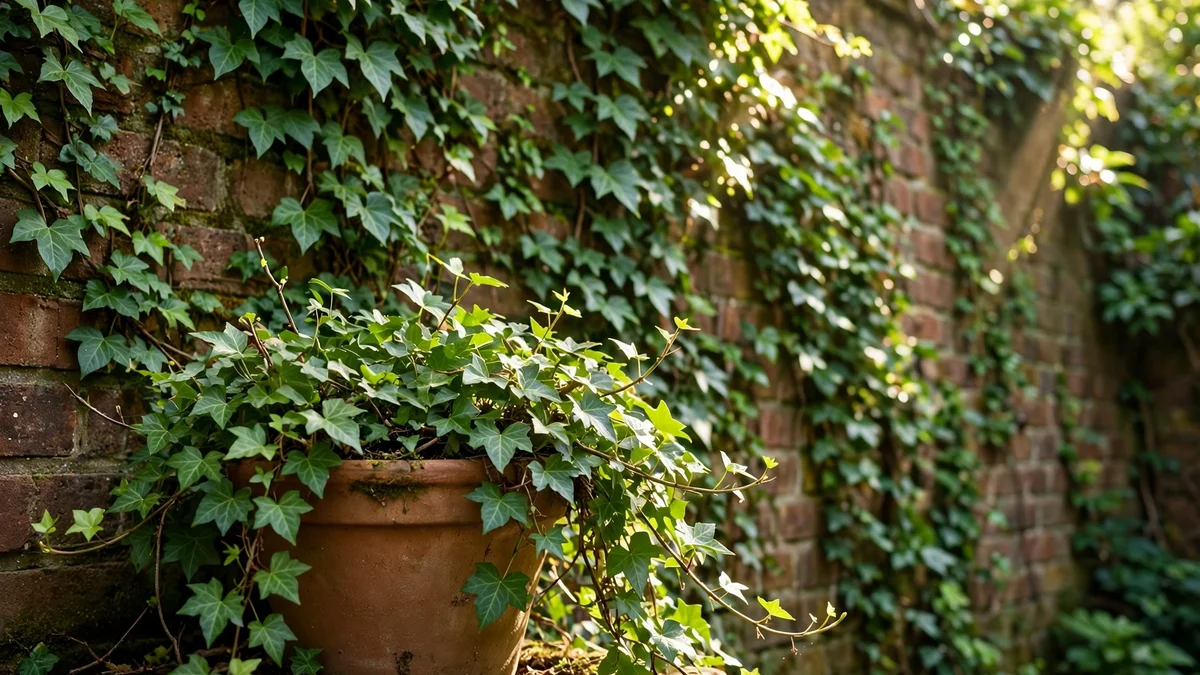

Ivy is one of the most forgiving plants a gardener can grow, thriving indoors in a pot or outdoors up a wall with only modest care. The central question is simple: what does ivy need to grow well? Bright indirect light, soil that stays lightly moist, and a pot or a patch of ground with good drainage, plus a trim now and then to keep it in shape. Give it those basics and it will reward you with fast, leafy growth for years.
There are several kinds of ivy, and they are not all the same plant. True ivies belong to the genus Hedera, and the best known is English ivy, with its familiar lobed leaves. Boston ivy, despite the name, is a different plant altogether, and it behaves differently too. This guide covers the true ivies, how to tell them apart, and how to keep them healthy inside and outside the home.
Key takeaways
- English ivy is the classic choice for pots, baskets and walls.
- Ivy likes bright indirect light and soil that stays lightly moist.
- Water when the top of the soil feels dry, and never let the pot sit in water.
- Prune in spring to keep ivy bushy and stop it taking over.
- Watch for spider mites and scale, the two pests that trouble ivy most.
- Ivy leaves and berries are toxic if eaten, so keep them away from children and pets.
Meet the main types of ivy
English ivy, Hedera helix, is the plant most people picture when they hear the word ivy. Its leaves are dark green, three to five lobed, and often veined with pale green or cream in variegated forms. It grows as a trailing vine indoors and as a climber outdoors, gripping walls and trees with small aerial roots. It is evergreen, so it keeps its leaves through winter, and it grows quickly once established.
Irish ivy, Hedera hibernica, is a close relative with larger, glossier leaves and a faster, more vigorous habit. It is often chosen for covering large walls or fences quickly, but that vigour means it needs firmer pruning. Algerian ivy, Hedera canariensis, has bigger leaves still and prefers warmer, sheltered spots; it is popular in mild climates and as a houseplant.
Boston ivy is not a true ivy. Boston ivy belongs to a different genus, Parthenocissus, and it is a deciduous climber that turns brilliant red in autumn before dropping its leaves. It clings with sucker discs rather than aerial roots, and it is often the plant covering grand old buildings. It is beautiful, but it needs different care from true ivy, including a hard prune in winter while it is bare.
Growing ivy indoors
Ivy makes an excellent houseplant because it tolerates the light levels found in most rooms. A spot near a bright window, out of direct midday sun, suits it best. Variegated forms need more light than plain green ones to keep their pale markings; in a dark corner they tend to revert to plain green. If the leaves look pale or the stems stretch long and bare, the plant is asking for more light.
Choose a pot with drainage holes and a free-draining compost, and water when the top couple of centimetres of soil feel dry. Ivy likes its soil lightly moist but hates sitting in water, which rots the roots. Empty the saucer after watering, and water less in winter, when growth slows.
Feed indoor ivy sparingly: a half-strength liquid feed once a month in spring and summer is plenty, and no feeding at all in winter. Too much fertiliser produces soft, leggy growth that attracts pests. Repot every year or two in spring, moving up just one pot size.
Growing ivy outdoors
Outdoors, ivy is a tough and versatile ground cover and climber. It grows in sun or shade, although it colours best with some light, and it tolerates most soils as long as they are not waterlogged. Plant it in spring or autumn, water it well for the first few weeks, and it will usually establish itself with little further help.
On a wall, ivy climbs by itself, sending out aerial roots that grip brick and stone. That self-climbing habit is convenient, but it deserves respect: on old or damaged walls, the roots can work into cracks and loosen mortar, and removing mature ivy from a wall can pull off render or paint. On a sound modern wall the risk is low, but it is worth checking the surface before letting ivy cover it.
As ground cover, ivy suppresses weeds and holds soil on banks where little else will grow. It spreads steadily, so give it room and be ready to cut back the edges once or twice a year. In a small garden, a pot or a contained bed is often wiser than open ground, where ivy can overwhelm slower neighbours.

Ivy compared
The main ivies suit different jobs, so it helps to compare them before choosing. The table below sums up the differences.
| Type | Best for | Watch out for |
|---|---|---|
| English ivy | Pots, baskets, walls and ground cover | Slow to start, then steady and persistent |
| Irish ivy | Covering large walls and fences fast | Very vigorous, needs firm pruning |
| Algerian ivy | Bold leaves in mild climates and indoors | Dislikes cold winds and frost |
| Boston ivy | Autumn colour on large buildings | Not a true ivy, loses leaves in winter |
| Variegated English ivy | Brightening a shady corner or shelf | Needs good light or it reverts to green |
| Miniature ivy | Small pots, terrariums and topiary | Dries out faster, needs regular watering |
Watering, feeding and pruning
Watering is where most ivy problems begin, and the rule is simple: water thoroughly, then wait until the top of the soil dries out before watering again. Ivy that is watered a little every day stays soggy and rots, while ivy that is left bone dry for weeks will drop leaves. A deep soak followed by a drying period suits it far better than constant damp.
Pruning is the other essential routine. Cut back long, bare stems in spring, just as growth resumes, and the plant will respond by branching and filling out. Indoors, pinch out the growing tips of young plants to encourage bushiness. Outdoors, cut back any stems that stray onto paths, gutters or neighbouring plants.
Training a young climber is easy: guide the stems towards a trellis, wire or wall and they will grip on their own. If a stem refuses to cling, tie it loosely with soft twine until its roots take hold. Never nail or staple stems to a wall, since the damage invites disease.
Common problems and pests
Yellow leaves are the most common complaint, and they usually point to watering. Leaves that yellow and drop from the base of the plant often mean overwatering, while dry, crisp leaf edges suggest underwatering or dry air. Check the soil before reaching for fertiliser or a new pot: the answer is usually in how wet or dry it is.
Spider mites are the pest to watch for indoors. They are tiny, hard to see, and they leave fine webbing and speckled, dusty-looking leaves, usually in warm, dry rooms. A regular shower of the foliage, wiping the leaves with a damp cloth, and raising the humidity around the plant all help. Badly affected stems are best cut off and thrown away rather than treated.
Scale insects appear as small brown bumps on stems and leaf stalks, and they feed on the sap, weakening the plant. They can be wiped off with a cloth dipped in soapy water, although a large infestation may need the affected stems removed. Outdoors, aphids sometimes gather on soft new growth in spring; a strong jet of water usually dislodges them.
Propagating ivy from cuttings
Ivy is one of the easiest plants to multiply. In spring or summer, cut a stem about ten centimetres long, just below a leaf joint, and remove the lower leaves. Place the cutting in a glass of water or in a pot of moist compost, and roots will usually appear within a few weeks. Once the roots are a few centimetres long, pot the cutting up and treat it like a young plant.
Outdoor ivy can also be layered: pin a low stem to the soil with a bent piece of wire, cover the pinned section lightly with compost, and wait. Roots form at the buried joint, and the new plant can be cut free once it is growing strongly.
Seed is possible but slow and unreliable, and the seedlings will not always resemble the parent, especially with variegated forms. Cuttings are the reliable way to get more of the exact plant you already like.
Your ivy care checklist
Keep this list near your plants until the routine feels natural.
- Give ivy bright indirect light, and more light for variegated forms.
- Use a pot with drainage holes and free-draining compost.
- Water when the top of the soil feels dry, then empty the saucer.
- Mist the leaves now and then in dry, heated rooms.
- Feed at half strength once a month in spring and summer only.
- Pinch out growing tips to keep indoor ivy bushy.
- Prune outdoors in spring and again in late summer.
- Check the undersides of leaves for spider mites each month.
- Keep ivy away from children and pets, since it is toxic if eaten.
- Take cuttings in spring to replace tired plants or share with friends.
Frequently asked questions
Is ivy easy to grow indoors?
Yes, it is one of the easiest houseplants. It tolerates ordinary room light, needs watering only when the top of the soil dries out, and forgives the occasional missed watering. Variegated forms need a brighter spot to keep their pale markings.
Does ivy damage walls?
On sound modern brickwork the risk is low, but on old, cracked or rendered walls the aerial roots can work into gaps and loosen mortar, and removing mature ivy can pull off paint or render. Check the wall first, and keep ivy away from damaged surfaces and gutters.
How often should I water ivy?
Water thoroughly, then wait until the top couple of centimetres of soil feel dry before watering again. Indoors that is usually once a week, less in winter. Never let the pot stand in water, since soggy roots are the most common cause of yellow leaves.
Is ivy poisonous?
Yes. Ivy leaves and berries contain compounds that are toxic if eaten, and the sap can irritate skin. Keep ivy out of reach of small children and pets, wash your hands after pruning, and never eat any part of the plant.
Why are my ivy leaves turning yellow?
Yellow leaves most often mean a watering problem: overwatering causes leaves to yellow and drop from the base, while dry soil and dry air cause crisp edges. Check the soil first, adjust your watering, and only then consider light or feeding.
Can I grow ivy from a cutting?
Yes, very easily. Cut a stem about ten centimetres long just below a leaf joint, remove the lower leaves, and stand it in water or moist compost. Roots usually appear within a few weeks, and the cutting can then be potted up.
The bottom line
Ivy earns its reputation as a beginner-friendly plant: it grows in sun or shade, indoors or out, asks for little more than light, water when the soil dries, and a trim now and then. Choose the right type for the spot, keep it away from damaged walls and from children and pets, and it will give you years of green growth. For more planting ideas, see our guide to the August birth flower, our notes on the cherry tree, and our look at the best rosemary oil for hair growth.