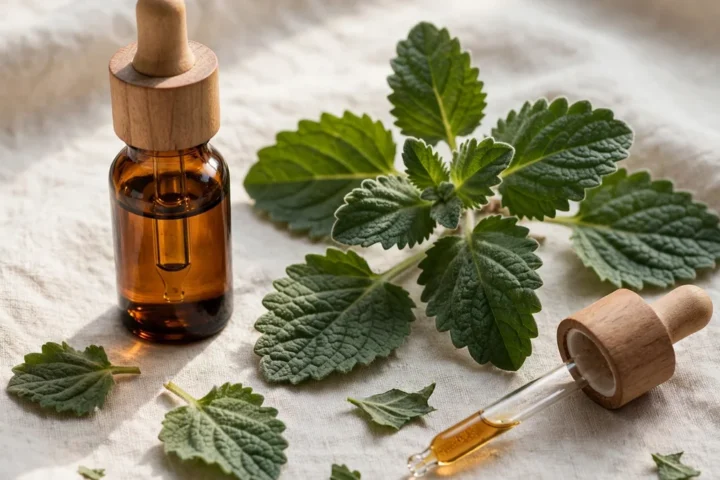

The best rosemary oil for hair growth is the one that fits how you actually plan to use it — and the first thing to know is that the evidence behind rosemary oil is limited. Rosemary oil has become one of the most talked-about hair care ingredients of the past few years, but the science is much thinner than the hype. The central question is simple: does rosemary oil help hair grow? The honest answer is that one small study found promising results, the wider evidence is thin, and rosemary oil is best treated as a scalp care habit rather than a treatment for hair loss.
This guide separates what is known from what is claimed. It covers the evidence, the products worth buying, how to use rosemary oil safely, and when to speak to a dermatologist instead.
Key takeaways
- The evidence for rosemary oil and hair growth is limited: one small 2015 study reported results similar to a low-strength minoxidil, and little has been proven since.
- Rosemary oil is best treated as a scalp care habit, not a treatment for medical hair loss.
- Pure rosemary essential oil must always be diluted in a carrier oil before it touches the scalp.
- Ready-made scalp oils are the simplest option; pure essential oils are the cheapest and most flexible.
- Always patch test first, and speak to a doctor or dermatologist if you are pregnant or have a scalp condition.
What the evidence actually says
The best-known evidence for rosemary oil and hair growth comes from a small study published in 2015, in which researchers compared rosemary oil with a 2% minoxidil solution in people with androgenetic alopecia, the common pattern of hair thinning. After six months, both groups showed similar improvements in hair count, and the rosemary oil group reported less scalp itching. The study was small, with around 100 participants.
Since then, very little high-quality research has followed. There are no large clinical trials of rosemary oil for hair growth, and there is no evidence that it works for hair loss caused by medical conditions, hormonal changes or scarring. Laboratory studies have suggested that rosemary contains compounds that may support circulation, but laboratory findings are not the same as proven results on a real scalp.
That does not make rosemary oil useless. Scalp massage with a diluted oil can feel good and can turn hair care into a regular habit, and a regular habit is what most hair routines need. The mistake is expecting a bottle of oil to do the work of a medical treatment: if hair is shedding suddenly or coming out in patches, that is a question for a dermatologist, not a shopping list.
Best for: readers who want an honest picture of rosemary oil — what it might do, what it cannot do, and how to use it safely.
| Product | Type | Best for | Use |
|---|---|---|---|
| Mielle Rosemary Mint | Ready-made scalp oil | An easy starting point | Direct to scalp |
| Weleda Rosemary Hair Oil | Ready-made hair oil | Classic, gentle care | Scalp and lengths |
| NOW Rosemary Essential Oil | Pure essential oil | Budget, flexible use | Dilute before use |
| Plant Therapy Rosemary | Pure essential oil | Quality and choice | Dilute before use |
| Aura Cacia Rosemary | Pure essential oil | Simple, widely available | Dilute before use |
| A DIY rosemary blend | Home blend | Full control of strength | Dilute before use |
Mielle Rosemary Mint Scalp and Hair Strengthening Oil
Mielle Rosemary Mint is the best-known rosemary hair oil on the market, and it is the easiest place to start. It is a ready-made scalp oil that blends rosemary oil with mint, biotin and a carrier base, so it can be applied directly to the scalp without dilution. It is one of the most widely reviewed hair oils of the past few years, with a large following among people with curly and coily hair.
The oil is light enough to use as a pre-wash treatment or a scalp massage oil, and the mint gives it a cooling feel on the skin. Use it a few times a week, massaged into the scalp and left for at least 30 minutes before washing out.
Best for: a first rosemary oil, and anyone who wants a ready-made scalp oil with no mixing required.
Weleda Rosemary Hair Oil
Weleda Rosemary Hair Oil is the classic European option, and it has been sold for decades. It is a ready-made oil that blends rosemary leaf extract with other plant oils, and it is designed for the scalp and the lengths of the hair rather than for the scalp alone.
Use it as a pre-wash treatment, warmed between the palms and worked through the scalp and hair, or as a small amount on the ends between washes. It is less intense than the pure essential oils on this list, which makes it a good choice for sensitive scalps and for people who want a mild, everyday oil.
Best for: sensitive scalps, everyday use, and readers who prefer a long-established natural brand.
NOW Foods Rosemary Essential Oil
NOW Foods Rosemary Essential Oil is a pure, undiluted essential oil, and it is the cheapest way to try rosemary oil properly. NOW is one of the most widely sold essential oil brands, and its rosemary oil is steam-distilled from the leaves of the rosemary plant. A small bottle lasts a long time, but it must always be diluted in a carrier oil before it touches the skin.
Mix two or three drops into a tablespoon of a carrier oil such as jojoba, sweet almond or fractionated coconut oil, then massage the blend into the scalp. This is the best option for readers who want full control over strength and ingredients.
Best for: a low-cost starting point, and anyone who wants to mix their own scalp blend.
Plant Therapy Rosemary Essential Oil
Plant Therapy Rosemary Essential Oil is another pure essential oil, and it is the best choice for readers who want quality and choice. Plant Therapy sells several types of rosemary oil, including the common cineole type and a gentler verbenone type, and each bottle is tested for purity.
Use it the same way as any pure essential oil: dilute two or three drops in a tablespoon of carrier oil, massage into the scalp, and wash out after 30 minutes or leave overnight before washing.
Best for: readers who want a tested, clearly labelled pure oil with a gentler option available.
Aura Cacia Rosemary Essential Oil
Aura Cacia Rosemary Essential Oil is a simple, widely available pure oil, and it is the best choice for readers who want to buy in a shop rather than online. Aura Cacia is sold in health food shops and pharmacies in many countries, and its rosemary oil is steam-distilled and clearly labelled, with no added fragrance and no extra ingredients.
Dilute two or three drops in a tablespoon of carrier oil before use, and patch test first. It is a good, honest choice for a first pure essential oil.
Best for: buying in a shop, and readers who want a simple, well-labelled pure oil.

A DIY rosemary blend
A DIY blend is the best option for readers who want full control. Start with a carrier oil — jojoba is the closest to the skin’s own oils, sweet almond is light and affordable, and fractionated coconut oil stays liquid and absorbs well. Add two or three drops of rosemary essential oil per tablespoon of carrier, shake well, and use within a few weeks.
The advantage of a home blend is that the strength, the carrier and the scent are all yours to choose. Add a drop of peppermint for a cooling feel, or a drop of lavender for fragrance, but keep the total essential oil content low.
Best for: readers who want to control the strength, the carrier and the cost of their scalp oil.
How to use rosemary oil safely
How you use rosemary oil matters more than which bottle you buy. Pure essential oil must always be diluted, and a new blend should always be patch tested on the inside of the arm for 24 hours before it goes near the scalp. Massage the diluted oil into the scalp with the fingertips, leave it for at least 30 minutes, and wash it out with a gentle shampoo.
Keep rosemary oil away from the eyes, and stop using it if the scalp becomes red, itchy or sore. Do not use rosemary oil on broken or irritated skin, and do not apply it to a child’s scalp without medical advice. If you are pregnant, breastfeeding or taking medication, speak to a doctor before using essential oils.
Your rosemary oil checklist
Starting a rosemary oil habit is simple, but a few habits make it safer and more useful.
- Choose a ready-made oil or a pure essential oil — never apply undiluted essential oil to the scalp.
- Dilute two or three drops of pure oil in a tablespoon of carrier oil.
- Patch test every new blend on the inside of the arm for 24 hours.
- Massage into the scalp two or three times a week, and wash out after at least 30 minutes.
- Keep a simple record of what you use and how your scalp reacts.
- Speak to a dermatologist if shedding is sudden, rapid or patchy, or if the scalp is sore or inflamed.
For more on hair care, the guide to the trending hairstyles for women covers the looks that pair well with healthy hair, and the guide to the viral TikTok beauty products separates the trends worth trying from the ones to skip. For the wider picture of rooftop dining, the guide to the best rooftop restaurants covers the best open-air dining rooms around the world.
Frequently asked questions
Does rosemary oil actually help hair grow?
The evidence is limited. One small 2015 study found results similar to a low-strength minoxidil after six months, but there are no large clinical trials, and rosemary oil is not a proven treatment for hair loss. It is best treated as a scalp care habit rather than a medical treatment.
Can I put rosemary oil directly on my scalp?
Only if it is a ready-made scalp oil designed for direct use. Pure rosemary essential oil must always be diluted in a carrier oil first, and a new blend should be patch tested on the inside of the arm for 24 hours.
How often should I use rosemary oil?
Two or three times a week is enough. Massage the diluted oil into the scalp, leave it for at least 30 minutes, and wash it out with a gentle shampoo.
Is rosemary oil safe during pregnancy?
Essential oils should be used with caution during pregnancy. Speak to a doctor before using rosemary oil if you are pregnant, breastfeeding or taking medication, and do not use it on broken or irritated skin.
How long does rosemary oil take to work?
Hair grows slowly, and any change would take months to notice. The 2015 study measured results after six months. If there is no change after several months of regular use, rosemary oil is probably not the right approach for your hair.
When should I see a dermatologist about hair loss?
See a dermatologist if shedding is sudden, rapid or patchy, if the scalp is sore, red or inflamed, or if hair loss is causing distress. A dermatologist can identify the cause and discuss treatments that are proven to work.
Conclusion
The best rosemary oil for hair growth is the one you will use regularly and safely. Mielle Rosemary Mint is the easiest starting point, Weleda is the gentlest classic, and the pure oils from NOW, Plant Therapy and Aura Cacia offer the best value for readers who want to mix their own blend. Keep expectations honest, patch test first, and speak to a dermatologist if hair loss is sudden or severe. This article is for general information only and is not medical advice.