
The august birth flower is the gladiolus, a tall, sword-stemmed bloom that stands for strength of character, with the poppy as August’s second flower, a symbol of remembrance, sleep and peace. If you were born in August, or you are choosing birthday flowers for someone who was, these two are the traditional choice, and they could hardly be more different: one bold and upright, the other soft and papery. Both bloom in the heat of late summer, which is why they came to belong to this month.
This guide explains what each flower means, where the traditions come from, what the colours signify, and how to grow and gift both flowers.
Key takeaways
- August has two birth flowers: the gladiolus is the primary flower and the poppy is the secondary flower.
- The gladiolus stands for strength of character, integrity and sincerity; the poppy stands for remembrance, sleep and peace.
- The gladiolus takes its name from the Latin word for sword, and its tall, upright stem matches the meaning.
- The poppy’s link with remembrance grew from the poppies that flowered on the battlefields of the First World War.
- Both flowers come in a wide range of colours, and each colour carries its own traditional meaning.
- Gladioli grow from corms planted in spring, while poppies prefer cool weather and poor, disturbed soil.
Why August has two birth flowers
Every month in the traditional list has a primary flower and a secondary one, because cultures, climates and florists never fully agreed on a single flower per month. The list we use today owes most to the Victorians, who developed an elaborate language of flowers in the nineteenth century, and to the Old Farmer’s Almanac, whose list has become the standard reference.
The two flowers balance each other neatly. The gladiolus is tall, structured and vivid, a flower that looks as though it is standing to attention. The poppy is softer and wilder, with thin, papery petals that fall easily. Together they suit August well: a month of high summer, when gardens are at their most generous and beginning to turn towards autumn.
The gladiolus: August’s primary flower
The gladiolus, often called the sword lily, grows on a tall spike that can reach well over a metre in height, with funnel-shaped blooms opening from the bottom upwards. Its name comes from the Latin gladius, meaning sword, a reference to the long, blade-like leaves and the upright stem. It is a member of the iris family, and it grows from corms rather than true bulbs, which are planted in spring after the last frost.
Gladioli come in almost every colour: white, pink, red, purple, yellow, orange and peach. They flower roughly two to three months after planting, which puts their display squarely in mid to late summer. Because the blooms open in sequence up the spike, a single stem can last a good while in a vase.
The gladiolus is the flower of the fortieth wedding anniversary, which fits its meaning of strength and lasting devotion. In Roman times it was associated with gladiators, who were said to wear it for protection, and the link with courage has survived ever since.
What the gladiolus means
Strength of character is the meaning most often given to the gladiolus, and it is easy to see why: the flower stands straight, tall and unapologetic. It is linked with integrity, sincerity and moral courage. For an August birthday, it is a fitting tribute to a person known for being direct and dependable.
Colour adds another layer of meaning. Red gladioli are linked with love and passion, pink with compassion and a mother’s love, yellow with friendship and joy, purple with good fortune and beauty, and white with innocence and purity. If you are choosing a bouquet for an August birthday, the colour you pick can say as much as the flower itself.
The poppy: August’s second flower
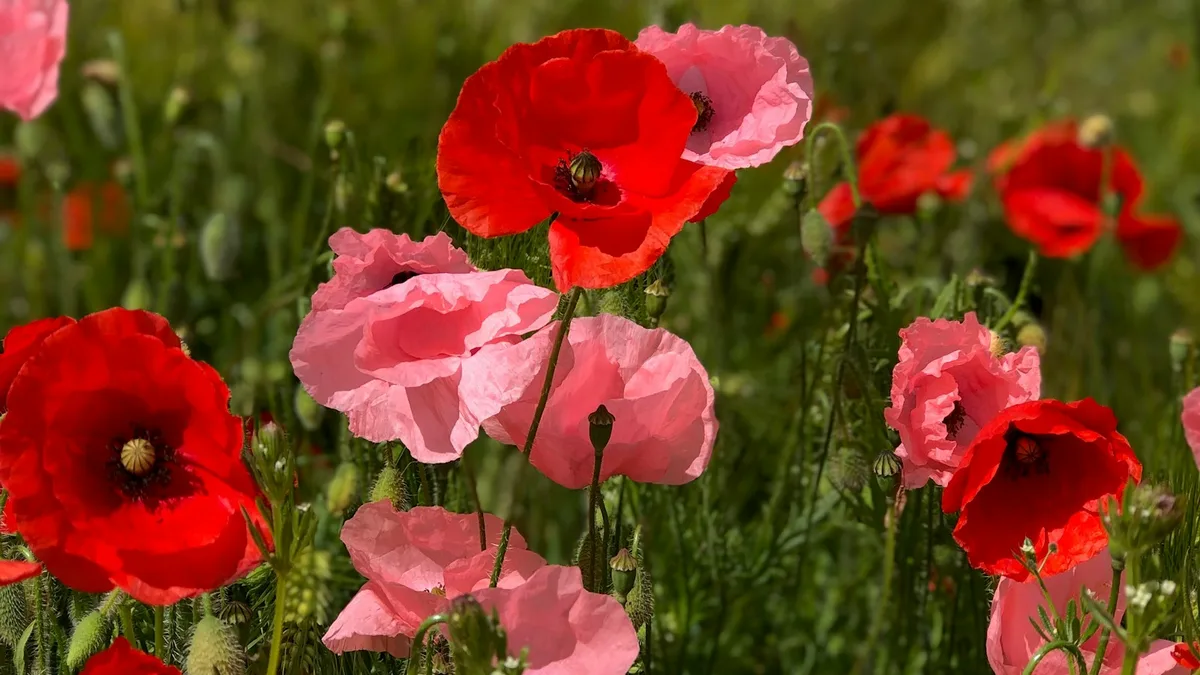
The poppy is August’s other official flower, and it could hardly be more different from the gladiolus. Poppies have thin, papery petals, usually four to six per bloom, on slender stems that move in the lightest breeze. The best known is the common poppy, with scarlet petals and a dark centre, but poppies also bloom in white, yellow, pink and orange, and some varieties are perennial while others are annual.

The poppy has a long history in myth and medicine. In Greek and Roman stories it was linked with sleep and with the dead, and the opium poppy is the source of medicines such as morphine and codeine. The California poppy, a different species, became California’s state flower in 1903.
Most famously, the red poppy became a symbol of remembrance after the First World War, when poppies flowered across the battlefields of Flanders. The red poppy is still worn in Britain and the Commonwealth each November to remember those who died in war.
What the poppy means
The poppy’s meanings are gentler than the gladiolus, and they centre on rest, peace and memory. In the Victorian language of flowers, the poppy stood for consolation and sleep, and that association has never really left it. Red poppies in particular have come to mean remembrance, while white poppies are sometimes worn as a symbol of peace.
For an August birthday, the poppy suits someone who is imaginative, thoughtful or quietly resilient. It is a flower with a reflective quality, and it pairs well with the gladiolus in a bouquet: strength on one side, gentleness on the other. Together they say something more complete than either flower alone.
August birth flower: gladiolus and poppy compared
The table below sets out the two flowers side by side, so you can see at a glance how they differ and what each one brings to a birthday bouquet.
| Feature | Gladiolus | Poppy |
|---|---|---|
| Role | Primary August birth flower | Secondary August birth flower |
| Meaning | Strength, integrity, sincerity | Remembrance, sleep, peace |
| Form | Tall spike of funnel blooms | Single bloom on a slender stem |
| Colours | White, pink, red, purple, yellow, orange | Red, white, yellow, pink, orange |
| Grown from | Corms planted in spring | Seed sown in cool weather |
| Also known for | 40th wedding anniversary flower | Symbol of remembrance |
Growing August birth flowers at home
Both flowers are within reach of a home gardener, though they like different conditions. Gladiolus corms go into the ground in spring, after the last frost, about ten centimetres deep in a sunny spot with well-drained soil. Planting in small batches a few weeks apart gives a steady wave of blooms. Tall varieties need staking, and in colder regions the corms are lifted in autumn and stored somewhere dry and frost-free.
Poppies are far less demanding. They prefer cool weather and poor, disturbed soil, and they dislike being moved, so seed is best sown where the plants are to flower. Scatter the fine seed thinly on bare soil in spring or autumn and keep it watered until seedlings appear. Once established, poppies largely look after themselves, and many varieties self-seed freely.
A practical caution: most parts of the gladiolus plant are toxic to people, dogs, cats and horses if eaten, so handle corms with care and keep them away from pets and small children. The sap of some poppy species can irritate skin, so gloves are sensible when handling them.
Gifting the August birth flowers
A bouquet of gladioli makes a striking birthday gift on its own, especially in the recipient’s favourite colour. Because the blooms open from the bottom of the spike upwards, a fresh stem will keep developing in the vase, which gives the gift a longer life than a bouquet of fully open flowers.
Poppies are harder to give as cut flowers, because their stems wilt quickly and the petals fall within a day or two. They work better as a potted plant, as seed for the garden, or as a motif: poppy-printed fabric, a piece of jewellery, or a print of a poppy field. A small plant or a packet of seed is a thoughtful gift for a gardener, and it keeps the birthday flower growing long after the day itself.
For a combined gift, pair the two flowers where the gladioli provide structure and the poppies provide colour and softness. Add a note explaining the meanings, since few recipients will know their birth month carries two flowers, and the story is half the gift.
Your August birth flower checklist
- Remember the pairing: gladiolus is the primary flower, poppy the secondary.
- Choose red gladioli for love, pink for compassion, yellow for friendship.
- Pick white gladioli for purity or purple for good fortune and beauty.
- Use poppies when the message is remembrance, peace or quiet resilience.
- Plant gladiolus corms in spring after the last frost, in a sunny spot.
- Stake tall gladioli and lift corms in autumn in colder regions.
- Sow poppy seed where it is to flower, in cool weather and poor soil.
- Keep gladiolus corms away from pets and children, as they are toxic if eaten.
- Give gladioli as cut stems and poppies as plants, seed or a motif.
- Add a note with the meanings: the story is half of the gift.
Frequently asked questions
What is the August birth flower?
The August birth flower is the gladiolus, also known as the sword lily. The poppy is August’s second, or secondary, birth flower. Both bloom in mid to late summer, which is why they became associated with the month.
What does the gladiolus symbolise?
The gladiolus symbolises strength of character, integrity and sincerity. Its tall, upright stem and sword-like leaves match the meaning, and its name comes from the Latin word for sword. Different colours add their own meanings, from red for love to yellow for friendship.
What does the poppy symbolise?
The poppy symbolises remembrance, sleep, peace and consolation. Red poppies in particular are linked with remembrance of those who died in war, a connection that grew from the poppies that flowered on the battlefields of the First World War. White poppies are sometimes used as a symbol of peace.
Why does August have two birth flowers?
August has two birth flowers because the traditional list gives every month a primary and a secondary flower. Cultures and florists never fully agreed on one flower per month, and some flowers are scarce in certain regions, so the list keeps both. The gladiolus is the primary flower and the poppy is the secondary one.
Can you grow gladioli and poppies together?
Yes, they can share a sunny border, though they like different conditions. Gladioli need rich, well-drained soil and regular watering, while poppies prefer poor soil and less water. Plant gladioli at the back for height and sow poppies at the front.
Are gladioli safe around pets?
No, gladioli need care around animals. Most parts of the plant, including the corms, are toxic to dogs, cats and horses if eaten, and can cause vomiting and other symptoms. Keep corms stored out of reach, and contact a vet promptly if a pet eats part of the plant.
The bottom line
The august birth flower is the gladiolus, bold, upright and full of meaning, with the poppy beside it as August’s second flower, soft, reflective and rich in history. Together they make a fine pair for anyone born in the month: strength and sincerity on one side, peace and remembrance on the other. Whether you grow them, cut them or give them, the flowers carry a story worth telling, and a note explaining their meanings turns a bouquet into something personal. August is a generous month for gardens, so if you are planning ahead, our May calendar 2026 can help you time spring planting, and a bottle of water is a gardener’s best friend in the heat, so see our guide to the best water bottles. Afterwards, a quiet cup in the shade is the proper reward, which is why our round-up of the best tea brands is worth a look.