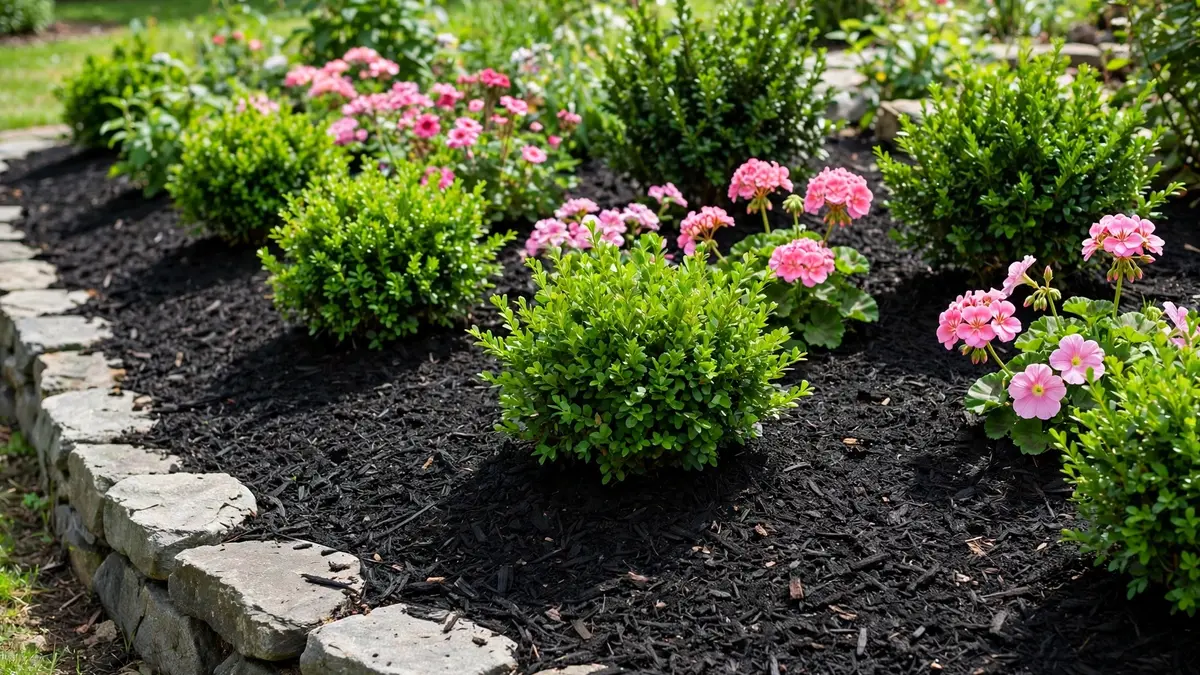

Black mulch is shredded wood or bark that has been dyed black, and it is the mulch you see in the smartest-looking flower beds: dark, even and neat, with green plants standing out sharply against it. It does the same work as any mulch — holding moisture in the soil and keeping weeds down — while making a bed look finished. This guide explains what black mulch is, what it does well, where it can cause trouble, and how to lay it properly.
Key takeaways
- Black mulch is shredded hardwood bark or wood, dyed black, usually with a carbon-based dye.
- It holds moisture in the soil, blocks the light weeds need, and makes plants stand out.
- It warms the soil in spring but can get very hot in summer sun, so it suits established plants best.
- Lay it 2 to 3 inches deep, and keep it a few inches away from stems and tree trunks.
- The colour fades to grey over a season, so most beds need a top-up each year.
- Many gardeners keep dyed mulch to ornamental beds and use compost or straw on vegetables.
What black mulch actually is
Black mulch starts life as ordinary wood mulch: shredded hardwood bark, wood chips or recycled wood, ground into pieces an inch or two across. It is then dyed black, most often with a carbon-based dye, the same kind of pigment used in printer’s ink, and sometimes with iron oxide for a softer tone. The dye coats the outside of the chips rather than soaking through them, which is why a broken chip shows pale wood inside, and why the colour fades over a season as the surface weathers.
The result is a mulch that looks like rich, dark soil from a distance, and that holds its colour far longer than natural bark, which fades to grey within weeks. It is sold by the bag in garden centres and by the cubic yard from landscape suppliers, and it is used mainly in ornamental beds, around shrubs and trees, and along paths, where the neat look matters. The Wikipedia page on mulch sets out the types of mulch and what each one does.
What black mulch does well
The first job of any mulch is to hold moisture, and black mulch does it well. A layer two or three inches deep shades the soil, slows evaporation, and keeps the ground damp for longer after rain or watering, which means less watering in a dry summer. The same layer blocks light, and without light, most weed seeds cannot germinate, so a well-mulched bed needs far less weeding than bare soil. The mulch also softens the impact of heavy rain, stopping the soil from compacting and splashing onto low leaves.
The dark colour adds two more effects. In spring, black mulch absorbs the sun and warms the soil underneath, which helps early plants get going, and all year round it makes green foliage and bright flowers stand out in a way pale bark does not. That contrast is the main reason gardeners choose it: a bed edged with black mulch looks tended even when the plants are still small. It also breaks down slowly, feeding the soil as it rots, and it keeps the ground cooler than bare soil in all but the hottest weather.
Where black mulch can cause trouble
The same dark colour that warms the soil in spring can work against you in high summer. On a hot, sunny day, black mulch can get hot enough to scorch shallow roots and young seedlings, and it can dry out the top layer of soil beneath it. Established shrubs and trees cope with this, but new plantings and tender annuals are better off with a lighter mulch, or with black mulch kept well away from their stems until they are settled.
There are other things to watch. The dye fades, so a bed that looked sharp in May can look grey and tired by September, and most gardeners top it up once a year. Cheap dyed mulch can be made from recycled wood of uncertain origin, so it is worth asking a supplier what the mulch is made from and whether the dye is carbon-based. Wood mulch also takes nitrogen from the soil as it breaks down, so it should sit on top of the soil rather than being dug in, and it should never be piled against a trunk or stem — the volcano shape that suffocates bark and invites rot. The cherry tree guide explains how mulch should be kept clear of a trunk, and the August birth flower guide covers the plants that suit a summer bed.
| Mulch type | Look | Best for | Watch out for |
|---|---|---|---|
| Black dyed wood | Dark, even, neat | Ornamental beds and shrubs | Heats up in sun; colour fades |
| Natural bark | Brown, varied | General beds and paths | Fades to grey quickly |
| Compost | Dark and crumbly | Feeding soil and vegetables | Breaks down fast; needs topping up |
| Straw | Pale and loose | Vegetable beds | Can carry weed seeds; blows about |

How to lay black mulch
Start with a clean bed. Pull the weeds, water the soil well, and put down a layer of compost first if the soil is poor, since the mulch will sit on top of it. Then spread the black mulch two to three inches deep — about five to eight centimetres — in an even layer, and keep it two or three inches away from the stems of plants and the trunks of trees. That gap matters: mulch piled against a stem stays damp, rots the bark, and gives pests and disease a way in.
The best time to lay it is spring, once the soil has warmed, or autumn, when it will protect the ground over winter. A cubic yard covers roughly a hundred square feet at three inches deep, so measure the bed before you order, and buy a little extra for topping up. After laying it, water the bed again so the mulch settles, and check it after heavy rain: mulch can wash downhill on a slope, and a thin patch lets weeds through. If the mulch dries out completely in a hot spell, it can form a crust that sheds water, so a quick soak with a hose brings it back to life. A best picnic recipes guide is a good excuse to spend the afternoon in the garden once the work is done.
Black mulch and vegetable beds
Many gardeners keep dyed mulch out of the vegetable bed, and the reasons are practical rather than alarming. The dye is generally carbon-based and regarded as safe for ornamental use, but the mulch itself is often made from recycled wood, and a vegetable bed is the one place where what is in the soil ends up on the plate. Compost and straw are the usual choices there: compost feeds the soil as it breaks down, and straw keeps the ground cool without adding anything you would not want near food.
That does not mean black mulch has no place near food. It works well on the paths between vegetable beds, where it keeps weeds down and the ground tidy, and around fruit bushes and trees, where the fruit is picked well above the mulch. The rule most gardeners follow is simple: dyed mulch for show, compost and straw for food. If you do use it near vegetables, buy from a supplier who can tell you what the mulch is made from, and keep it off the bed itself.
Your black mulch checklist
- Choose a reputable supplier, and ask what the mulch is made from and what dye is used.
- Weed the bed and water the soil before you lay anything.
- Spread the mulch two to three inches deep, in an even layer.
- Keep it two or three inches away from stems and tree trunks — no volcanoes.
- Lay it in spring once the soil has warmed, or in autumn for winter protection.
- Water after laying so the mulch settles, and soak it again if it dries into a crust.
- Top it up once a year, since the colour fades to grey over a season.
- Keep dyed mulch to ornamental beds, and use compost or straw on vegetables.
What is black mulch made of?
Black mulch is shredded hardwood bark or wood chips dyed black, usually with a carbon-based dye. The dye coats the outside of the chips, which is why a broken chip shows pale wood inside and why the colour fades over a season.
Is black mulch safe for plants?
Yes, for ornamental plants, when it is laid correctly. Keep it away from stems and trunks, lay it two to three inches deep, and avoid piling it against bark. It can get hot in summer sun, so tender seedlings are better off with a lighter mulch.
How deep should black mulch be?
Two to three inches, or about five to eight centimetres. Less than that lets light through and weeds grow, and more than that can smother the soil and keep water from reaching the roots.
Does black mulch stop weeds?
Yes, well laid mulch blocks the light weed seeds need to germinate, so a mulched bed needs far less weeding than bare soil. It works best on a bed that is weeded first, since it cannot smother weeds that are already growing.
How long does black mulch last?
The colour lasts a season before fading to grey, and the mulch itself breaks down over one to two years. Most gardeners top it up once a year to keep the bed looking neat and the layer at the right depth.
Can you use black mulch on vegetables?
Many gardeners prefer not to. Dyed mulch is often made from recycled wood, and compost or straw are the usual choices for vegetable beds. Black mulch works well on the paths between beds and around fruit bushes and trees.
The bottom line
Black mulch is dyed wood mulch that does the same work as any mulch — holding moisture, stopping weeds and feeding the soil as it rots — while making a bed look sharp. Lay it two to three inches deep, keep it clear of stems and trunks, top it up once a year, and keep it to the ornamental beds. Do that, and the dark bed with bright plants against it is one of the simplest upgrades a garden can have.