What if the Florida you have seen in ads is only a small slice of the state? Most travelers land in Orlando, ride the coasters, and fly home without ever seeing a spring-fed river, a Spanish fortress, or a beach town that looks Mediterranean. That is a shame, because the Sunshine State rewards anyone willing to drive a couple of hours past the exits for Walt Disney World.
This roundup covers ten specific places worth building a trip around. Each entry explains who it suits, what it does well, one honest drawback, and where a real price or free entry is confirmed. A comparison table comes first so you can scan the shortlist, then each option gets its own section, and a short choosing guide closes the loop.
Quick Comparison of Florida Destinations
| Destination | Best For | Signature Experience | Main Limitation | Cost Signal |
|---|---|---|---|---|
| Crystal River | Wildlife lovers | Kayaking and snorkeling with manatees in winter | Manatee sightings are seasonal | Not stated |
| St. Augustine | History fans | Castillo de San Marcos and the historic district | Can feel crowded and touristy in peak season | Not stated |
| Miami | City and beach mix | Art deco streets, Little Havana, nightlife | Less relaxing than a quiet beach town | Not stated |
| Orlando | Families and culture seekers | Theme parks plus Loch Haven Park museums | Easy to default to parks only | Not stated |
| Tampa | City explorers | Gateway city with spontaneous adventures | Often treated as a pass-through | Not stated |
| The Panhandle | Beach purists | Dazzling white sand along the Gulf | Long drives between towns | Not stated |
| Sanibel and Captiva | Slow beach vacations | Shelling and quiet island pace | Quieter nightlife | Not stated |
| Space Coast | Nature and space fans | Bioluminescence paddling in summer | Glow season is limited to summer | Not stated |
| Rainbow Springs | Swimmers and paddlers | Clear, spring-fed water year-round | Rarely on tourist shortlists | Not stated |
| Kissimmee | Park-focused families | Vacation homes near the parks | Less of a destination in itself | Not stated |
Crystal River: Manatees in Clear Water
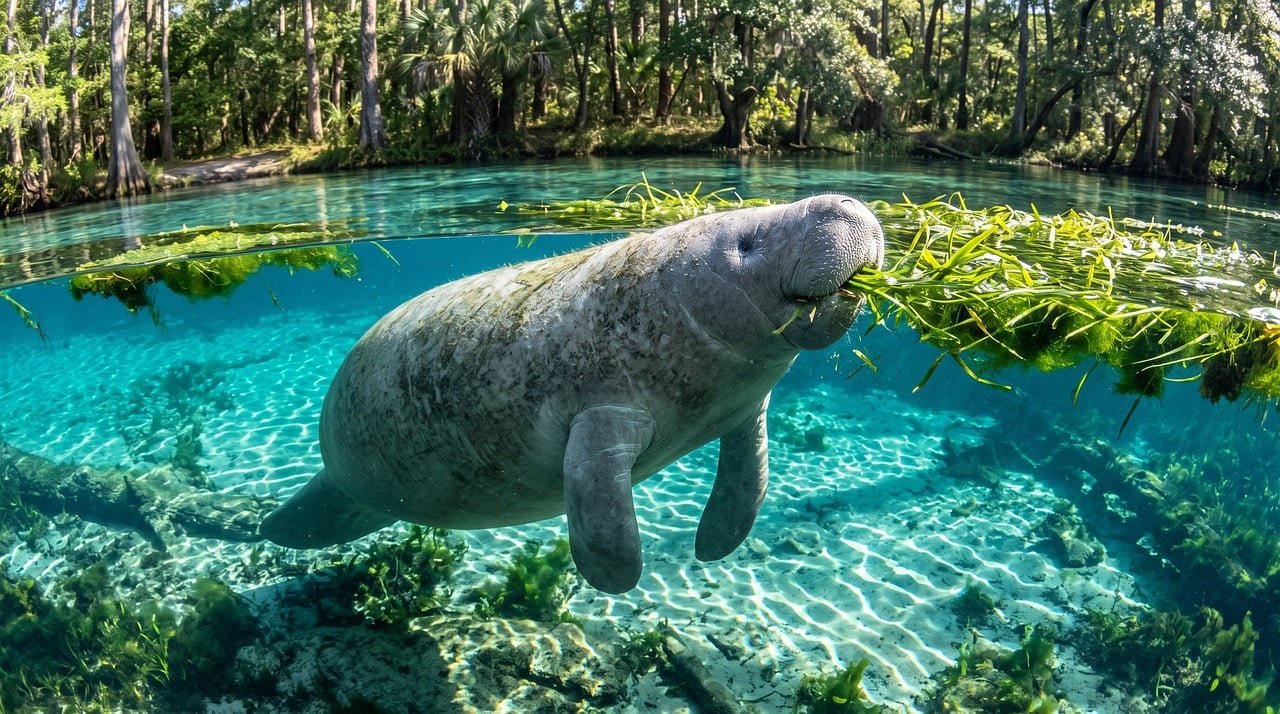
Crystal River sits about two hours north of Orlando, and in winter months manatees flock there to find warmer waters. Visitors can kayak or snorkel alongside these gentle giants in the crystal-clear river. For anyone who has only seen Florida from a hotel pool deck, this is the version of the state that surprises people most.
Who it suits: wildlife lovers, photographers, and couples who want one unforgettable nature day.
What it does well: it turns a wildlife encounter into an accessible half-day activity. You do not need diving certification to float above a manatee.
The limitation: the manatees come for warm water in winter, so a summer visit offers a different, less reliable experience.
Practical tip: book an early morning paddle. Water is calmer, groups are smaller, and guides have more room to teach you how to float without crowding the animals. The most common mistake is treating this like a swim stop rather than a wildlife encounter; keep your distance, stay low in the water, and let the animals approach on their own terms.
St. Augustine: The History Stop
If you love history, St. Augustine on the northeast coast is a dream destination. The city appears on shortlists of treasured views and must-see places across Florida, with the Castillo de San Marcos named among the state’s standout sites. Few American cities wear their past this openly, and the walkable core makes it easy to absorb.
Who it suits: history buffs, couples, and families with school-age kids who want context with their vacation.
What it does well: it pairs architecture and storytelling with a compact downtown you can cover on foot.
The limitation: the historic district is popular, and the experience thins out if you never leave the main pedestrian streets.
Practical tip: plan around the fort and the older streets first, then branch outward. The mistake travelers make is squeezing St. Augustine into an afternoon between beach days. Give it a full day, wear comfortable shoes on the coquina and brick surfaces, and book accommodation early if you want to stay inside the historic core.
Miami: More Than a Party City
Miami has a glitzy reputation of lounging under palm trees, riding jet skis, and turning up the heat all night. It is also full of surprises for families and couples alike. Art deco architecture, salsa music drifting through Little Havana, and rooftop views give the city a cultural layer that the beach photos never capture.
Who it suits: travelers who want a city break with a beach attached.
What it does well: variety. You can spend a morning on the sand, an afternoon in a gallery, and an evening listening to live music within a few miles.
The limitation: it is not the relaxing beach vacation some families picture. Traffic and noise come with the territory.
Practical tip: split your stay. Base yourself near the beach for two nights, then move inland or to a different neighborhood for the food and music. The classic mistake is booking one hotel for a week and spending half of it in the car.
Orlando: Look Past the Rollercoasters
Orlando is far more than rollercoaster thrills. Travelers can tap into a thriving cultural scene through the arts museums of Loch Haven Park, the independent galleries of CityArts, and the newer downtown district Creative Village. Theme parks remain the headline, and new attractions keep arriving, but the city rewards a day or two of curiosity.
Who it suits: families on a park trip who want one non-park day, and culture travelers who would otherwise skip Orlando entirely.
What it does well: it combines world-class parks with a genuine local arts scene and easy access to the rest of Central Florida.
The limitation: the parks dominate time and budget, and the cultural side gets crowded out unless you plan for it.
Practical tip: schedule the non-park day mid-trip, not on arrival or departure day. Energy is highest in the middle, and a museum morning gives everyone a break from queues. The mistake people make is adding a fourth park day when a neighborhood afternoon would stick in memory longer.
Tampa: The Underrated Gateway
Tampa is one of Florida’s three major gateways alongside Orlando and Miami, and it is made for spontaneous adventures. Travelers can make every moment count by exploring as soon as they get off the plane. It works well as a base for a wider Gulf Coast loop.
Who it suits: city explorers and travelers who want a gateway without Orlando’s park gravity.
What it does well: it functions as both a destination and a launch point, so you can linger a few days and still reach beaches and springs.
The limitation: it is often treated as a pass-through, so many visitors never build an itinerary around it.
Practical tip: give Tampa two nights at the start or end of a trip rather than a rushed airport transfer. The mistake is assuming a gateway city has nothing to offer; lingering for a few days is exactly what the destination deserves.
The Panhandle: White Sand That Rivals the Maldives
Head north to the Panhandle and the beaches along the Gulf of Mexico are simply stunning, with white sand so dazzling that it rivals that of any Maldivian island. For beach purists, this is the argument-ender.
Who it suits: beach-first travelers, families who want soft sand and shallow water, and anyone driving from the southern states.
What it does well: the sand and water quality are the attraction, and they do not need a theme park to justify the trip.
The limitation: towns are spread out, so a car is essential and beach days can involve real driving between stops.
Practical tip: pick one base town and stay put rather than hopping along the coast. The mistake is underestimating distances on the map. Build in a rest day, bring shade for long beach hours, and book summer accommodation well ahead.
Sanibel and Captiva Islands: Slow Beach Days
For a relaxing beach vacation, Sanibel and Captiva Islands come recommended, along with the Panhandle. These islands suit travelers who want shelling, quiet mornings, and a pace that rewards doing less.
Who it suits: couples, retirees, and families with young children.
What it does well: it delivers calm. The islands are built for slow breakfasts and long walks rather than packed schedules.
The limitation: nightlife and big-attraction energy are limited, which is a feature for some and a drawback for others.
Practical tip: check current access and accommodation availability before booking, since island conditions can change. The mistake visitors make is expecting city conveniences; plan groceries and dining reservations in advance.
Space Coast: Summer Bioluminescence
In the summertime, certain bodies of water on Florida’s Space Coast glow with bioluminescence, a natural light show that draws paddlers after dark. The same region pairs with the Kennedy Space Center, one of the state’s treasured views and must-see places.
Who it suits: nature lovers, photographers, and families with older kids.
What it does well: it offers two completely different experiences, a daytime space history stop and a nighttime paddle, within one region.
The limitation: the glow is a summer phenomenon, so timing is everything.
Practical tip: book a guided night paddle and avoid bright white light, which ruins night vision for everyone on the water. The mistake is showing up unprepared for darkness and bugs; wear long sleeves and bring a red-light headlamp.
Rainbow Springs: The Local Secret
Rainbow River and the headsprings at Rainbow Springs State Park sit west of Ocala in Central Florida. The area is a hidden gem loved by locals but rarely found on visitor shortlists. The name comes from the blue and green colors visible through the water thanks to the sandy bottom, and because the river is spring-fed, it stays cool and clear year-round.
Who it suits: swimmers, tubers, and paddlers who want a natural water day without a beach crowd.
What it does well: the water is the attraction, and it delivers in every season rather than just summer.
The limitation: it is not a resort experience, so facilities and services are basic compared with coastal towns.
Practical tip: arrive early, since spring parks fill up on warm weekends. The mistake is treating it as a quick photo stop; bring water shoes, a dry bag, and enough time for a proper float.
Blue Spring State Park: Two Seasons, Two Trips
Blue Spring State Park offers a rare split personality. Visitors can swim in the springs during summer and watch manatees make their way through during winter. The coolest thing about the park is that you get completely different experiences depending on the season.
Who it suits: repeat visitors and anyone building a nature-focused itinerary.
What it does well: it gives you a reason to return, with summer swimming and winter manatee viewing in the same place.
The limitation: you cannot do both in one trip, so expectations need setting before you book.
Practical tip: decide which experience you want before choosing dates. The mistake is arriving in winter expecting to swim, or in summer expecting manatees.
Kissimmee: The Park Base With Space
Kissimmee will tick all the boxes for anyone looking to make the most of Central Florida’s legendary theme parks without full-on 24-hour immersion. The lakeside city is known for its holiday homes, more than 30,000 at the last count, earning it the title of Vacation Home Capital of the World. Options range from sprawling homes for extended families to smaller retreats, and the parks are a short drive away.
Who it suits: large families and groups who want space and a kitchen.
What it does well: it solves the group-travel problem, giving everyone room while keeping park access easy.
The limitation: it is a base rather than a destination, so the trip needs a plan beyond the parks.
Practical tip: book a home with a real outdoor space and plan at least one rest day. The mistake is filling every day with a park and coming home more tired than when you left.
How to Choose Your Florida Base
Work through these steps before booking:
- Decide the trip’s center of gravity. Beach, city, nature, or parks? Pick one primary and one secondary.
- Match the season to the experience. Winter means manatees at Crystal River and Blue Spring. Summer means bioluminescence on the Space Coast and spring swimming.
- Limit yourself to two bases on a week-long trip. Florida distances are deceptive, and every move costs half a day.
- Book the anchor activity first, then build lodging and meals around it.
- Leave one open day. The best Florida moments, from a spring float to an unplanned gallery afternoon, rarely fit a rigid schedule.
For more travel planning ideas and destination guides, see Marianoiduba.com.
Conclusion
The best places to visit in Florida depend on what you want the trip to feel like. Crystal River and Blue Spring deliver wildlife. St. Augustine delivers history. Miami and Tampa deliver city energy. The Panhandle, Sanibel, and Captiva deliver sand and stillness. Rainbow Springs and the Space Coast deliver the natural Florida that locals keep to themselves, and Kissimmee and Orlando deliver the parks with room to breathe.
The common thread is simple: pick two or three places, give each enough time, and resist the urge to collect them all. Florida rewards depth over distance, and a slower itinerary almost always beats a packed one.
FAQ
What is the best place in Florida for a first-time visitor?
Orlando and Miami are the easiest starting points because of flight connections and variety. Orlando combines parks with a growing arts scene, while Miami mixes beach and city life. From either gateway, Crystal River or St. Augustine is a manageable add-on.
When is the best time to see manatees in Florida?
Winter months are the reliable window at Crystal River, where manatees gather in warmer waters. Blue Spring State Park also hosts manatees in winter, while summer visits there are for swimming instead.
Is Florida worth visiting outside Orlando?
Yes. The state offers historic cities, spring-fed rivers, island beaches, and summer bioluminescence that have nothing to do with theme parks. Many travelers find the non-park days become the highlight of the trip.
How many days do you need in Florida?
A week allows two bases comfortably. Ten days lets you add a nature stop such as Rainbow Springs or the Space Coast without rushing. Shorter trips work best with a single base and one day trip.
What should travelers avoid in Florida?
The biggest mistake is overpacking the itinerary. Long drives between distant towns eat into beach and park time. Also avoid assuming seasonal wildlife or bioluminescence is available year-round; check timing before booking.
Which Florida destination is best for families with young kids?
Kissimmee and the Panhandle suit young families well. Kissimmee offers vacation homes with space and short drives to the parks, while the Panhandle provides soft white sand and shallow Gulf water for easy beach days.