What if the difference between a miserable long-haul flight and a genuinely enjoyable one comes down to a single booking decision? It often does. The airline you pick shapes everything from legroom and meal quality to how quickly a delay gets fixed. And every year, one ranking settles the argument for millions of travelers.
The Skytrax World Airline Awards, often called the “Oscars of Aviation,” surveyed passengers from more than 100 nationalities across over 300 airlines between September 2025 and August 2026. The results, announced at a London ceremony, produced a clear hierarchy. Asian and Middle Eastern carriers dominated the top 10, while no U.S. airline made the top 20 at all.
Below is a practical roundup of the 2026 top 10, with who each airline suits, what it does well, and where it falls short.
The 2026 Top 10 at a Glance
| Rank | Airline | Best For | Watch Out For |
|---|---|---|---|
| 1 | Singapore Airlines | Overall polish, economy comfort | Premium pricing on popular routes |
| 2 | Qatar Airways | Business class (Qsuite) | Just lost the crown after 5+ years |
| 3 | Cathay Pacific | Asia connections via Hong Kong | Limited presence in some regions |
| 4 | ANA All Nippon Airways | Service consistency, Japan routes | Higher fares on peak dates |
| 5 | Turkish Airlines | European hub reach, onboard dining | Busy Istanbul transfers |
| 6 | Emirates | Long-haul luxury, huge network | Large hub crowds in Dubai |
| 7 | Air France | First class experience | Only six European carriers made the top 20 |
| 8 | Hainan Airlines | Value on China routes | Fewer Western connections |
| 9 | Japan Airlines | Quiet, efficient travel | Smaller international footprint |
| 10 | Korean Air | Transpacific routes | Less flashy cabin product |
1. Singapore Airlines: The Overall Winner
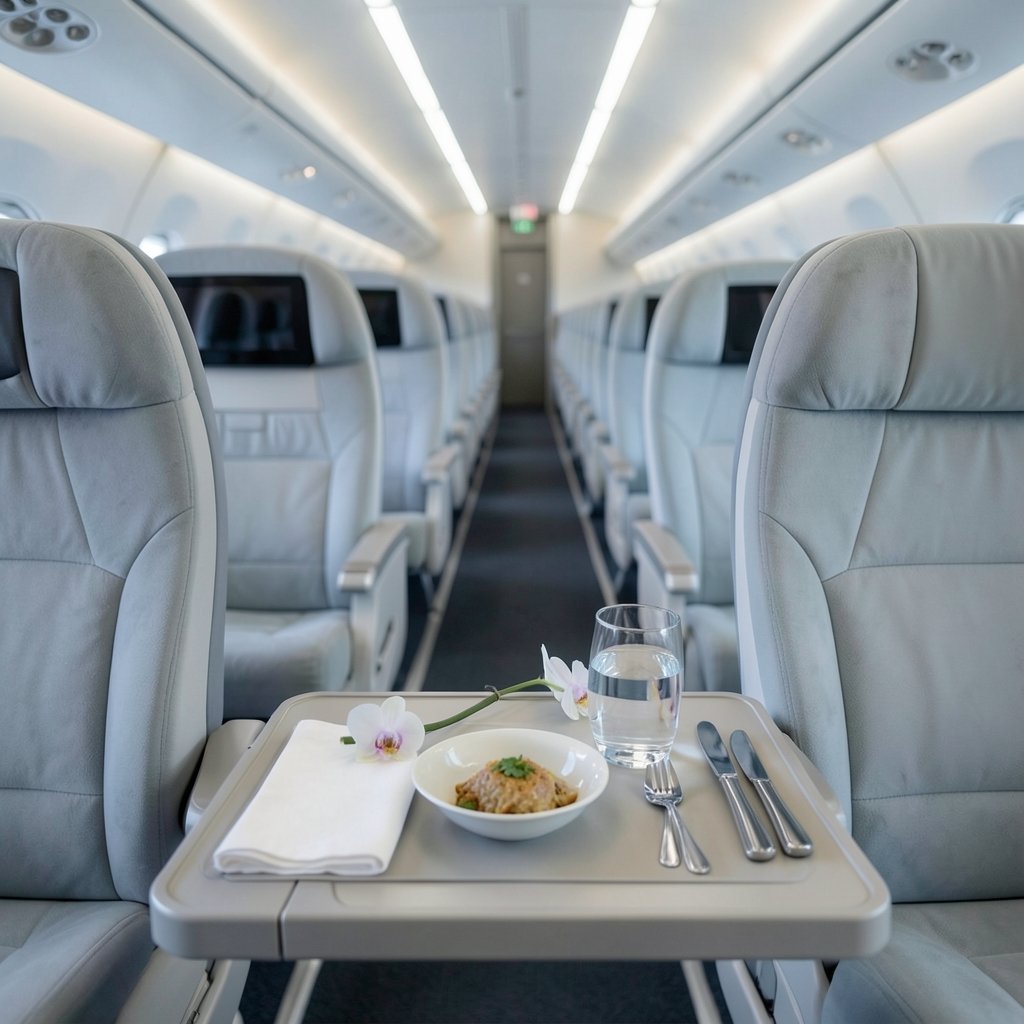
Singapore Airlines reclaimed the top spot for the sixth time, dethroning Qatar Airways after more than five years. Skytrax CEO Edward Plaisted said the award highlights “the level of product and service excellence they are providing to customers.”
Who it suits: Travelers who want the whole experience to feel effortless, from check-in to landing. It is especially strong for families and economy passengers who still want to feel looked after.
What it does well: In-flight menus in every cabin class are designed by an international chef panel, and the entertainment system is loaded with movies, music, and games. Together with its budget arm Scoot, the group runs more than 180 aircraft across over 110 destinations.
The limitation: That polish comes at a price. On high-demand routes, fares often run above competitors.
2. Qatar Airways: Still the Business Class Benchmark
Qatar Airways slipped to second place, but its reputation for premium cabins remains intact. Its Qsuite business class is widely treated as the gold standard, and Hamad International Airport in Doha offers high-end lounges and smooth connections.
Who it suits: Business travelers and anyone willing to pay for a lie-flat seat on a long route through the Middle East.
What it does well: Onboard comfort, fine dining, and a vast entertainment library, all backed by service that regularly wins awards.
The limitation: It is no longer number one, and economy class does not get the same attention as the premium cabins. If you are flying in the back, the gap between Qatar and its rivals narrows fast.
3. Cathay Pacific: The Asia Connector
Cathay Pacific held third place, the same position it occupied the previous year. Its Hong Kong hub makes it a natural pick for anyone moving between Asia, Australia, and Europe.
Who it suits: Travelers building multi-city Asia itineraries who value a reliable connecting hub.
What it does well: Consistent service standards and a route network that reaches deep into the region.
The limitation: If your trip does not touch Asia, Cathay is rarely the practical choice. Its reach in the Americas and Africa is thinner than the Gulf carriers’.
4. ANA All Nippon Airways: Quiet Consistency
ANA climbed from fifth to fourth, and passengers consistently reward it for the small things: punctuality, cabin cleanliness, and crew who anticipate needs rather than react to them.
Who it suits: Travelers heading to Japan, or anyone who values calm, orderly service over spectacle.
What it does well: Reliability. When everything runs on time and the cabin feels fresh, long flights get noticeably easier.
The limitation: Fares spike on peak Japan travel dates, and its international network is smaller than Emirates’ or Turkish Airlines’.
5. Turkish Airlines: Europe’s Best, and a Dining Standout
Turkish Airlines rose from sixth to fifth and took home three major awards: Best Airline in Europe, Best Business Class Catering, and Best Airline in Southern Europe. Its Istanbul hub connects more countries than almost any other airport in the world.
Who it suits: Travelers flying between Europe, Asia, and Africa who want one-stop access to an enormous map of destinations.
What it does well: Food. The onboard catering wins awards for a reason, and it applies across cabins more than most rivals manage.
The limitation: Istanbul Airport transfers can be long and crowded at peak times, so build in buffer time.
6. Emirates: Long-Haul Luxury at Scale
Emirates dropped from fourth to sixth but remains the airline most people picture when they imagine premium long-haul travel. Its Dubai hub and sprawling network make it hard to avoid on routes between continents.
Who it suits: Passengers on very long trips who want a wide choice of departure times and a polished premium cabin.
What it does well: Scale and consistency. The fleet is large, the network is huge, and the premium product is genuinely impressive.
The limitation: Dubai connections can mean big crowds and long walks. Budget extra time if your layover is tight.
7. Air France: The First Class Specialist
Air France moved up to seventh and swept the first class categories, winning World’s Best First Class, Best First Class Lounge Dining, and Best First Class Comfort Amenities. It was also named Best Airline in Western Europe.
Who it suits: Travelers booking the very front of the plane, or anyone flying within Western Europe who wants a full-service carrier.
What it does well: The premium experience, from the lounge to the seat to the amenities kit.
The limitation: European carriers struggled overall in these awards. Only six made the top 20, so Air France’s strength at the top does not automatically translate to every cabin.
8. Hainan Airlines: The Quiet Climber
Hainan Airlines jumped from tenth to eighth, one of the biggest moves in the top 10. It is the highest-ranked mainland Chinese carrier on the list.
Who it suits: Travelers flying to or within China who want full-service comfort without premium pricing.
What it does well: Service quality that has improved steadily enough to earn a top-10 spot from passenger votes.
The limitation: Its international network is smaller than the Gulf carriers’, so it works best when China is part of your route.
9. Japan Airlines: Precision Travel
Japan Airlines held ninth place, matching its 2025 position. It is the quieter sibling to ANA, and passengers reward it for the same reasons: order, punctuality, and thoughtful service.
Who it suits: Travelers who want a smooth, low-stress trip and do not need the flashiest cabin.
What it does well: Operational reliability and a consistently pleasant onboard experience.
The limitation: A smaller international footprint means fewer direct options from some regions.
10. Korean Air: The Transpacific Workhorse
Korean Air rounded out the top 10, slipping from seventh. Its Seoul hub makes it a strong bridge between North America and Asia.
Who it suits: Transpacific travelers who want a solid full-service carrier with good connections through Seoul.
What it does well: Route coverage across the Pacific and a dependable onboard product.
The limitation: The cabin experience is solid rather than spectacular, and it lost ground in this year’s rankings.
Notable Moves Outside the Top 10
The rankings reward momentum as much as reputation. Qantas climbed to 12th, Thai Airways leapt from 29th to 20th, and Malaysia Airlines rose to 21st. Air Canada, at 17th, was the only North American carrier in the global top 20. Among Indian carriers, Air India jumped 27 places to 57th, while IndiGo fell to 61st.
If you follow the money side of travel as closely as the service side, the same passenger-first thinking applies elsewhere. The world‘s biggest earners in sport and music face the same trade-offs between scale and quality, whether you are reading about the richest athletes in the world in 2026 or the richest singers in the world and their net worth. Airlines, like careers, reward those who build durable reputations.
How to Choose the Right Airline for Your Trip
Rankings are a starting point, not a booking engine. Here is how to turn the list into a decision.
- Match the airline to your route first. A top-ranked carrier is useless if it does not fly where you are going without a painful detour.
- Decide which cabin you will actually fly. Air France’s first class wins awards, but that tells you little about its economy seat.
- Check the hub. A great airline with a chaotic hub can still produce a stressful trip. Look at connection times and terminal transfers.
- Weigh schedule against price. For a short flight, timings usually matter more than service.
- Read recent passenger reviews for your specific route. Service varies by aircraft and crew base, even within one airline.
A common mistake is treating the overall winner as the automatic best choice. Travelers who book Singapore Airlines for a route where it competes on price often find the experience excellent but the fare hard to justify. The smarter move is to pick the highest-ranked carrier that flies your route nonstop in the cabin you can afford.
Conclusion
The 2026 Skytrax results put Asian and Middle Eastern carriers at the front: Singapore Airlines is back on top, with Qatar Airways close behind. Europe’s best, Turkish Airlines, sits fifth; North America’s strongest showing, Air Canada, lands at 17th. For travelers, the practical takeaway is simple: use the ranking to narrow your shortlist, then let route, cabin, and budget make the final call. The best airline in the world is the one that fits your trip, not the trophy cabinet alone.
Frequently Asked Questions
Which airline is ranked the best in the world for 2026?
Singapore Airlines took the top spot in the 2026 Skytrax World Airline Awards, its sixth time winning the title. Qatar Airways placed second, followed by Cathay Pacific and ANA All Nippon Airways.
Why did Singapore Airlines beat Qatar Airways?
Singapore Airlines reclaimed first place after Qatar Airways had held the top spot for more than five years. Passenger votes across 100-plus nationalities rewarded Singapore Airlines for its all-cabin service quality, chef-designed menus, and strong entertainment systems.
Did any U.S. airlines make the top 20?
No. No U.S. airline appeared in the global top 20. Air Canada, ranked 17th, was the only North American carrier on the list.
Which European airline ranked highest?
Turkish Airlines was the highest-ranked European carrier at fifth place. It also won Best Airline in Europe and Best Business Class Catering. Only six European airlines made the top 20 overall.
What makes an airline rank highly in these awards?
The rankings are based on passenger surveys covering more than 300 airlines over roughly a year. Cabin comfort, crew service, food, entertainment, and cleanliness all feed into the scores, which is why full-service carriers with consistent standards tend to rise.
Is the top-ranked airline always the best choice for my trip?
Not necessarily. Rankings reflect an average across routes and cabins. A carrier ranked lower overall may still be the best option on your specific route, especially if it offers a nonstop flight in the cabin you can afford.