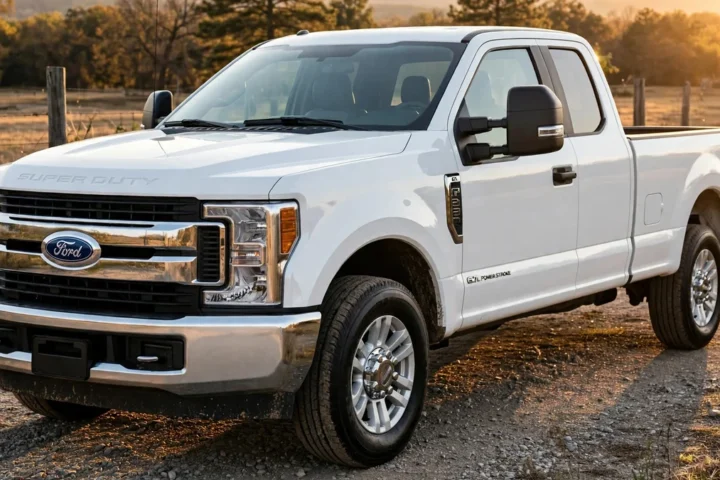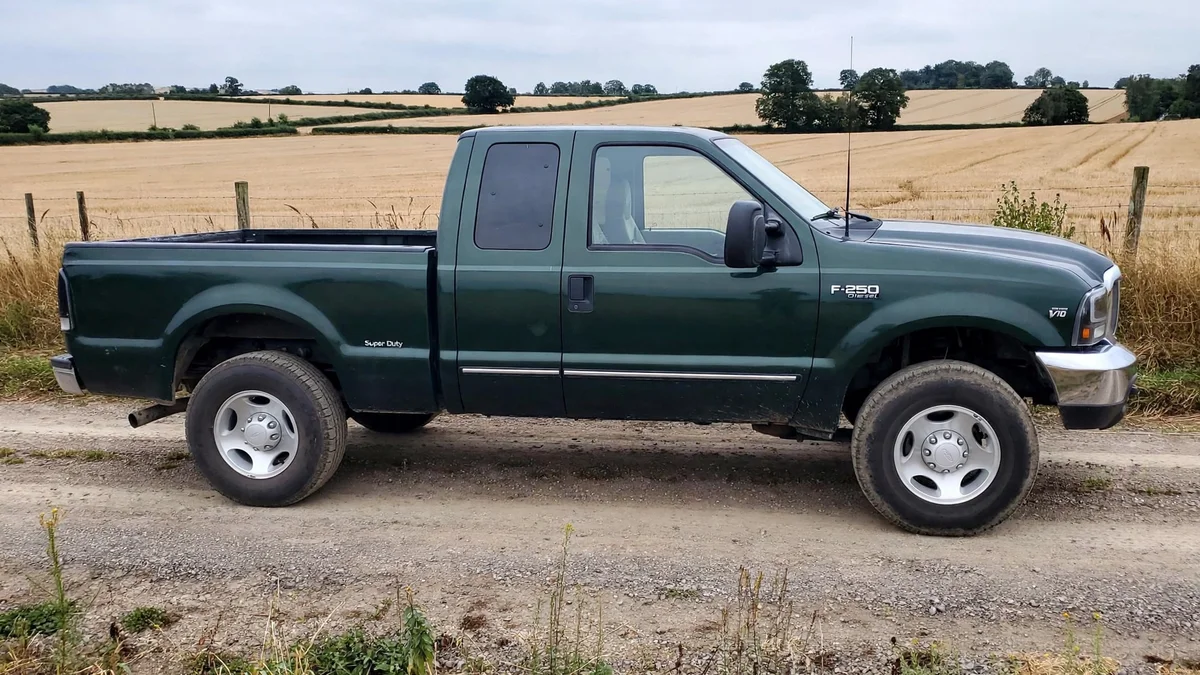

The 7.3 Powerstroke is the diesel V8 that built Ford’s reputation for tough trucks, and it still has one of the most loyal followings of any engine ever fitted to a pickup. Built from 1994 to 2003, the 7.3 powerstroke was the first engine to carry the Power Stroke name, and nearly two million of them were made. So why do owners still hunt for these old trucks, pay strong money for clean ones, and talk about them like old friends? The short answer is that the engine is simple by modern standards, famously durable, and easy to keep running, even though it is noisy, slow by today’s standards and thirsty. This guide tells its story, explains what made it special, and sets out the faults to check before you buy one.
Key takeaways
- The 7.3 Powerstroke was built from 1994 to 2003 and was the first engine to use the Power Stroke name.
- It is the Ford version of the Navistar T444E, a 444 cubic inch turbo-diesel V8.
- Nearly two million were built at the International plant in Indianapolis.
- Late trucks made up to 275 horsepower and 525 lb-ft of torque with a manual gearbox.
- An intercooler arrived in 1999, and forged connecting rods gave way to powdered metal rods in early 2002.
- The best-known weak spot is the camshaft position sensor, a cheap part that can stop the truck dead.
What the 7.3 Powerstroke is
The 7.3 Powerstroke is a 7.3-litre, 444 cubic inch, 16-valve V8 turbo-diesel that Ford offered in its three-quarter-ton and larger F-Series trucks and in the Econoline van range. It was the Ford version of the Navistar T444E, and it replaced the older 7.3-litre IDI diesel, sharing only its bore and stroke dimensions with that engine. Everything else was new. It is an electronically controlled, direct-injection engine with a 4.11 inch bore and a 4.18 inch stroke, a 17.5 to 1 compression ratio, and a dry weight of about 920 lb. Fuel delivery uses HEUI injectors, which stands for hydraulically actuated electronic unit injection: high-pressure engine oil fires the injectors, so the engine carries a high-pressure oil pump as well as a conventional fuel system, and the oil pan holds 15 US quarts with another 3 quarts in the top end. The early engines, from 1994 to 1997, used single-shot injectors and a single non-wastegated turbocharger, while the 1999 to 2003 trucks got split-shot injectors, an air-to-air intercooler and a wastegated turbocharger. Power rose through the years, reaching up to 250 horsepower and 505 lb-ft of torque in automatic trucks from the last years of production, and 275 horsepower and 525 lb-ft in manual trucks. Those numbers look modest beside a modern diesel, but in the late 1990s they were serious figures, and the engine’s reputation was built on torque and toughness rather than outright speed.
A short history
The engine arrived midway through the 1994 model year, which is why enthusiasts call the first trucks 1994.5 models. It replaced the old IDI diesel at a time when Ford was moving its whole truck range towards electronic control, and it was offered alongside petrol V8s and the big V10 as the heavy-duty choice. The first version ran from 1994 to 1997 with single-shot injectors, and California trucks got different injectors from the rest of the country. In 1999, Ford gave the engine its biggest update: an intercooler to cool the charged air, larger 140 cc injectors, a wastegated turbocharger and split-shot injection, which fires a small pilot charge before the main charge to soften combustion knock and cut nitrogen oxide emissions. The change made the trucks noticeably stronger, and the 1999 to 2003 models are the ones most buyers want today. Small changes followed: early 2002 models swapped forged connecting rods for powdered metal rods, which are fine in a standard engine but can become a failure point if aftermarket tuning pushes output above 450 horsepower, and by mid-2002 Ford began fitting catalytic converters as emissions rules tightened. Production ended in the first quarter of the 2003 model year, when the 6.0-litre Power Stroke took over, and the 7.3 passed into legend almost immediately. Nearly two million had been built, and it is still described as one of the best engines International ever produced.
How it compares with the engines around it
The 7.3 sits between two very different eras of diesel design. Before it came the old IDI engine, which was tough but slow and crude. After it came the 6.0-litre, which made more power but earned a troubled reputation, and then the 6.7-litre, which is the refined modern engine Ford builds today. The table below puts the headline figures side by side so you can see where the 7.3 fits.
| Engine | Years built | Power | Torque |
|---|---|---|---|
| 7.3 Powerstroke | 1994 to 2003 | Up to 275 hp | Up to 525 lb-ft |
| 6.0 Powerstroke | 2003 to 2007 | 325 hp | 570 lb-ft |
| 6.4 Powerstroke | 2008 to 2010 | 350 hp | 650 lb-ft |
| 6.7 Powerstroke | 2011 to present | 400 hp at launch | 800 lb-ft at launch |

The numbers flatter the newer engines, and they should: twenty years of progress is real. But the table misses the reason people still buy 7.3 trucks. The old engine has no diesel particulate filter, no selective catalytic reduction and no diesel exhaust fluid to worry about. It has a simple turbocharger, a simple fuel system by modern standards, and a huge supply of used parts. For an owner who does their own maintenance, that simplicity is worth more than horsepower. The trade-off is noise, smoke on a cold morning and fuel economy that no modern diesel would accept, and buyers should go in with their eyes open about all three.
Why owners still love it
Talk to a 7.3 owner and the same themes come up again and again. The engine starts reliably, it tows without complaint, and it keeps going when newer trucks are waiting for a dealer appointment. Part of that is the design: a big, under-stressed V8 with a cast-iron block, a gear-driven valvetrain and a modest power output for its size. Part of it is the community: after nearly two million engines and twenty years on the road, every fault has been diagnosed, every fix has been written up, and parts are available from dozens of suppliers. Prices reflect all of this. Clean, low-mileage examples now sell for far more than their age would suggest, and rough trucks still find buyers who plan to rebuild them. That is a strange fate for a workhorse engine, but it is a fair measure of how much people trust it.
The weak spots
Even a legend has faults, and the 7.3 has a familiar list. The most common failure is the camshaft position sensor, which can fail without warning and cause a no-start condition or a stall while driving. The quick check is the rev counter: if the needle does not move while the engine is cranking, the sensor is the likely culprit, and the part itself is cheap and easy to carry as a spare. The turbocharger up-pipes are another weak spot, leaking at the joints, which costs the engine boost and raises exhaust gas temperatures. The under-valve-cover harness can lose contact with the glow plugs or injectors, causing rough starts or a misfire, and the fuel filter and water separator housing can crack, causing fuel leaks, while its heating element can short out, blow a fuse and stop the truck from starting. The exhaust back-pressure valve can stick closed when cold and make a jet-engine noise from the exhaust. Most of these problems come from poor electrical connections and ageing seals rather than from the engine itself, and that is good news for a buyer: they are diagnosable, fixable and well documented. The expensive things to check are different. Look for blow-by, which is pressure and smoke escaping past worn piston rings, check for coolant in the oil, and listen for knocks that suggest bottom-end wear. A truck with those symptoms is a rebuild, not a bargain, whatever the price. A good drill bit set and a basic socket set will cover most of the smaller jobs on these trucks, and many owners learn to do the sensor and harness work themselves. If you are buying from out of state, the 205 area code guide helps if the truck is in Alabama, and the Burlingame area guide is handy if you are collecting one near San Francisco.
Buying checklist
- Start the truck from cold and watch for excessive white smoke, rough running or a long crank.
- Check the rev counter moves while cranking, which is the quick test for the camshaft position sensor.
- Look for oil leaks around the turbocharger up-pipes and listen for an exhaust leak under load.
- Ask whether the camshaft position sensor, glow plugs and under-valve-cover harness have been replaced.
- Check the oil for a milky colour and the coolant for oil, both signs of serious internal trouble.
- Take a long test drive and watch the temperature gauge and oil pressure under load.
- Ask for service records and check that oil changes happened on schedule with the right grade.
- Have a diesel specialist scan the truck and check for blow-by before you agree a price.
Questions owners ask
How many miles will a 7.3 Powerstroke last?
With regular oil changes and sensible use, these engines are known for very high mileages, and trucks with several hundred thousand miles are common. The bodywork, transmission and suspension usually need attention long before the engine gives up.
Is the 7.3 Powerstroke a good tow engine?
Yes, within its limits. It makes strong low-end torque and tows steadily, though it is slower than a modern diesel and it works hard on long grades. Keep the cooling system healthy and watch exhaust gas temperatures on steep climbs.
What is the camshaft position sensor problem?
The sensor tells the engine computer where the camshaft is, and when it fails the engine will not start or will stall while driving. It is a common and cheap fix, and many owners carry a spare in the glovebox.
Which model year of the 7.3 is best?
Most buyers prefer the 1999 to 2003 trucks, which have the intercooler, split-shot injectors and the Super Duty body. The 2000 and 2001 trucks are often picked out because they still have forged connecting rods.
Does the 7.3 Powerstroke need any emissions equipment?
Early trucks had no catalytic converter or particulate filter at all, and converters only appeared from mid-2002. That simplicity is part of the appeal, but it also means the trucks produce more visible exhaust than a modern diesel.
Is a 7.3 Powerstroke expensive to maintain?
Routine maintenance is reasonable, and parts are widely available and well documented. The costs come from age: seals, hoses, sensors and suspension parts wear out on any twenty-year-old truck, whatever engine it has.
The bottom line
The 7.3 Powerstroke earned its reputation the slow way, by starting every morning and doing the job for years on end. It is not the fastest, quietest or cleanest diesel Ford ever built, and a buyer who wants modern refinement should look at a 6.7 instead. But for anyone who values simplicity, durability and an engine that can be fixed in a home garage with ordinary tools, there is still nothing quite like it. Buy the best example you can afford, favour the 1999 to 2003 trucks, check the sensor, the up-pipes and the service history, and you will understand why so many owners refuse to sell. You can read the full engine family history on Wikipedia.