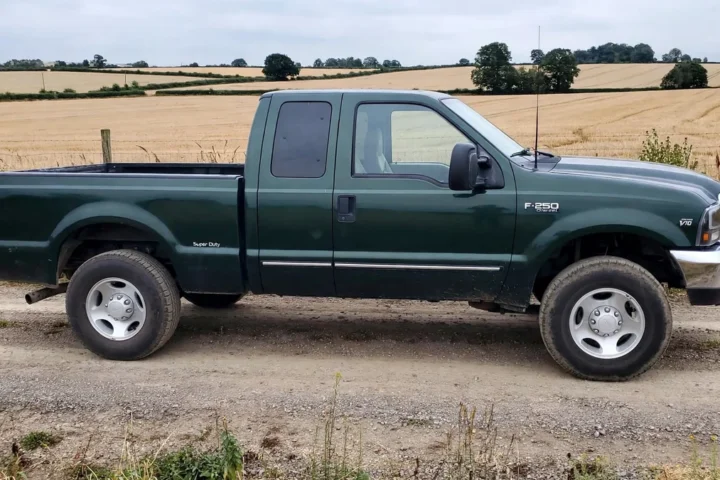

The 6.7 Powerstroke is the diesel V8 that has powered Ford Super Duty trucks since 2011, and it is the first Power Stroke engine that Ford designed and built itself. If you are shopping for a used Super Duty, or you already own one, the 6.7 powerstroke is probably the engine under the bonnet, and knowing its history will save you money and worry. So is it a good engine to buy? Broadly, yes: it is strong, quiet and far more refined than the diesels it replaced, but the early trucks have a handful of known weak spots, and the later ones cost more to fix when something does go wrong. This guide walks through every version of the engine, what breaks, what to check before you hand over money, and how to live with one day to day.
Key takeaways
- The 6.7 Powerstroke debuted in the 2011 Ford Super Duty, replacing the 6.4-litre engine.
- It was the first Power Stroke designed and built by Ford, after years of Navistar-built engines.
- Output rose steadily, from 400 horsepower at launch to a 500 horsepower high-output version in 2023.
- Early 2011 and 2012 trucks are the ones to inspect most carefully, especially the turbocharger.
- Regular oil and fuel filter changes matter more on this engine than on most others.
- A clean service history and a cold-start test tell you more than any sales pitch ever will.
What the 6.7 Powerstroke is
Power Stroke is the name Ford gives to the diesel engines in its heavy trucks, and the 6.7-litre V8 is the current member of that family. It is a 90-degree V8 with a displacement of 406 cubic inches, which works out at 6.7 litres, and it sits in the F-250 through F-550 Super Duty range. Unlike every Power Stroke before it, which Navistar International built and Ford rebadged, this one came from Ford itself, developed with help from AVL of Austria and given the codename Scorpion during development. The name came from the layout: the exhaust manifolds and the turbocharger sit in the valley of the V, like a scorpion with its tail curled over its back. That hot-vee arrangement keeps the exhaust short, which helps the turbo respond quickly. The block is made from compacted graphite iron, a stronger and lighter material than the cast iron used before, and the cylinder heads are aluminium with a reverse-flow design, so the exhaust ports face inwards towards the valley. It has four valves per cylinder, six head bolts per cylinder, and a high-pressure common-rail fuel system with piezoelectric injectors. It also supports B20 biodiesel, which is a blend of up to 20 per cent biodiesel and 80 per cent ordinary diesel. Emissions are handled by exhaust gas recirculation, a diesel particulate filter and selective catalytic reduction, which uses diesel exhaust fluid to cut nitrogen oxide emissions.
When it launched, the engine made 390 horsepower and 735 lb-ft of torque, but Ford soon updated the engine control software and raised that to 400 horsepower and 800 lb-ft without changing any hardware. That set the pattern for the engine’s whole life: steady, useful improvements every few years, rather than one big redesign. For a buyer, that matters, because a 2011 truck and a 2020 truck share the same basic engine yet feel quite different to drive and to own.
How the engine changed over the years
The output figures tell the story in the simplest way. Ford raised power and torque at several points, usually with a new turbocharger, new injector nozzles or exhaust improvements, and each step is tied to a model year you can check on the truck. The table below lists the headline figures for each major step, using the ratings Ford published for those model years.
| Model year | Power | Torque | What changed |
|---|---|---|---|
| 2011 | 400 hp | 800 lb-ft | Launch rating after software update |
| 2015 | 440 hp | 860 lb-ft | New turbocharger, injectors and exhaust |
| 2017 | 440 hp | 925 lb-ft | Torque rise, power unchanged |
| 2018 | 450 hp | 935 lb-ft | Power and torque rise together |
| 2020 | 475 hp | 1,050 lb-ft | Strongest standard version to that point |
| 2023 | 500 hp | 1,200 lb-ft | High-output version introduced |

Two things are worth noting. First, the 2020 truck was rated the best in its class for horsepower when it arrived, and the 2023 high-output version pushed torque to 1,200 lb-ft. Second, the numbers only tell part of the story: the later trucks also got better transmissions and better cooling, so the whole package improved. If you are choosing between model years, do not fixate on ten extra horsepower; look at the truck as a whole, and at the condition of the particular example in front of you.
What goes wrong
No engine is perfect, and the 6.7 has a short list of faults that buyers should know by name. The best known affects the 2011 and 2012 model years: turbocharger failures were common on those early trucks because the Honeywell DualBoost turbo used weak ceramic ball bearings. The problem was fixed by switching to steel ball bearings, and a failing turbo usually announces itself with a loud screeching sound and smoke from the tailpipe. If you test drive an early truck, listen carefully under load and watch the mirrors when you accelerate. Early 2011 trucks also had radiator leaks, linked to defects in radiators made before September 2010, and the 2011 engines had frequent failures of the nitrogen oxide sensors, which cut engine power until they were replaced. Ford replaced faulty sensors under a customer satisfaction programme that expired in April 2013, so a truck that missed it may still be running on old parts.
The other fault that every buyer asks about is the CP4 high-pressure fuel pump. It is less common than internet forums suggest, but it is real: the pump can wear internally, especially with low-lubricity fuel or air in the housing, and the metal debris it sheds can damage the fuel rails, lines and injectors. When it happens, the repair bill is large, because the whole fuel system needs cleaning or replacing. There is no cheap way to remove the risk entirely, but fresh fuel filters, good-quality diesel and never running the tank dry all help. A few early engines also suffered glow plug tips breaking off into the engine, which could cause catastrophic damage, though this was limited to a small number of early production engines, mainly in chassis cab models. The pattern is clear: the first two model years carry most of the risk, and the engine got steadily more dependable after that.
Buying checklist
- Start the truck from cold and watch for white or blue smoke, rough running or a long crank before it fires.
- Listen for a screeching turbocharger under acceleration, especially on 2011 and 2012 trucks.
- Ask for the full service history and check that oil and fuel filter changes happened on schedule.
- Look under the truck for coolant leaks around the radiator and check the coolant level in the reservoir.
- Check the dashboard for warning lights and ask whether any nitrogen oxide sensors have been replaced.
- Take a long test drive that includes a motorway run so the engine reaches full temperature.
- Have a diesel specialist scan the truck for stored fault codes before you agree a price.
- Confirm the truck has only ever run on proper diesel and ask how often the fuel filters were changed.
Living with a 6.7 day to day
Day to day, the 6.7 is a pleasant engine to own. It is quiet for a diesel, it pulls hard from low revs, and it tows heavy trailers without drama. The running costs are higher than a petrol truck, though, and the maintenance schedule is not something to stretch. Oil changes need good-quality oil at the right interval, and the fuel filters are the single most important consumable on the truck: the high-pressure fuel system has very tight tolerances, and dirty fuel is its worst enemy. Keep the diesel exhaust fluid topped up, because the truck will limit power or refuse to start if the tank runs dry, and use the correct fluid rather than topping up with water or anything else. The diesel particulate filter needs regular motorway runs to regenerate, which burns off the trapped soot, so a truck that only ever does short trips around town will have more filter trouble than one that regularly stretches its legs. If you are handy with tools, many jobs are straightforward, and a decent drill bit set earns its keep when you are working on brackets and guards in the engine bay. For longer trips, it helps to know the 865 area code if your route takes you through eastern Tennessee, and the Chicago zip code guide is useful if a towing job takes you into Illinois.
Fuel economy varies a lot with load, speed and driving style, and a sudden change in consumption, exhaust smell or engine note is worth getting checked promptly. Diesels reward owners who notice small changes early, and they punish owners who ignore them.
Questions buyers ask
Is the 6.7 Powerstroke a reliable engine?
On the whole, yes, especially from the 2013 model year onwards. The early 2011 and 2012 trucks had turbocharger and sensor problems, but Ford fixed those, and the later engines have a good reputation for durability when they are serviced properly.
How long does a 6.7 Powerstroke last?
With regular oil and fuel filter changes, many of these engines cover very high mileages, and trucks with several hundred thousand miles on them are common. The rest of the truck, including the transmission and the bodywork, often wears out before the engine does.
What is the CP4 pump problem?
The CP4 is the high-pressure fuel pump, and in some trucks it wears internally and sheds metal debris into the fuel system, which can damage the injectors and fuel rails. It is not common, but the repair is expensive, so fresh fuel filters and good diesel matter.
Can the 6.7 Powerstroke run on biodiesel?
Yes, Ford supports B20, which is a blend of up to 20 per cent biodiesel and 80 per cent ordinary diesel. Do not use higher blends unless you have checked that your truck and your local fuel supply support them.
Which model year is the best to buy?
There is no single answer, but many buyers aim for 2015 or later, when the engine made 440 horsepower and the early faults were behind it. The 2017 and newer trucks add more torque, and the 2020 trucks are the strongest standard versions before the high-output model arrived.
Does the 6.7 Powerstroke need diesel exhaust fluid?
Yes. It uses selective catalytic reduction, which injects diesel exhaust fluid into the exhaust to cut nitrogen oxide emissions. Keep the tank topped up, because the truck will limit power if it runs out.
The bottom line
The 6.7 Powerstroke is the engine that turned Ford’s diesel trucks from a bought-in compromise into a product Ford could call its own, and the results show in the way the trucks drive. Buy a 2011 or 2012 truck with your eyes open, check the turbo and the service history, and budget for proper maintenance, or spend a little more on a later truck and enjoy one of the strongest and most refined diesel pickups on the road. Either way, the basics never change: clean oil, clean fuel, regular filter changes and a proper inspection before you buy. Get those right and the engine will look after you for a very long time. You can read more about the engine family on Wikipedia.