The 228 area code is the telephone code for Mississippi’s Gulf Coast, covering the three counties at the south-eastern tip of the state: Hancock, Harrison and Jackson. If you have seen 228 on a missed call, a business card or a new neighbour’s number, it means the number belongs to the coastal strip that runs from Bay St. Louis in the west to Pascagoula in the east, taking in Gulfport and Biloxi along the way. This guide covers where it reaches, how it came to be, how to dial it, and the things it is often mistaken for.
Key takeaways
- The 228 area code covers Mississippi’s Gulf Coast: Hancock, Harrison and Jackson counties.
- It was created on 15 September 1997, when the coast split away from the original statewide code, 601.
- Its main cities are Gulfport, Biloxi and Pascagoula, with Bay St. Louis and Ocean Springs among the smaller towns.
- There is no overlay on 228, so it remains the only area code for the Gulf Coast.
- Local calls need the full 10 digits, a rule in force since 24 October 2021.
- The whole region runs on Central Time, and numbers are not expected to run out any time soon.
Where the 228 area code is
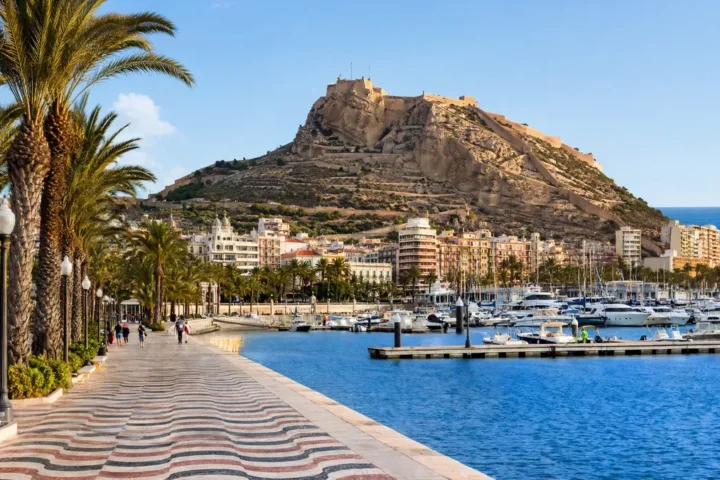
Area code 228 sits on the map exactly where you would expect a Gulf Coast code to sit: along the shoreline of the Gulf of Mexico, at the south-eastern corner of Mississippi. Its territory is compact, just three counties, but it holds some of the state’s best-known places. Gulfport, the largest city on the coast and home to a working commercial port, sits in the middle. Biloxi, famous for its casino resorts and its long white-sand beach, sits just to the east, and Pascagoula, a shipbuilding town at the mouth of the Pascagoula River, anchors the eastern end.
Between those three anchors sit the smaller towns that give the coast its character: Bay St. Louis and Waveland in Hancock County, Pass Christian, Long Beach and D’Iberville in Harrison County, and Ocean Springs, Moss Point and Gautier in Jackson County. The whole region runs on Central Time, six hours behind Greenwich Mean Time in winter and five in summer. To the north, 228 meets the 601 and 769 codes of central Mississippi, to the east lies Alabama’s 251, to the west Louisiana’s 985, and to the south there is nothing but the Gulf of Mexico.
How 228 came to be: the 1997 split from 601
Mississippi began the telephone era with a single area code. When the North American Numbering Plan was set up in 1947, the whole state was given 601, and for fifty years that one code served every town from the Tennessee border to the Gulf. By the mid-1990s, though, 601 was running short, as mobile phones and pagers multiplied and businesses wanted extra lines.
The answer was a split. On 15 September 1997, the three Gulf Coast counties were carved out of 601 and given their own code, 228, making it only the second area code Mississippi had ever had. The code had been assigned a few weeks earlier, on 31 July 1997, and after a permissive dialling period the changeover became mandatory in September 1998. Two years later, in 1999, the northern half of the state split away as well, taking the new code 662, and in 2005 the remaining 601 territory gained an overlay, 769. The Wikipedia page on area code 228 sets out this history and the current service area in full.
The towns and counties inside 228
Hancock County is the westernmost of the three, a quieter stretch of coast where Bay St. Louis has rebuilt itself as an artsy small town since Hurricane Katrina, and Waveland and Diamondhead offer the coast’s slower pace. Harrison County is the busy middle, holding Gulfport and Biloxi as well as Pass Christian, Long Beach and D’Iberville, and most of the coast’s hotels, casinos and restaurants. Jackson County is the eastern end, where Pascagoula’s shipyards build vessels for the US Navy, Ocean Springs draws visitors to its galleries and oak-lined streets, and Moss Point and Gautier round out the industrial side.
What the three counties share, beyond a code, is a way of life shaped by the water. Fishing, shipbuilding, tourism and the port at Gulfport drive the local economy, and the beach highway along the shore ties the towns together more tightly than the county lines suggest. A 228 number tells you someone lives or works somewhere along that strip, but not which town: it could belong to a casino in Biloxi, a shipyard office in Pascagoula, or a beach house in Bay St. Louis.
How dialling works in 228
Because 228 has no overlay, it works differently from the codes that share their territory with a second code: there is only one 228 number for any given seven-digit local number. Even so, local calls in 228 now need the full ten digits, the area code plus the seven-digit number, a rule in force since 24 October 2021, when the nationwide changeover to protect the 988 crisis line made ten-digit dialling the standard in area codes like 228.
For calls from elsewhere in the United States, dial 1, then 228, then the seven-digit number. From abroad, dial your country’s international exit code, then 1, then the ten-digit number, or hold down the plus key on a mobile and enter +1 228 followed by the seven digits. Saving numbers in the full ten-digit form is the safest habit, since it works on mobiles, office systems and voice-over-internet lines alike. Short service numbers still work as three digits: 911 for emergencies and 988 for the crisis line.
| Call type | How to dial | Notes |
|---|---|---|
| Local call inside 228 | 228 + seven digits | Ten digits required since 24 October 2021 |
| Long-distance call from the US | 1 + 228 + seven digits | The leading 1 is for toll calls |
| Call from abroad | Exit code + 1 + 228 + seven digits | Or +1 228 on a mobile |
| Emergency or service number | Three digits, such as 911 or 988 | These are not area codes |
Mississippi’s other area codes
Mississippi now has three numbering plan areas and five area codes, and 228 is the simplest of them. The original code, 601, still covers central and southern Mississippi, including the capital, Jackson, and it has shared its territory with the overlay code 769 since 14 March 2005. The northern half uses 662, created in the 1999 split, and gained its own overlay, 471, in 2026. So the full set is 228 on the Gulf Coast, 601 and 769 in the centre and south, and 662 and 471 in the north.
Area codes work the same way everywhere in the country, and the pattern in Mississippi is a useful example of how the system grows. A split gives a region its own code and changes the numbers of everyone inside it, which is what happened to the Gulf Coast in 1997. An overlay adds a second code on top of the same ground, so existing numbers stay unchanged but ten-digit dialling becomes necessary, which is what happened to central Mississippi in 2005. The guide to the 205 area code covers Birmingham, Alabama, just east of Mississippi, while the 865 area code guide covers Knoxville, Tennessee, and the 239 area code guide covers south-west Florida, all following the same split-and-overlay story in different states.
What 228 is not
It is also worth knowing what 228 is not. It is not a toll-free code, it is not a premium-rate code, and it does not tell you who is calling or whether the call is genuine. Scammers can fake any area code, including 228, so a Gulf Coast number on your screen is not proof that the caller is on the Gulf Coast. If a call feels wrong, do not share personal details or send money, and look the number up before calling back. A genuine caller will leave a message or a way to reach them.
Nor is 228 a code that is about to run out. Numbering analyses have found that exhaustion is unlikely for the foreseeable future, a pleasant contrast with the bigger metropolitan codes that need new overlays every few years. The Gulf Coast is a small numbering area with a modest population, and 228 has plenty of numbers left. It is also not a code that belongs to a single city: people sometimes call it the Biloxi area code or the Gulfport area code, but it belongs to the whole coast, all three counties and every town between Bay St. Louis and Pascagoula.

Your 228 checklist
- Save Gulf Coast numbers in full, as 228 plus the seven-digit number.
- Dial ten digits for local calls, even when calling next door.
- Add 1 before the area code for long-distance calls from the US.
- From abroad, dial your exit code, then 1, then the ten-digit number.
- Remember the region runs on Central Time when you call from another zone.
- Do not trust a caller ID showing 228 on its own, since numbers can be faked.
- Look an unknown 228 number up before calling it back.
- Keep 911 for emergencies and 988 for the crisis line, not 228 numbers.
What area is 228?
The 228 area code covers Mississippi’s Gulf Coast, the three counties of Hancock, Harrison and Jackson at the south-eastern tip of the state. Its main cities are Gulfport, Biloxi and Pascagoula, with Bay St. Louis, Ocean Springs, Long Beach, Moss Point and Pass Christian among the smaller towns.
When was the 228 area code created?
Area code 228 went into service on 15 September 1997, when the Gulf Coast was split away from Mississippi’s original statewide code, 601. It was assigned on 31 July 1997, and the changeover became mandatory in September 1998 after a permissive dialling period.
What cities use the 228 area code?
Gulfport, Biloxi and Pascagoula are the largest cities in 228, along with Bay St. Louis, Ocean Springs, Long Beach, Moss Point, Pass Christian, D’Iberville, Gautier, Waveland, Diamondhead and Vancleave. Every town in Hancock, Harrison and Jackson counties uses the code.
Is 228 an overlay area code?
No. The 228 area code has no overlay, so it is the only area code for the Mississippi Gulf Coast. Mississippi’s overlays are elsewhere: 769 over 601 in central Mississippi, and 471 over 662 in the north of the state.
Do I need to dial 10 digits for a local 228 call?
Yes. Local calls in 228 need the full ten digits, the area code plus the seven-digit number, a rule in force since 24 October 2021, when the nationwide changeover to protect the 988 crisis line took effect. Saving numbers in the ten-digit form is the safest habit.
Is 228 a scam area code?
No area code is a scam code in itself, and 228 is a genuine geographic code for the Mississippi Gulf Coast. Scammers can fake any area code, though, so a 228 number on your screen does not prove the caller is on the Gulf Coast. If a call feels wrong, do not share personal details, and look the number up before calling back.
The bottom line
The 228 area code is a small, simple piece of the American telephone system: three counties, one code, no overlay, and a history that goes back to a single split from 601 in 1997. It covers the whole Mississippi Gulf Coast, from Bay St. Louis to Pascagoula, and it runs on ten-digit dialling and Central Time. If a 228 number calls you, it most likely belongs to someone on the coast, but the code alone is never proof, so a quick check before calling back is always worth the moment it takes.