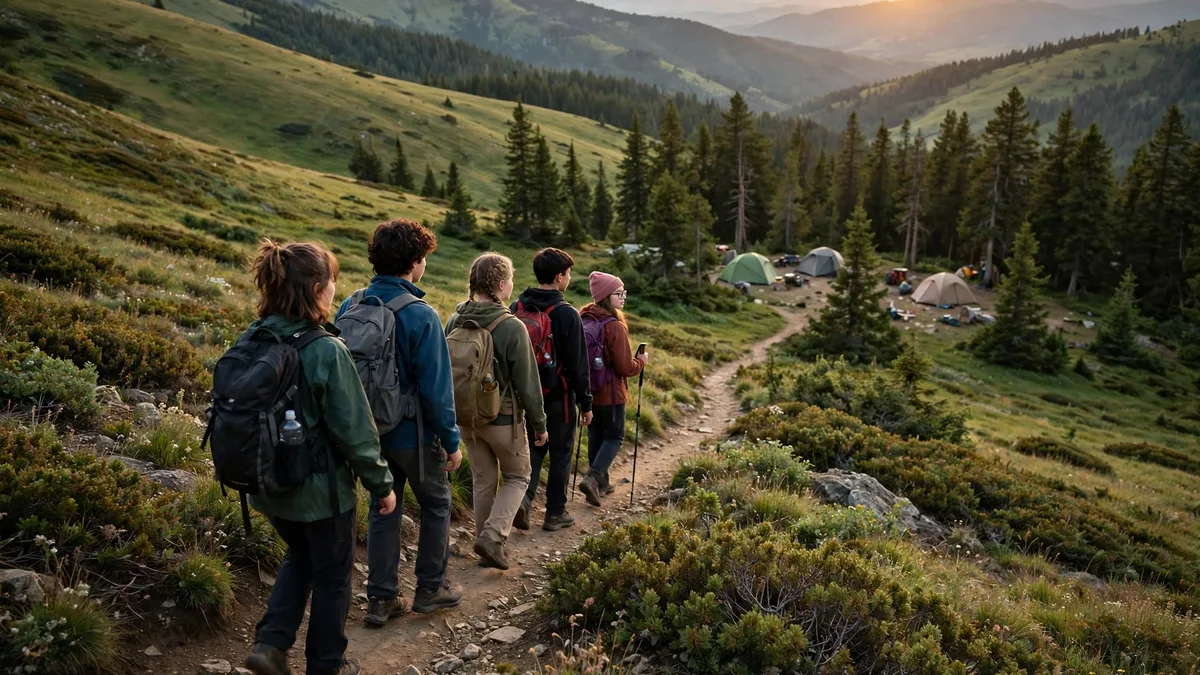

A youth expedition project is an organised journey that takes young people away from home to travel on foot, camp outdoors and complete a useful project, over several days or weeks. The team plans its own route, carries its own kit, cooks its own meals and works together to finish a task that matters, whether that is repairing a footpath, surveying wildlife or helping to build a classroom. It is part adventure, part education and part service, and it builds confidence, teamwork and self-reliance in a way that a classroom rarely can.
Key takeaways
- A youth expedition project combines a self-supported journey, usually on foot, with a practical project or purpose.
- The best-known framework is the Duke of Edinburgh’s Award, founded in 1956 for ages 14 to 24.
- Expeditions range from a two-day hike close to home to several weeks overseas with a charity such as Raleigh International.
- Participants plan routes, navigate, camp and cook, with trained adult leaders supervising.
- Skills gained include navigation, teamwork, leadership, resilience and problem solving.
- Costs vary widely, and many programmes offer fundraising support or bursaries.
What a youth expedition project is
The phrase covers a family of activities rather than one single scheme. At its simplest, a youth expedition project is a journey with a purpose, undertaken by a small team of young people under adult supervision. The team travels under its own power, most often walking, and is self-sufficient: they navigate with map and compass, pitch their own tents, cook on portable stoves and carry everything they need. The project element is what separates an expedition from an ordinary walking holiday.
Most expeditions are run by schools, youth organisations or specialist charities. Some form part of a wider award, such as the Duke of Edinburgh’s Award, where the expedition is one section among several. Others are standalone trips: a school might run a week in the hills, or a charity might take a group overseas for a month of community work and trekking. The young people do the work themselves, while adults set the safety framework.
The expedition itself
The journey is usually the heart of the experience. Teams of four to seven walk a planned route over unfamiliar ground, navigating as they go. On a short expedition this might mean two days in a national park, with one night under canvas. On a longer one it can mean weeks of trekking between villages, camping in a different place each night. The pace is deliberately steady: the aim is for everyone to finish together.
The project work around it
The project gives the journey its shape. A team might survey a stretch of river or help with a conservation task such as path repair, while on overseas expeditions the project is often more substantial, such as building a classroom or helping a community set up a water supply.
The best-known programmes
Several established programmes run youth expeditions. The Duke of Edinburgh’s Award is the most widespread: a youth awards programme founded in 1956 by Prince Philip, Duke of Edinburgh, now operating in more than 130 countries. Young people aged 14 to 24 work through Bronze, Silver and Gold levels, completing sections in volunteering, physical activity and skills, plus an expedition and, at Gold, a residential project. The expedition grows with the level: Bronze takes two days and one night, Silver three days and two nights, and Gold four days and three nights. The Duke of Edinburgh’s Award entry on Wikipedia sets out the award’s history and sections in full.
Raleigh International is a youth development charity that runs longer expeditions overseas, typically lasting several weeks. Its young volunteers, known as venturers, work on community and environmental projects across Africa, Asia and Latin America, trekking between project sites and camping along the way. School expeditions sit between the two: a school organises its own trip for a group of its pupils, with teachers and specialist leaders in charge.
| Programme | Who it suits | Expedition length | Main focus |
|---|---|---|---|
| Duke of Edinburgh’s Award | Aged 14 to 24 | Two to four days, by level | Personal development and expedition |
| Raleigh International | Late teens and twenties | Several weeks overseas | Community and environmental projects |
| School expedition | Pupils aged 14 to 18 | A few days to two weeks | Teamwork and adventure |
| Gap-year volunteer expedition | School leavers aged 18 and over | Several weeks to a few months | Volunteering abroad with travel |

What young people actually do day to day
A day on expedition follows a simple rhythm. The team rises early, often at first light, and the day’s walk is planned around the route card prepared the night before. Checking what time is sunrise helps the group set a realistic start, since a long day in the hills needs an early departure. Navigation is shared around the group, so everyone takes a turn with the map and compass.
Arriving at camp brings a second round of work. Tents go up, water is fetched, and the cooking team starts the evening meal while others sort kit and dry anything that got wet. Kit matters more than most first-timers expect: boots must fit and waterproofs must keep water out. Checking kit measurements before departure avoids trouble on the trail, and the guide to 12 cm to inches helps when a tent or sleeping mat is sized in centimetres.
Skills and benefits
The skills young people take home are practical and lasting. Navigation is the most obvious: reading a map, taking a bearing, judging distance and time, and recovering calmly when the group takes a wrong turn. Campcraft follows close behind: pitching a tent in wind and rain, cooking on a small stove and keeping kit dry.
The personal gains are just as important, and they are the reason schools and employers value expedition experience. Teamwork is unavoidable when a small group must carry, cook and navigate together for days. Leadership is practised in small doses, with a different team member leading each day, and resilience grows from coping with bad weather and plans that change.
Costs and funding
Costs vary widely, and any family considering an expedition should ask for a full breakdown before committing. A school-run Duke of Edinburgh’s Award expedition close to home can be relatively modest, covering transport, campsite fees, food and kit hire. An overseas expedition with a charity, involving flights, insurance, project materials and weeks of support, costs a great deal more.
Fundraising is a normal part of longer expeditions. Many young people raise part of their fee through sponsored events or part-time work, and some charities and schools hold bursary funds for families who could not otherwise afford a place. Kit is the other cost to budget for: boots, waterproofs, a rucksack, a sleeping bag and a sleeping mat are the essentials, and borrowing from friends, family or the school is common. Checking sizes matters too, since a mat measured in millimetres needs converting, and the guide to transform mm to inches covers that conversion.
Safety: how expeditions are run
Safety is the part of an expedition that families rightly ask about first, and reputable providers are used to the questions. Every expedition runs under a written safety plan: routes are checked in advance, risk assessments cover the terrain and the weather, and leaders hold recognised qualifications in outdoor leadership and first aid. Groups carry radios or phones for contact with a base.
Young people are trained before they go. A Duke of Edinburgh’s Award group completes training and a practice expedition before its qualifying journey, learning navigation, campcraft, first aid and what to do in an emergency. Weather is the most common cause of changed plans: a good leader will alter a route or keep a group in camp rather than push on through dangerous conditions.
How to choose the right expedition
Choosing well starts with the young person, not the brochure. A first expedition should be close to home, short and well supported, so that the experience is challenging but achievable. A teenager who has never camped will get more from two nights in the hills than from three weeks overseas, and a successful first trip builds appetite for a bigger one. Age, fitness and interests all matter: a keen walker will thrive on a trekking expedition, while a practically minded teenager might prefer a project-heavy trip.
Next, check the provider. Look for a clear safety record, qualified leaders, proper insurance and a written plan for emergencies. Ask what is included in the price, what kit is needed and how the group is supervised. Talk to families whose children have been on the same trip. If the provider is evasive about safety or costs, walk away.
Your youth expedition project checklist
- Decide what the young person wants: adventure, project work, an award, or a mix.
- Start small for a first expedition: a short trip close to home builds confidence.
- Check the provider’s safety record, leader qualifications, insurance and emergency plan.
- Ask for a full cost breakdown, including flights, visas, kit and spending money.
- Ask about fundraising support and bursaries before ruling a trip out on cost.
- Sort kit early: boots that fit, reliable waterproofs, a comfortable rucksack and a warm sleeping bag.
- Complete the training and practice expedition before the real journey.
- Agree the project aim in advance and decide who does what in the team.
What is a youth expedition project?
A youth expedition project is an organised journey in which a team of young people travels under its own power, usually on foot, camps outdoors and completes a practical project along the way. The team plans its route, navigates, cooks and looks after itself, with trained adult leaders supervising.
What age are youth expeditions for?
It depends on the programme. The Duke of Edinburgh’s Award is open to ages 14 to 24. School expeditions usually take pupils aged 14 to 18, while longer overseas expeditions are generally aimed at young adults in their late teens and twenties.
How long does a youth expedition last?
A first expedition may last just two days and one night, as at Bronze level of the Duke of Edinburgh’s Award. School trips often run for a week or two, while overseas charity expeditions typically last several weeks.
Do young people need experience before an expedition?
No previous experience is needed for most programmes, and first-timers are expected. Training is provided before departure, covering navigation, campcraft and first aid, and Duke of Edinburgh’s Award groups complete a practice expedition first.
How much does a youth expedition project cost?
Costs vary widely. A short school or Duke of Edinburgh’s Award expedition close to home is relatively modest, while an overseas expedition with flights and weeks of support costs a great deal more. Many providers help with fundraising, and bursaries are sometimes available.
Is a youth expedition safe?
Reputable expeditions are carefully managed, with qualified leaders, first-aid cover, written risk assessments, checked routes and a plan for emergencies. Young people are trained before they go, and leaders will change a route or keep a group in camp if the weather turns dangerous.
The bottom line
A youth expedition project is a journey with a purpose: a small team of young people, travelling on foot and camping out, working together to complete something worthwhile. Whether it is two days in the hills for a Duke of Edinburgh’s Award or several weeks overseas with a charity, the shape is the same: plan the route, carry the kit, look after each other and finish the job. Choose a programme that fits the young person’s age and appetite, and check the provider’s safety record.
Outdoor expeditions carry real risks from weather, terrain, fatigue and remoteness, so never treat safety as a formality: follow the provider’s safety plan, make sure leaders hold recognised qualifications and first-aid cover, and turn back or seek help early if conditions deteriorate rather than pushing on.