
Are styes contagious? In the ordinary sense, no: a stye is not passed from person to person the way a cold or flu is, and you cannot catch one simply by being near someone who has one. The fuller answer is that the bacteria involved can be spread by hands, towels and make-up, so a little care with hygiene is still worthwhile. This guide explains what a stye is, how it behaves, and when eye symptoms deserve a clinician’s attention.
Key takeaways
- A stye is a painful red bump on the eyelid, caused by a blocked oil gland that has become infected.
- Styes are not contagious in the usual sense: you cannot catch one from being near someone who has one.
- The bacteria involved can be spread by hands, towels, flannels and eye make-up, so hygiene matters.
- Most styes get better on their own within a week or two, often after coming to a head.
- Warm compresses and gentle eyelid cleaning are the usual home measures; squeezing a stye is best avoided.
- See a clinician if vision is affected, swelling spreads, the stye keeps coming back, or it does not improve.
What a stye is
A stye is a small, painful, red bump that appears on the edge of the eyelid, usually at the base of an eyelash. It forms when one of the tiny oil glands in the eyelid becomes blocked and then infected, most often by Staphylococcus aureus, a bacterium that lives harmlessly on the skin of many people. The blocked gland swells, the eyelid becomes tender and red, and the bump may develop a yellowish head, much like a spot, before it drains and heals.
There are two kinds. An external stye grows on the outside of the eyelid, at the lash line, and is the kind most people recognise; an internal stye grows on the inside, tends to be more painful, and can take longer to settle. Both differ from a chalazion, a painless lump caused by a blocked gland that has not become infected, and telling them apart is a job for a clinician. The NHS page on styes describes the condition, its symptoms and the usual advice in plain language.
Why styes are not usually contagious
A stye is not an infection that travels through the air or through casual contact. The bacterium behind it, Staphylococcus aureus, already lives on the skin of a large share of healthy people without causing any trouble, and a stye happens when it gets into a blocked gland, not when it arrives from outside. That is why one person can develop a stye while everyone around them stays well, and why styes do not sweep through a household the way a cold does.
That said, the bacteria can be moved around. Rubbing the eyes with unwashed hands, sharing a towel or flannel, or using someone else’s eye make-up can all transfer bacteria to the eyelid, and in a person whose glands are already blocked or irritated, that may be enough to start a stye. So the honest answer has two parts: the stye itself is not contagious, but the habits that spread bacteria are worth avoiding, especially while a stye is present. Washing hands before touching the eyes, using a clean towel and not sharing eye make-up are simple habits that cost nothing.
What a stye feels like
A stye usually announces itself with tenderness: the edge of the eyelid feels sore, then a red bump appears, and blinking or touching it hurts. The eye may water, the lid may swell, and light may feel uncomfortable, and many people notice a gritty feeling, as though something is in the eye. The bump often grows for a day or two, comes to a head, then drains on its own, and the soreness fades quickly.
Most styes follow this course and settle within a week or two without treatment beyond simple home care. An internal stye can be slower and more uncomfortable, and may leave the lid swollen for longer. A lump that is painless, very hard, or that does not change over several weeks is a different matter, and it is worth showing to a clinician rather than assuming it is a stye.
How to look after a stye at home
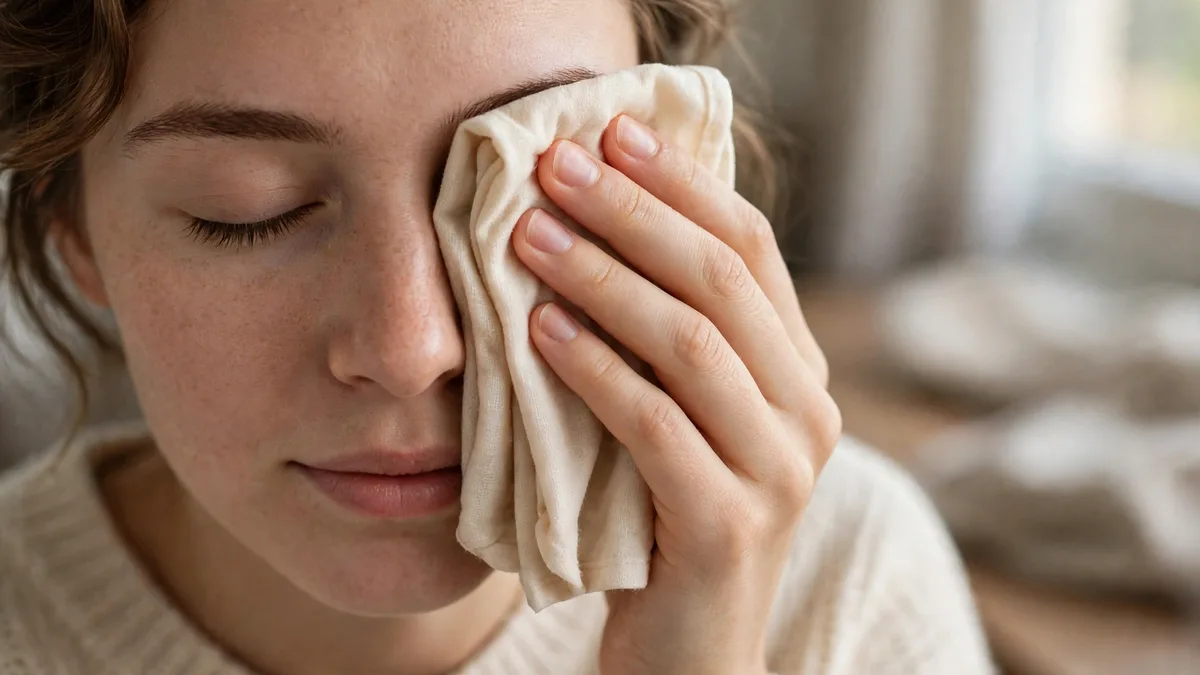
The most widely recommended home measure is a warm compress: a clean flannel soaked in warm water, wrung out and held gently against the closed eyelid for ten minutes or so, several times a day. The warmth helps the blocked gland to drain and eases the soreness, and it is the measure health services most often suggest first. Use a fresh flannel each time, and do not share it with anyone else in the household.
Keep the eyelid clean and leave it alone: gentle cleaning of the lash line with warm water is enough for most people, and make-up and contact lenses are best avoided until the stye has settled, since both can irritate the lid and carry bacteria. Do not try to squeeze a stye: squeezing can push the infection deeper into the lid and make things worse, and it is one of the few things that can turn a small problem into a bigger one. A person who wears contact lenses may find glasses more comfortable for a few days, and regular eye checks still matter: a guide to what is glaucoma explains why routine eye care matters even when the eyes feel fine.
| Condition | Where it appears | How it feels | Usual course |
|---|---|---|---|
| External stye | Outside of the eyelid, at the lash line | Painful, red and tender | Often drains and heals within a week or two |
| Internal stye | Inside of the eyelid | More painful, with more swelling | Can take longer to settle |
| Chalazion | On the eyelid, away from the edge | Painless lump, firm to touch | May last weeks or months; often painless |
| Blepharitis | Along the whole lash line | Itchy, sore, crusty lashes | Long-term; needs regular lid cleaning |

When to see a clinician
Most styes get better on their own, but some situations call for professional advice. See a clinician promptly if swelling spreads beyond the eyelid to the cheek or face, if vision becomes blurred or the eye very painful, or if the eyeball itself looks red or swollen: these are signs the infection may have spread. The same applies if the stye has not improved after a week or two of home care, or if it keeps coming back.
Frequent styes can be linked to blepharitis, an ongoing inflammation of the eyelid margins, or to skin conditions such as rosacea, and they can also be a sign that contact lens hygiene or make-up habits need a change. A clinician can check the eyelids, look at the glands and suggest a cleaning routine or a treatment, and can also rule out the less common conditions that mimic a stye. If you need care quickly, a search for urgent dental care near me shows how local urgent services are found, and eye symptoms deserve the same prompt attention.
Preventing styes
Prevention is mostly a matter of hygiene and habit. Wash hands before touching the eyes or handling contact lenses, and avoid rubbing the eyes with unwashed hands. Remove eye make-up before bed, replace mascara and eyeliner regularly, and do not share eye make-up, towels or flannels. Clean contact lenses exactly as instructed, and give the eyes a break from lenses when they feel irritated.
People who get styes often may benefit from a regular eyelid cleaning routine, which a clinician or optician can demonstrate, and treating an underlying eyelid condition reduces the chance of another stye. The habits that keep the glands clear are daily ones, not occasional ones. Daily routines matter elsewhere too, and the San Diego time guide is a reminder that keeping track of the small, regular things keeps the larger ones on course.
Your stye care checklist
- Use a warm compress: a clean flannel in warm water, held gently on the closed lid several times a day.
- Use a fresh flannel each time, and do not share towels or flannels while a stye is present.
- Keep the eyelid clean with warm water, and avoid make-up and contact lenses until it settles.
- Do not squeeze a stye, however tempting, since it can push the infection deeper.
- Wash hands before touching the eyes, and avoid rubbing them with unwashed hands.
- Do not share eye make-up, and replace mascara and eyeliner regularly.
- See a clinician if vision is affected, swelling spreads, the stye does not improve, or it keeps coming back.
- Ask a clinician about a regular lid-cleaning routine if styes keep returning.
Are styes contagious?
No, not in the usual sense. A stye is a blocked oil gland in the eyelid that has become infected, and it is not passed from person to person through the air or casual contact. The bacteria involved can be spread by hands, towels and eye make-up, so good hygiene is still important, especially while a stye is present.
Can I go to work or school with a stye?
Yes, in most cases. A stye is not contagious the way a cold is, so there is no need to stay away. If the eye is sore or swollen you may prefer to rest it, and avoid sharing towels or eye make-up, but a stye on its own is not a reason to stay home.
How long does a stye last?
Most styes get better on their own within a week or two, often after coming to a head and draining. An internal stye can take longer. If a stye has not improved after a week or two, or if it keeps coming back, it is worth showing to a clinician.
Should I squeeze a stye?
No. Squeezing a stye can push the infection deeper into the eyelid and make it worse. Warm compresses are the usual home measure, helping the blocked gland drain on its own. If it does not drain or the pain increases, seek advice from a clinician rather than forcing it.
Can I wear contact lenses with a stye?
It is best to avoid contact lenses until the stye has settled, since lenses can irritate the eyelid and carry bacteria. Glasses are a more comfortable option for a few days. If you rely on lenses, ask an optician for advice, and do not share lens cases or solutions.
What is the difference between a stye and a chalazion?
A stye is a painful, red, infected bump on the eyelid, while a chalazion is a usually painless, firm lump caused by a blocked gland that has not become infected, and often lasts much longer. If you are unsure which one you have, a clinician can tell them apart.
The bottom line
A stye is painful and unsightly, but it is not contagious in the ordinary sense, and most settle on their own within a week or two with warm compresses and a little patience. Keep your hands and towels clean, leave the bump alone, and let the gland drain in its own time. If your vision changes, the swelling spreads, or the stye keeps returning, get it looked at.
This article gives general information only and is not a diagnosis. Eye symptoms can have many causes, and only a clinician who examines your eyes can say what is wrong. Seek professional medical advice if you have eye pain, changes in vision, swelling that spreads, a stye that does not improve, or any eye symptom that worries you, and seek urgent care if your vision is affected.