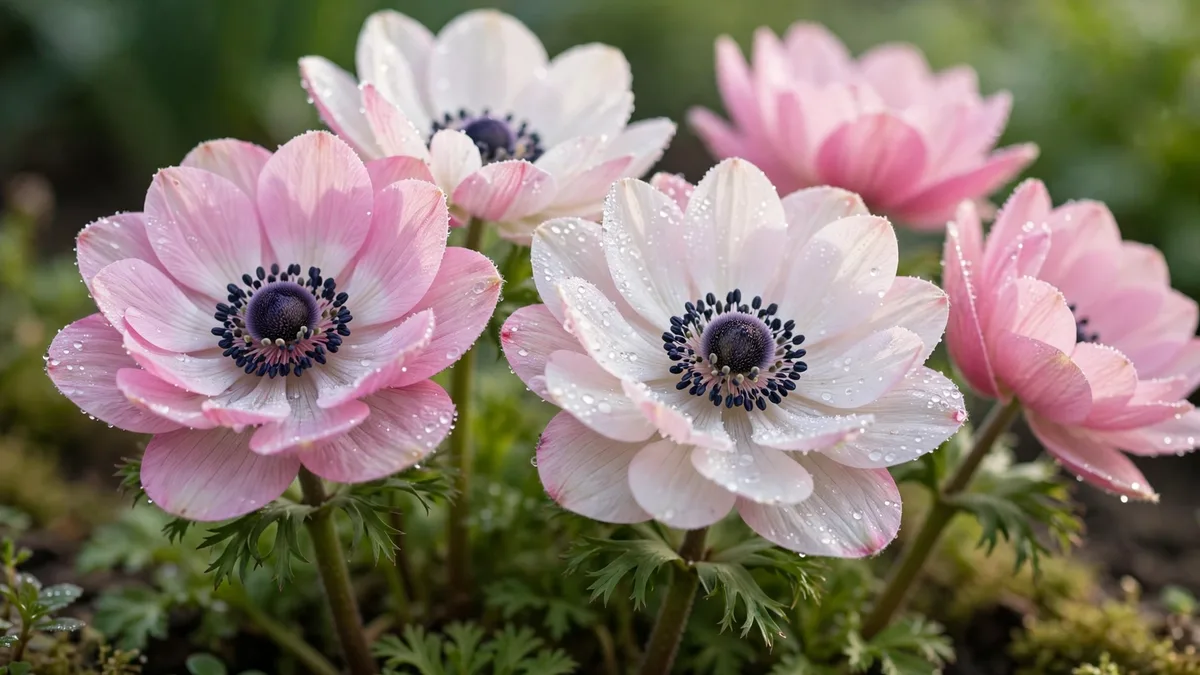

Anemone meaning covers two very different things that share one name: a delicate flower also called the windflower, and a soft-bodied sea creature that looks like a flower on the seabed. The flower’s meaning comes from Greek myth and Victorian flower language, where it speaks of love, loss and anticipation, while the sea creature borrows its name from the bloom it resembles. Both are worth knowing.
Key takeaways
- Anemone comes from the Greek word anemos, meaning wind, which is why the flower is also called the windflower.
- In Greek myth, anemones sprang from the tears of Aphrodite and the blood of Adonis, linking the flower to love and loss.
- In Victorian flower language, anemones often meant anticipation, forsaken love and protection against evil.
- Meaning varies by colour: white suggests sincerity, red and pink suggest love, and purple suggests protection.
- The sea anemone is a marine animal named for its resemblance to the flower.
- Anemones are a genus in the buttercup family, with species flowering in spring and others in autumn.
Where the name comes from
The word anemone comes from the Greek anemos, meaning wind, and the flower’s folk name in English is the windflower. The name is usually explained by the way the blooms tremble in the wind, and by the light, feathery seed heads that scatter on the breeze. It is a fitting name for a plant whose flowers seem barely attached to their stems, opening wide in the sun and folding up at dusk or in bad weather.
Botanically, anemones form a genus in the buttercup family, Ranunculaceae, with well over a hundred species spread across the temperate regions of the world. The genus includes the wood anemone, the poppy anemone and the Japanese anemone: some are low woodland carpets, others tall border perennials, with flowers from white and soft pink to deep purple and scarlet. What unites them is the simple cup or saucer shape of the bloom, with petal-like sepals around a dark, prominent centre. The anemone entry on Wikipedia gives the full botanical picture, including how the genus is classified and where its species grow.
The Greek myth behind the flower
The best-known story attached to the anemone comes from Greek myth, and it is a sad one. Aphrodite, goddess of love, was devoted to the mortal Adonis, and when he was killed while hunting, her tears fell on the ground where his blood had spilled. From that mingling of tears and blood sprang the anemone, a flower as brief and beautiful as their love. The story is why the anemone has long been tied to love that is intense, fragile and cut short.
A second, gentler tradition says the anemone was a nymph who was loved by the west wind, Zephyrus, and changed into a flower by a jealous goddess. Either way, the anemone is a flower of passion that does not last, and poets and painters have used it for centuries to speak of love and mourning in a single image.
Anemone meaning in Victorian flower language
In Victorian Britain, when flowers were used as a coded language, the anemone carried a cluster of meanings that all circle the same idea: something hoped for, something lost. It was read as a sign of anticipation, of waiting for a loved one to return, and also as a sign of forsaken love. A bunch of anemones could say what a letter could not, and the message was rarely a cheerful one. The flower was also thought to ward off evil, and people planted it near doorways or carried it as a charm: flower language was never one simple dictionary but a tangle of local customs.
Colour refined the message. White anemones were linked to sincerity and honesty, and to the quiet hope of a fresh start. Red and pink anemones spoke of love and affection, drawing directly on the Adonis story. Purple anemones, the colour of royalty and mystery, were linked to protection and to the warding off of ill fortune. Modern florists still lean on these associations, though today anemones are as often chosen for colour and vase life as for any coded message.
What is a sea anemone
The sea anemone is an animal, not a plant, and it takes its name from the flower because its ring of tentacles looks like petals around a centre. Sea anemones are soft-bodied marine animals related to corals and jellyfish, and they live attached to rocks, shells or the seabed in shallow water and in the deep ocean. Their tentacles carry stinging cells for catching small fish and crustaceans, and many species live in partnership with clownfish, which shelter among them.
The name shows how people first made sense of the unfamiliar by likening it to the familiar: a rock-pooler would naturally call it a flower of the sea, and the name stuck. The symbolism of the sea anemone is thinner than that of the flower, but it carries the same associations of delicate beauty with a hidden sting, which is a useful thing to remember when exploring a rock pool. Look, admire and leave it where it is.
| Kind of anemone | Where it grows or lives | When it shows | Main meaning |
|---|---|---|---|
| Wood anemone | Deciduous woodland floors | Early spring | Anticipation and new beginnings |
| Poppy anemone | Mediterranean fields and gardens | Spring | Love and remembrance |
| Japanese anemone | Garden borders in partial shade | Late summer to autumn | Protection and quiet strength |
| Sea anemone | Rocks and seabeds in shallow water | All year | Beauty with a hidden sting |

Giving anemones as a gift
Anemones make a striking gift, and their meaning gives the giver something to say. A bunch of white anemones suits a new beginning, such as a new home or a new job, where sincerity and hope are the right notes. Red or pink anemones suit a romantic gesture, though the myth behind them makes them a better choice for a love that is deep than for a light-hearted one. Purple anemones, with their protective association, suit a get-well message or a gift for someone going through a hard time, where the wish is for safety and steadiness rather than celebration.
Practical points matter too. Anemones are long-lasting cut flowers if you keep them in clean water and out of direct sun, and they continue to open after they are cut, so a tight bud on Monday can be a wide-open flower by Wednesday. Include a short note explaining the meaning you intend: a line about anticipation, protection or remembrance turns a pretty bunch into a message. Checking the timing of a gift matters as well, and a time and date calculator is a handy way to count the days to a birthday or anniversary so the flowers arrive on the day itself.
Growing anemones at home
Anemones are not difficult plants, but they reward a little attention to position. The wood anemone wants a cool, leafy spot under deciduous trees, where it gets light in spring and shade in summer, and it will spread slowly into a carpet if left alone. The poppy anemone wants sun and free-draining soil, and its corms are best soaked overnight before planting in autumn or early spring, depending on the climate. The Japanese anemone wants rich, moist soil in partial shade, and once established it will need room, since it spreads by runners and can crowd its neighbours.
All dislike waterlogged ground in winter, which rots the roots, and all benefit from a mulch of leaf mould in autumn. Slugs may nibble the young shoots of the spring kinds. Planting them needs patience: the wood anemone takes a year or two to settle, and the Japanese anemone may sulk for a season after moving. The reward is a plant that asks for little and gives flowers at the seasons when the garden needs them most, and a youth expedition project is one of the pleasant ways younger gardeners first learn how a woodland carpet of white flowers can transform a familiar patch of ground.
Your anemone meaning checklist
- Remember the root: anemone comes from the Greek anemos, meaning wind, hence windflower.
- Link the flower to its myth: Aphrodite’s tears and Adonis’s blood, a love both intense and brief.
- Use colour to refine the message: white for sincerity, red and pink for love, purple for protection.
- Keep the two anemones apart: the flower is a plant, the sea anemone is an animal that resembles it.
- Match the species to the season: wood and poppy anemones for spring, Japanese anemones for autumn.
- Give the flowers with a note, so the recipient knows which meaning you intend.
- Plant spring kinds in cool, moist soil and autumn kinds in rich soil in partial shade.
- Leave sea anemones in the rock pool: admire them, do not touch them, and never take one home.
What does an anemone symbolise?
An anemone most often symbolises love, loss and anticipation. In Greek myth it grew from Aphrodite’s tears and Adonis’s blood, and in Victorian flower language it meant forsaken love, waiting and protection against evil. The exact shade of meaning depends on the colour and the occasion.
What is the difference between an anemone flower and a sea anemone?
The anemone flower is a plant in the buttercup family, grown in gardens and woodlands, while the sea anemone is a soft-bodied marine animal related to corals and jellyfish. The animal is named after the flower because its ring of tentacles looks like petals around a centre. They are not related to each other.
What do white anemones mean?
White anemones are generally linked to sincerity, honesty and hope, and they suit occasions that mark a fresh start, such as a new home or a new job. In the older flower language they also carried the wider anemone meanings of anticipation and protection, so the message depends on the note that comes with them.
What do red anemones mean?
Red anemones are linked to love and passion, drawing on the myth of Aphrodite and Adonis, whose blood and tears were said to have produced the flower. They suit a romantic gift, though the story behind them is a sad one, so they carry more weight than a casual bunch of flowers.
When do anemones flower?
It depends on the kind. Wood anemones and poppy anemones flower in spring, while Japanese anemones flower from late summer into autumn. Together they give the garden anemone flowers at both ends of the growing season, which is one reason the genus is so widely planted.
Are anemones good luck?
In folklore, anemones were thought to ward off evil, and people planted them near doorways or carried them as a charm. That protective association survives in the purple forms in particular, and a gift of anemones suits a Thanksgiving Day 2026 table or an autumn gathering, where their late-season colour is most welcome.
The bottom line
Anemone meaning is a story of wind, love and loss: a flower named for the breeze, born in myth from a goddess’s tears, and read by the Victorians as a sign of anticipation and forsaken love. Its sea namesake borrows the bloom’s shape and its beauty. Give the flowers with a note, plant them where they will thrive, and let the meaning you choose be the one you say out loud.