
Sewer line cleaning is the process of clearing the main pipe that carries wastewater away from your home to the public sewer or a septic system. The central question is simple: how do you know when the line needs cleaning, and which method is right? Slow drains across the house, gurgling toilets, bad smells and sewage backing up into the lowest fixtures are the classic signs, and the usual fix is snaking or hydro-jetting by a licensed professional.
The sewer line is the one pipe every drain in the house depends on. Kitchen sinks, baths, showers, toilets and washing machines all feed into it, so when it narrows or blocks, the whole house feels it. A local blockage in a single sink is a small job, but a blockage in the main line is different: wastewater has nowhere to go, and it will find the lowest available exit.
Key takeaways
- The sewer line carries wastewater from every drain in the house, so a blockage affects the whole home.
- Multiple slow drains, gurgling sounds and bad smells are the classic signs of a main line problem.
- Snaking breaks up blockages with a flexible cable; hydro-jetting scours the pipe with high-pressure water.
- Grease, wet wipes, tree roots and scale are the most common causes of a blocked sewer line.
- Never enter a drain, chamber or confined space, and never breathe sewer gas.
- Regular cleaning and careful flushing habits prevent most repeat blockages.
How the sewer line works
Every home has a network of branch pipes that join into one main sewer line, sometimes called the lateral. In a house connected to the public sewer, the lateral runs from the home to the street, where it meets the public main. In a home with a septic system, the line runs to the tank instead. Either way, the pipe relies on a gentle downward slope so that wastewater flows by gravity.
The pipe itself is usually made of clay, cast iron, PVC or a similar material, depending on the age of the property. Older clay pipes are often joined in short sections, and the joints can shift, crack or let in tree roots. Cast iron corrodes over decades, and the roughened inside surface catches grease and debris.
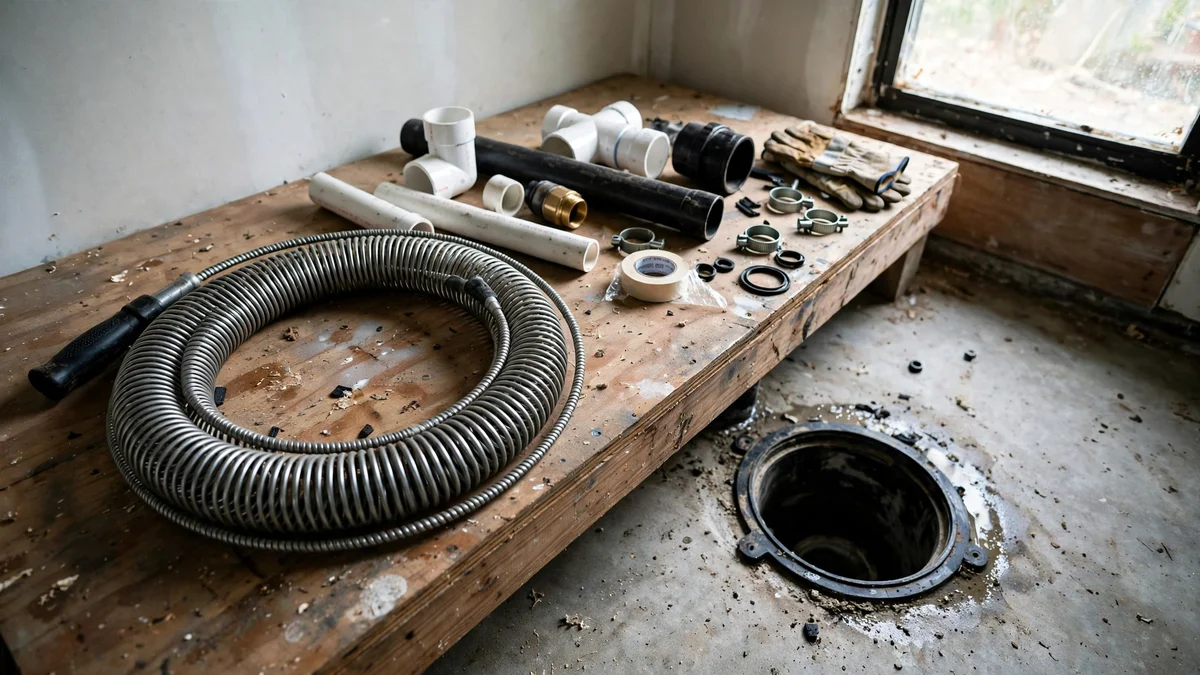
Access points, often called cleanouts or inspection chambers, are placed at intervals along the line. These capped openings let a professional feed a cleaning cable or a camera into the pipe without digging. Knowing where your cleanouts are saves time and money when a problem appears, so it is worth finding them before you need them.
Signs the line needs cleaning
The most telling sign is a pattern: several fixtures misbehaving at once. When the kitchen sink, the bath and a toilet all drain slowly, the fault is almost certainly in the shared main line rather than in any single fixture. A toilet that gurgles when the washing machine empties, or a bath that fills slightly when a toilet is flushed, points the same way.
Smells are another warning. A drain smell that comes and goes, or a sewage smell in the garden near the line, suggests waste is sitting in the pipe or escaping through a crack. The smell may be worse in warm weather or after heavy rain. Foul water appearing in a shower tray or at the base of a toilet is a more urgent sign: the line is blocked and wastewater is backing up.
Outside, look for unusually green or soggy patches above the line, and listen for bubbling from drains. A blockage can also show up as a toilet that needs several flushes, or as water levels in the toilet bowl that rise and fall for no clear reason. Any of these signs is a good reason to arrange an inspection rather than wait for a full backup.
Snaking and hydro-jetting compared
Two methods do most sewer line cleaning work. Snaking, also called rodding or augering, uses a flexible steel cable with a cutting head that is fed into the pipe and rotated to break up the blockage. Hydro-jetting uses a hose with a special nozzle that sprays water at high pressure, scouring the inside of the pipe and flushing debris away. Both have their place, and a professional will choose based on what the camera shows.

Common causes of blockages
Grease is the most common cause of slow sewer lines. Cooking fat poured down the sink cools and hardens inside the pipe, narrowing it a little at a time until water can barely pass. Wet wipes are another frequent culprit. Even wipes labelled as flushable do not break down like toilet paper, and they catch on rough spots and joints, building into a mass that traps everything behind it.
Tree roots are a slower but more stubborn problem. Roots seek out moisture, and a tiny crack or loose joint in a sewer pipe is an invitation. Once inside, roots grow into a dense mat that catches paper and waste. The pipe may drain normally for months while the mat grows, then block suddenly after a heavy day of water use.
Scale and debris also build up over time. In hard water areas, mineral deposits narrow older pipes. Soap residue, hair, food waste and small objects all add to the problem. In some homes, the pipe itself has sagged, creating a low section known as a belly where waste settles and collects. A belly cannot be cleaned away; it needs repair, which is why a camera inspection matters before any cleaning begins.
Sewer line cleaning methods compared
The right method depends on the cause of the blockage and the condition of the pipe. The table below sums up the main options.
| Method | Best for | Keep in mind |
|---|---|---|
| Hand auger | Short, local blockages near a fixture | Cannot reach a deep main line blockage |
| Machine snaking | Roots, compacted waste, mid-line blockages | May leave residue on pipe walls |
| Hydro-jetting | Grease, scale and full-pipe cleaning | Needs a sound pipe; not for fragile drains |
| Camera inspection | Finding the cause before cleaning | Done first, so cleaning targets the real fault |
| Root cutting | Root mats inside the pipe | Roots often grow back without pipe repair |
| Enzyme treatment | Light grease and odour maintenance | Not a fix for a full blockage |
What a cleaning visit involves
A cleaning visit usually starts with questions: which fixtures are affected, when the problem began, and whether it has happened before. The professional will then locate the nearest cleanout and feed a camera into the line. The camera shows the type and location of the blockage, the condition of the pipe and whether roots or damage are involved.
With the cause identified, the professional chooses the method. Snaking is often first for a solid blockage, with the cable worked back and forth until flow returns. Hydro-jetting may follow to scour the pipe walls clean. The camera is usually run again afterwards to confirm the pipe is clear and to check for damage that needs repair.
Afterwards, ask what was found and what to watch for. A report will note the location of the blockage, the state of the pipe and any advice about roots, grease or cleaning.
Keeping the line clear
Prevention is mostly about what goes down the drains. Pour cooking fat into a container and throw it away once it sets, rather than washing it down the sink. Put wet wipes, cotton buds, sanitary products, nappies and dental floss in the bin, even when the packaging says flushable. Use sink strainers to catch food scraps and hair, and empty them into the bin.
Water habits help too. Running hot water down the kitchen drain after washing up can help move grease along. Spreading laundry loads across the week avoids sudden surges that can overwhelm a partly blocked line. Fix leaking taps and running toilets, since extra water adds to the load.
Outside, think about trees. A fast-growing tree planted above or near the sewer line will eventually find it, so choose planting positions with the line in mind. If roots have been a problem before, ask a professional about the options, which can include regular root cutting or, in some cases, replacing a damaged section of pipe with a root-resistant joint.
Your sewer line cleaning checklist
Keep this list with your household records and run through it once a year.
- Find your cleanouts or inspection chambers and note where they are.
- Watch for several slow drains at once, gurgling and bad smells.
- Put cooking fat in the bin, never down the sink.
- Bin wet wipes, cotton buds and sanitary products, even if labelled flushable.
- Use strainers in sinks and showers and empty them regularly.
- Spread laundry loads across the week to avoid surges.
- Do not plant fast-growing trees above or near the sewer line.
- Arrange a camera inspection if blockages keep returning.
- Keep written reports from cleaning visits with your household records.
- At the first sign of sewage backing up, stop using water and call a professional.
Frequently asked questions
How do I know if the blockage is in the sewer line or a single drain?
A single slow drain usually means a local blockage in that fixture or its branch pipe. When several fixtures drain slowly at the same time, or when flushing one fixture affects another, the blockage is almost certainly in the shared main sewer line, and a professional inspection is the right next step.
Is hydro-jetting safe for old pipes?
Hydro-jetting is effective, but it needs a sound pipe. A camera inspection should come first, because high-pressure water can worsen cracks in fragile clay or corroded cast iron pipes. If the pipe is damaged, snaking or repair is the safer choice.
Can I clean the sewer line myself?
You can clear a local blockage in a single fixture with a plunger or a short hand auger. The main sewer line is different: it usually needs a powered snake or a jetter, plus a camera to see what is happening. Never enter a drain chamber or any confined space, and never breathe sewer gas.
How often should a sewer line be cleaned?
A healthy line may never need routine cleaning. Lines that have suffered grease build-up or root problems may benefit from cleaning every year or two. The right interval depends on the pipe, the trees nearby and what goes down the drains, so ask the professional who inspects your line.
Do enzyme cleaners unblock a sewer line?
Enzyme products can help maintain a clear line and reduce grease and smells over time, but they cannot clear a full blockage, a root mat or a collapsed pipe. Treat them as maintenance, not as a repair, and call a professional if drains stay slow.
What should I do if sewage backs up into my home?
Stop using water straight away, including taps, toilets, showers and washing machines, and keep children and pets away from the affected area. Do not try to clear the blockage yourself with chemicals. Call a licensed professional as soon as possible and avoid contact with the sewage.
The bottom line
Sewer line cleaning is straightforward once the cause is known: a camera inspection finds the fault, snaking or hydro-jetting clears it, and careful habits keep it clear. Watch for the pattern of several slow drains at once, and call a licensed professional rather than waiting for a backup. For more home care reading, see our guide to sewer line repair, our advice on plumbing repair, and our guide to emergency septic pumping near me.
This article is general information only and is not a substitute for professional advice. Sewer lines and chambers can contain sewer gas, which is dangerous, and drains and chambers should never be entered. Always use a licensed professional for inspection and cleaning, and follow local rules for sewer work in your area.