The clarinet is one of the most versatile instruments in music, and one of the most welcoming for a complete beginner. A clarinet is a single-reed woodwind, usually made from dark African blackwood or a hard-wearing synthetic material. What should you know before you pick one up? Start with a standard B-flat clarinet, a soft reed and a teacher, and you can play simple tunes within a few weeks.
This guide explains how the instrument works, where it came from, the main types you will meet, and how to choose, look after and practise on your first clarinet.
Key takeaways
- The clarinet is a single-reed woodwind, and the standard beginner instrument is the B-flat clarinet.
- It grew from the chalumeau in the early 18th century, with Johann Christoph Denner credited with the breakthrough.
- Mozart wrote his Clarinet Concerto K. 622 for Anton Stadler, and Benny Goodman made the clarinet a star of swing.
- Start on a soft reed, practise little and often, and keep the instrument clean and dry.
What is a clarinet and how does it work
A clarinet makes sound when the player blows across a thin cane reed held against the mouthpiece. The reed vibrates, the air inside the long bore vibrates with it, and the player changes pitch by opening and closing tone holes with fingers and keys. That simple idea gives the instrument a wide range of expression, from a soft whisper to a bright, carrying call.
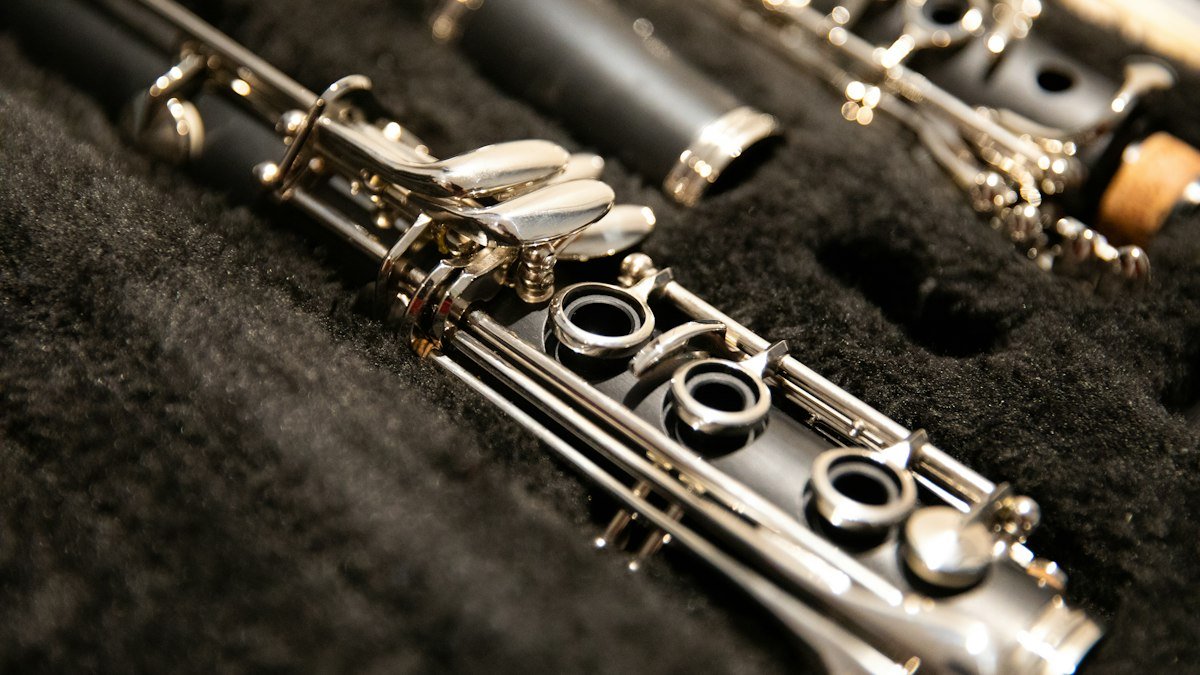
Most clarinets are built in five sections: mouthpiece, barrel, upper joint, lower joint and bell. The sections fit together with cork tenons, and the whole instrument comes apart for cleaning and storage. A clarinet in pieces fits neatly into a compact case.
The clarinet is a transposing instrument, so the note you read is not the note that comes out. A B-flat clarinet sounds a whole step lower than written. Its sound has three registers: the low chalumeau register is warm and dark, the middle clarion register is brighter and more singing, and the high altissimo register is brilliant and takes time to control.
Best for: anyone who wants an instrument that suits classical music, jazz, folk and concert band alike.
A short history of the clarinet
The clarinet grew out of the chalumeau, a simple single-reed folk pipe. Around 1700, the German maker Johann Christoph Denner of Nuremberg added a register key to the chalumeau, allowing the player to reach higher notes. That change is the moment the clarinet begins, and Denner is generally credited with its development. Early clarinets had only a handful of keys, and makers spent the next century adding more to improve tuning.
By the middle of the 18th century, the clarinet was finding its way into orchestras. Wolfgang Amadeus Mozart was among its greatest early champions. He wrote his Clarinet Concerto in A major, K. 622, and his Clarinet Quintet, K. 581, for his friend Anton Stadler, a virtuoso whose instrument had an extended lower range. The concerto, completed in 1791, remains one of the most loved pieces in the repertoire.
The 19th century brought the key system most players still use. The Boehm system, developed in the 1840s with the French clarinettist Hyacinthe Klosé, arranged the keys so the fingers could cover the tone holes more comfortably and the tuning became more even. The Boehm clarinet became the standard in much of the world, and it remains so.
In the 20th century, the clarinet found a second home in jazz. Benny Goodman, known as the King of Swing, led one of the great big bands of the 1930s and made the clarinet a leading voice in popular music. His famous 1938 Carnegie Hall concert helped bring jazz into the concert hall, and Aaron Copland wrote concert works for him.
The main types of clarinet
Most beginners need to know about four types. The B-flat clarinet is the standard, and almost every beginner starts on it. The A clarinet is a close relative, used mainly in orchestral music. The E-flat clarinet is smaller and higher, and the bass clarinet is larger and lower.
| Type | Pitch | Where you hear it | Who it suits |
|---|---|---|---|
| B-flat clarinet | Standard; sounds a whole step below written pitch | Orchestra, band, jazz and teaching | Almost every beginner |
| A clarinet | A semitone lower than the B-flat | Orchestral and chamber music | Orchestral players |
| E-flat clarinet | Smaller and higher; bright and penetrating | Concert band and orchestra | Experienced players |
| Bass clarinet | Much larger and lower; deep and rich | Orchestra, band and jazz | Players who want a bass voice |
Choosing your first clarinet
Your first clarinet should be easy to play, comfortable to hold, and sturdy enough for daily practice. Most beginners start on a student B-flat clarinet, and the best-known makers in general terms include Buffet Crampon, Yamaha and Selmer.
A student B-flat clarinet in hard rubber or a synthetic material is the most forgiving choice. It is lighter than a wooden instrument, it copes better with changes in temperature and humidity, and it needs less careful handling while you are learning to assemble and clean it.
Best for: complete beginners, school players and anyone returning to the instrument after a long break.
A wooden student or intermediate B-flat clarinet is the next step for a player who practises regularly and wants a warmer tone. Wooden clarinets, usually made from African blackwood, need more care: swab them after playing, keep them away from sudden changes in temperature, and have them oiled occasionally by a repairer.
Best for: committed learners who practise most days and want a fuller tone.
Renting is a sensible way to begin, especially for a child. A rented instrument lets you try the clarinet without a long commitment, and most rental schemes include maintenance. If you buy, ask a teacher to test the instrument with you, and check that every key moves freely and every pad seals.

Reeds, mouthpieces and the first sound
The reed is the heart of the clarinet. It is a thin piece of cane, tied to the mouthpiece with a ligature, and it vibrates to make the sound. Reeds are graded by strength, and beginners should start on a soft reed, usually a strength of 2 or 2.5. As your embouchure — the shape of your lips and mouth around the mouthpiece — grows stronger, you can move to a slightly harder reed.
Reeds wear out, and they are meant to. A single reed may last a few weeks of regular practice. Keep three or four reeds in rotation, and throw away any reed that is chipped, split or warped. Soak a new reed in clean water for a minute or two before playing, and let it dry flat afterwards.
The mouthpiece that comes with a student clarinet is made to be easy to play, and it will serve you well for your first year or two. Your first sound will probably be a squeak, and that is normal: rest your top teeth on the mouthpiece, curl your lower lip over your lower teeth, and blow steadily as though you were saying “too”.
Care and maintenance
A clarinet repays a little care after every session. Pull a swab through the instrument to remove moisture, wipe the keys gently with a soft cloth, and take the reed off the mouthpiece and store it in a reed case. Never leave a wet reed on the mouthpiece, and never put the instrument away damp.
Assemble the instrument with a gentle twisting motion, holding the joints by their thicker rings rather than by the keys. Keys are easily bent, and a bent key will leak air. Keep the case closed when you are not playing, and take the clarinet to a repairer once a year, or sooner if a key sticks or a note stops speaking clearly.
How to practise the clarinet
Short, regular practice beats long, occasional sessions. Twenty minutes a day, five or six days a week, will take a beginner further than one long session at the weekend. Start with long notes, listening for a steady, even tone. Then play scales slowly, then a short tune from your method book.
Listen as much as you play. Record yourself on your phone and listen back for a wobbly tone or a rushed rhythm. Play with other people as soon as you can, in a school band, a community wind band or a small chamber group: ensemble playing improves your timing, tuning and confidence faster than practising alone.
Buying checklist: choose your first clarinet
Use this checklist before you buy or rent, and you will avoid the most common beginner mistakes.
- Choose a B-flat clarinet as your first instrument, unless your teacher advises otherwise.
- Start on a soft reed, usually strength 2 or 2.5, and keep three or four reeds in rotation.
- Check that every key moves freely, every pad seals, and the joints fit together smoothly.
- Make sure the instrument fits your hands: fingers should reach the keys without stretching or straining.
- Ask a teacher or experienced player to test the instrument with you before you commit.
- Budget for a case, a swab, reeds, cork grease and a reed case, not just the instrument itself.
- Consider renting first, especially for a child, so you can try the clarinet without a long commitment.
Practice is only part of a musician’s routine. A break with one of the trending healthy snacks can keep a long practice session going, and an evening out after a concert is easier when you know the best restaurants in Tampa. If your musical travels ever take you to France, the best hotels in Paris for every kind of traveller will help you plan the stay.
Frequently asked questions
Is the clarinet hard to learn?
The clarinet is friendly to beginners: the fingering is logical, the instrument is light, and most players can produce a pleasant sound within a few weeks. The challenges come later, in the high register and in playing in tune. Regular practice and a good teacher make the greatest difference.
What age is best to start the clarinet?
Children often start between nine and eleven, when their hands are large enough to cover the tone holes. Adults can start at any age, and many do: the clarinet is popular with adult beginners because it is portable, relatively quiet to practise, and rewarding from the first tunes.
How long does a clarinet reed last?
A cane reed used daily will usually last a few weeks before it loses its brightness. Rotating three or four reeds spreads the wear. Replace any reed that is chipped, split or warped, and store reeds flat in a reed case so they dry evenly.
Should I rent or buy my first clarinet?
Renting is safer for a child or for anyone not yet sure the clarinet is for them, and rental schemes usually include maintenance. Buying makes sense once you are practising regularly. Either way, ask a teacher to check the instrument first.
What is the difference between a B-flat clarinet and an A clarinet?
The B-flat clarinet is the standard instrument, and the A clarinet sounds a semitone lower. Orchestral players use the A clarinet because its lower pitch makes certain keys easier to play in tune. Beginners should start on the B-flat clarinet.
Conclusion
The clarinet began with a simple change to a folk pipe, was taken up by Mozart and carried into the concert hall, and was given a new life by Benny Goodman and the swing era. Start with a B-flat clarinet, a soft reed and a little patience. Practise a little every day, look after your instrument, and play with other people as soon as you can.