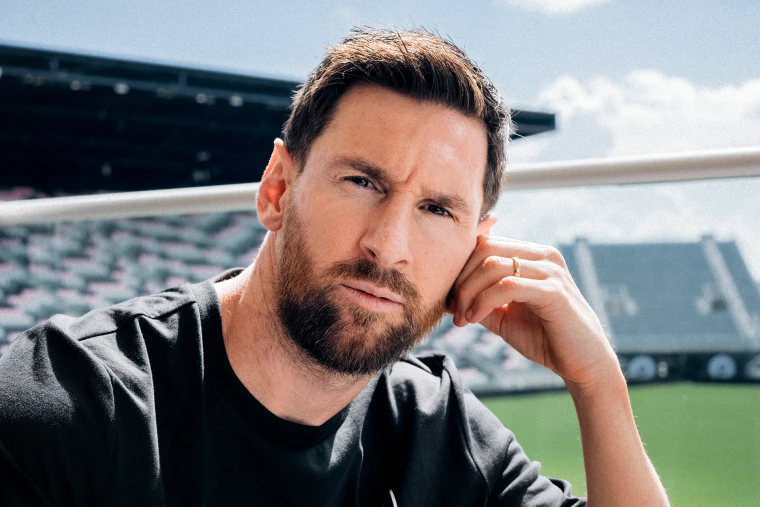
Quick Answer: Who is Lionel Messi and why does his story matter? Lionel Messi, born June 24, 1987, is a 38-year-old Argentine forward who captains Inter Miami and won the 2022 World Cup with Argentina. He holds a record eight Ballon d’Or awards. Once a boy too small to play, he was diagnosed with a growth hormone deficiency at 11 and grew into the most decorated footballer alive.
The ball sat on the spot in Lusail, and 78,000 people stopped breathing. Gonzalo Montiel struck it, France’s keeper guessed wrong, and a 35-year-old man who had carried his country’s grief for two decades dropped to his knees with his hands over his face. Minutes later, draped in a black Qatari bisht, Lionel Messi lifted the only trophy that had ever escaped him. The kid who once needed nightly injections just to grow had finished the one story football had refused to give him.
This lionel messi biography is not a highlight reel. It is the human account of how a working-class boy from Rosario became the player coaches still struggle to explain.
Rosario: The City That Made Him
Rosario in the late 1980s was a hard-working river city, proud and unglamorous, hammered by Argentina’s brutal economic swings. Steelworkers, factory hands, and shop owners filled its neighborhoods, and the Messi family lived among them in the southern barrio of La Bajada. Football was not a luxury there. It was the language everyone spoke.
Jorge Messi worked in a steel factory and later managed people on the factory floor. Celia worked part-time in a magnet workshop and ran the household. They were not poor in the desperate sense, but there was no spare money, and nothing about their life suggested the family was raising a generational athlete.
Leo was different from the start. He kicked a ball before he could properly talk, slept with one, and cried when games ended.
A boy who only wanted the ball
He joined his local club Grandoli as a small child, coached for a time by his own father, before moving to Newell’s Old Boys, Rosario’s beloved giant. There he played in a youth side so dominant that locals nicknamed them “The Machine of ’87,” after the players’ birth year. Opposing parents reportedly paid the little number 10 in coins and candy just to do his tricks at halftime.
What strikes me about this period is how ordinary the surroundings were and how extraordinary the talent already looked. Coaches did not whisper that he might be good. They argued about whether they had ever seen anything like him.
Then his body stopped cooperating.
The Diagnosis That Shocked the Messi Family
Around age 10 to 11, doctors noticed Leo had simply stopped growing. The relevant lionel messi age here matters: at eleven, he stood roughly four feet tall when his peers were shooting up around him. Dr. Diego Schwarzstein diagnosed a growth hormone deficiency, a condition that, untreated, would have capped his adult height well below average.
The treatment was nightly injections of human growth hormone into his legs and it was expensive. The cost was around $900 a month, a sum his family could not sustain, though some biographers have put the figure as high as $1,500. Newell’s covered it briefly, then balked at funding an unproven child long term, and River Plate, despite their interest, would not pay either.
Did you know? Lionel Messi injected himself in the leg almost every night for years, often before bed, as a child.
A boy who needed help to grow up was about to be told that the only club willing to pay was on another continent.
Barcelona and the Famous Napkin Contract
The story of his lionel messi early life turns on a single piece of paper. In September 2000, a 13-year-old Leo flew to Barcelona for a trial, separated from most of his family, betting everything on a foreign club he had never seen.
Carles Rexach, Barcelona’s sporting director, watched him train once and knew. The internal doubters worried about the boy’s size, the medical bills, and the gamble of signing a teenager from Argentina. Rexach overruled them.
Why the First Contract Had to be a Napkin
With no formal contract on hand and the family losing patience, Rexach grabbed a paper napkin on December 14, 2000, and wrote a commitment to sign Messi in front of two witnesses. It was improvised, almost absurd, and legally flimsy. It also changed the sport.
Barcelona’s real promise was bigger than the napkin: the club would pay for his treatment. Barcelona agreed to cover the growth hormone costs once Messi joined the academy in 2000, and Leo and his father relocated to Spain while the rest of the family eventually split their time between countries.
La Masia and the homesickness nobody filmed
La Masia, Barcelona’s youth academy, had already shaped technical artists like Xavi and Andrés Iniesta. It drilled positional play, quick passing, and intelligence over raw athleticism a philosophy built for a small, brilliant boy rather than against him.
The football flourished. The homesickness was real. Teammates remembered a quiet kid who barely spoke for months, who missed Rosario badly, and who let his feet do all the talking on the pitch.
On October 16, 2004, at 17, he made his first-team debut against Espanyol. His first senior goal came on May 1, 2005, against Albacete, set up by the man who would become his guide.
The Barcelona Years What the Stats Don’t Capture
Ronaldinho was the world’s best player and the dressing room’s biggest personality when Messi arrived. Instead of guarding his turf, the Brazilian adopted the teenager, vouched for him, and reportedly told teammates the kid would soon be better than he was. That generosity gave a shy boy permission to become himself.
What followed at Barcelona is almost difficult to state without sounding like exaggeration. Across his career there, Messi scored a club-record 672 goals in 778 appearances and won 10 La Liga titles and four Champions Leagues.
The 91-Goal Year That Shattered Records
In the 2012 calendar year, Messi scored 91 goals for club and country, shattering Gerd Müller’s 1972 record of 85 that experts had assumed would stand forever. No player before or since has come close in a single year. The number sits in football’s history like a fingerprint that belongs to one man.
Did you know? Messi’s 91 goals in 2012 still stand as the most ever scored by a footballer in a calendar year.
What strikes me about his Barcelona prime is that the trophies undersell him. Pick one moment instead: the 2011 Champions League semifinal against Real Madrid, when he collected the ball near halfway, slithered through four defenders, and finished low into the corner. It was not power. It was geometry no one else could see.
How it ended in tears
Messi’s final Barcelona years curdled into conflict with management over direction, spending, and broken promises. In 2020 he asked to leave and was effectively trapped by his contract for one more season.
Then in August 2021 the club simply could not afford to keep him. Under LaLiga’s strict salary cap rules, Barcelona could not register his new deal without breaching financial limits, and the man who defined the club found out he was leaving the only home he had known since 13. At his farewell press conference, he wept before he could speak and a global audience watched the most accomplished player alive look utterly powerless.
The Argentina Wound and the Messi World Cup Story
For more than fifteen years, the Argentina shirt was Messi’s burden as much as his honor. He was adored in Spain and second-guessed at home, where a vocal share of fans insisted he could not replicate his Barcelona magic in blue and white. Three Copa América finals and a 2014 World Cup final all ended in defeat.
The night he quit his country
After losing the 2016 Copa América Centenario final to Chile on penalties missing his own spot kick Messi announced his retirement from international football. He was 29, exhausted by the criticism, and seemingly done.
He came back within months, pulled by his own stubborn loyalty and a nation that, in quieter moments, begged him not to go. The reconciliation took years, but it built toward something.
From doubted to immortal
In 2021, Argentina beat Brazil 1-0 at the Maracanã to win the Copa América, the country’s first major trophy in 28 years. Messi finally had senior silverware for his nation, and the narrative cracked open. The full messi world cup story arrived a year later in Qatar.
Argentina opened the 2022 tournament by losing 2-1 to Saudi Arabia, a result that looked like the old curse returning. Instead it became a beginning. Messi dragged them through the group, scored a stunning solo run-and-finish against Mexico, and lifted the team’s belief game by game.
In the semifinal, Argentina dismantled Croatia 3-0, with Messi torturing one of the tournament’s best defenders before teeing up Julián Álvarez. The final against France was the greatest in the competition’s history: 3-3 after extra time, Messi scoring twice, Kylian Mbappé answering with a hat-trick, and Argentina holding their nerve 4-2 on penalties.
Did you know? Messi has played 26 World Cup matches more than any footballer in history and in 2022 he scored in every single knockout round.
He won the Golden Ball as the tournament’s best player for the second time, the only player ever to do so. What strikes me is that he did not transform in Qatar. The world finally caught up to what he had always been.
PSG The Chapter Nobody Enjoyed
Paris was not a dream. It was a landing pad. When Barcelona could not keep him, Paris Saint-Germain offered the money and the platform, and Messi accepted out of necessity rather than desire.
The football never fit. PSG was a collection of superstars, not a system built around Messi the way Barcelona had been, and his genius depends on teammates who move the way he thinks.
Why the PSG Era Soured for Fans
Things soured publicly. PSG fans, frustrated by repeated Champions League failures, began whistling and booing Messi at the Parc des Princes an almost unthinkable sound directed at the best player on earth. The low point came in 2023, when he was suspended by the club over an unsanctioned promotional trip to Saudi Arabia and returned to open hostility from the stands.
He won two Ligue 1 titles in Paris and almost no one remembers them. The trophies were real and the joy was absent. That gap is the whole lesson of the PSG years.
What strikes me about this chapter is how clearly it proved a point his critics missed: Messi was never a solo act. Remove him from a structure designed for him, and you see a brilliant man working in the wrong language.
Moving to Inter Miami and Rewriting MLS History
You probably found Messi through this chapter, or watched it pull people you know into soccer for the first time. So this section talks to you directly, because the messi mls career is partly your story too.
When Messi became a free agent in 2023, the obvious money was elsewhere. Saudi Arabia reportedly offered a fortune that dwarfed any other deal, and a romantic Barcelona return was floated. He chose Inter Miami, a young MLS club co-owned by David Beckham, and a quieter life in South Florida for his family.
The goal that announced everything
His debut on July 21, 2023, in the Leagues Cup against Cruz Azul, ended the only way it could. With the score level deep into stoppage time, Messi curled a free kick into the top corner in the 94th minute, the stadium erupted, and the legend of his American chapter began in a single swing of his left foot.
The numbers since are absurd for a man in his late thirties. In the 2025 regular season he produced 29 goals and 19 assists in 28 matches, won the Golden Boot, and became the first player in MLS history to win Most Valuable Player in consecutive seasons.
What he built in Florida
He has won everything available to him here. Messi led Inter Miami to the 2023 Leagues Cup, the 2024 Supporters’ Shield, and the 2025 MLS Cup the club’s first league title and was named MLS Cup MVP. By late 2025 he had collected his 47th career trophy across club and country, a world record.
The commercial impact reshaped the league. Inter Miami’s global Google searches jumped more than 1,200% when his signing broke, and secondary-market ticket prices for his first matches soared over 1,000%. The club’s Instagram following exploded from one million to fourteen million, later climbing past seventeen million, and his pink jersey became the best-selling shirt across all of sports in his first weeks.
Apple felt it too. Forty-six percent of all U.S. MLS Season Pass subscriptions on Apple TV began in July 2023, the month he arrived, and owner Jorge Mas said subscriptions more than doubled. By Fortune’s calculation, Messi generated at least $265 million in primary ticket sales within two months.
The day-to-day of a quiet life
His teammates included old Barcelona brothers Sergio Busquets and Jordi Alba, both of whom retired after winning the 2025 title alongside him, with his former Barcelona teammate Javier Mascherano now coaching the side. They describe a player who still treats training like it matters and a man who mostly wants to go home to his family afterward.
In Fort Lauderdale, “normal” means school runs, mate tea, dinners with Antonela, and an unremarkable routine for a remarkable person. What MLS gained was global legitimacy; what Messi gained was peace, and a place where football is fun again. As of May 2026 he is fit, central to a team chasing back-to-back MLS Cups, and preparing to defend a World Cup on American soil.
The Messi Nobody Sees on Camera
His most important relationship started in Rosario, long before fame. Antonela Roccuzzo was the cousin of his childhood best friend, a girl he loved as a boy and stayed connected to across continents. They married in Rosario on June 30, 2017, and have three sons Thiago, Mateo, and Ciro.
People who know him use the same word over and over: shy. Pep Guardiola once advised reporters not to try to describe Messi but simply to watch him a coach admitting that words fall short.
The man behind the silence
Through the Leo Messi Foundation, founded in 2007, and his work as a UNICEF goodwill ambassador, he has funded children’s healthcare and education a man who needed expensive medical treatment as a boy now paying for others. He still owns his old Rosario house and stays in close contact with childhood friends.
Former Barcelona teammates have described his fierce competitiveness in training, his calm under pressure, and a dry humor that only emerges among people he trusts. What strikes me is how consistent the picture is: there is no hidden second Messi, no off-camera diva. There is a private, family-centered man who happens to be a genius at one specific thing.
The GOAT Question Answered Seriously
The Messi versus Cristiano Ronaldo debate deserves honesty rather than dodging. On pure output, both are statistical outliers without precedent, and Ronaldo’s longevity, athleticism, and goal records across multiple leagues are extraordinary and real.
The data still tilts toward Messi on creation, dribbling, and overall influence, and his eight Ballon d’Or awards to Ronaldo’s five reflect how voters and peers have judged them. The 2022 World Cup removed the last argument used against him.
What actually makes him different
His greatness is physical and mental at once. A low center of gravity lets him change direction faster than defenders can react, his left foot operates with a precision that looks computer-generated, and his vision processes the pitch a half-second ahead of everyone else.
The mental piece is rarer still: he almost never panics, rarely forces a play, and waits for the exact instant the game opens. That combination is why so many former opponents say guarding him felt like guarding a problem with no solution.
Where does he sit in football history? At or above the top, depending on how you weigh peak brilliance against era and circumstance and the honest answer is that the debate exists at all only because of one rival who pushed him.
Conclusion: What Rosario Gave the World
Trace the line all the way back. A small boy in a steel city, injecting his own legs at night so he might grow tall enough to chase a dream nobody could guarantee. A foreign club that bet on him with a napkin. A country that doubted him until he gave them everything.
His career argues that talent is necessary but not sufficient that circumstance, stubbornness, and the right people at the right moments turn a gifted child into something the world remembers. Without Barcelona’s gamble, the growth hormone kid stays small and unknown.
Here is my genuine take, not a hedge: Messi is the most complete footballer the sport has produced, and the reason is not the trophies but the fact that he made an impossibly difficult game look like a private conversation between him and the ball.
What is Lionel Messi’s age and birthdate?
Lionel Messi was born on June 24, 1987, in Rosario, Argentina, which makes him 38 years old as of May 2026 and turning 39 in June. He has played professional football for more than two decades, debuting for Barcelona’s first team in 2004 at age 17, and currently captains Inter Miami in Major League Soccer.
Frequently Asked Questions
Where was Lionel Messi born and what was his early life like?
Messi was born in Rosario, Argentina, to Jorge, a steel factory worker, and Celia, who worked in a magnet workshop. He played for local club Newell’s Old Boys as a child. At age 11 he was diagnosed with a growth hormone deficiency requiring costly nightly injections, which his family struggled to afford until Barcelona agreed to fund his treatment in 2000.
How did Messi win the World Cup?
Messi won the 2022 World Cup in Qatar after Argentina recovered from a shock opening loss to Saudi Arabia. He scored in every knockout round, including the final against France, which ended 3-3 before Argentina won 4-2 on penalties. Messi was named the tournament’s best player, earning his second World Cup Golden Ball, a record.
Why did Messi join Inter Miami?
In 2023, Messi turned down a far larger financial offer from Saudi Arabia and a potential Barcelona return to join Inter Miami in Major League Soccer. He prioritized lifestyle, family, and a quieter base in South Florida, plus part-ownership perks and revenue shares with league partners Apple and Adidas. He has since led Miami to three trophies, including the 2025 MLS Cup.
What are Lionel Messi’s greatest career achievements?
Messi has won a record eight Ballon d’Or awards, the 2022 FIFA World Cup, four Champions Leagues, and ten La Liga titles with Barcelona, where he scored a club-record 672 goals. He set a calendar-year record of 91 goals in 2012. With Inter Miami he won the 2025 MLS Cup and back-to-back MLS MVP honors, lifting his career total past 47 trophies.
For deeper insights into iconic sports figures and detailed celebrity wealth breakdowns, explore the comprehensive coverage on marianoiduba. Stay updated with premium profiles and exclusive reports curated daily by the team at marianoiduba.