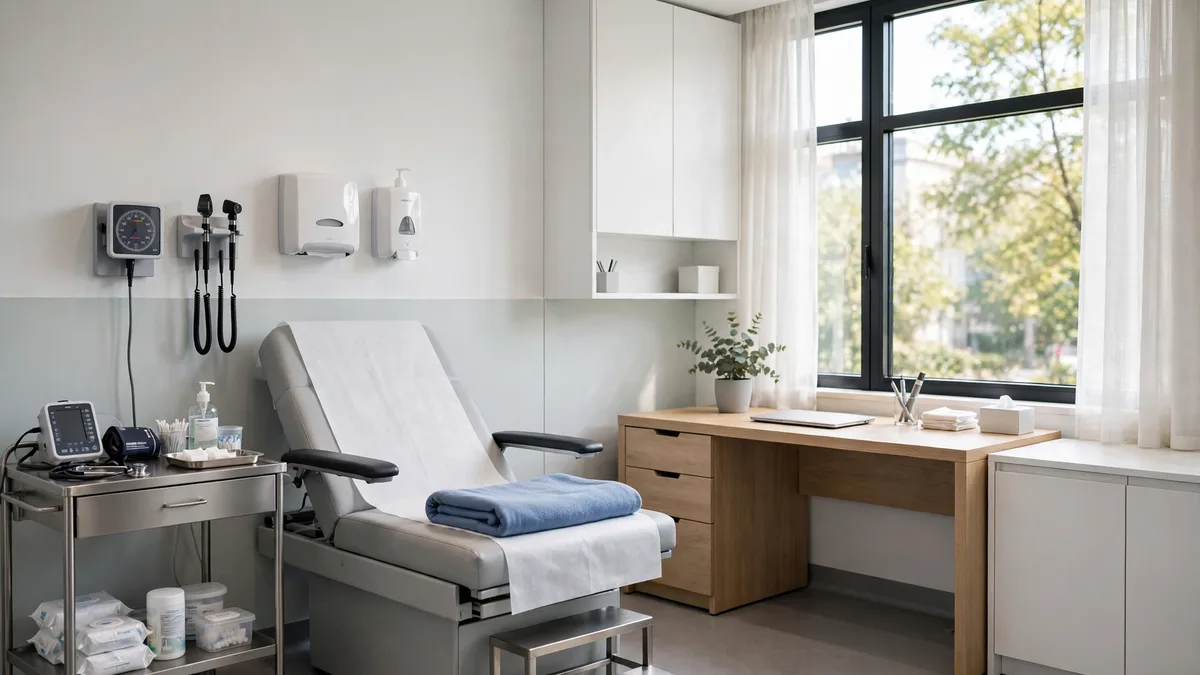

Hysteroscopy is a way of looking directly inside the womb using a thin telescope called a hysteroscope, passed through the vagina and the cervix, the neck of the womb, carrying a small camera and light. In short, it lets a doctor see the lining of the womb in real time, so the cause of bleeding, pain or fertility problems can be found and often treated during the same visit. It is usually an outpatient appointment lasting ten to thirty minutes, and most people go home the same day.
This guide explains what a hysteroscopy involves, why it is offered, how to prepare, what it feels like, and what happens afterwards. It is general information only, not medical advice.
Key takeaways
- Hysteroscopy uses a thin telescope with a camera to look inside the womb through the vagina and cervix.
- It investigates heavy or irregular bleeding, bleeding after the menopause, repeated miscarriage and fertility problems.
- Many hysteroscopies are done in a clinic with local anaesthetic, in around ten to thirty minutes.
- The same procedure can also treat problems, such as removing a polyp or a small fibroid, or taking a biopsy.
- Cramping like period pain is common during and after, and painkillers taken beforehand usually help.
- Light bleeding for a few days is normal, but heavy bleeding, fever or severe pain needs medical attention.
What a hysteroscopy is
A hysteroscope is a narrow tube, usually only a few millimetres wide, with a light and a camera at its tip. It is passed gently through the vagina and cervix into the womb, and a small amount of fluid opens the womb slightly so the lining can be seen clearly on a screen. A hysteroscopy can be diagnostic, to find out what is wrong, or operative, to treat a problem already found.
An outpatient hysteroscopy takes place in a clinic room rather than an operating theatre, usually with local anaesthetic, and you stay awake throughout. A hysteroscopy under general anaesthetic takes place in theatre, with you asleep, and is more likely when a larger treatment is planned or a previous attempt was difficult.
Why a hysteroscopy is offered
The most common reason is bleeding that needs explaining: periods that are very heavy, irregular or prolonged, bleeding between periods, and bleeding after the menopause, which should always be checked. A direct look can show whether the bleeding comes from a polyp, a fibroid, thickened lining or scar tissue, and a normal-looking lining is useful information too.
Hysteroscopy is also used after repeated miscarriages, when fertility investigations raise questions about the shape of the womb, or when a scan shows something needing a closer look. It can find a coil that has moved or cannot be felt, and look for adhesions, bands of scar tissue that can follow infection or previous surgery. The procedure can move straight from looking to treating.
How to prepare for a hysteroscopy
For an outpatient hysteroscopy, you can usually eat and drink normally and drive yourself to and from the appointment. Taking ibuprofen or paracetamol about an hour before is commonly advised, because it reduces cramping, but check your appointment letter. You may be asked to take a pregnancy test first.
For a hysteroscopy under general anaesthetic, you will usually be asked not to eat or drink for several hours beforehand, and you will need someone to take you home, since you cannot drive after an anaesthetic. Tell the team about your medicines, allergies and medical conditions. Bring a sanitary pad for afterwards, since light bleeding is common.

What happens during the procedure
When you arrive, you will be shown to a clinic room and asked to undress from the waist down and lie on a couch, usually with your knees bent and your feet supported. The doctor will first do a gentle internal examination, then pass the hysteroscope through the vagina and cervix. You may feel pressure and cramping as it passes through the cervix and as fluid opens the womb, often described as similar to strong period pain. The doctor watches the lining on a screen and may take a biopsy, a tiny tissue sample sent to a laboratory.
A diagnostic hysteroscopy often takes around ten minutes, while one that includes treatment can take up to thirty minutes. Local anaesthetic may be given around the cervix, and some clinics offer gas and air or a mild sedative. You can ask the doctor to pause or stop at any point. Once the hysteroscope is removed, you will have time to rest and dress, and the team will tell you what they found before you leave.
What it feels like, and how to manage the pain
Most people feel some discomfort, but the amount varies a great deal. Cramping is the most common sensation, often strongest when the instrument passes through the cervix and when fluid fills the womb. Some feel only mild pressure. Painkillers taken an hour beforehand help many people, as does slow, steady breathing. If the pain becomes too much, say so; the doctor can pause, give more local anaesthetic, or stop and rearrange the procedure under general anaesthetic.
Afterwards, cramping like period pain can continue for a few hours, and light bleeding or brownish spotting can last several days. Painkillers and a hot water bottle usually manage the cramps, and resting for the rest of the day is sensible. Most people return to normal activities the next day, although after a general anaesthetic you should rest for a day and not drive for twenty-four hours. If pain is severe, gets worse, or does not respond to painkillers, contact the clinic or your doctor.
Risks and possible complications
Hysteroscopy is a low-risk procedure, but like any procedure that enters the body, it carries some risk, and the clinic should explain these before you agree. The most common problems are pain during the procedure, light bleeding afterwards, and a failed procedure, where the hysteroscope cannot be passed through the cervix, which is more common after previous surgery on the cervix. Infection of the womb is uncommon and is usually treated with antibiotics.
A rarer complication is damage to the wall of the womb, called a perforation, when an instrument makes a small hole in the muscle. This is uncommon, usually heals without surgery, and is more likely when a treatment such as removing a fibroid is being done rather than a simple look. Other rare risks include heavy bleeding and a reaction to the fluid used to open the womb, which the team monitor throughout. Your doctor will explain the risks that apply to you before you sign a consent form.
Results and what happens next
If the hysteroscopy was done to look at the lining, the doctor can tell you what they saw before you leave. If a biopsy was taken, the sample goes to a laboratory, and the result takes one to two weeks, although this varies between hospitals. Your doctor will explain how the result will reach you.
What happens next depends on what was found. If the lining looked normal, you may need no further treatment. If a polyp or small fibroid was removed, the tissue is usually sent for examination as a routine check. If the hysteroscopy found something needing different treatment, such as a larger fibroid, your doctor will discuss the options with you. After fertility investigations, the findings are usually discussed at a follow-up appointment.
| Kind of hysteroscopy | Setting | What to expect |
|---|---|---|
| Diagnostic, outpatient | Clinic room, awake | Local anaesthetic; around ten minutes; home the same day |
| Operative, outpatient | Clinic room, awake | Local anaesthetic; ten to thirty minutes; polyp or biopsy done at the same visit |
| Diagnostic, general anaesthetic | Operating theatre, asleep | No food or drink beforehand; a lift home is needed |
| Operative, general anaesthetic | Operating theatre, asleep | Used for larger treatments; longer recovery on the day |
| With biopsy | Either setting | Small tissue sample sent to a laboratory; results in one to two weeks |
A checklist for your hysteroscopy appointment
- Read the appointment letter and follow its instructions on eating, drinking and medicines.
- Take ibuprofen or paracetamol about an hour before an outpatient appointment, if your letter advises it.
- Bring a sanitary pad.
- Arrange a lift home if you are having a general anaesthetic, and do not plan to drive that day.
- Tell the team about medicines, allergies, and any chance you could be pregnant.
- Ask the doctor to pause or stop if the pain becomes too much.
- Rest for the rest of the day, use painkillers and a hot water bottle for cramps, and avoid tampons, baths and sex until the bleeding has stopped.
- Contact the clinic promptly if you develop heavy bleeding, a fever, severe pain or smelly discharge.
Frequently asked questions
Is a hysteroscopy painful?
Many people feel cramping like strong period pain, especially when the instrument passes through the cervix and when fluid opens the womb, but the amount varies a great deal. Taking ibuprofen or paracetamol an hour beforehand usually helps, and local anaesthetic, gas and air or a mild sedative may be offered. You can ask the doctor to pause or stop at any point.
How long does a hysteroscopy take?
A diagnostic hysteroscopy often takes around ten minutes, while one that includes treatment can take up to thirty minutes. The whole appointment takes longer, with time to talk beforehand, rest afterwards, and hear what was found. Most people go home the same day, and an outpatient appointment usually lasts an hour or two.
Will I be awake during a hysteroscopy?
It depends on the type. An outpatient hysteroscopy is done while you are awake, usually with local anaesthetic, and many people prefer this because they recover quickly and can drive home. A hysteroscopy under general anaesthetic is done while you are asleep in theatre, more likely when a larger treatment is planned or a previous attempt was difficult.
How long does bleeding last after a hysteroscopy?
Light bleeding or brownish spotting for a few days is normal, and some people bleed for up to a week, especially if a biopsy was taken or a polyp removed. Use sanitary pads rather than tampons until the bleeding has stopped. Bleeding that soaks through a pad every hour, or that comes with large clots, needs prompt medical attention.
When will I get my hysteroscopy results?
If the procedure was done to look at the lining, the doctor can tell you what they saw before you leave. If a biopsy was taken, the result takes one to two weeks, although this varies between hospitals. Your doctor will explain how the result will reach you and what the next steps are.
Can I go back to work after a hysteroscopy?
Most people feel well enough to return to normal activities the next day after an outpatient hysteroscopy, although resting that day is sensible. After a general anaesthetic, rest for at least a day, avoid driving for twenty-four hours, and avoid alcohol and important decisions that day.
The bottom line
A hysteroscopy is a straightforward way of looking inside the womb, and for many people it answers a question that scans alone cannot, whether about heavy bleeding, bleeding after the menopause, repeated miscarriage or fertility. It is a short outpatient appointment that can both find and treat problems such as polyps and small fibroids, and the discomfort is usually manageable with painkillers taken beforehand. If you have been offered one, read your appointment letter and rest afterwards. For more on pregnancy and women’s health, read our guide to HG pregnancy complications, our list of the best baby books, and our guide to the best baby formula.
This article is general information about hysteroscopy, not medical advice. Speak to your own doctor or the clinic team if you have questions, and seek urgent care for heavy bleeding, a fever or severe pain afterwards.