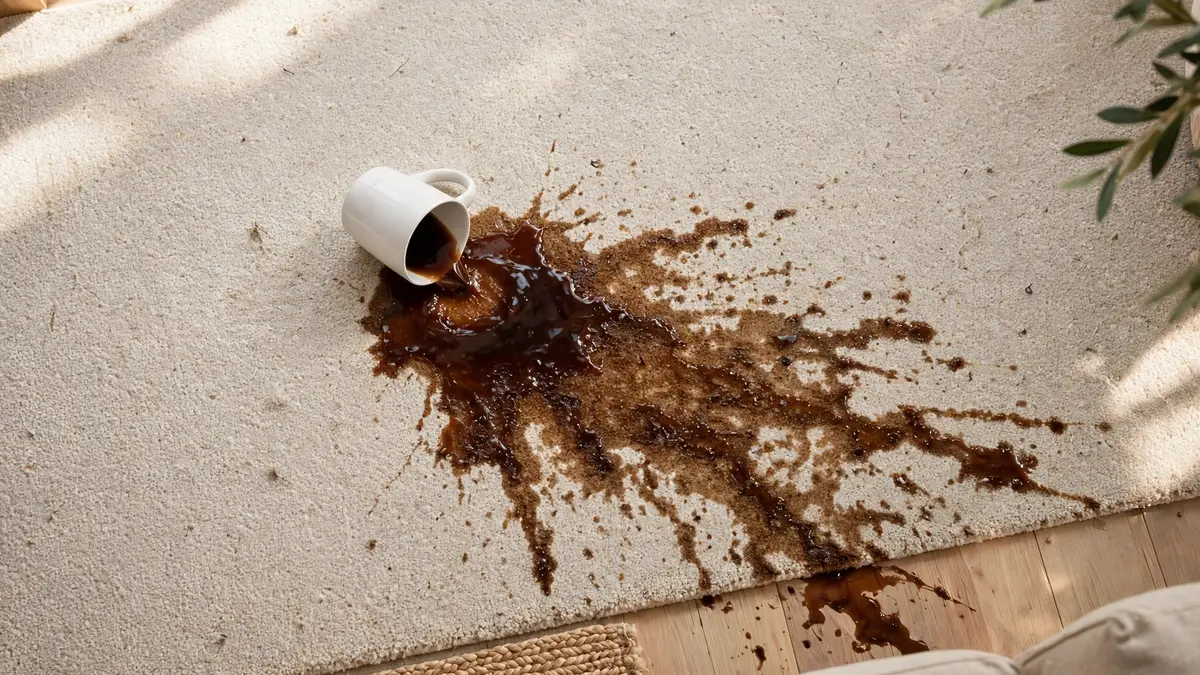

Learning how to remove coffee stain from carpet starts with speed and a calm hand, because a fresh spill is far easier to lift than a dried one. The short answer is to blot up as much liquid as you can with a clean cloth, work cold water into the mark from the outside in, then treat what remains with a mild washing-up liquid solution and, if needed, a white vinegar solution, rinsing and blotting between steps. Coffee stains carpet because it carries tannins, brown plant compounds that also stain teeth and mugs, and heat helps them grip the fibres, which is why hot water and scrubbing usually make things worse. Most spills come out completely if you act before the stain dries.
Key takeaways
- Blot a coffee spill at once; never rub it, because rubbing pushes the coffee deeper.
- Use cold water first; hot water can set a coffee stain and sets milk protein too.
- Washing-up liquid lifts most fresh stains; white vinegar helps with the brown mark left behind.
- Work from the outside of the stain towards the centre so it does not spread.
- Dried stains need soaking and patience, with the same steps repeated.
- Test any solution on a hidden patch of carpet first.
Why coffee stains carpet so stubbornly
The brown colour of coffee comes largely from tannins, natural compounds in coffee beans, tea leaves and red wine, which bind readily to fibres. Hot coffee opens the fibres slightly and helps the tannins attach, and as the liquid dries the colour concentrates into a ring darker than the original spill. Milk adds protein and fat, which can leave a sour smell if not removed, while sugar leaves a sticky residue that attracts dirt. Wool carpet is more delicate than synthetic carpet and can be damaged by alkaline cleaners and too much water, while pale synthetic carpet shows every trace of brown. Use as little liquid as you need, and blot rather than flood.
What you need before you start
Gather everything before you touch the stain, because every minute a spill sits, it sinks deeper. You will need several clean white cloths, since coloured cloths can transfer dye to wet carpet, along with a bowl, cold water, washing-up liquid, white vinegar and a spray bottle if you have one. A blunt knife is useful for lifting pooled liquid, and a vacuum cleaner helps at the end once the carpet is dry. Never use bleach on coloured carpet, and avoid the strongest product in the cupboard: strong stain removers are usually unnecessary on fresh coffee and can set the stain or leave a soapy residue that attracts dirt.

How to remove a fresh coffee stain, step by step
Work through the steps in order, giving each one time to work.
Step 1: Blot up as much coffee as you can
Press a clean white cloth firmly onto the spill and lift it straight up, then fold the cloth to a clean section and press again, until no more brown liquid transfers. Do not rub in circles or press with your full weight, since both drive the coffee deeper. If you have a wet-and-dry vacuum, you can use it here instead of cloths.
Step 2: Flush with cold water
Pour a little cold water onto the stain, or spray it lightly, then blot again with a clean cloth. Repeat this rinse-and-blot cycle three or four times, always working from the outside edge towards the middle so the mark does not spread. If the water you blot up is still dark brown after several rounds, keep going; patience now saves work later.
Step 3: Treat with washing-up liquid
Mix one teaspoon of clear washing-up liquid into a mug of cold water, dab it onto the stain with a clean white cloth and leave it for about five minutes, then blot with a clean damp cloth. Repeat until the cloth stops picking up colour. Use only a teaspoon: too much detergent leaves a sticky residue that attracts dirt.
Step 4: Treat the brown mark with white vinegar
If a pale brown shadow remains, mix one part white vinegar with two parts cold water, dab it onto the mark and leave it for five to ten minutes. Vinegar is mildly acidic, which helps break down the tannin colour that detergent can leave behind. Blot with a cloth dampened in plain cold water to rinse it out. Do not use malt vinegar or any coloured vinegar.
Step 5: Rinse and dry properly
Finish by dabbing the area with a cloth dampened in plain cold water to remove leftover detergent or vinegar, then press a dry towel firmly over the patch and stand on it to draw out moisture. Let the carpet dry fully with air circulating, and keep people and pets off it until dry. Once dry, vacuum to lift the fibres back up.
How to remove a dried coffee stain
A dried stain needs the same treatment, only slower, because the coffee has bonded to the fibres and must be loosened again. Dampen it with cold water and leave it for ten to fifteen minutes to soften, then blot and repeat the cold-water rinse until the cloth picks up colour. Follow with the washing-up liquid and vinegar solutions exactly as for a fresh stain, giving each five to ten minutes before blotting. Expect to repeat the cycle several times; each round lifts a little more, and most dried stains improve greatly over three or four rounds. For a very old stain on light synthetic carpet, three per cent hydrogen peroxide dabbed on for a few minutes can lift the last brown colour, but test it first, use it only on pale carpet and never on wool. If the stain does not shift after several rounds, call a professional carpet cleaner.
Coffee with milk, sugar and cream
Milky coffee needs one extra consideration: heat sets milk protein, much as heat sets an egg, so cold water is even more important at the start. Pouring hot water onto a milky spill can bond the protein to the fibres and leave a mark that is much harder to remove, along with a sour smell. Blot first, rinse with cold water only, and move to the washing-up liquid step once the milky liquid is out. Sugar makes a spill stickier, so rinse thoroughly and leave as little detergent behind as possible. A dried milky spill may need a twenty-minute cold soak first. If a faint smell remains after drying, sprinkle bicarbonate of soda on the dry patch, leave it an hour and vacuum it up.
What not to do with a coffee stain
The most common mistake is scrubbing, which grinds coffee into the fibres and can damage the pile, leaving a fuzzy patch worse than the stain. The second is hot water, which helps tannins and milk protein to set. The third is too much cleaning product: flooding the carpet leaves residue in the backing that attracts dirt, so the patch can look grubby again within a week. Pouring a coloured cleaner onto the stain can dye the fibres, and steam-cleaning an untreated stain can set it permanently. Leaving the carpet damp for a long time, for instance under a rug, invites mildew and a musty smell. Restraint, cold water and clean white cloths beat an aggressive approach almost every time.
| Method | Best for | What to watch |
|---|---|---|
| Blotting and cold water | Fresh spills of any kind | Blot, do not rub; work from the outside in |
| Washing-up liquid solution | Fresh and dried stains, milky coffee | Use a teaspoon only; rinse well to avoid residue |
| White vinegar solution | The brown tannin shadow left behind | White vinegar only; test on a hidden patch first |
| Hydrogen peroxide, 3 per cent | Old stains on pale synthetic carpet | Never on wool or dark carpet; test first |
| Bicarbonate of soda | Lingering milky smells on dry carpet | Use on dry carpet only; vacuum it up fully |
| Professional extraction cleaning | Old, large or set stains | Choose a cleaner experienced with your carpet type |
A checklist for coffee stains
- Act at once, and blot with a clean white cloth instead of rubbing the spill.
- Use cold water first, and repeat the rinse-and-blot cycle until the cloth stays pale.
- Mix one teaspoon of clear washing-up liquid into a mug of cold water, dab it on, wait five minutes, then blot.
- Follow with a white vinegar solution if a brown shadow remains, then rinse with plain water.
- Test every solution on a hidden patch of carpet before using it on the stain.
- Press a dry towel over the patch to draw out moisture, then let the carpet dry fully with air moving.
- Vacuum once dry to lift the fibres, and check the patch in daylight before deciding it needs another round.
- Call a professional carpet cleaner if several rounds have not shifted an old or large stain.
Frequently asked questions
Does coffee stain carpet permanently?
Usually not, if the spill is treated before it dries fully. Coffee stains are water-soluble, so blotting, cold water and mild detergent lift most of them. A stain left for weeks, or steam-cleaned before treatment, is harder to remove, and a faint shadow can remain on very pale carpet. In those cases a professional extraction clean is the best next step.
Should I use hot or cold water on a coffee stain?
Cold water, always, at least at the start. Heat helps tannins to set and causes milk protein to bond to the fibres, making colour and smell harder to remove. Cold water dilutes the coffee and carries it out without setting it. There is no reason to switch to hot water at any point.
Can I use washing-up liquid on carpet?
Yes, in a weak solution and a small amount: one teaspoon of clear washing-up liquid in a mug of cold water is enough, and the key is to rinse it out thoroughly. Detergent left in carpet leaves a sticky residue that attracts dirt. Avoid liquids with bleach or strong colour, and never pour undiluted washing-up liquid onto carpet.
Will white vinegar damage my carpet?
White vinegar in a diluted solution is safe on most synthetic carpets and many wool carpets when used sparingly, but test on a hidden patch first. Mix one part vinegar with two parts cold water, dab it on, wait five to ten minutes and rinse with plain water. Do not use malt vinegar, and avoid vinegar if the carpet maker warns against acidic cleaners.
How do I remove a coffee stain that has already dried?
Dampen the stain with cold water for ten to fifteen minutes, then work through the fresh-stain steps: blot, rinse, treat with washing-up liquid, then white vinegar, rinsing between steps. Repeat several times, since each round lifts more colour. For a stubborn old stain on pale synthetic carpet, three per cent hydrogen peroxide can help, but test first and never use it on wool.
What if the coffee had milk and sugar in it?
Blot first, then rinse with cold water only, because hot water sets milk protein. Follow with the washing-up liquid solution and rinse thoroughly, since sugar leaves a sticky residue. If a faint sour smell remains once dry, sprinkle bicarbonate of soda on the patch, leave it an hour and vacuum it up.
The bottom line
Knowing how to remove coffee stain from carpet comes down to three habits: blot at once, use cold water, and work gently with mild detergent and vinegar rather than the strongest product in the cupboard. Fresh spills usually come out completely. For more on keeping the house clean, read our guide to how to clean cork flooring, our guide to how to clean soapstone countertops, and our guide to how to polish wood furniture.