
How to clean cork flooring comes down to one rule above all others: keep it as dry as you can. Cork is warm, soft underfoot and naturally beautiful, but it is also porous, so standing water, steam and harsh cleaners can swell it, stain it or strip its finish. The good news is that routine care is simple: sweep or vacuum often, damp-mop once a week with a gentle cleaner, and wipe up spills the moment they happen.
This guide covers daily cleaning, weekly mopping, stain removal, and the mistakes that damage cork floors. It also explains how different types of cork flooring need slightly different care, and how to keep your floor looking good for years with minimal effort.
Key takeaways
- Cork is porous, so water is its biggest enemy: use a damp mop, never a wet one.
- Sweep or vacuum daily with a soft brush or a suction-only head.
- Mop weekly with a pH-neutral cleaner and dry the floor afterwards.
- Wipe up spills immediately and never let liquid stand on the floor.
- Avoid steam mops, abrasive pads, ammonia and oil-based soaps.
- Use felt pads, rugs and doormats to prevent scratches and grit damage.
Why cork needs gentle cleaning
Cork flooring is made from the bark of the cork oak, pressed into tiles or planks and sealed with a protective finish. Its honeycomb structure makes it springy and insulating, which is why it feels comfortable to walk on and quiet underfoot. The same structure also absorbs liquid, so a spill left standing can soak through the seal and into the cork itself, leaving a dark stain or causing the tiles to swell at the edges.
Most cork floors are sealed with polyurethane or a hard-wax finish, which gives reasonable protection, but the seal is not waterproof. Seams between tiles and planks are the weak point: water that sits in a joint can creep underneath and lift the floor. This is why every cork care guide, including the maintenance sheets from flooring manufacturers, repeats the same advice about damp, not wet, cleaning.
The finish also matters for cleaning. A polyurethane finish can be wiped with a mild cleaner, while a waxed finish needs products made for waxed floors and can be dulled by the wrong soap. If you are unsure which finish your floor has, check the paperwork from installation or ask the supplier before trying a new product.
Daily cleaning: sweep and vacuum
Daily care is the easiest part and the most important. Grit, sand and crumbs act like sandpaper under shoes, scratching the finish a little more each day. A quick sweep with a soft-bristle broom, or a pass with a vacuum on a suction-only setting, removes the grit before it does damage.
Never use a vacuum with a beater bar or a rotating brush on cork. The beating action can scuff the finish and, over time, wear through the seal. If your vacuum has a hard-floor setting that lifts the brush, use it, and empty the dust container often so the suction stays strong. A microfibre dust mop is a good alternative for daily passes, especially in larger rooms.
Doormats at every entrance make a real difference. Most of the grit on a floor is tracked in on shoes, so a mat outside and a mat inside each door catches much of it. Shake the mats out regularly, and ask the household to leave outdoor shoes by the door when possible.
Weekly mopping the right way
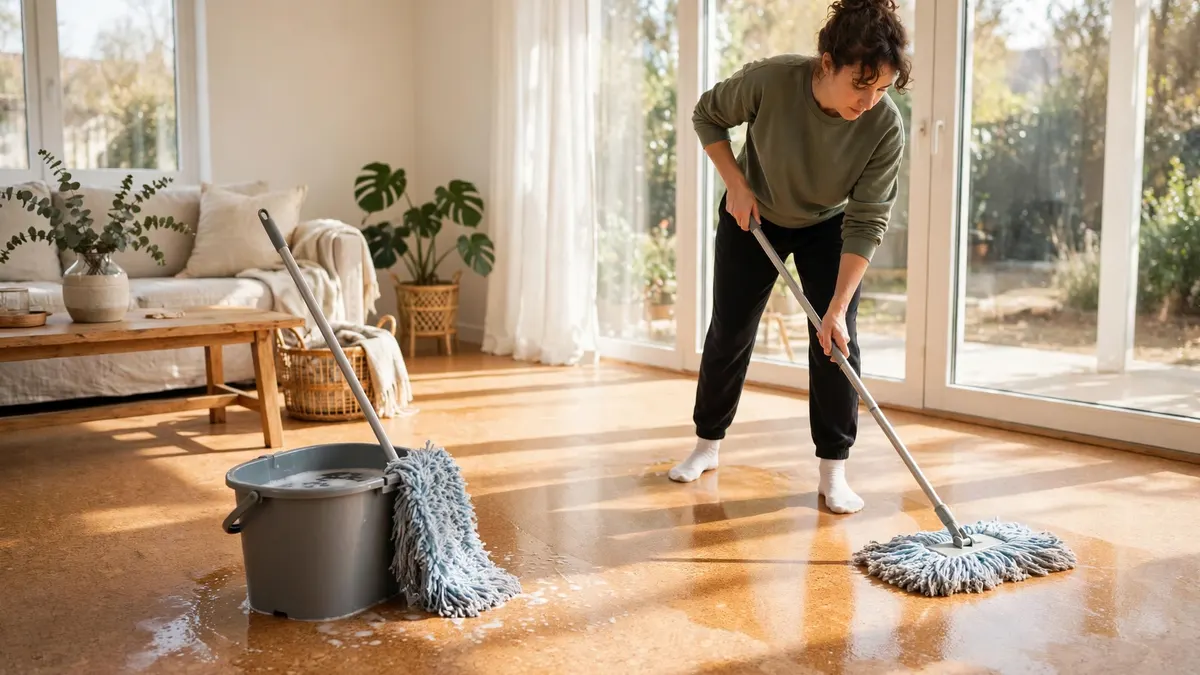
Once a week, give the floor a damp mop. Start by sweeping or vacuuming first, so you are not pushing grit around with the mop. Fill a bucket with warm water and a small amount of pH-neutral cleaner made for wood or cork floors, or a single drop of mild dish soap. Wring the mop out until it is barely damp: it should leave the floor slightly moist, not wet, and the surface should dry within a few minutes.
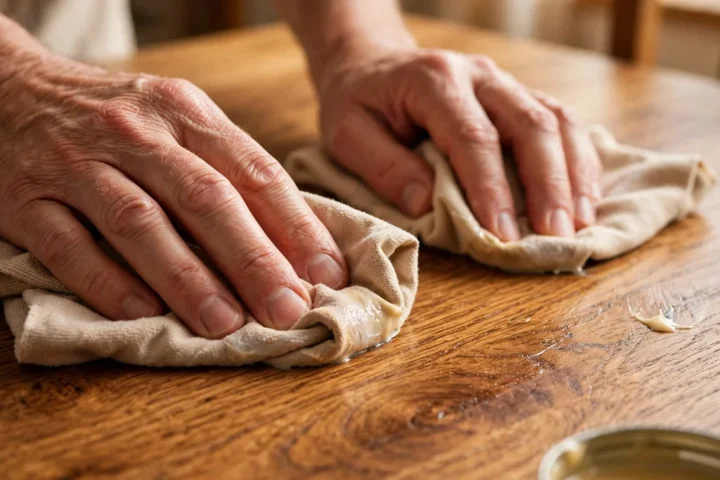
Work in sections, mopping with the direction of the planks where you can see it, and rinse the mop often so you are not spreading dirty water. A microfibre flat mop is ideal because it holds little water and picks up dirt well. After mopping, go over the floor with a dry microfibre cloth or an old towel if any damp patches remain, paying attention to the joints between tiles.
Some people use a spray bottle instead of a bucket: a quarter cup of white vinegar in a spray bottle with warm water and one drop of dish soap, sprayed lightly onto a section and wiped with a damp mop. This works well for light cleaning, but skip the vinegar if your floor has a wax finish, and never spray the solution directly onto the floor in large amounts. Test any new cleaner on a hidden corner first.
Stains, spills and spot cleaning
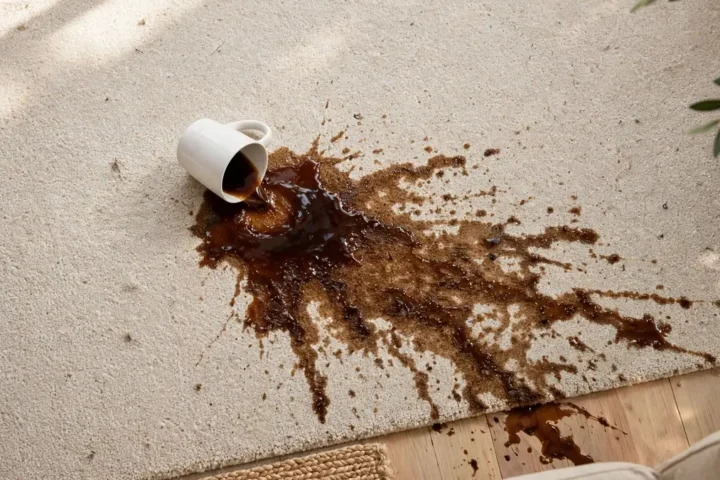
Spills need speed. Blot, never rub, with a soft cloth or paper towel, working from the outside of the spill inward so it does not spread. For water, juice or tea, a damp cloth followed by drying is usually enough. For stickier spills, a cloth with a little mild soap and warm water, then a rinse cloth and a dry cloth, will deal with most marks.
For tougher stains, such as food, mud or pet accidents, clean the area gently with a pH-neutral cleaner and a soft cloth, then dry it thoroughly. Avoid scrubbing pads, steel wool and scouring powders, which scratch the finish and open the cork to moisture. If a stain has soaked in and darkened the cork, it may need professional attention, and a refinishing of that section, rather than stronger chemicals.
Scuffs from shoes often lift with a soft cloth and a little cleaner, or with a pencil eraser rubbed gently over the mark. Deeper scratches can be touched up with a stain pen or a coloured wax filler made for cork, matched to your floor. Keep a note of your floor’s brand and colour for this reason, because a close match matters more than the product itself.
What to avoid
Excess water. Never use a soaking wet mop, flood the floor, or leave a bucket tipped over. Water is the fastest way to damage cork, causing swelling, warping and lifted edges that are hard to repair.
Steam mops. The heat and moisture of a steam mop can push water into the cork and soften the adhesive underneath. Manufacturers generally advise against steam cleaning on cork, and the damage it causes is often not covered by warranties.
Harsh chemicals. Avoid ammonia-based cleaners, bleach, acetone and abrasive powders. They can strip the finish, bleach the colour, or dissolve the seal. Oil-based soaps and wax polishes leave a dull film on polyurethane finishes and attract dirt.
Rubber-backed mats. Latex or rubber-backed rugs can trap moisture and, over time, stain cork permanently. Use breathable mats with a felt or woven backing, and lift them occasionally so the floor underneath can dry.
Dragging furniture. Chairs and heavy furniture dragged across cork leave scratches and dents. Fit felt pads under every leg, lift furniture to move it, and use wide castors or protective cups under heavy items.
Long-term care and maintenance
Beyond weekly cleaning, cork floors benefit from a little routine care. Keep indoor humidity between roughly 35 and 55 percent, because very dry air can shrink the cork and open gaps, while damp air can swell it. A humidifier in winter and ventilation in summer help keep the floor stable.
Recoating the finish every few years, following the manufacturer’s guidance, restores protection and shine. A polyurethane floor can be screened and recoated by a flooring professional, while a waxed floor may need a fresh coat of the recommended wax. This is a job worth planning rather than leaving until the finish has worn through, because bare cork absorbs stains far more easily.
Sunlight can fade cork over time, so use curtains or blinds in rooms with strong direct sun, and move rugs occasionally so the colour ages evenly. With steady care, a cork floor can last for decades, and the effort involved is modest: a few minutes of sweeping, a weekly damp mop, and quick action on spills.

Cork cleaning methods compared
The table below compares the main ways to clean a cork floor, so you can pick the right method for the job and avoid the ones that cause damage.
| Method | How often | Safe for cork |
|---|---|---|
| Soft-bristle sweeping | Daily | Yes, the safest routine |
| Suction-only vacuum | Daily | Yes, with brush lifted |
| Damp microfibre mop | Weekly | Yes, well wrung out |
| Spray and wipe | As needed | Yes, light mist only |
| Steam mop | Never | No, heat and water damage |
| Wet mop or flood | Never | No, causes swelling |
Your cork flooring checklist
- Sweep or vacuum daily with a soft brush or suction-only head.
- Never use a beater bar or rotating brush on cork floors.
- Damp-mop weekly with a pH-neutral cleaner, wrung out well.
- Dry the floor after mopping, especially along the joints.
- Blot spills immediately and never let liquid stand.
- Keep steam mops, bleach, ammonia and abrasive pads away.
- Use felt pads under furniture and lift, never drag, heavy items.
- Choose breathable mats, not rubber-backed ones, for cork floors.
- Keep humidity roughly between 35 and 55 percent indoors.
- Recoat the finish every few years as the manufacturer advises.
Frequently asked questions
Can I use a steam mop on cork flooring?
No. Steam mops push heat and moisture into the cork and can soften the adhesive and the finish, causing swelling and lifted edges. Stick to sweeping and a well-wrung damp mop, and check your floor’s warranty, which usually excludes steam cleaning.
What cleaner is best for cork floors?
A pH-neutral cleaner made for wood or cork floors is the safest choice, used in a small amount with warm water. A drop of mild dish soap works for light cleaning, and a little white vinegar in a spray bottle suits polyurethane finishes, but avoid vinegar on waxed floors.
How often should I mop a cork floor?
Once a week is enough for most homes, with daily sweeping or vacuuming in between. Homes with pets, children or a lot of foot traffic may need mopping twice a week, but the mop should always be barely damp, never wet.
How do I remove a stain from cork flooring?
Blot the spill straight away, then clean gently with a pH-neutral cleaner and a soft cloth, and dry the area fully. Avoid scrubbing pads and strong chemicals. If the stain has soaked in and darkened the cork, a flooring professional may need to refinish that section.
Can cork floors get wet at all?
Small amounts of water from a damp mop are fine, because the floor dries in minutes. Standing water is the problem: it seeps into seams and the cork itself, causing swelling and stains. Always dry the floor after cleaning and wipe up spills immediately.
How do I stop my cork floor from scratching?
Sweep daily to remove grit, use doormats at entrances, fit felt pads under furniture legs, and lift furniture rather than dragging it. Avoid high heels and shoes with hard soles indoors, and keep pet claws trimmed to reduce surface marks.
The bottom line
How to clean cork flooring is mostly about restraint: sweep often, mop with a barely damp microfibre mop and a gentle cleaner, dry the floor afterwards, and deal with spills straight away. Keep steam, soaking water and harsh chemicals far away, and protect the surface with felt pads and breathable mats. Treated gently, a cork floor rewards you with warmth and comfort for many years. For related reading, see our guides on plumbing repair basics, emergency garage door repair, and eco-friendly lifestyle tips for your home.