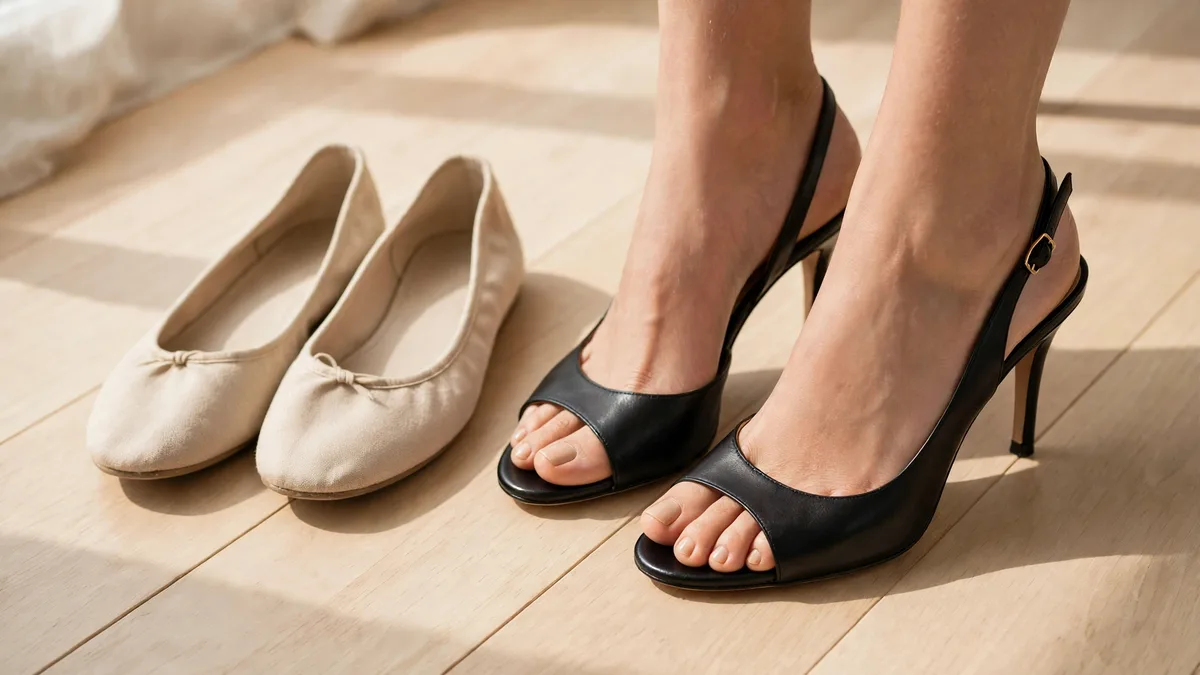

Heels and pain are a familiar pair for anyone who has spent a long day in high shoes, and the ache, the pinched toes and the stiff calves are no mystery. The question most wearers ask is simple: why do heels hurt, and is there a way to enjoy them without paying for it afterwards? The short answer is that high heels shift body weight forward onto the forefoot, squeeze the toes, and shorten the calf muscles, and the best protection is lower heels, a wider fit, cushioned insoles, and regular breaks in flats.
Key takeaways
- Heels and pain are linked because heels shift weight forward onto the forefoot.
- Higher, narrower heels cause more pressure and more problems.
- Bunions, hammer toes, blisters and ankle sprains are common heel-related problems.
- Lower heels, a wider toe box and cushioned insoles all help.
- Stretching the calves and feet eases much of the stiffness after wearing heels.
- See a doctor or podiatrist for pain that persists, or for a foot that changes shape.
Why heels hurt
A healthy foot spreads weight across the heel and the ball of the foot, with the arch acting as a spring. A high heel changes that balance: raising the heel by just a few centimetres throws the body forward, so the forefoot carries far more than its fair share. The higher the heel, the greater the shift.
The shape of the shoe adds to the problem. Many high heels taper to a narrow point, squeezing the toes together and pressing the big toe towards the second toe. The foot is held in a pointed position all day, which shortens the calf muscles and the Achilles tendon at the back of the ankle. When the shoes finally come off, the calf feels tight and the foot aches, because muscles and tendons that have been held short suddenly have to stretch again.
Walking changes too. In heels, the stride shortens, the ankle is less stable, and the knee bends more while the lower back arches to keep balance, which is why heel wearers often notice aching knees and a sore lower back as well as sore feet. A stiletto gives the least support of all, while a block heel or wedge spreads the load and feels steadier.
None of this means heels are forbidden. The NHS page on foot pain notes that footwear is a common cause of foot problems and that well-fitting shoes matter. The issue is dose: how high the heel is, how narrow the shoe is, and how long it is worn.
Common problems linked to high heels
Bunions are one of the best known problems. A bunion is a bony bump at the base of the big toe, where the joint has drifted out of line and the toe leans towards the other toes. Tight, narrow shoes do not cause bunions on their own, since the tendency often runs in families, but they can make a bunion worse and more painful by pressing directly on it.
Hammer toes develop when a toe is forced into a bent position for long periods. The middle joint of the toe sticks up, rubs against the top of the shoe, and can form a painful corn. Over time the toe can become stiff and stay bent even out of shoes. Wide, soft shoes and toe spacers can ease the pressure, but a fixed hammer toe sometimes needs treatment from a podiatrist.
Blisters and corns are the everyday injuries of heel wearing. A blister forms where the shoe rubs the skin again and again, while a corn is a thickened patch of skin that grows where pressure is repeated. Both are a sign that the shoe does not fit well enough.
Ankle sprains are more likely in heels because the ankle is raised, less stable, and perched on a small base. A single misstep on an uneven pavement or a stair can roll the ankle outwards, and repeated sprains weaken the ligaments and make future sprains more likely.
Daily wear of very high heels can shorten the Achilles tendon, which makes flat shoes feel uncomfortable afterwards. Regular stretching helps the tendon stay flexible.
Choosing heels that hurt less
Heel height is the first thing to check. As a rough guide, a heel of around two to three centimetres is far kinder than one of eight or ten, and many foot specialists suggest keeping everyday heels low and saving the highest pairs for short occasions. A block heel or wedge is steadier than a stiletto of the same height, because the weight spreads over a wider base.
Fit matters as much as height. The shoe should hold the heel firmly without pinching, the widest part of the foot should sit at the widest part of the shoe, and the toes should be able to wiggle. Feet swell slightly during the day, so shopping for shoes in the afternoon gives a truer fit. Leather and soft materials mould to the foot better than stiff synthetics, and a rounded or square toe box gives the toes room that a pointed toe does not.
Cushioning helps a great deal. A padded insole, a gel pad under the ball of the foot, or a metatarsal pad spreads pressure away from the sore spot. Heel grips stop the foot sliding forward, which reduces the crushing of the toes. These small additions are cheap, easy to fit, and make a noticeable difference over a long day.
Rotation is the simplest habit of all. Alternating heels with flat shoes through the week gives the feet and calves time to recover, and carrying flats for the walk to an event cuts the hours spent in high shoes. Our guide to trending hairstyles for women is a reminder that a look is built from the whole outfit, not from one painful pair of shoes.
| Heel type | Height | Pressure on forefoot | Best for |
|---|---|---|---|
| Flat shoes | Under 2 cm | Lowest, evenly spread | All-day wear, walking |
| Low block heel | 2 to 4 cm | Moderate | Workdays, standing |
| Mid heel | 5 to 7 cm | High | Short events, evenings |
| High stiletto | 8 cm and above | Very high | Brief occasions only |
| Wedge | 5 to 8 cm | High but steadier | Outdoor events, uneven ground |

Relief for sore feet after heels
Stretching is the fastest relief. Stand facing a wall, step one foot back, and press the back heel into the floor until the calf stretches, holding for half a minute on each side. Rolling the foot over a tennis ball or a cold water bottle massages the arch and eases the ache in the ball of the foot. Wiggling and spreading the toes for a few minutes helps them recover from being squeezed.
Rest and elevation help too. Raising the feet on a cushion for twenty minutes after a long day in heels lets swelling settle. A cool foot soak can soothe hot, aching feet, and moisturising the skin afterwards keeps it supple. Avoid walking barefoot on hard floors while the feet are sore, since that can add to the ache.
Simple care prevents small injuries from becoming bigger ones. Cover a blister with a plaster rather than bursting it, and keep the area clean. Trim toenails straight across, and if a corn is painful, a soft pad around it takes the pressure off.
Strengthening the feet helps over time. Picking up a towel with the toes and rising slowly onto tiptoe build the small muscles of the foot, so stronger feet cope better with heels and recover faster. Our guide to the best rosemary oil for hair growth follows the same steady-habits approach for hair care.
When to get help for foot pain
Most heel pain fades with rest, stretching and better shoes. See a doctor or podiatrist if pain lasts more than a few weeks, if it stops you walking normally, or if it keeps coming back despite changing shoes. Pain that is sharp, sudden, or linked to an injury needs prompt attention, as does any wound on the foot that does not heal, especially for people with diabetes.
Changes in the shape of the foot deserve attention too. A bunion that grows or a toe that stays bent should be checked. A podiatrist can advise on footwear, insoles and exercises, and can treat corns and ingrowing toenails safely.
People with diabetes should take foot pain especially seriously, since diabetes can reduce feeling in the feet and slow healing. A small blister that goes unnoticed can become a serious problem, so daily foot checks and well-fitting shoes matter. Our guide to viral TikTok beauty products is a reminder to check claims carefully before following a fashion that could hurt your feet.
A checklist for happier feet in heels
- Keep everyday heels low, and save the highest pairs for short occasions.
- Choose a block heel or wedge over a stiletto for stability.
- Make sure the toe box is wide enough for your toes to wiggle.
- Add cushioned insoles or gel pads under the ball of the foot.
- Carry flats for walking, and change into heels only when needed.
- Stretch your calves and roll your feet after wearing heels.
- Alternate heels with flats through the week to let feet recover.
- See a podiatrist if pain persists or a foot changes shape.
Frequently asked questions
Why do high heels cause pain?
High heels shift body weight forward onto the ball of the foot, squeeze the toes into a narrow space, and hold the calf muscles short. The higher the heel, the greater the pressure, which is why stilettos hurt more than low block heels.
Can wearing heels cause bunions?
Heels do not usually cause bunions on their own, since the tendency often runs in families, but tight, narrow heels can make a bunion worse by pressing on the joint and pushing the big toe further out of line.
What heel height is safest?
There is no single safe height, but a heel of around two to three centimetres is far kinder than one of eight or ten. Lower heels, block heels and wedges spread weight better and feel steadier than high stilettos.
How can I relieve pain after wearing heels?
Stretch the calves against a wall, roll the foot over a tennis ball, raise the feet for twenty minutes, and soak them in cool water. Rest, cushioned insoles and alternating with flats through the week all help recovery.
Are insoles worth using in high heels?
Yes. A padded insole or a gel pad under the ball of the foot spreads pressure away from the sore spot, and heel grips stop the foot sliding forward. They are cheap, easy to fit, and make a long day in heels noticeably easier.
When should I see a doctor about heel pain?
See a doctor or podiatrist if pain lasts more than a few weeks, stops you walking normally, or keeps returning despite better shoes. Seek prompt help for sharp pain after an injury, a wound that does not heal, or a foot that changes shape.
The bottom line
Heels and pain do not have to go together every time. The hurt comes from height, narrowness and hours worn, and all three are within your control. Choose lower, wider, steadier heels, add cushioning, carry flats for the walk, and stretch afterwards. If pain persists or your feet change shape, a podiatrist can help before a small problem becomes a lasting one.
Disclaimer: This article is for general information only and is not medical advice. It cannot diagnose or treat any foot condition. If you have persistent foot pain, a foot that changes shape, or a wound that does not heal, speak to your doctor or a podiatrist, especially if you have diabetes.