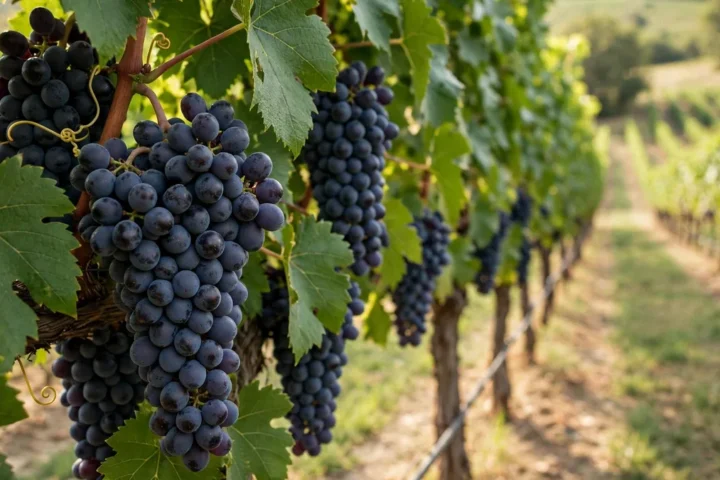

Grape must is the freshly crushed fruit that winemaking starts with: grape juice together with the skins, seeds and sometimes stems of the grapes. The name comes from the Latin vinum mustum, meaning young wine, and it describes the thick, sweet mixture that goes into the fermenter before any alcohol exists. If you want to understand how wine is made, must is where the story begins, because almost everything about the finished wine, its colour, its tannin, its flavour and its alcohol, is decided while the must is fermenting.
Making must is the first step in winemaking, and it is a simple idea carried out with care. Ripe grapes are picked, sorted and crushed so that the juice starts to flow, and the resulting mixture is either left with its skins or pressed away from them, depending on the wine being made. The solid part of the must is called pomace, and it usually makes up between 7 and 23 per cent of the total weight.
Key takeaways
- Grape must is freshly crushed grapes: juice plus skins, seeds and sometimes stems.
- Its name comes from the Latin vinum mustum, meaning young wine.
- The solid part of must is called pomace, and it usually makes up 7 to 23 per cent of the weight.
- Red wines ferment with their skins in the must, which gives them colour and tannin; white wines are usually pressed first.
- Yeast converts the sugar in must into alcohol and carbon dioxide during fermentation, which often takes one to two weeks.
- The sugar level of the must, known as must weight, decides how much alcohol the finished wine can reach.
What grape must is made of
Must is not just juice. When grapes are crushed, what comes out is a mixture of liquid and solids: juice from the pulp, skins that carry colour and tannin, seeds that add more tannin, and sometimes stems, which are usually removed but are kept in some styles of wine. The juice itself is sweet, since ripe wine grapes are rich in sugar, and it is the sugar that yeast will later turn into alcohol. The skins are where the most important winemaking compounds live, including the pigments that colour red wine and the tannins that give it structure.
The exact make-up of a must changes with the grape variety, the ripeness of the fruit and the weather of the vintage. A cool year may give grapes with more acidity and less sugar, while a warm year gives riper fruit with more sugar and softer acidity. Winemakers measure the sugar level of the must, known as must weight, because it tells them the potential alcohol of the finished wine: the more sugar there is to ferment, the more alcohol the yeast can make. That measurement is one of the first decisions in the winery, and it guides everything that follows.

How must is made: crushing and pressing
After the harvest, grape bunches arrive at the winery and are usually sorted to remove damaged fruit, leaves and other debris. They then pass through a crusher-destemmer, a machine that gently squeezes the berries to break their skins and start the juice flowing, while removing most of the stems. The juice that runs freely at this stage, before any pressing, is called free-run juice, and it is often the finest part of the must. Machine-harvested grapes arrive already partly crushed, so they are often ready to ferment with little further handling.
What happens next depends on the wine being made. For red wine, the whole must, juice and skins together, goes into the fermenter, and the skins stay in contact with the juice throughout fermentation. For white wine, the must is pressed soon after crushing, and the juice is separated from the skins before fermentation begins, so the wine stays pale and picks up very little tannin. The decision about whether to keep the stems is a separate one: whole-bunch fermentation, where some stems are kept, can add spice and structure, but it is used sparingly because stems can also add harsh, green flavours.
Fermentation: how must becomes wine
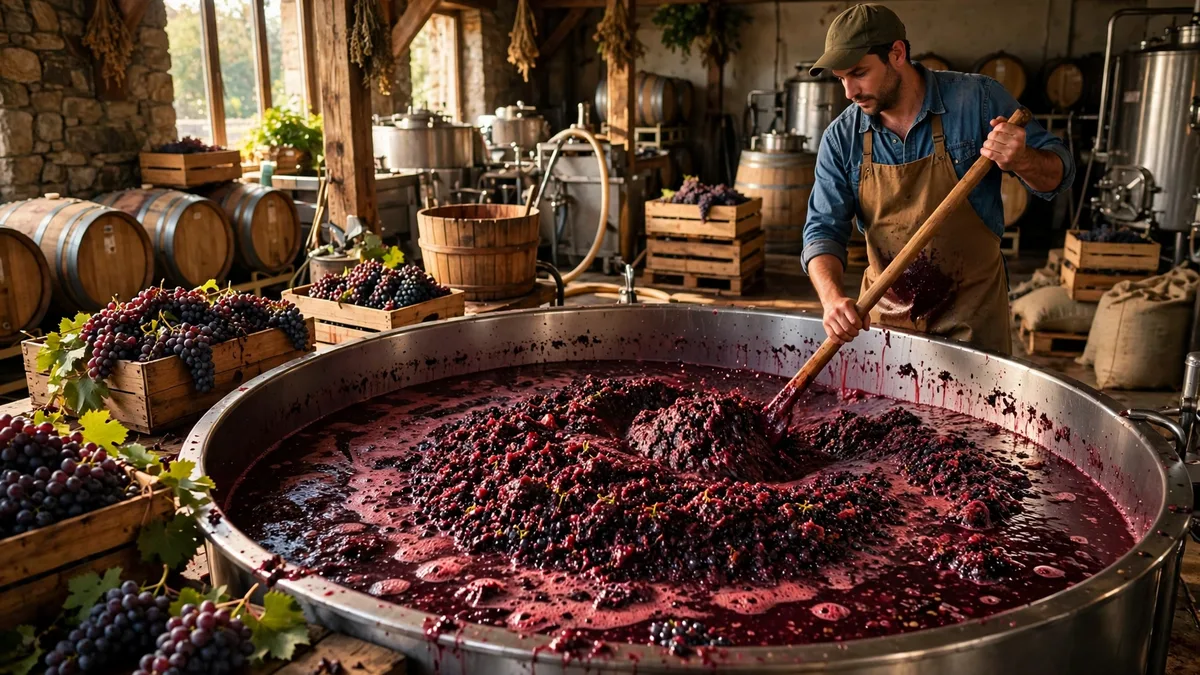
Fermentation is the step where must turns into wine, and it is driven by yeast. The winemaker may add a chosen commercial yeast, or may let the wild yeast that lives on the grape skins and in the winery do the work. Either way, the yeast feeds on the sugar in the must and converts it into alcohol, heat and carbon dioxide. Primary fermentation often takes between one and two weeks, and during that time the must bubbles, warms up and slowly loses its sweetness as the alcohol rises.
In a red wine fermenter, the skins rise to the surface and form a solid cap, which must be kept wet and mixed back into the juice, or the extraction of colour and flavour will stall. Winemakers do this by punching the cap down by hand, by pumping juice from the bottom of the tank over the top, or by draining the juice off and returning it over the skins. When the winemaker judges the time to be right, the wine is drained from the pomace, and the pomace is pressed to recover the juice still held in the skins. You can read the process in detail in the Wikipedia entry on must and the Wikipedia guide to winemaking.
Red, white and rosé: how must differs by style
The treatment of must is what makes red, white and rosé wines different from one another, and the difference is mostly about time on the skins. Red wine is made by fermenting the must with the skins, so colour, flavour and tannin pass from the skins into the juice over days of contact. The longer the skins stay in, the deeper and more structured the wine becomes, which is why red wines range from light and pale to dark and firmly tannic.
White wine is made the other way round: the must is pressed and the juice is fermented without the skins, so the wine stays pale and fresh, with little tannin. Rosé sits between the two. It is usually made from red grapes whose juice is left in contact with the dark skins only briefly, long enough to pick up a pink colour, before being drained off and fermented like a white wine.
| Wine style | How the must is handled | Result |
|---|---|---|
| Red wine | Fermented with skins, seeds and sometimes stems | Deep colour, firm tannin, full flavour |
| White wine | Pressed before fermentation, juice fermented alone | Pale colour, fresh acidity, little tannin |
| Rosé wine | Brief skin contact, then drained and fermented as white | Pink colour, light tannin, fresh fruit |
| Sparkling wine | Pressed gently, juice fermented for a still base wine | Pale, high-acid base for a second fermentation |
| Sweet wine | Fermentation stopped early or must kept unfermented | Residual sugar left in the finished wine |
What happens to must after fermentation
Once fermentation is finished, the wine is separated from the pomace, and the pomace is pressed to extract the remaining wine held in the skins. The pressed wine is usually stronger and more tannic than the free-run wine, and the winemaker may blend a little of it back in for structure, or keep it apart. The leftover pomace is often returned to the vineyard as compost, or used in other ways, such as distillation into spirits in some wine regions.
A portion of unfermented must is sometimes kept back rather than fermented. In Germany, this reserved must is called Süssreserve, and a measured amount is added to a finished wine before bottling to sweeten it gently. Must also has uses outside winemaking: in parts of Spain, the word mosto describes unfermented grape juice drunk as a seasonal, non-alcoholic drink.
A checklist for understanding must at a winery visit
Use this checklist on your next winery visit, when the guide talks about the crush and the fermenters, so you can follow what is happening.
- Ask what happens to the grapes first: are they crushed and destemmed, or fermented as whole bunches?
- Find out whether the wine ferments on its skins, and for how long, since that decides its colour and tannin.
- Look at the fermenters and ask whether the cap is punched down or pumped over.
- Ask how the winemaker knows when to drain the wine from the pomace.
- Taste the difference between free-run wine and pressed wine if the winery offers both.
- Ask what happens to the pomace after pressing: compost, distillation or something else.
- Note the must weight if it is mentioned, since it tells you the potential alcohol of the wine.
- Remember that must itself is not wine yet: it only becomes wine once fermentation has done its work.
Frequently asked questions
What is grape must?
Grape must is freshly crushed grape juice that contains the skins, seeds and sometimes stems of the fruit. Its name comes from the Latin vinum mustum, meaning young wine, and making must is the first step in winemaking. The solid part of must is called pomace, and it usually makes up between 7 and 23 per cent of the total weight of the must.
Is must the same as grape juice?
Not quite. Grape juice is the liquid alone, while must is the whole crushed mixture, juice plus skins, seeds and sometimes stems. The skins matter, because they carry the colour, tannin and flavour compounds that shape the finished wine. For white wine, the must is pressed and the juice is fermented on its own; for red wine, the must ferments with the skins still in it.
What is pomace?
Pomace is the solid part of the must: the skins, seeds and stems left over after the juice has been drained off. It usually makes up 7 to 23 per cent of the weight of the must. After pressing, pomace is often returned to the vineyard as compost, and in some wine regions it is distilled into spirits.
How long does must ferment for?
Primary fermentation, in which yeast converts the sugar in must into alcohol and carbon dioxide, often takes between one and two weeks. The exact time depends on the temperature, the yeast and the style of wine. Cooler fermentations run more slowly and preserve fresh aromas, while warmer ones run faster and extract more colour and tannin.
Does grape must contain alcohol?
Fresh must contains no alcohol, or only a trace, because fermentation has not yet begun. It is sweet grape juice and crushed fruit. Alcohol appears only once yeast starts converting the sugar, and it rises through fermentation until the sugar is used up or the winemaker stops the process.
What happens to the skins after the must is pressed?
Once the wine is drained from the pomace and the pomace is pressed, the remaining skins, seeds and stems are usually composted and returned to the vineyard, where they feed the soil. In some regions they are distilled into spirits, such as grappa in Italy or marc in France.
The bottom line
Grape must is where wine begins: freshly crushed grapes, juice and skins together, waiting for yeast to turn sugar into alcohol. How the must is handled decides almost everything about the wine that follows, from the colour of a rosé to the tannin of a red, and the length of skin contact is the winemaker’s most important choice. The next time you pour a glass, remember that it started as must, a sweet, thick mixture of juice and skins in a fermenter. For more on wine, read our guide to the best wineries in Napa, our article on the best inexpensive wines, and our guide to the best white wine for cooking.
Please drink responsibly: if you drink alcohol, do so in moderation and never drink and drive.