
An emergency electrician is a qualified electrician who attends urgent electrical faults outside normal working hours, when a home has lost power, a circuit is sparking, or something smells of burning. The question people ask at midnight with the lights out is always the same: is this a genuine emergency, or can it wait until morning? The short answer is that loss of all power, sparking, burning smells and a breaker that will not reset are emergencies, while a single dead socket or a flickering light can usually wait for a normal appointment.
Electrical emergencies are different from most household problems because the danger is invisible and the consequences of waiting can be serious. A fault that starts as a warm socket can become a fire, and a power cut in a home with medical equipment or a young baby is a different matter from a power cut in an empty house. Knowing where the line falls helps you act quickly when it matters and avoid paying emergency rates when it does not.
Key takeaways
- An emergency electrician attends urgent faults outside normal hours: total power loss, sparking, burning smells and breakers that will not reset.
- Switch off the affected circuit if it is safe to do so, and never touch wiring, open the consumer unit, or keep resetting a tripped breaker.
- Check first whether the outage affects your street or only your home, and whether the main switch is on.
- Note exactly what happened, what was running, and what you have already tried before you call.
- Ask for the callout charge, the hourly rate and the cost of likely parts before work starts.
- Keep the certificate and test results from the visit with the property records.
What an emergency electrician does
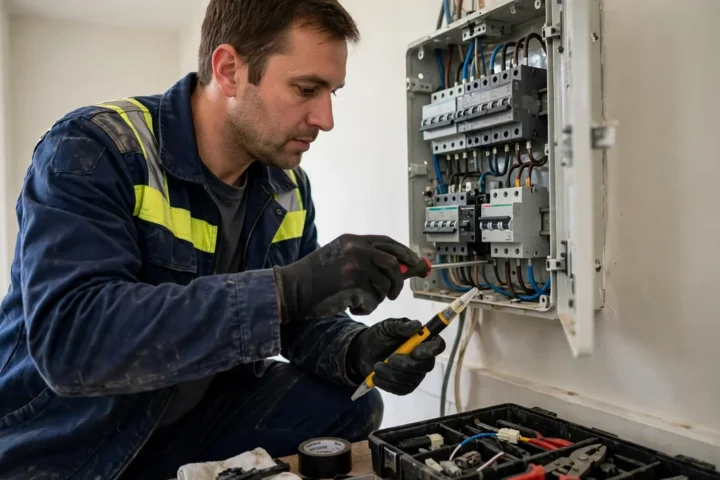
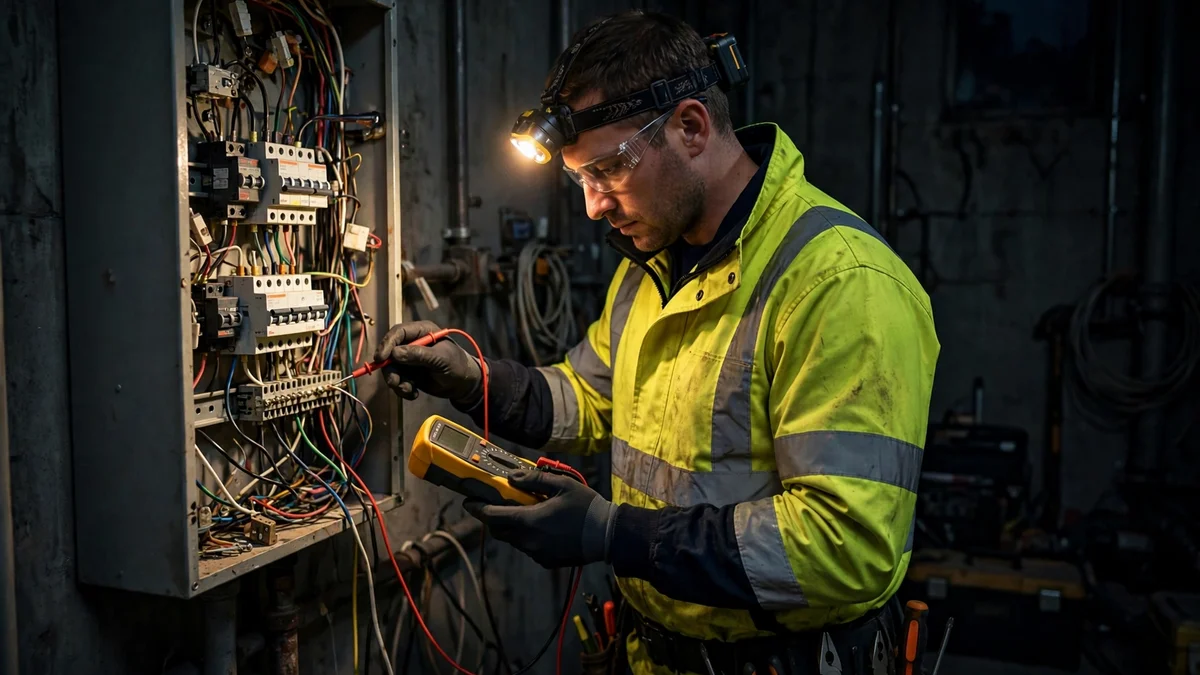
An emergency electrician does the same work as any qualified electrician, but under time pressure and outside normal hours. The first job is always to make the installation safe: isolate the faulty circuit, stop any further damage, and restore power to the rest of the property where that can be done safely. Only then does the work turn to a permanent repair, which sometimes needs parts or daylight and may be finished on a follow-up visit.
The visit usually starts with questions, not tools. The electrician will want to know what happened, when it started, whether anything changed just before the fault, and what you have already tried. Honest answers speed up the diagnosis considerably, because electrical faults often have a story: a new appliance, a recent storm, a socket that has been warm for weeks. The Wikipedia page on electrical wiring describes the systems an electrician works with, from the consumer unit and its protective devices to the circuits that serve each part of a building, and that structure is what the diagnosis follows.
Emergency work is not a different trade; it is the same trade with a faster response. The standards are the same, the testing is the same, and the work should still be certified where certification is required. Speed matters, but it never justifies skipping the checks that make the repair safe.
When to call straight away
Call immediately if you smell burning near a socket, a switch or the consumer unit, or if you see scorch marks, smoke or sparking. Switch off the affected circuit at the consumer unit if you can do so safely, and do not use the socket or appliance again until it has been checked. If there is any sign of fire, leave the property and call the fire service first.
Call straight away if the whole property has lost power and the problem is not a street-wide outage. Check with a neighbour or look outside to see whether other houses are dark; if yours is the only one, the fault is inside your installation and needs a professional. The same applies if the main breaker or residual current device will not reset, or if it trips again the moment you reset it.
Call too if power loss creates a safety risk of its own: medical equipment that needs power, a home with a very young baby in cold weather, or a property where the heating and the hot water have both stopped in winter. In those cases the emergency is not only the wiring, it is what the wiring supports. Our guide to plumbing repair covers the same judgement call, that a fault becomes an emergency when it threatens health, safety or the fabric of the building, not simply when it is inconvenient.
What you can safely do first
Before you call, run through a few safe checks. Look at the consumer unit and see whether a breaker has tripped or a residual current device has switched off. If one has, switch it back on once. If it stays on, the fault may have been a one-off surge; if it trips again, leave it off and call for help. Never hold a breaker on, tape it in place, or replace it with a larger one.
Check whether the outage is yours alone. A quick look at neighbouring houses, or a check with the local network operator, will tell you whether the problem is in the street supply. If the whole street is dark, the fault belongs to the network operator, not to an electrician, and an emergency callout will not fix it.
Unplug the appliance that was running when the fault occurred, if you can do so safely, and note what it was. A kettle, a heater or a washing machine that trips the power every time it is used is telling you where the fault lives, and that information saves the electrician time. Do not open the appliance, the socket or the consumer unit, and do not touch anything that is wet, scorched or sparking. The same caution applies to other household systems: our guide to how to check car fluids makes the same point about knowing which checks are safe for an owner and which belong to a professional.
Emergency electrical faults compared
| Fault | What you may notice | How urgent it is |
|---|---|---|
| Total power loss | Whole property dark, nothing works | Emergency if it is your installation |
| Burning smell or scorching | Smell near socket, switch or consumer unit | Emergency, switch off and call at once |
| Sparking | Sparks or crackling from a fitting | Emergency, do not use the circuit |
| Breaker will not reset | Trips again immediately | Emergency, leave it off |
| One dead socket | Single point not working | Can usually wait for a normal visit |
| Flickering light | Light dims or flickers | Book soon, unless it worsens |

What the visit involves and what it costs
An emergency visit follows a clear order: make safe, diagnose, explain, repair, test. The electrician will isolate the fault, test the affected circuits, explain what has failed and what the repair involves, and agree the cost with you before starting. Common emergency repairs include replacing a failed breaker or residual current device, repairing a damaged cable, replacing a scorched socket, or restoring a circuit that has been damaged by water.
Costs vary with the time of day, the area and the fault, but the structure is usually the same: a callout charge, an hourly rate, and parts. Emergency rates are higher than normal rates, which is why it is worth asking for the figures before the work starts and getting them in writing where possible. A reputable electrician will also tell you if a fault can be made safe temporarily and finished properly during normal hours, which is often the cheaper option.
Be wary of anyone who will not give a price before starting, who wants to replace the whole consumer unit before testing anything, or who cannot explain the fault in plain language. A good electrician can always say what failed and why. Heating faults follow the same pattern: our guide to radiator repair near me notes that a clear explanation and a price agreed in advance are the marks of a trustworthy callout in any trade.
Before the electrician leaves, the repaired circuit should be tested and the power restored to the rest of the property. Ask for a short written summary of what was done and any certificate that applies, and keep it with the property records. If a follow-up visit is needed for parts, agree the date and the price before the electrician leaves.
A checklist for an electrical emergency
- Switch off the affected circuit if it is safe to do so, and leave it off.
- Check whether the outage affects your street or only your home.
- Reset a tripped breaker once only; if it trips again, leave it off.
- Note what happened, what was running, and what you have already tried.
- Unplug the appliance involved, if it is safe to do so.
- Never open the consumer unit, touch wiring, or bypass a protective device.
- Ask for the callout charge, hourly rate and likely parts cost before work starts.
- Keep the written summary and any certificate from the visit.
Frequently asked questions
What is an emergency electrician?
An emergency electrician is a qualified electrician who attends urgent electrical faults outside normal working hours. The work covers making the installation safe, finding the fault, and repairing it or making it safe until a permanent repair can be done.
When should I call an emergency electrician?
Call when the whole property has lost power and the fault is in your installation, when there is sparking, smoke or a burning smell, or when a breaker will not reset. A single dead socket or a flickering light can usually wait for a normal appointment.
What should I do if a socket is sparking?
Switch off the circuit at the consumer unit if it is safe to do so, do not use the socket again, and call an emergency electrician. If there is any sign of fire, leave the property and call the fire service first.
Can I reset a tripped breaker myself?
Yes, once. If the breaker stays on, the trip may have been a one-off. If it trips again immediately, leave it off and call a professional. Never hold a breaker on or replace it with a larger one.
How much does an emergency electrician cost?
It depends on the time of day, the area and the fault. Expect a callout charge plus an hourly rate and parts, with higher rates at night and at weekends. Ask for the figures before work starts and get them in writing where possible.
Will the work be certified?
Substantial electrical work should be tested and certified, even in an emergency. Ask what certificate applies to the repair and keep it with the property records, along with the written summary of the work.
The bottom line
An emergency electrician is for the faults that cannot wait: total power loss, sparking, burning smells and breakers that will not reset. Switch off the affected circuit if it is safe, check whether the outage is yours alone, note what happened, and call with the facts in hand. Agree the price before work starts, insist on proper testing, and keep the records. The calmest emergency call is the one where you already know what counts as urgent and what you can safely do first.
Safety note: this article is general information only. Electricity can kill, and fixed wiring should always be handled by a qualified professional. Never touch wiring, open a consumer unit, or bypass a protective device. If you see sparking, smoke or fire, switch off the power only if it is safe to do so, leave the property if needed, and seek professional help straight away.