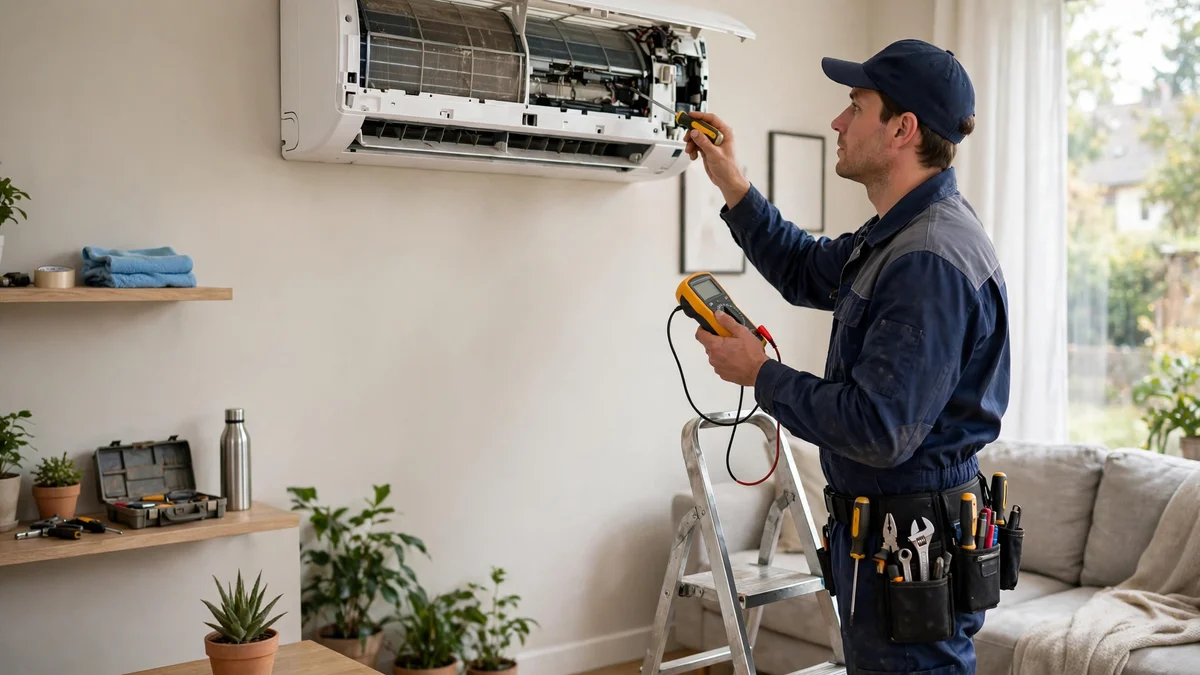

Emergency AC repair is the urgent service you call when an air conditioning system stops cooling, starts leaking, or makes alarming noises, usually on the hottest day of the year. The question most people ask in that moment is a practical one: what can I safely check myself, and when should I stop and call a technician? The short answer is that a few simple checks are safe for anyone, such as the thermostat, the power supply and the air filter, while anything involving refrigerant, wiring or the outdoor unit belongs to a qualified professional.
Air conditioning feels like a luxury until it fails during a heatwave, when it becomes a matter of comfort and, for older people, young children and anyone with a health condition, a matter of safety. Knowing the difference between a simple fix and a genuine emergency saves time, money and a long wait in a hot house.
Key takeaways
- Emergency AC repair covers sudden failures: no cooling, leaks, strange noises, burning smells and units that will not start.
- Safe checks for anyone include the thermostat setting, the breaker, the filter and blocked vents.
- Never open the unit, handle refrigerant or work on wiring yourself.
- Water leaks and burning smells are urgent; a unit that cools weakly can usually wait for a normal appointment.
- Note the make, model, symptoms and any error code before you call.
- Regular servicing and clean filters prevent many of the failures that lead to emergency callouts.
What counts as an emergency AC repair
Not every breakdown is an emergency. An air conditioner that stops cooling entirely on a very hot day is urgent, especially if someone in the household is vulnerable to heat. The same applies to a unit that is leaking water into a room, one that trips the breaker repeatedly, and any unit producing a burning smell or visible sparking. These are the faults that can damage the property or put people at risk, and they justify an out-of-hours call.
Other faults are uncomfortable but not urgent. A system that cools weakly, a noisy fan, a remote control that has stopped working, or a unit that short-cycles can usually wait for a normal appointment. The distinction matters, because emergency callouts cost more, and spending that premium on a fault that could safely wait a day is rarely good value. The Wikipedia page on air conditioning explains how these systems move heat rather than creating cold, which is why a system that runs but does not cool is often a sign of a refrigerant or airflow problem rather than a total failure.
When you are unsure, describe the symptoms honestly and let the service decide. A reputable company will tell you whether the job needs an emergency visit or whether a next-day appointment is safe, and will explain what to do in the meantime.
Safe checks before you call
Start with the thermostat. Check that it is set to cooling, that the temperature setting is below the room temperature, and that the fan is set to auto rather than off. A thermostat knocked to heating or switched off by mistake is one of the most common causes of a callout, and it takes seconds to rule out.
Next, check the power. Look at the breaker or fuse for the air conditioning circuit and see whether it has tripped. If it has, reset it once. If it trips again immediately, leave it off and call a technician; a breaker that will not stay on is protecting you from a fault. Also check that the outdoor unit has power and that its isolator switch has not been turned off.
Then check the air filter and the vents. A clogged filter restricts airflow and can cause the indoor unit to freeze up, which stops the cooling altogether. If the filter is dirty, clean or replace it and give the system time to recover. Make sure supply vents are open and not blocked by furniture or curtains. Our guide to air conditioning repair services covers the same first steps, because most technicians start every visit by checking the simple causes before they touch the machinery.
Finally, look at the outdoor unit from a safe distance. Clear leaves and debris from around it if you can do so without reaching into the fan, and check that nothing is blocking the airflow. Do not open the casing, do not spray water into the unit, and do not touch any wiring. If the outdoor unit is iced over, switch the system off and let it thaw before calling for help.
Emergency AC faults compared
| Symptom | Likely cause | How urgent it is |
|---|---|---|
| No cooling at all | Power, thermostat, compressor or refrigerant fault | Urgent in hot weather |
| Water leaking indoors | Blocked drain or frozen coil | Urgent, can damage floors and ceilings |
| Burning smell or sparking | Electrical fault | Urgent, switch off and call at once |
| Repeated breaker trips | Electrical fault or compressor problem | Urgent, do not keep resetting |
| Weak cooling | Dirty filter, low refrigerant, airflow problem | Can usually wait a day |
| Unusual noises | Loose parts, fan or motor wear | Book soon, switch off if it worsens |

What happens when the technician arrives
A good emergency visit follows a clear sequence. The technician will first ask what happened, when it started, and what you have already checked. Having the make and model of the unit, the symptoms in order, and any error code displayed on the unit or the remote will speed this up considerably.
Next comes diagnosis. The technician will check the thermostat and controls, test the power supply, measure temperatures at the supply and return, and inspect the indoor and outdoor units. If refrigerant is suspected, they will check pressures with gauges. This stage is methodical, and it matters more than the repair itself, because a wrong diagnosis leads to a repair that does not hold.
Once the fault is found, the technician should explain it in plain language, say what the repair involves, and give you the cost before starting work. Common emergency repairs include replacing a failed capacitor or contactor, clearing a blocked condensate drain, repairing a leak, or replacing a fan motor. Some repairs need parts that are not carried on the van, in which case a temporary fix may keep the system running safely until the part arrives.
Before leaving, the technician should test the system properly: cooling restored, temperatures within the normal range, drains clear, and no unusual noises. Ask what was done, what to watch for, and whether anything else needs attention soon. A written summary of the work is worth keeping, especially if the unit is still under warranty. The same habit applies across the home: our guide to heat pump repair makes the same point, that a clear record of the diagnosis and the repair is what turns a one-off fix into useful history for the next visit.
How to avoid the next emergency
Most emergency callouts have a history. A filter that has not been cleaned for a year, an outdoor unit choked with leaves, or a system that has not been serviced since it was installed will fail at the worst possible moment, which is usually the first hot spell of the year. Regular servicing catches the small problems while they are still small.
Book a service before the cooling season starts, not during it. A service visit typically includes cleaning the filters and coils, checking refrigerant pressures, testing the controls and drains, and tightening electrical connections. It will not prevent every failure, but it removes the most common causes and gives the technician a chance to warn you about parts that are wearing out.
Between services, keep the routine simple: clean or replace the filter regularly, keep the outdoor unit clear of plants and debris, and do not ignore small changes. A unit that has become noisier, slower to cool, or more expensive to run is telling you something. Listening early is almost always cheaper than calling late. Radiators follow the same rule in winter, and our guide to radiator repair near me describes how a heating system that is serviced before the cold season rarely fails in the middle of it.
A checklist for an AC emergency
- Check the thermostat is set to cooling and below room temperature.
- Check the breaker once; if it trips again, leave it off.
- Check and clean the air filter and open blocked vents.
- Look at the outdoor unit from a safe distance and clear debris around it.
- Note the make, model, symptoms and any error code.
- Switch off the unit if there is a burning smell, sparking or water leaking.
- Keep vulnerable people cool with fans, shade and fluids while you wait.
- Ask the technician for a written summary of the diagnosis and repair.
Frequently asked questions
What is emergency AC repair?
Emergency AC repair is urgent service for a sudden air conditioning failure, such as no cooling in hot weather, water leaking into a room, a burning smell, or a unit that will not start. It is usually available outside normal working hours and prioritises faults that affect safety or cause property damage.
What should I check before calling?
Check the thermostat setting, the breaker, the air filter and the vents. These are safe for anyone to check and they solve a surprising number of callouts. Do not open the unit, handle refrigerant or work on the wiring.
How much does an emergency AC repair cost?
It depends on the fault, the time of day and the parts needed. Emergency visits usually carry a higher callout charge than a normal appointment, and the technician should explain the cost before starting work. Ask for the breakdown, not just the total.
Is a leaking air conditioner dangerous?
A water leak can damage floors, ceilings and plaster, so it should be treated as urgent even though the water itself is usually just condensation. Switch the unit off, contain the water if you can, and call a technician. A leak with a burning smell is more serious and needs immediate attention.
Can I run my AC with a dirty filter?
Running with a dirty filter restricts airflow, reduces cooling and can cause the indoor coil to freeze, which stops the system altogether. Clean or replace the filter regularly; it is the simplest maintenance task and the one most often skipped.
How often should an air conditioner be serviced?
Most manufacturers and technicians recommend a service once a year, ideally before the cooling season begins. A service includes cleaning, pressure checks and testing the controls, and it catches the small problems that lead to emergency callouts.
The bottom line
Emergency AC repair starts with calm, safe checks and ends with a professional diagnosis, not a guess. Check the thermostat, the power and the filter, switch the unit off if anything smells, sparks or leaks, and call a qualified technician with the symptoms written down. Then book a service before next summer, because the cheapest emergency repair is the one that never happens.
Safety note: this article is general information only. Air conditioning systems contain refrigerant under pressure and live electrical parts. Never open the unit or attempt repairs involving refrigerant or wiring yourself; always use a qualified technician. If you smell burning or see sparking, switch the unit off if it is safe to do so and seek professional help straight away.