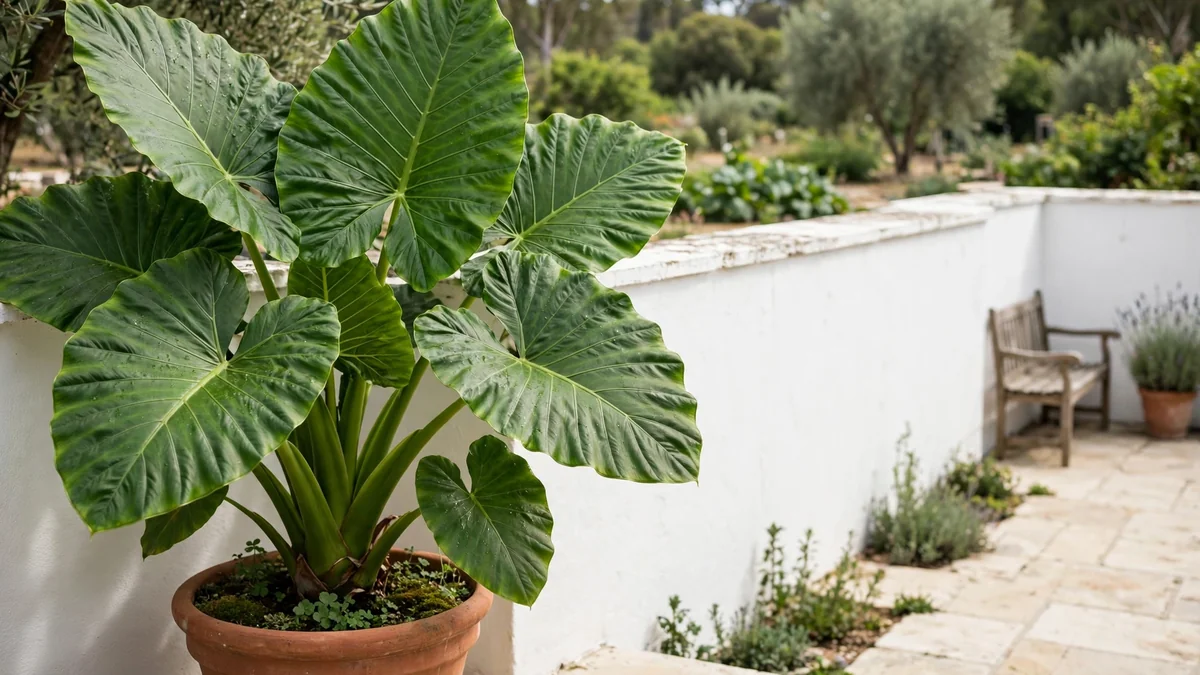

An elephant ear plant is a tropical plant grown for its enormous leaves, which can be heart-shaped or arrow-shaped and big enough to live up to the name. The central question most new owners ask is how to keep one alive, and the answer is simple: give it bright light without harsh direct sun, keep the soil moist, and keep it warm and humid. Get those three things right and the plant will reward you with fast growth and leaves that become a talking point in any room or garden.
This guide explains what an elephant ear plant is, the different types you are likely to meet, how to care for it indoors and outdoors, what to do when something goes wrong, and the safety warning every owner should know.
Key takeaways
- Elephant ear is a common name for plants in the Colocasia, Alocasia and Xanthosoma genera.
- They need bright indirect light, moist soil and warmth to grow well.
- Most types are frost-tender and must come indoors before cold weather.
- Water generously in the growing season and ease off in winter.
- All parts of the plant are toxic if eaten, for people and for pets.
- Keep the plant out of reach of children and animals that chew leaves.
What an elephant ear plant is
Elephant ear is not a single species but a common name shared by several genera of tropical plants in the arum family, most often Colocasia, Alocasia and Xanthosoma, with Caladium sometimes sold under the same name. They all share the same look: large leaves on long stalks, held upright or arching outwards, with a bold shape that makes them hard to miss. The name describes the leaf, which is broad and rounded like an ear, and on a mature plant outdoors a single leaf can be wider than a dinner plate.
The genera differ in small ways. Colocasia, which includes taro, usually has large heart-shaped leaves and likes damp soil, even wet ground near a pond. Alocasia tends to have glossier, more arrow-shaped leaves with striking veins, and many of the popular houseplant forms belong to this group. Xanthosoma has arrow-shaped leaves on long stems and is widely grown in tropical gardens. Caladium is smaller and grown mainly for its colourful patterned leaves.
Light, water and soil
Elephant ears come from the shaded floors of humid tropical forests, and their care follows from that origin. They want plenty of light, plenty of moisture, and protection from cold and from drying wind. Indoors, that usually means the brightest spot you have that does not get harsh midday sun through the glass.
Light.
Bright indirect light is the safest choice indoors. A spot near an east-facing window, or a few feet back from a south-facing one, gives the plant the brightness it needs without scorching the leaves. Too little light shows quickly: growth slows, new leaves are smaller, and the stems stretch towards the window. Outdoors, most elephant ears do best in partial shade, especially where summers are hot, though some Colocasia types cope with more sun if the soil stays moist.
Water.
These are thirsty plants. During the growing season, keep the soil consistently moist, watering when the top few centimetres begin to dry, and water thoroughly so the moisture reaches the roots. Colocasia tolerates very wet soil, but most types still need drainage: soil that stays waterlogged will rot the roots. In winter, when growth slows, ease off and let the soil dry a little more between waterings, but do not let the plant dry out completely.
Soil and feeding.
Rich, moisture-retentive soil that still drains freely suits elephant ears best. A good general potting mix with added compost works well indoors, and garden soil improved with compost suits them outdoors. Feed during the growing season with a balanced liquid fertiliser, following the maker’s instructions, roughly every two to four weeks. Measure carefully: too much fertiliser can burn roots and leaf edges.

Elephant ear types compared
The table below compares the main groups sold as elephant ears, so you can tell roughly what you have bought.
| Type | Leaves | Best spot |
|---|---|---|
| Colocasia | Large, heart-shaped, often matte | Moist soil, partial shade, near water |
| Alocasia | Glossy, arrow-shaped, bold veins | Bright indirect light indoors |
| Xanthosoma | Arrow-shaped on long stems | Warm, sheltered spot outdoors |
| Caladium | Smaller, colourful and patterned | Bright shade, pots and bedding |
Growing indoors and outdoors
Indoors, an elephant ear makes a statement plant, but it needs room. Give it a large pot, because the roots grow quickly, and repot when roots appear at the drainage holes or growth slows despite regular feeding. Turn the pot weekly so it does not lean, and wipe the leaves with a damp cloth to keep off dust. Indoor air is often dry, so grouping plants together or standing the pot on a tray of pebbles with water can raise the humidity around the leaves.
Outdoors, elephant ears are grown as summer bedding in cooler climates and as permanent plants where winters stay warm. Most types are frost-tender, so in a cold climate they should be planted out only after the last frost and brought back inside, or lifted and stored, before the first frost of autumn. In a pot, that is simply a matter of carrying the plant indoors; in the ground, the tubers or rhizomes can be lifted, dried and stored somewhere cool and frost-free until spring. In very warm climates, they can stay outside all year and will grow larger with each season.
Propagation is usually done by division. When you repot a mature plant, you will often find smaller offsets or tubers around the base, and these can be separated carefully, each with some roots attached, and potted on their own.
Common problems
Yellow leaves are the most common complaint, and they usually mean a watering problem. Leaves that yellow from the outside in, with soft stems, often point to overwatering or poor drainage, while leaves that yellow and crisp at the edges often point to underwatering or dry air. Check the soil before changing anything: if it is soggy, let it dry and improve the drainage; if it is dry through, water thoroughly and consider a larger pot.
Drooping leaves are normal to a degree, since the leaves are heavy and the stalks are long, but sudden drooping often means the plant is thirsty or cold. Pests are less common indoors, but spider mites like the dry air of heated rooms, and aphids can appear outdoors.
Safety: toxic if eaten
Elephant ear plants are toxic if eaten, for people and for pets, and this is the one warning every owner should take seriously. All parts of the plant contain needle-shaped crystals of insoluble calcium oxalate, known as raphides. When the plant is chewed, these crystals pierce the soft tissues of the mouth and throat, causing immediate pain, a burning sensation, swelling of the lips and tongue, drooling, difficulty swallowing, and sometimes nausea and vomiting. Alocasia, Colocasia esculenta and Caladium are all listed as toxic to cats and dogs, and the crystals affect people too, with children at particular risk because of their size and curiosity.
Keep the plant out of reach of small children and of pets that chew leaves, and wear gloves when you handle cut stems or divide the plant, since the sap can irritate the skin. If a child or a pet eats part of the plant, rinse the mouth gently with water, do not try to make them vomit, and seek medical or veterinary advice promptly, especially if there is swelling or difficulty breathing. One exception is worth noting for completeness: taro, Colocasia esculenta, is eaten as a food crop in many parts of the world, but only after thorough cooking, which breaks down the crystals. Raw taro is not safe to eat, and ornamental elephant ears should never be eaten at all.
Your elephant ear plant checklist
Use this checklist to keep your elephant ear plant healthy.
- Give it bright indirect light indoors, or partial shade outdoors.
- Keep the soil consistently moist in the growing season, and ease off in winter.
- Use rich, free-draining soil with added compost.
- Feed every two to four weeks in spring and summer, following the label.
- Repot when roots fill the pot, and turn the pot weekly for even growth.
- Raise humidity by grouping plants or using a pebble tray.
- Move the plant indoors or lift the tubers before the first frost.
- Check yellowing leaves against the soil: soggy means too much water, dry means too little.
- Keep the plant out of reach of children and pets that chew leaves.
- Wear gloves when dividing the plant, and wash your hands afterwards.
Frequently asked questions
How big does an elephant ear plant get?
It depends on the type and where it grows. Indoors, most elephant ears reach between half a metre and a metre tall, with leaves up to about half a metre across. Outdoors in a warm climate, some types grow far larger, over two metres tall.
Can I grow an elephant ear plant indoors?
Yes, and many of the most popular types are sold as houseplants. Give it your brightest spot without harsh direct sun, keep the soil moist, and keep the room warm and reasonably humid. It will need a large pot and regular turning, because it grows quickly towards the light.
How often should I water an elephant ear plant?
There is no fixed schedule, because it depends on the pot, the soil and the season. In spring and summer, check the soil every few days and water thoroughly when the top few centimetres feel dry. In winter, water less often, but do not let the plant dry out completely. The soil, not the calendar, should decide.
Why are the leaves of my elephant ear plant turning yellow?
Yellow leaves usually mean a watering problem. Soggy soil and poor drainage cause yellowing with soft stems, while dry soil and dry air cause yellowing with crisp edges. Check the soil first, adjust your watering, and remove the yellow leaf once it is fully spent, since it will not turn green again.
Is the elephant ear plant safe around cats and dogs?
No. Elephant ear plants are toxic to cats and dogs if eaten, because of the calcium oxalate crystals in all parts of the plant. Eating the leaves causes mouth pain, drooling, swelling and vomiting. Keep the plant where pets cannot reach it, and contact a vet promptly if you think a pet has eaten any part of it.
Can you eat elephant ear plant?
No, ornamental elephant ears should never be eaten. All parts are toxic when raw. Taro, one type of Colocasia, is eaten in many countries, but only after thorough cooking, which breaks down the harmful crystals. Never eat any part of a plant sold as an ornamental elephant ear.
The bottom line
An elephant ear plant is a bold, fast-growing tropical that asks for three things: bright light without harsh sun, soil that stays moist, and warmth. Give it those, keep it frost-free, and it will fill a corner with leaves no other houseplant can match. Remember it is toxic if eaten, so keep it away from children and pets. While you plan your next plant, enjoy our guide to the August birth flower, our round-up of the best aquarium fish for beginners, and our guide to the best breakfast food for a slow morning.
Note: this article is general gardening information, not medical or veterinary advice. If a person or pet eats part of an elephant ear plant, seek medical or veterinary help promptly.