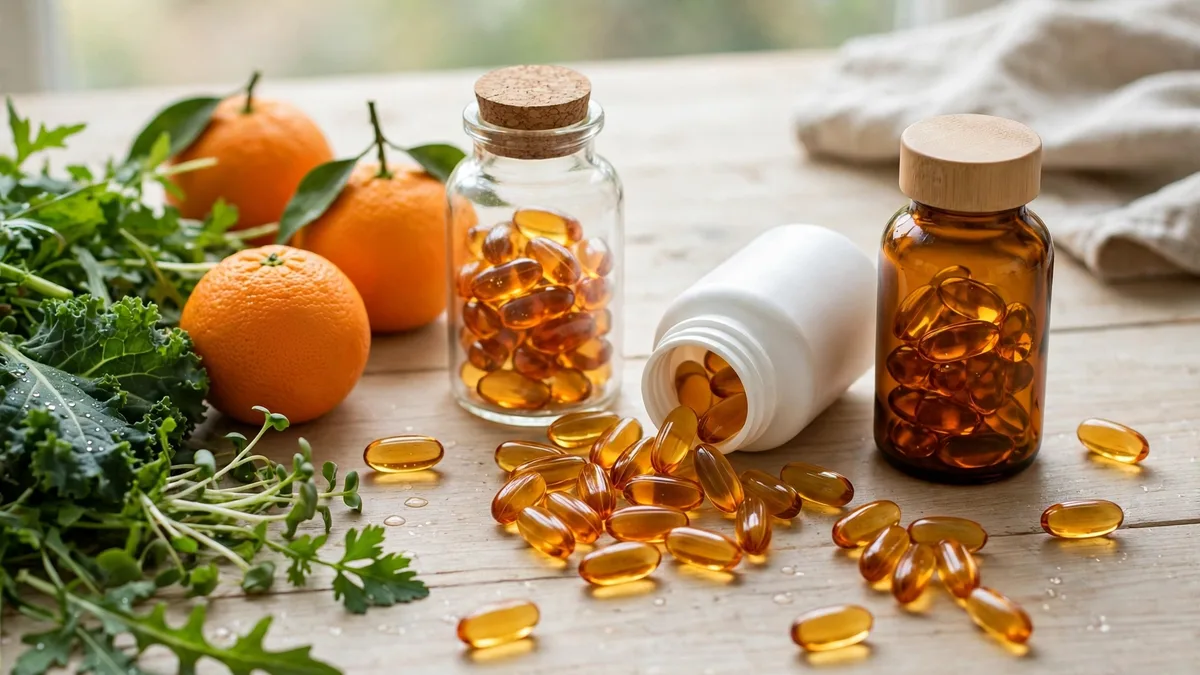

Vitamin A D and E are three fat-soluble vitamins that work in very different ways: vitamin A supports eyesight and the immune system, vitamin D helps the body use calcium for healthy bones, and vitamin E protects cells from damage. The central question most people ask is whether they need supplements, and the short answer is that a varied diet usually provides enough, with supplements useful only where diet or sunlight falls short. This guide explains what each vitamin does, where to find it, and how to use supplements safely.
Because these three vitamins dissolve in fat rather than water, the body can store them, which is both an advantage and a warning. A store built up over weeks helps you through a poor patch of eating, but it also means that very large doses can build up to harmful levels. That is why the advice for vitamin A D and E is always the same: food first, supplements second, and no megadoses without professional guidance.
Key takeaways
- Vitamin A supports vision, skin and the immune system; find it in liver, eggs, dairy and orange vegetables.
- Vitamin D helps the body absorb calcium for bones and teeth; sunlight and oily fish are the main sources.
- Vitamin E is an antioxidant that protects cells; nuts, seeds and vegetable oils are rich in it.
- All three are fat-soluble, so the body stores them and large doses can build up.
- Most people get enough from a varied diet, and supplements suit only specific gaps.
- Check labels, keep to recommended amounts, and ask a pharmacist or GP before combining supplements.
What does vitamin A do?
Vitamin A is best known for eyesight. It helps the retina respond to light, which is why a shortage can make it harder to see in dim light, and it also supports the immune system and keeps skin and the lining of the nose and gut healthy. The body gets vitamin A in two forms: retinol from animal foods such as liver, eggs and dairy, and beta-carotene from plants such as carrots, sweet potatoes and leafy greens, which the body converts into vitamin A as needed.
Most people in Britain get enough vitamin A from food, and a shortage is uncommon where diets are varied. The risk runs the other way: because the body stores retinol, regular very high doses from supplements or frequent large portions of liver can build up. Pregnant women are usually advised to avoid high-dose vitamin A supplements and to limit liver, because very high intakes have been linked with harm to the developing baby. Food sources, by contrast, are safe in normal amounts.
What does vitamin D do?
Vitamin D helps the body absorb calcium, which keeps bones and teeth strong, and it also plays a part in muscle function and the immune system. The main source is not food at all: the body makes vitamin D when sunlight reaches the skin. Oily fish such as salmon and mackerel, egg yolks and fortified foods such as some breakfast cereals and spreads add smaller amounts. The Wikipedia guide to vitamins gives a clear overview of how the fat-soluble vitamins work and why vitamin D is unusual in coming mainly from sunlight.
Low vitamin D is common in winter, when the sun is too weak for the skin to make much of it, and in people who spend little time outdoors or cover their skin. Health guidance in Britain suggests that many people benefit from a daily low-dose vitamin D supplement in autumn and winter, and some groups are advised to take one all year round. A blood test can confirm a shortage, and a GP can advise on the right amount for you.
What does vitamin E do?
Vitamin E is an antioxidant, which means it helps protect cells from the damage caused by unstable molecules called free radicals. It supports the immune system and helps keep skin and eyes healthy. Good sources include nuts such as almonds and hazelnuts, seeds such as sunflower seeds, vegetable oils, and leafy green vegetables. Because vitamin E is found in everyday foods, a shortage is rare in people who eat a varied diet.
Supplements of vitamin E are seldom needed, and high doses can interfere with blood clotting and with some medicines, so they should not be taken casually. The safest way to cover vitamin E is through food: a handful of nuts, a drizzle of oil on a salad, and a portion of greens each day will usually do it. As with the other two vitamins in this guide, the pattern is the same: a varied plate beats a handful of pills.
Vitamin A, D and E at a glance
| Vitamin | Main role | Best food sources | Watch out for |
|---|---|---|---|
| Vitamin A | Vision, immunity, skin | Liver, eggs, dairy, carrots | High-dose supplements in pregnancy |
| Vitamin D | Calcium absorption, bones | Sunlight, oily fish, egg yolks | Low levels in winter months |
| Vitamin E | Protecting cells, immunity | Nuts, seeds, vegetable oils | High doses and blood-thinning medicines |

Food first: building a vitamin-friendly plate
A plate that covers vitamin A, D and E does not need to be complicated. Orange vegetables such as carrots and sweet potatoes, leafy greens, eggs, oily fish once or twice a week, and a small handful of nuts or seeds will cover most needs. Lentils and other pulses add variety and fibre to the same plate, and our guide to dried lentils shows how easily they fit into everyday meals. Cooking with a little oil also helps, because fat helps the body absorb all three vitamins.
Outdoor time matters too, especially for vitamin D. A short walk in daylight, with face and arms uncovered when the sun is strong enough, lets the skin make vitamin D naturally. In winter, when the sun is weak, food and a low-dose supplement matter more. A picnic is a pleasant way to combine both aims, and our best picnic recipes offer plenty of ideas for meals that travel well and include the foods mentioned here. Even a simple morning meal can help, and a breakfast burrito with egg is one easy way to start the day with vitamin A and D on the plate.
A checklist for vitamin A, D and E
- Eat orange vegetables and leafy greens most days for vitamin A and beta-carotene.
- Include eggs, dairy or oily fish regularly for vitamins A and D.
- Add nuts, seeds or vegetable oil daily for vitamin E.
- Spend time outdoors in daylight when the sun is strong enough.
- Consider a low-dose vitamin D supplement in autumn and winter.
- Read supplement labels and keep to the recommended daily amount.
- Avoid high-dose vitamin A supplements, especially during pregnancy.
- Ask a pharmacist or GP before combining supplements or starting a new one.
Frequently asked questions
Do I need a vitamin A, D and E supplement?
Most people do not need one if they eat a varied diet and spend time outdoors. Vitamin D is the exception: many people benefit from a low-dose supplement in autumn and winter, when sunlight is too weak for the skin to make enough. A GP or pharmacist can advise on whether a supplement suits you.
Can I get too much vitamin A, D or E?
Yes, because all three are fat-soluble and the body stores them. Very high doses over time can cause harm, and vitamin A in high doses is a particular concern during pregnancy. Keep to the amount on the label and do not combine several supplements that contain the same vitamin.
Which foods are highest in vitamin D?
Oily fish such as salmon, mackerel and sardines are the richest food sources, followed by egg yolks and fortified foods such as some breakfast cereals, spreads and dairy alternatives. Even so, food alone rarely provides all the vitamin D the body needs in winter, which is why sunlight and supplements matter.
Is beta-carotene the same as vitamin A?
Not quite. Beta-carotene is a plant pigment found in carrots, sweet potatoes and leafy greens, which the body converts into vitamin A as needed. Because the body controls the conversion, beta-carotene from food does not carry the same risk of excess as retinol from supplements or liver.
Does vitamin E help the skin?
Vitamin E supports skin health as part of its antioxidant role, protecting cells from damage. Eating foods rich in vitamin E, such as nuts, seeds and vegetable oils, is the usual advice. There is no good reason to take high-dose vitamin E for the skin, and creams containing it are a separate matter from supplements.
Should children take vitamin A, D and E supplements?
Health guidance often recommends a daily vitamin D supplement for young children, and some children are advised to take a combined vitamin A, C and D supplement. The exact advice depends on age and diet, so parents should follow current health guidance or ask a GP or health visitor rather than choosing a dose themselves.
The bottom line
Vitamin A, D and E each do a different job, and together they cover eyesight, bones, immunity and the protection of cells. Food comes first: orange vegetables, leafy greens, eggs, oily fish, nuts and seeds will cover most people most of the time, with daylight topping up vitamin D. Supplements have their place, especially vitamin D in winter, but the dose on the label is the dose to keep to.
This article is general information only and is not medical advice. If you have a health condition, are pregnant, or take regular medicines, ask your GP or pharmacist before starting a supplement.