
The art elective programme is Singapore’s enriched art course for secondary school and junior college students with a strong talent for art, and the question most families ask is a simple one: what does it involve, and is it right for your child? The short answer is that it offers deeper art teaching than the standard curriculum, covering drawing, painting, digital art and the study of artists, alongside regular school subjects. This guide explains what the programme covers, how students join, and what it can lead to.
For a student who loves art, the programme can be the most rewarding part of school. It gives talented young people time, space and expert teaching to develop their skills, and it puts them among other students who take art seriously. For parents, though, it raises practical questions about workload, selection and future options.
Key takeaways
- The Art Elective Programme is an enriched art course offered by selected schools in Singapore.
- It is also known as Higher Art and can be taken as an O-level subject.
- It was announced in 1983 and began in January 1984.
- Students learn drawing, painting, digital art and the Study of Visual Arts.
- Students complete at least two projects a year, which count heavily towards grades.
- Admission is for students with demonstrated artistic ability and interest.
What the art elective programme is
The art elective programme, often shortened to AEP, is offered by schools in Singapore that have obtained permission from the Ministry of Education. It is designed as an enrichment programme for students with artistic flair, giving them a deeper art education than the standard curriculum provides. The programme is also known as Higher Art, and it can be offered as a Singapore-Cambridge General Certificate of Education Ordinary Level, or O-level, subject.
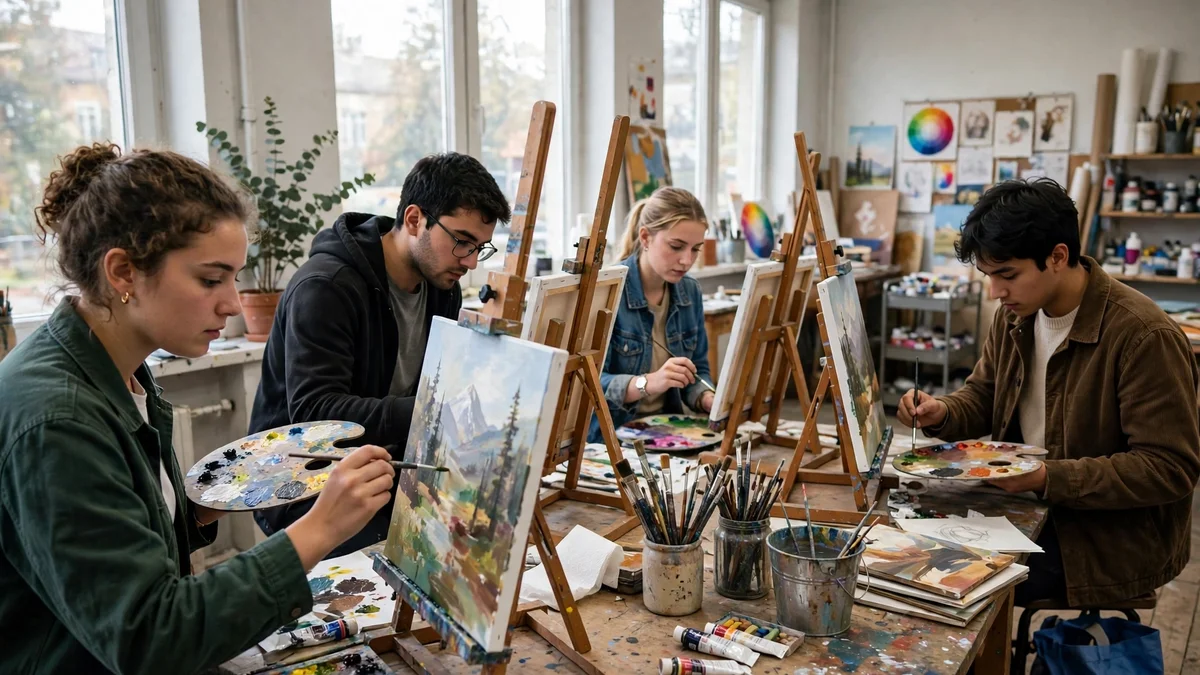
Lessons are usually held in a separate classroom, sometimes after regular classes, so that students can work without rushing. Schools that offer the programme normally have an art room, a media lab and facilities to store and use art materials. That dedicated space matters, because art needs room for easels, drying work, computers and materials that do not fit neatly into an ordinary classroom. The Wikipedia page on the Art Elective Programme gives a clear overview of how the programme is organised.
The programme is not a casual art club. It is a structured course with regular lessons, projects and examinations, and it expects a serious commitment from students. At the same time, it is designed to develop creativity and thinking, not just technique. The curriculum aims to build students’ conceptual and analytical thinking alongside their practical skills.
How the programme began
The art elective programme was announced in 1983 by the Ministry of Education, and it started in January 1984 at two schools: the Chinese High School and Nanyang Girls’ High School. The idea was straightforward: students with real artistic ability deserved a richer art education than the standard syllabus could provide, and a dedicated programme would let them develop that ability properly.
From those two schools, the programme grew to include more secondary schools and junior colleges across Singapore. Each school that offers it must have the facilities and the teaching staff to deliver the enriched curriculum, which is why it remains a selective programme rather than one available everywhere.
That history is worth knowing because it explains the programme’s character. It was created for students who already show artistic ability, not as a general introduction to art for everyone. A student who joins should expect to be challenged, and should expect to spend real time on their work, including time outside normal lessons. For families weighing the decision, that is the most important thing to understand.
What students learn
Students in the programme learn a broad range of skills. Basic media are taught first: pencil, pen and paint, with drawing and painting at the centre of the course. Students also learn to design and work with digital art programs such as Adobe Illustrator, which reflects how much professional art and design now happens on screen. The mix of traditional and digital skills is deliberate, giving students a foundation they can build on in either direction.
Alongside practical work, the lessons include the Study of Visual Arts, known as SOVA, in which students are taught to analyse works by renowned artists. This is not just art history: students learn to look closely at a work, to understand how it was made, and to explain what it means. That analytical skill feeds back into their own work, helping them make deliberate choices rather than simply copying what they see. A student who can talk about their work clearly is a stronger artist, and SOVA builds that ability.
Every year, students create at least two projects within the spectrum of art and design, such as photography or designing a logo. Projects are weighted heavily in the overall grade, which means that sustained, thoughtful work matters more than a single good examination. A sketchbook is the usual companion to this kind of work, and our guide to keeping a sketchbook explains how regular drawing practice supports project-based learning.
Examinations and assessment
| Assessment | What it covers | What to know |
|---|---|---|
| Continual Assessment 1 | Coursework and class work | Early in the year, builds the portfolio |
| Continual Assessment 2 | Coursework and class work | Shows progress across the year |
| Semester Assessment 1 | Drawing, painting and SOVA | Mid-year check on skills and knowledge |
| Semester Assessment 2 | Drawing, painting and SOVA | End-of-year assessment |
| Drawing and Painting exam | A finished artwork under timed conditions | Usually around three hours long |
| Projects | Art and design work over the year | Weighted heavily in the overall grade |

How the examinations work
Throughout the year, students prepare for papers in SOVA and Drawing and Painting. The four main assessments are Continual Assessments 1 and 2, and Semester Assessments 1 and 2. Drawing and Painting examinations vary in duration, and students are allowed to create an art piece over around three hours. That sounds generous, but a finished piece in three hours demands planning, confidence and good time management.
Three weeks before the Drawing and Painting examinations, students are given several themes to choose from. They then have three weeks to complete their preparatory work for the assigned task. This preparation period is an important part of the assessment: it shows how a student develops an idea, tests it, and arrives at a final design. Examiners look at the preparatory work as well as the finished piece, so the thinking behind the artwork matters as much as the artwork itself.
Students who do well in the programme tend to share certain habits. They keep a sketchbook, they work steadily rather than in bursts, and they take feedback seriously. They also look at a lot of art, whether in galleries, books or online, because seeing good work is one of the fastest ways to improve your own.
Who the programme is for
The programme is for students who show real artistic ability and a genuine interest in art. That usually means a student who draws or makes things often, who enjoys the process as well as the result, and who is willing to put in the hours. It is not only for students who plan to become artists: many go on to study design, architecture, media or teaching, and the skills transfer well. What matters most is enthusiasm and commitment, since the workload is real.
Families should weigh the time commitment carefully. Lessons sometimes run after regular classes, projects take evenings and weekends, and examination preparation adds pressure at key points in the year. A student who is already struggling with other subjects may find the extra load difficult, while a student who loves art may find that it energises everything else.
It is also worth thinking about the practical side of an art student’s life. A workspace at home, good light, and somewhere to store materials and drying work make a real difference. Furniture and fittings matter more than families sometimes expect, and our guides to what a rattan chair is and how to polish wood furniture offer practical help with setting up a comfortable home workspace.
What the programme can lead to
Graduates of the programme have a strong foundation for further study in art, design and related fields. The portfolio built over the years is often the most valuable thing a student takes away, since it shows their development and range to colleges and employers. Even for students who do not pursue art further, the programme builds skills that last: observation, patience, critical thinking and the ability to carry a project from idea to finished work.
The programme also gives students a community. Working alongside other young people who take art seriously is motivating, and the friendships formed in an art room often last well beyond school. Exhibitions of student work give students the experience of showing their art to the public, which is a valuable step for any young artist.
A checklist for joining the art elective programme
- Check whether your school offers the programme, or which nearby schools do.
- Look at the portfolio or work samples the school asks for.
- Talk honestly with your child about the time the programme needs.
- Ask the school about lessons, including any after-school sessions.
- Set up a workspace at home with good light and storage for materials.
- Start a sketchbook habit before the programme begins.
- Visit galleries and look at art regularly, together if you can.
- Plan the year around project deadlines and the three-week exam preparation period.
Frequently asked questions
What is the Art Elective Programme?
The Art Elective Programme is an enriched art course for secondary school and junior college students in Singapore, offered by selected schools with permission from the Ministry of Education. It is also known as Higher Art and can be taken as an O-level subject. Students learn drawing, painting, digital art and the Study of Visual Arts.
When did the Art Elective Programme start?
The programme was announced in 1983 by the Ministry of Education and started in January 1984. The first two schools to offer it were the Chinese High School and Nanyang Girls’ High School. It has since grown to include more schools across Singapore.
How do students get into the Art Elective Programme?
Admission is for students who show artistic ability and interest, and schools select students based on their work and aptitude. The exact process varies by school, so families should ask the school directly about its requirements, including any portfolio or test. A strong sketchbook and a record of regular art-making help any application.
What subjects does the programme cover?
The programme covers drawing and painting with traditional media such as pencil, pen and paint, digital art using programs such as Adobe Illustrator, and the Study of Visual Arts, in which students analyse works by renowned artists. Students also complete at least two art and design projects each year.
Is the Art Elective Programme an O-level subject?
Yes, the programme can be offered as a Singapore-Cambridge GCE O-level subject, and it is also known as Higher Art. It is examined through a combination of coursework, projects and timed papers in Drawing and Painting and the Study of Visual Arts.
Does the Art Elective Programme lead to a career in art?
It can, but it is not only for future artists. Graduates go on to study art, design, architecture, media and teaching, among other fields. The portfolio, the practical skills and the habits of observation and critical thinking are useful in many careers.
The bottom line
The art elective programme is Singapore’s enriched art course for students with real talent and enthusiasm, offering deeper teaching in drawing, painting, digital art and the study of artists than the standard curriculum. It began in 1984, it expects serious commitment, and it rewards that commitment with skills, a portfolio and a community of fellow artists.