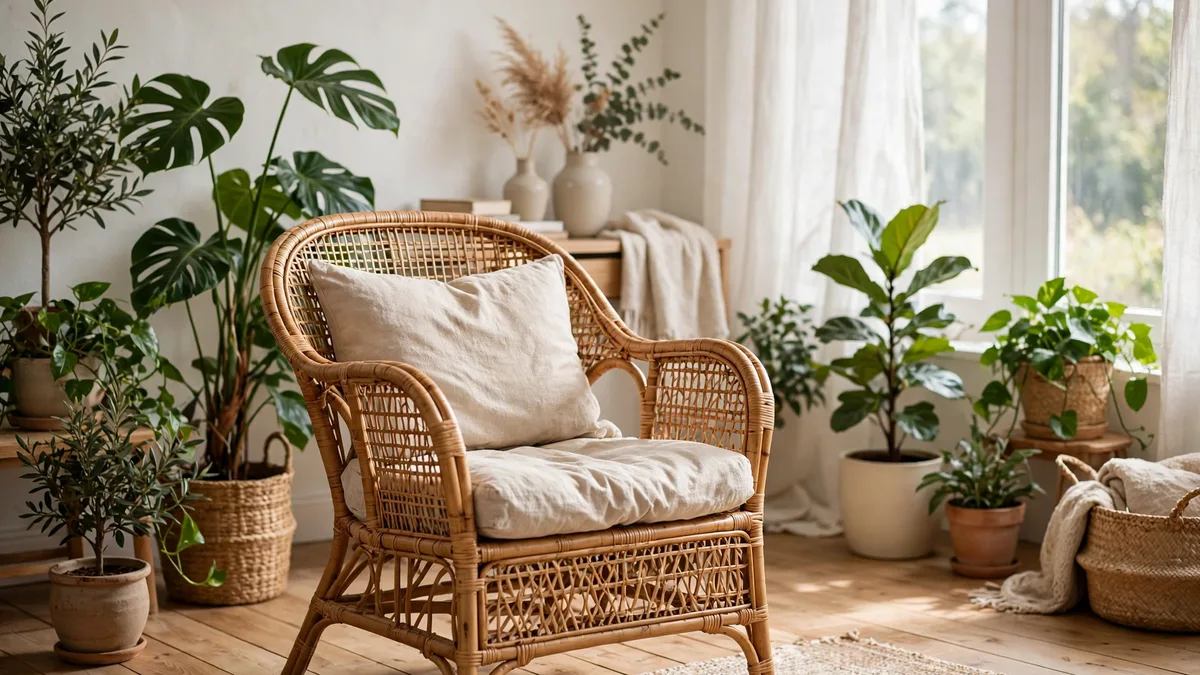

What is a rattan chair? It is a chair made from rattan, the long, flexible stems of a climbing palm that grows in the tropical forests of South-East Asia, woven or bent into a frame and seat. The short answer is that rattan is the material, and the chair is one of the many pieces of furniture made from it: light, strong, and instantly recognisable by its woven texture and warm honey colour. This guide explains what rattan is, how it differs from wicker and cane, the main chair styles, and how to look after one.
Rattan chairs have been popular for well over a century, from Victorian conservatories to mid-century modern living rooms and today’s garden rooms. Their appeal has lasted because they are comfortable, light enough to move easily, and suited to both indoor and sheltered outdoor use. A well-made rattan chair can last for decades with simple care.
Key takeaways
- A rattan chair is made from the stems of rattan, a climbing palm from South-East Asia.
- Rattan is the material; wicker is the weaving technique, and cane is the thin outer peel of the rattan stem.
- Natural rattan suits indoor and sheltered outdoor use, while synthetic rattan suits the garden.
- Peacock chairs, egg chairs and bentwood armchairs are the best-known rattan styles.
- Keep rattan out of heavy rain and strong sun, and dust it regularly.
- A loose strand or wobbly joint is usually easy to repair with glue and a little patience.
What is rattan?
Rattan is a group of climbing palms with long, thin, solid stems that can grow to great lengths in tropical forests. Unlike bamboo, which is hollow, rattan stems are solid, which makes them both strong and flexible: they can be bent into curves with steam, then hold their shape as they cool. The stems are harvested, stripped of their outer skin, and sorted by thickness before being made into furniture. The Wikipedia guide to rattan explains the plant and its many uses, from furniture to baskets and walking sticks.
The material has been used for furniture since the nineteenth century, when rattan from South-East Asia reached Europe and America through trade. It became a favourite for conservatories and verandas, because it was lighter than wood and cooler to sit on in warm weather. In the twentieth century, designers used it for some of the most famous chairs of the modern movement, and it has never really gone out of fashion since.
Rattan, wicker and cane: what is the difference?
The three words are often mixed up, so it helps to separate them. Rattan is the material: the palm stem itself. Wicker is not a material at all, but a weaving technique: any flexible material woven into furniture is wickerwork, whether it is rattan, willow, reed or synthetic fibre. A rattan chair is therefore usually also a wicker chair, because its seat and back are woven, but a wicker chair is not always made of rattan.
Cane is the thin outer peel of the rattan stem, split into narrow strips and woven into the open lattice pattern seen on many chair seats and backs. When you see a chair with a fine hexagonal weave, that is cane, while the thicker frame is rattan pole. Knowing the difference matters when you shop: a chair described as cane is likely to have a woven cane panel in a rattan or wooden frame, while a chair described as rattan is made from the thicker stems throughout.
Styles of rattan chair
The peacock chair is the most dramatic rattan style: a tall, fan-shaped back that rises above the sitter’s head, made famous in the twentieth century as a photographer’s prop and a bohemian statement piece. The egg chair is a rounded, enveloping seat that cradles the sitter, and it works well in a corner or a garden room. The bentwood armchair, with its curved arms and woven seat, is the most practical of the three, and it suits a living room or a reading nook with a cup of medium-ground coffee in hand.
Modern rattan chairs are often simpler, with clean lines and a cushion in a plain fabric, designed to sit alongside wooden and upholstered furniture. Dining chairs, rocking chairs and hanging chairs are all made in rattan too, and outdoor sets use synthetic rattan, a plastic fibre woven to look like the real thing. Synthetic rattan resists rain and sun far better than natural rattan, which is why it dominates garden furniture, while natural rattan remains the choice for indoors.
Rattan chairs at a glance
| Style | Look | Best place | Care note |
|---|---|---|---|
| Peacock chair | Tall fan-shaped back | Bedroom or studio corner | Dust the weave weekly |
| Egg chair | Rounded, enveloping seat | Garden room or conservatory | Keep cushions dry |
| Bentwood armchair | Curved arms, woven seat | Living room or reading nook | Check joints yearly |
| Dining chair | Upright, light frame | Kitchen or dining room | Wipe spills at once |
| Synthetic rattan | Looks like rattan, plastic fibre | Garden and patio | Hose down and dry |

Choosing and caring for a rattan chair
When choosing a rattan chair, sit in it first if you can. A good chair feels firm but comfortable, with no creaking joints and no loose strands in the weave. Check that the frame is even and the chair sits level on the floor, and look at the joints, where the stems meet: they should be tightly bound and smooth. If the chair is for the garden, choose synthetic rattan, and if it is for indoors, natural rattan will age more gracefully.
Caring for natural rattan is simple. Dust it regularly with a soft brush or a vacuum cleaner with a brush attachment, because dust settles into the weave. Wipe it with a damp cloth when needed, and let it dry fully before use. Keep it out of heavy rain and away from radiators and strong sun, which dry the fibres and make them brittle. A light coat of furniture oil or wax once a year keeps the surface supple, and the same gentle approach that keeps wood in good order works here too: our guide to polishing wood furniture explains the habit of regular, gentle care. A rattan chair used outdoors in summer will last longer if it is brought under cover for winter, and a cushion left out in the rain is the fastest way to spoil an otherwise sound chair. For outdoor meals, a picnic set is a good reminder that woven furniture belongs in the shade, not in a downpour.
A checklist for buying and keeping a rattan chair
- Sit in the chair before buying: it should feel firm, level and free of creaks.
- Check the joints and the weave for loose strands or rough bindings.
- Choose natural rattan for indoors and synthetic rattan for the garden.
- Measure the space, including room to pull the chair out from a table.
- Dust the weave weekly with a soft brush or vacuum attachment.
- Wipe spills at once and let the chair dry fully before use.
- Keep natural rattan out of heavy rain, strong sun and dry radiator heat.
- Repair loose strands promptly with glue, and bring outdoor chairs under cover for winter.
Frequently asked questions
Is rattan the same as wicker?
No. Rattan is the material, the stem of a climbing palm, while wicker is the weaving technique used to make furniture from flexible materials. A rattan chair is usually woven, so it is also a wicker chair, but wicker furniture can be made from willow, reed or synthetic fibre as well as rattan.
Can a rattan chair be used outdoors?
Natural rattan can be used outdoors in dry, sheltered weather, but it should not be left out in heavy rain or strong sun, which will dry and weaken the fibres. For a garden or patio that stays outside all year, synthetic rattan is the better choice, because it resists rain and sun far better than the natural material.
How do I clean a rattan chair?
Dust it regularly with a soft brush or a vacuum cleaner with a brush attachment, and wipe it with a damp cloth when needed. For dirt caught in the weave, a soft toothbrush works well. Let the chair dry fully before sitting on it, and avoid soaking it, because too much water can loosen the joints.
Why has my rattan chair gone brittle?
Rattan becomes brittle when it dries out, usually from strong sun, radiator heat or very dry indoor air. A light coat of furniture oil or wax helps keep the fibres supple, and moving the chair away from direct heat will slow further drying. Very brittle strands can be replaced by a furniture restorer, but prevention is easier than repair.
Are rattan chairs comfortable without cushions?
Many people find a woven rattan seat comfortable as it is, because the weave gives slightly under weight and lets air through. A cushion makes long sitting more comfortable, especially on a dining chair or an armchair, and it also protects the weave from wear. Choose a cushion in a washable cover for easy care.
How long does a rattan chair last?
A well-made rattan chair kept indoors and dusted regularly can last for decades, and many Victorian and mid-century rattan chairs are still in use today. Outdoor use shortens its life, and so does leaving it in damp or very dry conditions. Simple care and prompt repair of loose strands are the keys to a long life.
The bottom line
A rattan chair is a chair made from the stems of a climbing palm, woven or bent into a light, strong and comfortable seat. Rattan is the material, wicker is the weaving, and cane is the thin peel used for lattice panels. Choose natural rattan for indoors and synthetic rattan for the garden, sit in the chair before you buy it, and keep it dusted, dry and out of harsh sun. Looked after that way, a rattan chair will serve you for many years.