
Are teeth bones? No, they are not, even though they look hard, white and bone-like. Teeth are made from different tissue than bone, they work in a different way, and — most importantly for anyone who has ever chipped one — they cannot heal themselves the way a broken bone can. This guide explains what teeth are made of, how they differ from bone, and why the difference matters every time you brush, bite or visit the dentist.
Key takeaways
- Teeth are not bones: they are made of enamel, dentine and cementum around a living pulp, not bone tissue.
- Enamel is the hardest substance in the human body, harder than bone, but it has no living cells and cannot regrow.
- Bone is living tissue that constantly rebuilds itself; a broken bone can heal, but a chipped tooth cannot.
- Teeth and bone do share minerals — mostly calcium and phosphate — which is where much of the confusion comes from.
- Adults have 32 permanent teeth, children have 20 baby teeth, and both sets need daily cleaning.
- Because teeth cannot repair themselves, prevention matters more for teeth than for almost any other part of the body.
What teeth are actually made of
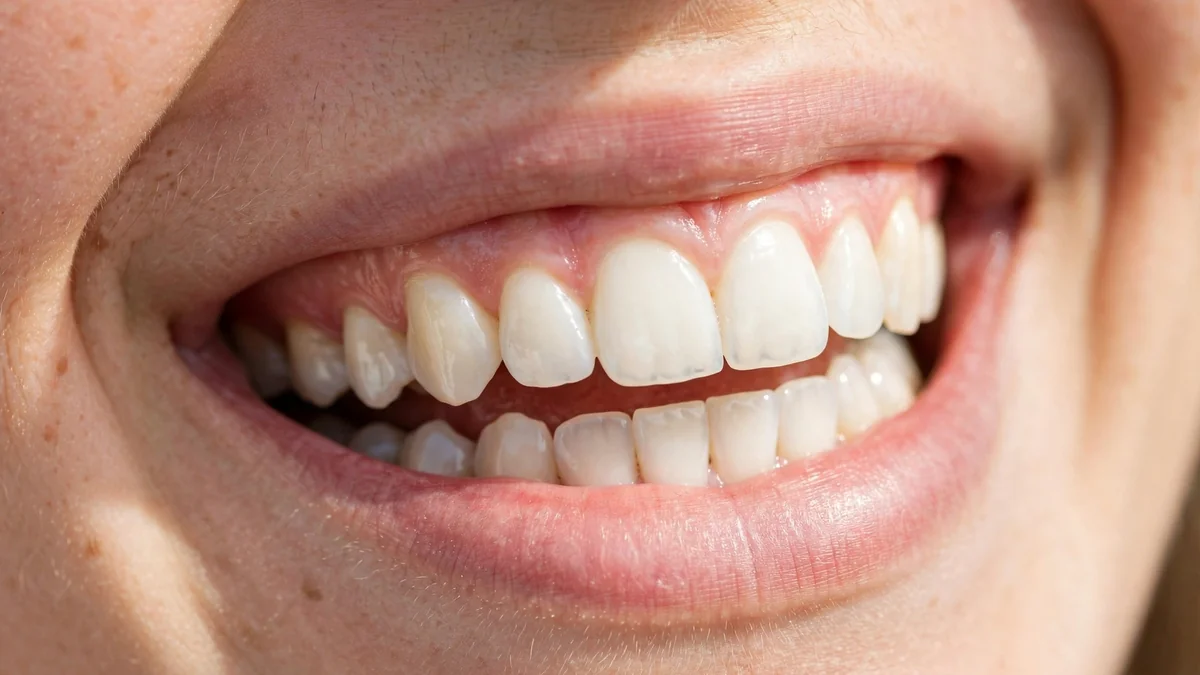
A tooth is built in layers, and each layer has its own job. The part you can see above the gum is the crown, covered in enamel, a pale, glassy material that is the hardest substance in the human body. Under the enamel sits dentine, a slightly softer, yellowish layer that makes up most of the tooth, and below the gum line the root is coated in cementum, which anchors the tooth into the jaw. At the centre of it all is the pulp, a soft core of nerves and blood vessels that keeps the tooth alive and lets you feel heat, cold and pressure.
None of those layers is bone. Enamel is almost entirely mineral — around 96 per cent calcium phosphate in the form of hydroxyapatite — with almost no water and no living cells at all. Dentine is about 70 per cent mineral, with tiny tubules running through it that connect to the pulp, which is why a deep cavity can make a tooth ache. Cementum is the closest thing to bone in a tooth, and it does resemble bone under a microscope, but it is still a separate tissue with its own structure, and it does not behave like the bone of the jaw that surrounds it. The Wikipedia page on teeth sets out the layers and their make-up in detail.
What bones are made of
Bone looks solid and still, but it is busy living tissue. About two-thirds of bone is mineral, again mostly calcium phosphate, and the rest is a framework of collagen, a tough protein that gives bone a little flex, plus water and living cells. Those cells are the key difference: osteoblasts build new bone, osteoclasts break old bone down, and osteocytes sit inside the bone keeping it maintained. Through this constant turnover, an adult skeleton replaces itself over a period of years, and a broken bone can knit itself back together.
Bone also does jobs that teeth never do. It stores calcium for the rest of the body to draw on, it makes blood cells inside the marrow, and it protects organs such as the brain and heart.
Teeth versus bones: the key differences
The simplest way to see the difference is to look at what happens when each one is damaged. Break a bone and the body sends cells to the site, forms a callus, and rebuilds the bone over weeks, often leaving it as strong as before. Chip a tooth and nothing of the sort happens: enamel has no cells, so it cannot regrow, and the chip stays chipped until a dentist repairs it. Dentine can lay down a small amount of new material from inside the tooth, but it cannot rebuild a lost cusp or a cracked crown.
The chemistry overlaps but the structure does not. Both teeth and bones are rich in calcium and phosphate, and both rely on vitamin D to use that calcium well, which is why diet advice for the two often sounds similar. But bone is porous and spongy inside, full of marrow and blood vessels, while enamel is dense and almost entirely mineral, with no blood supply at all. A tooth’s only blood supply is the narrow pulp at its centre, and once that is damaged badly enough, the tooth dies from the inside even though it still looks intact from the outside.
| Feature | Teeth | Bones |
|---|---|---|
| Main tissue | Enamel, dentine, cementum and pulp | Bone tissue with collagen and cells |
| Hardest part | Enamel, the hardest substance in the body | Compact bone, hard but less hard than enamel |
| Living cells | Only in the pulp; enamel has none | Throughout, with cells that build and resorb |
| Can it heal itself | No, a chipped tooth needs a dentist | Yes, a broken bone can knit back together |
| Blood supply | Only through the narrow pulp | Rich supply through marrow and vessels |
| Main job | Biting and chewing food | Support, protection and making blood cells |

Why teeth cannot heal like bones
The reason comes down to cells. Healing is a cellular job: cells have to arrive at the damage, clear away debris and lay down new material, and bone is full of exactly the cells that do this. Enamel has no cells at all — it is laid down once, before the tooth erupts, by cells that then disappear — so once enamel is lost, the body has no way to make more. That is why a cavity does not fill itself in and a crack does not close up, however healthy the rest of the body is.
Saliva does offer a little help. It carries calcium and phosphate that can reharden enamel in the very earliest stage of decay, when the damage is still microscopic, and fluoride helps that process along. But this remineralisation can only repair the surface; it cannot rebuild a visible hole or a broken edge. What you lose from a tooth is, for practical purposes, gone for good.
What teeth and bones do share
For all their differences, teeth and bones are close cousins. Both are built largely from calcium phosphate, both need vitamin D to form properly, and both suffer when the diet is short of calcium over a long period. The same habits that keep bones strong — enough calcium, enough vitamin D, not smoking, and a diet that is not constantly acidic — also help teeth. Children need both to develop well, and older adults need both to hold up: bone thins with age, and teeth become more vulnerable as gums recede and enamel wears thin.
The two are also linked through the jaw itself. Teeth sit in sockets in the jawbone, and the bone around a tooth responds to pressure from chewing, which is one reason dentists say that keeping your teeth helps keep your jawbone healthy. Lose a tooth and the bone underneath it slowly shrinks away over time, because it no longer gets the daily stimulus of chewing. That is also why a missing tooth is worth replacing: it is not only about the gap in the smile, but about the bone underneath it. A guide to temporomandibular disorder symptoms explains how the jaw joint and its muscles can cause pain when the bite is out of balance.
How many teeth you should have
Children have 20 baby teeth, ten in each jaw, which start to appear at around six months and are usually all in place by the age of three. These milk teeth hold space for the adult teeth and help a child learn to chew and speak. Adults have 32 permanent teeth, including four wisdom teeth, although many people have theirs removed.
Counting teeth is a quick check, but it is not a diagnosis. A missing adult tooth, a tooth that has never erupted, or an extra tooth are all things a dentist can assess, and none of them means the teeth are turning into bone or anything of the sort. What matters is that each tooth has its enamel intact, its root held firmly in the jaw, and its pulp healthy. If you need urgent help, the urgent dental care near me guide explains how to find a dentist quickly, and routine checks still matter even when nothing hurts: the teeth cleaning near me guide explains what a cleaning covers and why it is worth booking.
Your teeth care checklist
- Brush twice a day with fluoride toothpaste, last thing at night and once more during the day.
- Clean between the teeth daily with floss or interdental brushes, since a brush cannot reach those surfaces.
- Keep sugary and acidic food and drink to mealtimes, and give your teeth a break between meals.
- Do not use your teeth as tools: opening packets or bottles with them risks a chip that will not heal.
- Wear a mouthguard for contact sport, since a knocked-out tooth is an emergency, not a minor injury.
- See a dentist regularly, and sooner if a tooth is chipped, cracked, painful, or sensitive to hot and cold.
- Ask your dentist about fluoride treatments or fissure sealants if you get cavities often.
- Tell your dentist about medicines that dry your mouth, since less saliva means less protection.
Are teeth bones?
No. Teeth are made of enamel, dentine, cementum and pulp, while bones are made of living bone tissue with collagen and cells. They share minerals, but they are different tissues that behave differently, above all when they are damaged.
Are teeth stronger than bones?
Enamel is harder than bone, and it is the hardest substance in the human body. But hardness is not the whole story: bone is tougher and more flexible, and unlike enamel it can heal, so a tooth is easier to damage permanently than a bone.
Why do teeth not heal like bones?
Enamel has no living cells, so the body has no way to regrow it once it is lost. Bone is full of cells that rebuild it, which is why a fracture can knit together. Saliva can reharden enamel only in the very earliest, microscopic stage of decay.
Do teeth have blood in them?
Yes, but only in the pulp at the centre of the tooth, where nerves and blood vessels run. The enamel and dentine around the pulp have no blood supply, which is why a tooth can die from the inside while still looking whole.
Are baby teeth bones?
No, baby teeth are made of the same tissues as adult teeth — enamel, dentine, cementum and pulp — just smaller and with thinner enamel. They are not bones, and they hold space for the adult teeth.
Can a tooth turn into bone?
No. A tooth stays a tooth, and the bone around it stays bone. The two meet at the root, where cementum and a ligament hold the tooth in its socket, but one tissue does not turn into the other.
The bottom line
Teeth are not bones. They look alike, they share the same minerals, and they sit side by side in the jaw, but teeth are built from enamel, dentine and pulp, while bone is living tissue that rebuilds itself. That is why teeth need more protection than bones: a broken bone mends, a chipped tooth does not, so brushing, flossing and regular checks are worth more than any repair.
This article gives general information only and is not medical advice. If you have tooth pain, a chipped or broken tooth, swelling, bleeding gums, or any dental symptom that worries you, see a dentist. Only a clinician who examines your teeth can diagnose a problem, and urgent symptoms deserve prompt care.