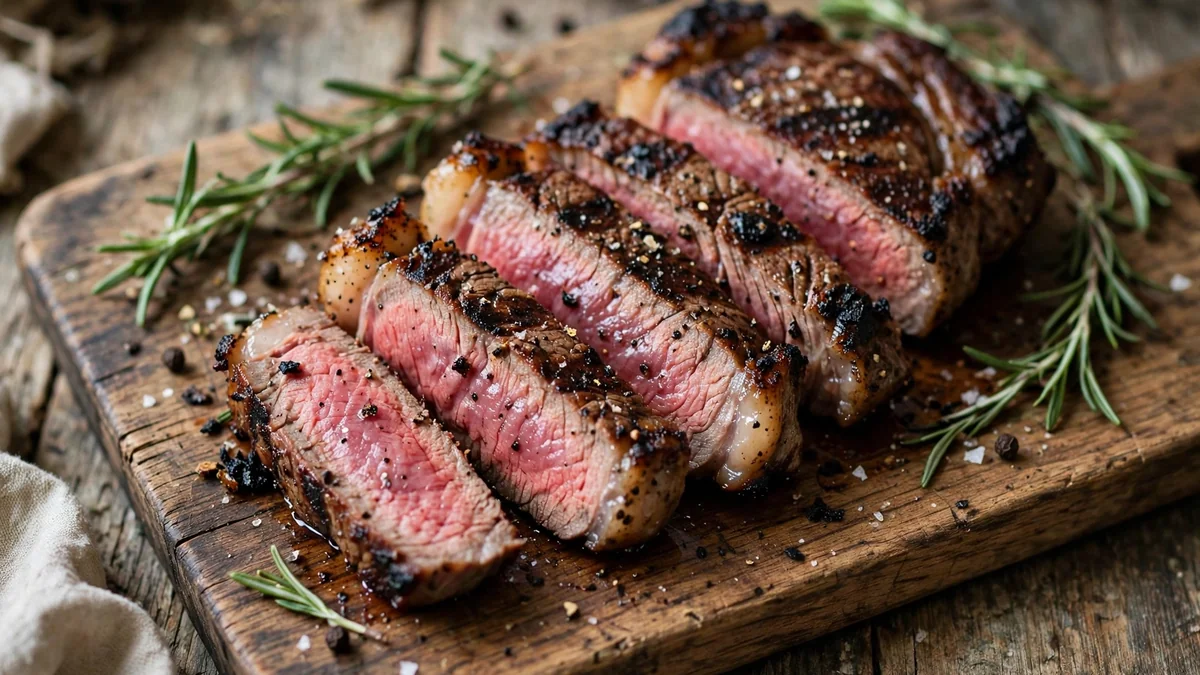

Bavette steak is a French cut from the flank of the animal, prized for its deep beefy flavour and its loose, open grain. It is the steak that French bistros serve with chips and shallot butter, and it is cheaper than ribeye or sirloin while tasting just as meaty. This guide explains what bavette is, how it compares with skirt and flank steak, and how to cook it so it stays tender instead of turning tough.
Key takeaways
- Bavette is a French cut from the flank, also sold as flap steak in the United States.
- It has a loose, coarse grain and a rich, beefy flavour that stands up to strong sauces.
- It is best cooked hot and fast to medium-rare, then rested and sliced thinly against the grain.
- Overcooking is the main mistake: past medium, bavette turns tough and chewy.
- It costs less than ribeye or sirloin, which makes it good value for a steak dinner.
- A short marinade is optional, but long soaks in acid can damage the texture.
What bavette steak actually is
Bavette is French for bib, and the name describes the shape: a long, flat, loose-textured cut from the underside of the animal, around the flank and the sirloin flap. In France there are two cuts that go by the name — bavette d’aloyau, from the sirloin, and bavette de flanchet, from the flank — and butchers treat them as two grades of the same idea. In Britain and the United States, the cut is often sold as flap steak, and it is sometimes confused with skirt steak, which comes from a nearby muscle but is thinner and more fibrous.
The meat is recognisable by its grain. Bavette has long, loose fibres that run in one direction, with a little fat marbled through them, and it feels softer and more open than a sirloin. That structure is the reason for both its flavour and its rules: the loose grain carries fat and juice well, which gives it a big beefy taste, but the same fibres turn tough if they are cooked too long or cut the wrong way. The Wikipedia page on flap steak sets out the cut and its French names.
Bavette against skirt, flank and ribeye
The cut most often compared with bavette is skirt steak, and the two are neighbours on the animal. Skirt is thinner, more fibrous and even more strongly flavoured, and it is the classic cut for fajitas. Bavette is thicker, a little more tender, and easier to cook evenly, which is why bistros prefer it for a steak-frites plate. Flank steak is leaner and tighter-grained than either, and it needs the same hot-and-fast treatment, while ribeye is a different animal altogether: a thick, marbled, expensive cut that forgives overcooking far more readily.
On price, bavette sits in the middle. It costs less than ribeye, sirloin or fillet, and about the same as skirt or flank, which is part of its appeal: it delivers a steakhouse flavour without a steakhouse bill. The trade-off is that it asks more of the cook. A ribeye can survive a few minutes too long; a bavette cannot. If you are buying it for the first time, ask the butcher for a piece about an inch thick, and check that the grain runs in one clear direction, so you can see which way to slice it later.
| Cut | Where it comes from | Grain and texture | Best cooking | Price band |
|---|---|---|---|---|
| Bavette | Flank and sirloin flap | Loose, coarse, juicy | Hot and fast, medium-rare | Mid-range |
| Skirt | Diaphragm muscle | Thin, fibrous, very beefy | Very hot and fast, medium-rare | Mid-range |
| Flank | Belly, below the loin | Lean, tight-grained | Hot and fast, medium-rare | Mid-range |
| Ribeye | Rib section | Thick, well marbled | Grill or pan, forgiving | Higher |

How to cook bavette steak
Start by taking the steak out of the fridge half an hour before cooking, so it comes up to room temperature and cooks evenly. Pat it dry with kitchen paper — a dry surface browns, a wet one steams — and season it generously with salt and pepper just before it hits the heat. Heat a heavy pan or a barbecue until it is very hot, add a little oil with a high smoke point, and lay the steak down without moving it. For a piece about an inch thick, three to four minutes a side gives a good medium-rare, with a browned crust outside and a pink centre.
Resting matters as much as the cooking. Move the steak to a warm plate, cover it loosely with foil, and leave it for five to ten minutes so the juices settle back through the meat. Cut into it too soon and the juice runs out onto the board; wait, and it stays where it belongs. Then slice it thinly, across the grain, at a slight angle. Cutting against the grain shortens the long fibres, which is what makes each bite tender instead of chewy, and it is the single most important step with this cut. A guide to the best white wine for cooking covers the pan sauces that go well with a rested steak.
Marinades, sauces and serving
Bavette takes well to a short marinade, but it does not need one. A simple mix of oil, garlic, thyme and black pepper for an hour or two adds flavour without changing the texture, and a spoonful of soy sauce or Worcestershire sauce in the mix deepens the savoury note. What it does not want is a long soak in acid: lemon juice or vinegar left on the meat for hours will start to cure the surface and turn it mushy, so keep acidic marinades short, an hour at most, and wipe the steak dry before cooking.
For serving, the French classic is steak-frites with shallot butter, and it is hard to beat. Chimichurri, the Argentinian sauce of parsley, garlic, oil and vinegar, is another natural partner, since its sharpness cuts through the richness of the meat. A green salad and good bread are enough alongside, and the steak also works sliced over a salad, tucked into a sandwich, or cut into strips for tacos. The Puerto Rican food guide has ideas for bold, garlicky sides that suit a beefy steak, and the best picnic recipes guide covers what to do with the leftovers the next day.
The mistakes that ruin bavette
The most common mistake is overcooking. Bavette is at its best rare to medium-rare, and past medium it tightens up and turns chewy, however good the meat was to start with. If you like your steak well done, bavette is the wrong cut: choose a ribeye or a braising cut instead. A meat thermometer takes the guesswork out of it — aim for the centre to reach the low fifties in Celsius before resting, and remember the temperature rises a few degrees while the steak rests.
The second mistake is slicing with the grain. The fibres run in one direction, and cutting along them leaves long, tough strands in every bite. Turn the steak so the grain runs across your knife, and slice thinly. The third mistake is skipping the rest, which costs you the juice you just cooked in. And the fourth is cooking it cold from the fridge, which leaves the outside overdone before the centre has caught up. Get those four right — temperature, rest, grain and a hot pan — and bavette is one of the best steaks you can buy.
Your bavette steak checklist
- Buy a piece about an inch thick, and check the grain runs in one clear direction.
- Take the steak out of the fridge 30 minutes before cooking and pat it dry.
- Season with salt and pepper just before it hits the heat.
- Cook hot and fast: three to four minutes a side for medium-rare.
- Rest the steak for five to ten minutes under loose foil before slicing.
- Slice thinly, across the grain, at a slight angle.
- Keep acidic marinades to an hour at most, and wipe the steak dry first.
- Serve with shallot butter, chimichurri or a sharp green salad.
What is bavette steak?
Bavette is a French cut from the flank and sirloin flap, also sold as flap steak. It has a loose, coarse grain and a rich beefy flavour, and it is the cut French bistros serve as steak-frites.
Is bavette steak the same as skirt steak?
No, though they come from nearby muscles and are often confused. Skirt is thinner and more fibrous, while bavette is thicker, a little more tender and easier to cook evenly. Both need hot, fast cooking and slicing against the grain.
How long do you cook bavette steak?
For a piece about an inch thick, three to four minutes a side in a very hot pan or on a barbecue gives medium-rare. Rest it for five to ten minutes before slicing, since the temperature rises a little while it rests.
Should you marinate bavette steak?
You can, but you do not need to. A short marinade of oil, garlic and herbs for an hour or two adds flavour. Avoid long soaks in lemon juice or vinegar, which can turn the surface mushy.
Why is my bavette steak tough?
Usually it was overcooked, sliced with the grain, or not rested. Bavette turns tough past medium, long fibres stay chewy if you cut along them, and skipping the rest lets the juices run out. Fix all three and it should be tender.
What do you serve with bavette steak?
The French classic is chips and shallot butter, and chimichurri is another good match. A green salad and good bread are enough alongside, and sliced leftovers work well in sandwiches, salads or tacos.
The bottom line
Bavette steak is a French flank cut with a big beefy flavour, a loose grain and a price below ribeye or sirloin. Cook it hot and fast to medium-rare, rest it, and slice it thinly against the grain, and it is one of the best steaks you can buy. Cook it past medium, or slice it the wrong way, and it will punish you for it — so treat it with respect and it will pay you back.