
What is glaucoma? It is an eye condition in which the optic nerve, the nerve that connects the eye to the brain, becomes damaged. It is most common in adults aged 50 and over, and it can cause vision loss if it is not diagnosed and treated early. The damage usually builds up slowly and without symptoms, which is why it is often picked up at a routine eye test. There is no cure, but treatment can slow the damage.
Key takeaways
- Glaucoma damages the optic nerve, which connects the eye to the brain.
- It is usually caused by pressure building up in the eye, when fluid cannot drain as it should.
- It most often has no symptoms and develops slowly over many years.
- It is usually found during a routine eye test, often before it causes any symptoms.
- Treatment with eye drops, laser or surgery can slow the damage.
- Sudden symptoms are a medical emergency: call 999 or go to A&E.
What glaucoma is
In a healthy eye, a clear fluid flows in and drains away, keeping the pressure steady. Glaucoma usually happens when that fluid cannot drain as it should, so pressure builds up and presses on the optic nerve, the bundle of fibres that carries what the eye sees to the brain, and once those fibres are damaged, the sight they carried is lost.
Pressure is not the whole story. Sometimes the pressure in the eye is normal and damage is still caused to the optic nerve, a form known as normal-tension glaucoma. It is not always known why this happens, and it is one reason an eye test looks at more than pressure. The glaucoma page on the NHS website explains the condition in plain language.
Glaucoma usually affects both eyes, although it may be worse in one. It develops slowly, over many years, and sight is lost gradually, starting with the edges of vision, so many people do not notice anything is wrong until the damage is advanced. That is what makes regular eye tests so important.
The types of glaucoma
There are several different types of glaucoma, and they differ in how they develop and how quickly they need treatment. The most common type is primary open-angle glaucoma, which usually develops slowly over many years, as the drainage channels in the eye become partly blocked over time and pressure rises gradually. It is the type that routine eye tests are designed to catch.
Angle-closure glaucoma is less common and behaves very differently. In this type, the drainage angle of the eye closes suddenly, pressure rises fast, and symptoms appear quickly: intense eye pain, a red eye, blurred vision, rainbow-coloured circles around bright lights, headache, nausea and being sick. That sudden form is a medical emergency, because the pressure can damage the nerve badly in a short time.
Secondary glaucoma is caused by another condition or by an eye injury, rather than developing on its own. Inflammation inside the eye, and injuries that damage the drainage channels, can both raise the pressure and lead to glaucoma. Childhood glaucoma is rare, and it is usually present from birth or develops in the first years of life. The table below sets out the main types and how they differ.
| Type | How it develops | Typical symptoms | Usual treatment |
|---|---|---|---|
| Primary open-angle | Slowly, over many years | Usually none until late | Eye drops, laser or surgery |
| Angle-closure | Suddenly, with fast pressure rise | Eye pain, red eye, blurred vision | Urgent treatment, often laser or surgery |
| Secondary | After another condition or injury | Depends on the cause | Treat the cause, plus drops or surgery |
| Childhood | Rare; from birth or early years | Cloudy eyes, sensitivity to light | Surgery is often needed |

Symptoms to watch for
For most people, glaucoma has no symptoms at all in its early stages. It develops slowly over many years and is picked up during a routine eye test, and the person had no idea anything was wrong. That is the case for the commonest type, primary open-angle glaucoma. Waiting for symptoms to appear means waiting until the damage is already advanced.
When symptoms do appear, they usually come late. The first thing many people notice is a loss of side vision, so they miss things at the edges of what they can see. Reading and looking straight ahead may still be easy, because the centre of vision is affected last. Some people notice that they need more light to read, or that their eyes take longer to adjust when they move from bright light into a dark room. These changes are easy to put down to age.
Sudden glaucoma is different, and its symptoms are hard to ignore: intense eye pain, a red eye, tenderness around the eyes, seeing rainbow-coloured circles around bright lights, blurred vision, feeling sick and being sick, and a headache. If symptoms like these develop suddenly, it is a medical emergency: call 999 or go to A&E, and do not drive yourself. Other conditions can cause similar symptoms, including inflammation inside the eye and eye injuries, so sudden eye pain always deserves urgent attention, just as a sudden muscle spasm deserves attention rather than being waited out.
Who is most at risk
Age is the biggest risk factor: glaucoma is most common in adults aged 50 and over, and the risk rises with age. Family history is next: if a brother, sister or parent has glaucoma, your own risk is higher. Ethnic background also matters: people from a Black African, Caribbean or Asian background have a higher risk than others, and the condition may develop earlier in life.
Other medical conditions raise the risk too. People who are short-sighted or long-sighted have a higher risk, as do people with diabetes. High pressure inside the eye is itself a risk factor, which is why the pressure test is part of a routine eye examination. None of these factors means glaucoma is certain, but they are good reasons to have regular eye tests and to tell the optometrist about any family history.
Everyone should have regular eye tests, at least every two years, and more often if they are at higher risk. You can get an eye test at a local opticians, and some people can receive free eye tests on the NHS. If glaucoma is found, you should be referred to a specialist eye doctor, an ophthalmologist, for further tests, because early checks catch what waiting for symptoms does not, as the guide to TMJ symptoms also shows.
Tests and treatment
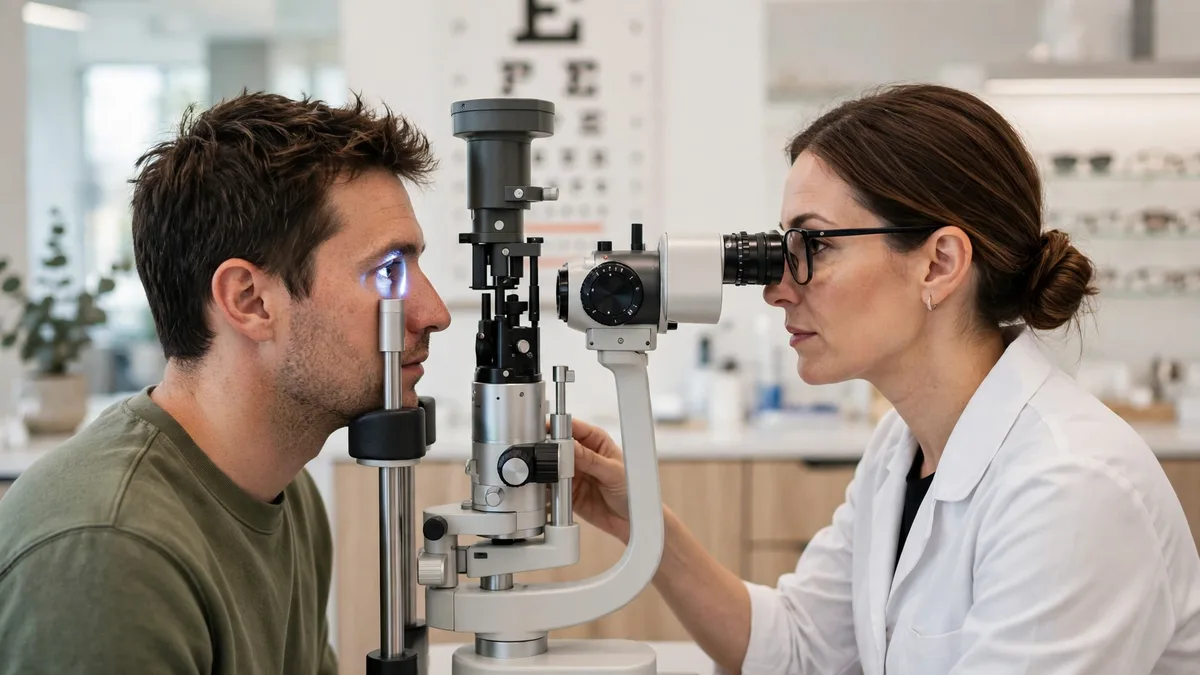
The optometrist will measure the pressure inside the eye, examine the optic nerve, and may test the field of vision for blind spots at the edges of sight. If anything looks unusual, you will be referred to an ophthalmologist for further tests.
There is currently no cure for glaucoma, but treatments can slow the damage and help stop your vision getting worse. The treatment depends on how your sight is affected and the type of glaucoma you have. Eye drops are the most common first treatment: they decrease the amount of fluid in the eye and help it drain, bringing the pressure down. Laser treatment can do the same, and surgery can improve the drainage. Follow-up appointments monitor your eyes and check that the treatment is working, and it is important not to miss them.
For most people, treatment means using eye drops every day, often for the rest of their lives, and attending regular eye clinic appointments. The drops only work if they are used as directed. If drops cause irritation or other problems, the specialist can change them, so it is worth mentioning side effects rather than quietly stopping, just as the guide to remedies to throat pain says a treatment only helps if it is actually used.
Living with glaucoma
If glaucoma is diagnosed and treated early, it may not change your vision much, but sometimes sight is affected, and in rare cases people may lose their sight. That uncertainty is frightening, and your specialist eye doctor will advise you on how it may affect your sight and on how to live as independently as you can.
If glaucoma affects the sight in both eyes, drivers in the UK need to tell the DVLA, which will assess whether they can keep driving safely. Charities such as Glaucoma UK and the Royal National Institute of Blind People offer information, helplines and practical help for people living with sight loss.
Daily life with glaucoma is mostly about routine: using the drops every day, keeping appointments, and having eye tests as advised. For many people that is all it takes to keep the condition stable for years. If some sight is lost, talking to others in the same position often helps.
Your glaucoma checklist
- Have regular eye tests at least every two years, and more often if you are at higher risk.
- Tell the optometrist if a parent, brother or sister has glaucoma.
- Know the sudden symptoms: intense eye pain, red eye, blurred vision, rainbow circles, headache, nausea.
- If sudden symptoms appear, call 999 or go to A&E: it is a medical emergency.
- Use prescribed eye drops every day, exactly as directed, and do not stop without advice.
- Keep all follow-up appointments, and tell the specialist about side effects.
- Ask your specialist about driving if glaucoma affects the sight in both eyes.
- Contact Glaucoma UK or the RNIB for information and support if you need it.
What is glaucoma?
Glaucoma is an eye condition in which the optic nerve, the nerve that connects the eye to the brain, becomes damaged, usually because pressure builds up inside the eye when fluid cannot drain as it should. It can cause vision loss if untreated.
What are the symptoms of glaucoma?
Glaucoma usually has no symptoms and develops slowly over many years, which is why it is found at a routine eye test. Late symptoms include loss of side vision. Sudden glaucoma causes intense eye pain, a red eye, blurred vision and nausea.
Who is most at risk of glaucoma?
The risk is higher if you are over 50, if a parent, brother or sister has glaucoma, if you are from a Black African, Caribbean or Asian background, or if you are short- or long-sighted or diabetic.
How is glaucoma diagnosed?
It is usually found during a routine eye test, when the optometrist measures the pressure inside the eye and examines the optic nerve. If suspected, you are referred to an ophthalmologist for further tests.
Can glaucoma be cured?
There is currently no cure for glaucoma, but treatment with eye drops, laser or surgery can slow the damage. Early diagnosis and regular treatment make the biggest difference.
What should I do if I get sudden eye pain?
If you develop symptoms of glaucoma suddenly, such as intense eye pain with blurred vision, call 999 or go to A&E. This is a medical emergency.
The bottom line
Glaucoma is damage to the optic nerve, usually caused by pressure building up inside the eye, and it is most common in adults over 50. It usually has no symptoms and develops slowly over years, which is why it is so often found at a routine eye test. There is no cure, but eye drops, laser and surgery can slow the damage and protect the sight that remains. The most useful thing you can do is to have regular eye tests, at least every two years, and to act fast if sudden symptoms appear. Caught early, glaucoma may never change your vision much.
This article is for general information only and is not medical advice. If you have concerns about your vision, or you develop sudden eye pain, speak to a GP or optician, or call 999 or go to A&E if the symptoms came on suddenly.