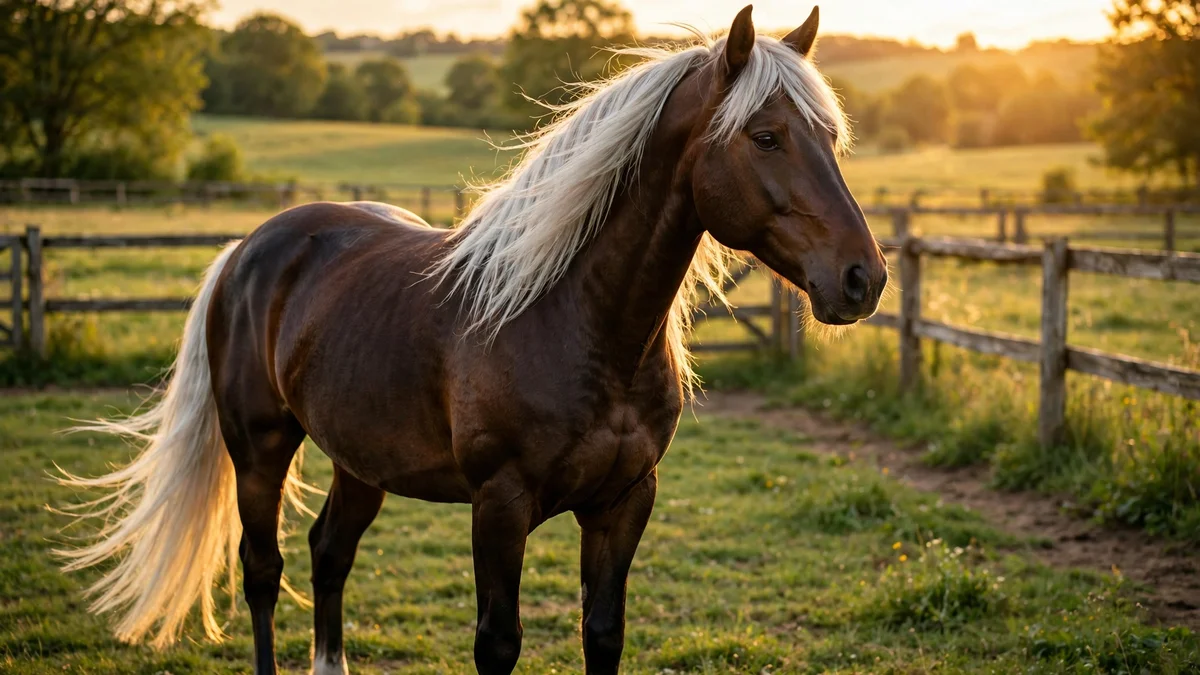

Spotted silver is a name sometimes given to a striking horse coat: a dark, chocolate-coloured body marked with pale dapples, and a mane and tail that shine silvery white or flaxen. The central question is simple: what makes a horse look like this, and is it a breed, a colour or a pattern? It is a colour, known properly as silver dapple, caused by a single gene that dilutes black pigment, and it appears in several breeds, most famously the Rocky Mountain Horse and the Icelandic horse.
The look is unmistakable once you know it. A black horse carrying the silver gene turns a flat, dark chocolate brown, often with rings of lighter hair dappling the body, while the mane and tail fade to a sooty silver. A bay horse keeps its reddish body but gains the same pale mane and tail. The effect is beautiful, but it comes with a serious health note every owner and breeder should understand.
Key takeaways
- Spotted silver is the silver dapple coat colour, caused by the silver dilution gene.
- The gene dilutes black pigment only, so it changes black and bay horses but not chestnuts.
- A typical silver dapple has a chocolate body with dapples and a pale silvery mane and tail.
- The gene is inherited as a dominant trait, so one copy is enough to show the colour.
- Silver is linked to an inherited eye condition called Multiple Congenital Ocular Anomalies.
- Silver dapples are often confused with liver chestnuts, palominos and greying horses.
What the silver gene does
The silver gene, known to geneticists as the silver dapple gene and written as Z, is a dilution gene that affects black pigment, called eumelanin. It does not change red or yellow pigment at all. That single fact explains almost everything about the colour. On a black base coat, silver dilutes the mane and tail to a silvery grey or flaxen colour and softens the body to a chocolate brown, often with dapples. On a bay base, the black points of the legs, mane and tail are diluted in the same way, while the reddish body stays mostly unchanged.
The gene responsible is called PMEL, and the change is a mutation in one part of that gene. Because the gene is dominant, a horse needs only one copy of the silver allele to show the colour. A horse with two copies looks much the same as a horse with one, which is why the colour can appear suddenly in a foal from a non-silver parent that carries the gene silently.
Chestnut-based horses can carry the silver gene without showing it, because chestnuts have no black pigment for the gene to dilute. A chestnut mare or stallion can therefore pass silver to a foal, and if the other parent supplies a black base, the foal can be born silver dapple. Palominos and cremellos, which are also red-based, behave the same way. This hidden carriage is one reason the colour turns up in unexpected places.
What a silver dapple looks like
A mature black silver horse is a memorable sight. The body is a flat, dark grey-brown, often with dapples, which are rings of lighter hair scattered across the coat. The mane and tail are sooty white or silver, usually darker at the roots, and the legs are often a flat brownish-grey mottled with silver. The hair around the eyes and muzzle may also show silvering. The overall impression is of a dark horse touched with moonlight.
Bay silvers look different again. They keep their reddish bodies, although the presence of small amounts of silver often gives them a chocolate appearance. The mane and tail are usually a sooty silver, darker at the roots, and the lower legs are diluted from black to a dark greyish colour.
Foals can be hard to identify. Silver dapple foals commonly have a pale, wheat-coloured body coat, white eyelashes and hooves with tapering vertical stripes, but these features fade as the horse grows. A foal that looks oddly pale with a white mane may be a silver dapple in disguise, and the only certain answer is a DNA test, which is widely available from equine genetics laboratories.

Breeds that carry silver
Silver is found in many breeds, but it is most associated with a few. The Rocky Mountain Horse is the best-known silver breed, and the colour is common in its close relatives, the Kentucky Mountain Horse and the Mountain Pleasure Horse. The Icelandic horse also carries silver widely, and the Shetland pony, the Morgan horse, the Finnhorse, the Welsh pony, the Arabian, the Saddlebred and the Tennessee Walking Horse are all listed among the breeds in which silver occurs.
The colour is common in Icelandic horses in particular, where it has been studied for many years. The colour is also seen in the Ardenne, the Gypsy Cob, the Missouri Foxtrotter and the Norwegian Nordland horse, among others.
Because silver is dominant and striking, it has been selected for in some breeds, especially those where a pale mane and tail are prized. That selection has a cost, which brings us to the health question that matters most about this colour.
Silver and eye health
Silver is associated with an inherited eye condition known as Multiple Congenital Ocular Anomalies, usually shortened to MCOA. The condition involves several different defects of the eye, affecting both the front and the back of the eye, and it is linked to the same gene that causes the silver colour. The genetic test for MCOA is the same as the test for the silver dilution, because the two travel together.
Horses with one copy of the silver gene may show milder eye changes, while horses with two copies are more likely to be affected more seriously. The connection is well documented by veterinary genetics laboratories, and it is the reason breeders are advised to test silver horses before breeding. Knowing a horse’s silver status helps owners make informed decisions and helps vets know what to look for in an eye examination.
This does not mean silver horses cannot live full, useful lives. Many do, and many compete successfully. It does mean that the colour should never be the only consideration when choosing a horse or planning a mating. A vet check that includes the eyes, and a DNA test for silver, are sensible steps for anyone buying or breeding a silver dapple.
Silver dapples and their lookalikes
Silver dapples are often confused with other colours, and the table below sums up the main differences.
| Colour | What it looks like | How to tell it apart |
|---|---|---|
| Black silver | Chocolate body with dapples, silver mane and tail | Dark body with soot-toned pale mane, darker at roots |
| Bay silver | Reddish body, silver mane and tail, grey legs | Legs diluted to grey, unlike a true bay |
| Liver chestnut | Dark red-brown body, flaxen mane and tail | Red and yellow tones, no grey-brown dappling on legs |
| Palomino | Golden body, pale mane and tail | Yellow and gold tones, red-based, not black-based |
| Grey | Progressively lighter coat with age | Greys lighten over time; silvers often darken |
| Flaxen chestnut | Chestnut body with honey mane and tail | Honey and red tones in the mane, unlike sooty silver |
Buying and caring for a silver horse
If you are thinking of buying a silver dapple, start with the eyes and the paperwork. Ask whether the horse has been DNA tested for silver, and whether an eye examination has been done. A seller who can show test results and vet records is giving you the information you need, and a horse with two copies of the gene deserves a careful eye check before you commit.
Day-to-day care is the same as for any horse: good feeding, regular hoof care, dental checks, worming and vaccination as your vet advises. The pale mane and tail show dirt more readily than a dark one, so silver horses often need more grooming if they are to look their best, and sun can bleach the pale hair further. A rug or shelter helps in strong sun, as it does for any horse.
For breeders, the key point is to test before mating. Because silver is dominant, a silver horse bred to a non-silver horse can produce silver foals, and two silver horses can produce a foal with two copies of the gene. A DNA test is inexpensive compared with the cost of a foal, and it removes the guesswork from the decision.
Your spotted silver checklist
Keep this list handy if you are learning about the colour or looking at a horse.
- Look for a dark chocolate body with dapples and a pale silvery mane and tail.
- Remember silver dilutes black pigment only, so chestnuts never show it.
- Check whether the mane is soot-toned and darker at the roots, not honey coloured.
- Ask for a DNA test for silver before buying or breeding.
- Arrange an eye examination, since silver is linked to MCOA.
- Do not confuse a silver dapple with a liver chestnut or a palomino.
- Remember that silver dapples often darken with age, while greys lighten.
- Look at foal clues such as white eyelashes and striped hooves, but confirm with a test.
- Note the breed: silver is common in Rocky Mountain, Icelandic and Shetland horses.
- Choose a horse for temperament and health first, and colour second.
Frequently asked questions
Is spotted silver a breed of horse?
No. Spotted silver, properly called silver dapple, is a coat colour caused by a single gene. It appears in many breeds, including the Rocky Mountain Horse, the Icelandic horse, the Shetland pony and the Morgan horse, but it is not a breed in itself.
What causes the silver dapple colour?
The colour is caused by the silver dilution gene, which dilutes black pigment in the hair. A mutation in the PMEL gene lightens the mane and tail to silver or flaxen and softens a black body to chocolate brown, often with dapples. The gene is inherited as a dominant trait.
Can a chestnut horse be silver dapple?
A chestnut horse cannot show the silver colour, because chestnuts have no black pigment for the gene to dilute. A chestnut can still carry the silver gene and pass it to a foal, and if the other parent supplies a black base, the foal can be silver dapple.
Is the silver gene linked to health problems?
Yes. Silver is associated with Multiple Congenital Ocular Anomalies, an inherited eye condition involving several defects of the eye. The genetic test for MCOA is the same as the test for silver, so testing and eye examinations are advised before breeding.
How can I tell a silver dapple from a palomino?
A palomino is red-based, with a golden body and yellow tones in the mane and tail. A silver dapple is black-based, with a chocolate or grey-brown body and a sooty silver mane and tail that is darker at the roots. The body colour and the tone of the mane are the clearest clues.
Do silver dapple foals look different from adults?
Yes, often. Silver dapple foals commonly have a pale, wheat-coloured body coat, white eyelashes and hooves with tapering vertical stripes, but these features fade as the horse grows. A DNA test is the reliable way to confirm a foal’s colour.
The bottom line
Spotted silver is a beautiful and well-understood coat colour: a dark, dappled body with a pale silvery mane and tail, caused by a single dominant gene that dilutes black pigment. Enjoy the look, but remember the eye health link, test before breeding, and choose a horse for temperament and soundness first. For more animal and outdoor reading, see our guide to the cherry tree, our guide to the best places to visit in spring, and our tips for an eco-friendly lifestyle.